Licensed & insured
Dryer Duct Installation & Repair
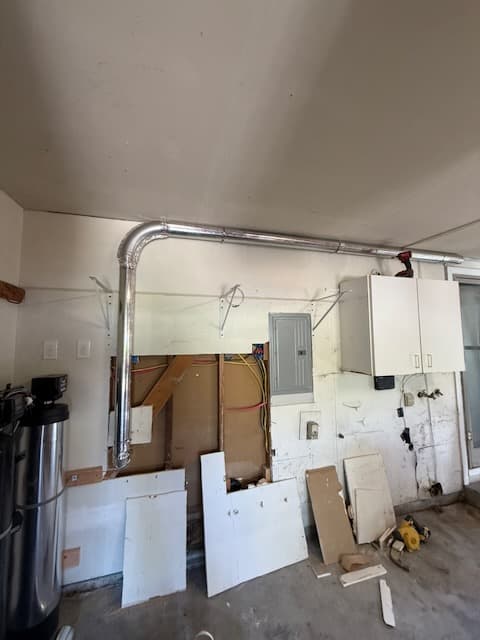
We replace flammable foil or plastic hoses with fire-rated DryerFlex duct, and repair disconnected or leaking joints inside walls or attics - bringing your system up to code.
Starting at
$77 / lf
Final pricing depends on scope. We always quote before we start.
- Licensed & insured
- Same‑day quotes
- 100% guarantee
- Top rated locally
Serving 30 cities • see service area
Dryer Duct Installation & Repair in San Mateo, CA
We replace flammable foil or plastic hoses with fire-rated DryerFlex duct, and repair disconnected or leaking joints inside walls or attics - bringing your system up to code.
Service area
Available in 30 cities
San MateoBelmontFoster CitySan CarlosHillsboroughBurlingameRedwood CityMillbraeAthertonWoodsideSouth San FranciscoSan BrunoHalf Moon BayMenlo ParkEl GranadaPalo AltoPacificaColmaDaly CityLos Altos HillsMountain ViewLos AltosSan FranciscoSunnyvaleCupertinoFremontSan LeandroPortola ValleySan JoseSanta Clara
Related
You might also need
Resources
Helpful guides
Answers to the questions San Mateo homeowners ask us most.
Need Dryer Duct Installation & Repair? We can help.
References & standards
“Exhaust ducts shall be supported at intervals not to exceed 12 feet (3658 mm) and shall be secured in place. The insert end of the duct shall extend into the adjoining duct or fitting in the direction of airflow. Exhaust duct joints shall be sealed in accordance with Section M1601.4.1 and shall be mechanically fastened. Ducts shall not be joined with screws or similar fasteners that protrude more than 1/8 inch (3.2 mm) into the inside of the duct.”IRC M1502.4.2
- IRC M1502.4.2 - Duct Installation Requirements - Duct joints must be sealed with metal tape, supported so they cannot sag, and fastened with screws short enough that nothing pokes into the airflow to snag lint.
- IRC M1502.4.3 - Transition Duct Requirements - The flexible duct behind the dryer must be a single piece no longer than 8 feet, rated for dryer use (UL 2158A), and never hidden inside a wall.
- UL 2158A - Clothes Dryer Transition Duct - The flexible connector behind the dryer must carry a UL 2158A label, confirming it can take dryer heat without collapsing or becoming a fire hazard.
- IRC M1502.4.6.1 - Maximum Exhaust Duct Length - Dryer ducting is capped at 35 feet, and every bend counts against that limit, so a vent with several elbows has to be considerably shorter.
- IRC M1502.4.5 - Prohibition of Domestic Booster Fans - Standard duct booster fans are banned from dryer vents because they are not built for lint and heat, which makes them a fire risk.
- IRC M1502.4.7 - Duct Length Identification - A duct longer than the 35-foot limit must carry a permanent label near the dryer stating its true length so it can be serviced correctly.
- IRC M1502.4.8 - Exhaust Duct Required When Space Provided - Any home with a space for a dryer must have a vent duct installed, capped and labeled for future use if no dryer is in place yet.
- IRC M1502.1 - General - Clothes Dryer Exhaust - A dryer has to be vented exactly the way its manufacturer specifies, which is the baseline for a safe, efficient exhaust system.
- NFPA General - Standard for Chimneys, Fireplaces, Vents, and Solid Fuel-Burning Appliances - National fire-safety guidance calls for a professional dryer vent inspection every year so hazards are caught before they become dangerous.
- U.S. Fire Administration - Clothes dryer fire statistics - Clothes dryers cause about 15,000 home fires a year, and failure to clean them is the leading cause. (U.S. Fire Administration)
- IRC M1502.4.1 - Duct Material and Size - Dryer ducting must be smooth metal and 4 inches across. Plastic, vinyl, and thin foil duct are prohibited because they trap lint and cannot handle the heat.