Dryer Vent Specialists cleans and inspects dryer exhaust systems across the San Mateo County Peninsula. A dryer fire is dangerous for a specific reason: it starts inside a duct nobody can see, it feeds on lint that ignites easily, and it can reach a wall cavity before anyone smells smoke. Nationally, the leading cause is failure to clean.
Source: NFPA, Home Fires Involving Clothes Dryers and Washing Machines, 2010-2014 annual averages.
How dangerous is a dryer fire, really?
Dangerous enough to be measured, and common enough that the measurement is steady year over year. In its most recent full analysis, the National Fire Protection Association estimated that US fire departments responded to about 15,970 home fires a year involving a clothes dryer or washing machine, causing 13 civilian deaths, 440 civilian injuries, and $238 million in direct property damage. Clothes dryers accounted for 92 percent of those fires, 95 percent of the injuries, and 93 percent of the property damage. The washing machine next to it is barely a factor.
The part that gets understated is how often the fire leaves the appliance. The US Fire Administration found that 54 percent of residential clothes dryer fires stayed confined to the object where they started, 32 percent spread to the room of origin, and 14 percent extended beyond that room. Roughly one in seven became a house fire rather than an appliance fire.
Two more details from that same report matter for a laundry room. Smoke alarms were missing, or could not be confirmed present, in between 16 and 38 percent of these fires. And incidence is seasonal: it climbs through fall and winter and peaks in January at 11 percent of the year's fires, when nobody is drying anything outdoors.
What actually catches fire in a dryer?
Lint, most of the time. In the NFPA data, the leading items first ignited in clothes dryer fires were dust, fiber, or lint at 27 percent, followed by clothing at 26 percent. The USFA found effectively the same split. Over half of these fires begin with either the laundry or the residue the laundry sheds.
Lint is close to an ideal fuel. It is bone dry by the time it settles in a duct, it is fine enough to catch from a small heat source, and it sits in loose piles with air around every fiber. The lint screen captures a share of it on each cycle, but what gets past the screen builds up along the duct wall for years.
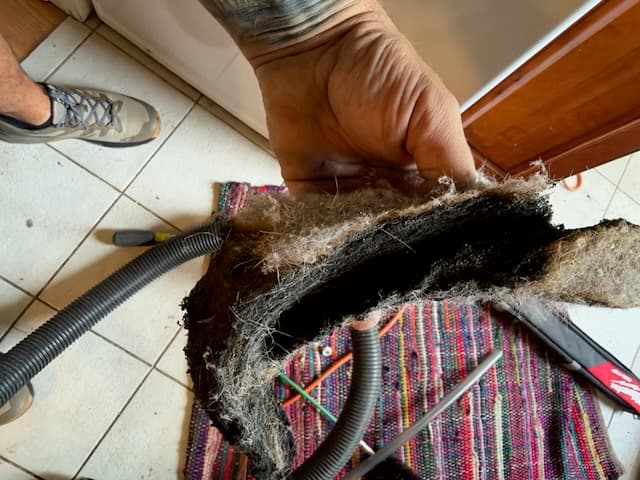
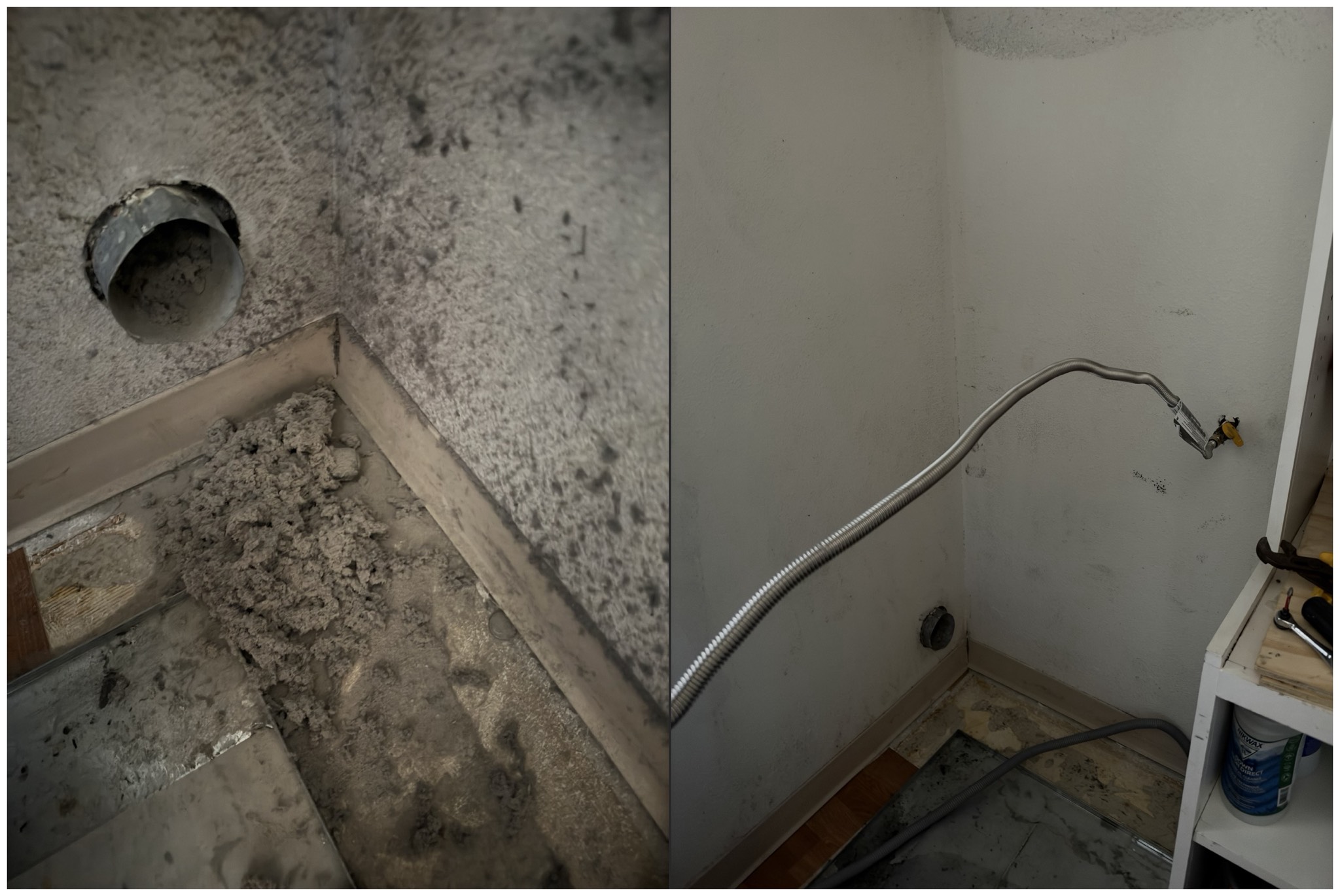
The slab at the top of this page came out of one system. That is not an unusual find, and none of it was visible to the homeowner.
Why the fire starts where you cannot see it
A dryer is designed around moving air. It pulls room air across a heating element, pushes it through the drum, and sends the hot, wet, lint-loaded air out through the duct. Every part of that depends on the air actually leaving.
When lint narrows the duct, airflow drops and heat stops leaving with it. Technical Safety BC describes the progression plainly in its gas dryer venting bulletin: lint "builds up on the sides of the vent system and eventually dries to a hard material. This material attracts more lint, where it eventually creates a restriction that leads to overheating." The dryer then works harder, runs hotter, and cycles its high-limit thermostat more often, "potentially resulting in a fire."
None of that happens in the open. It happens behind the appliance, inside the wall, or up in a duct run through a ceiling. By the time there is a flame, it is already next to framing and insulation, which is exactly why one in seven of these fires gets past the room it started in.
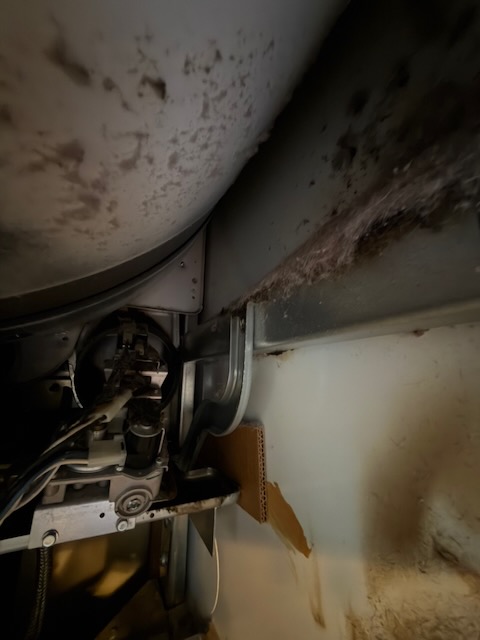
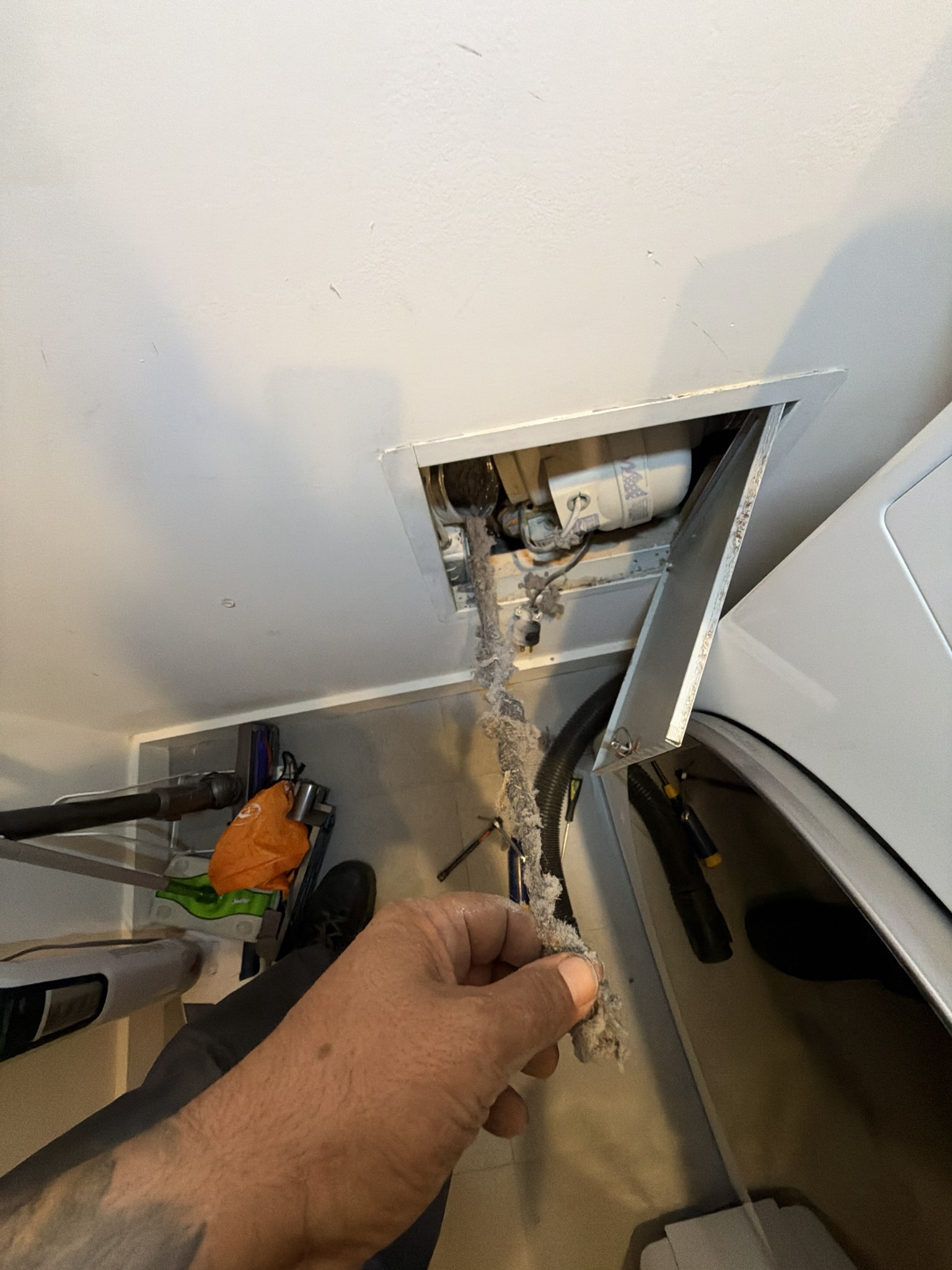
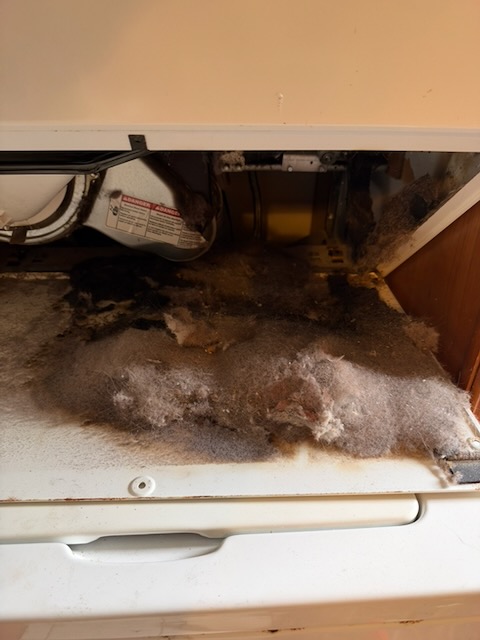
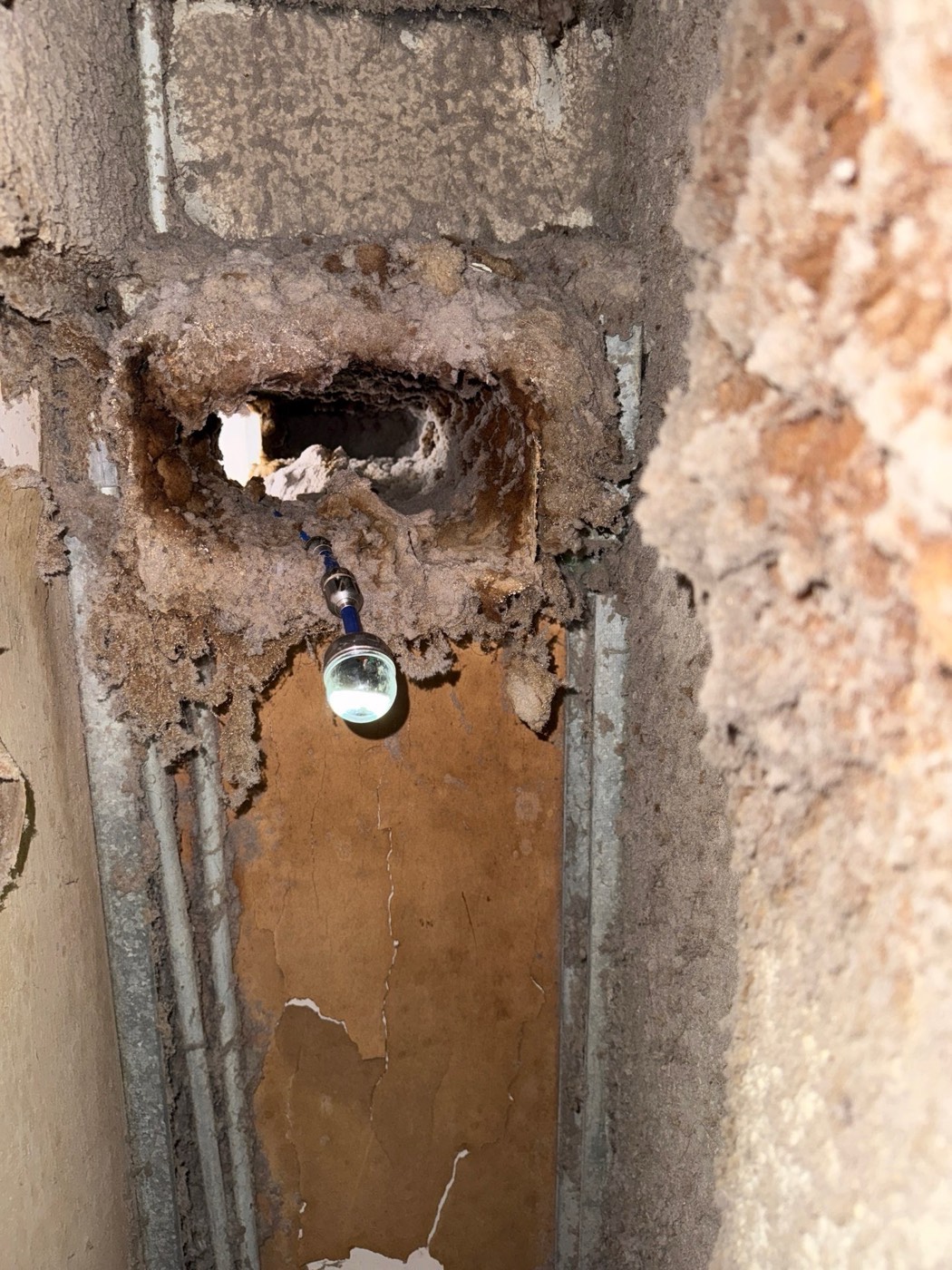
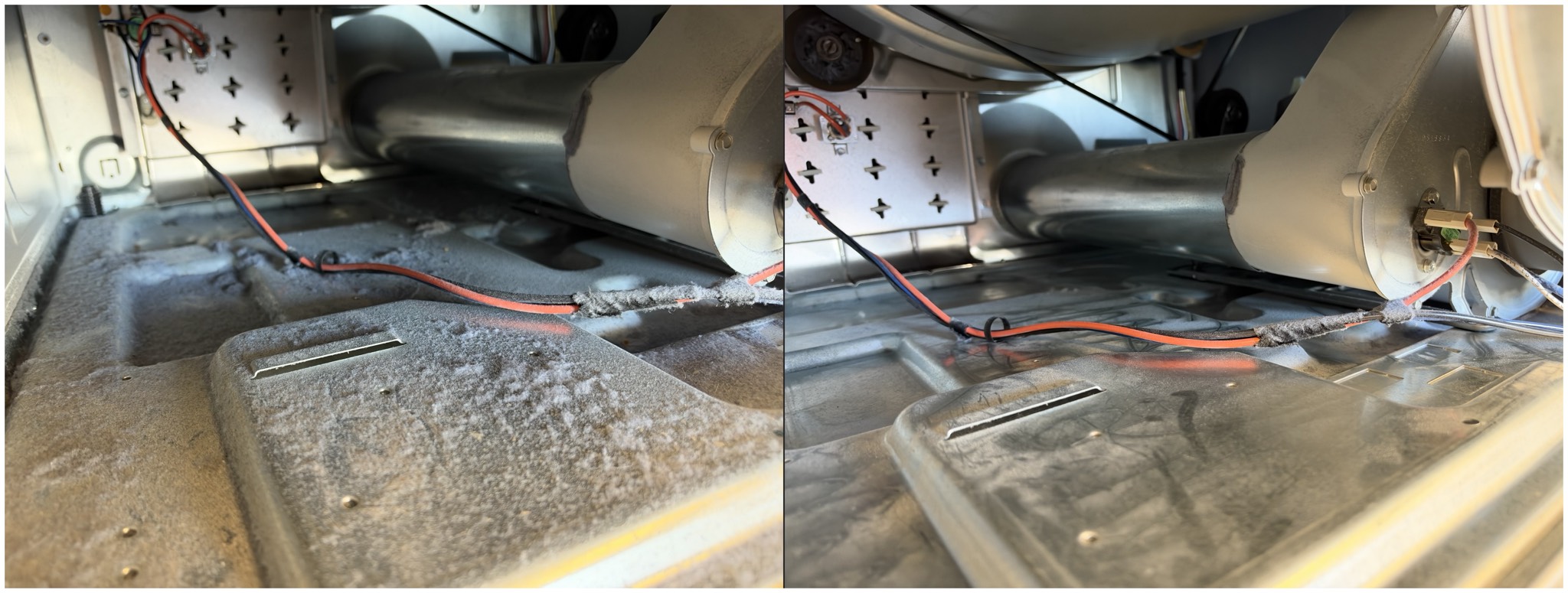
Nothing in either of those photographs is visible with the dryer pushed back against the wall, which is where it sits for years at a time.
It is not only fire: gas dryers and carbon monoxide
A gas dryer burns fuel, and its exhaust carries combustion byproducts out through the same duct as the moisture and lint. While the duct is intact and clear, those byproducts leave the building. When it is blocked or damaged, they have somewhere else to go.
If you have a gas dryer: Technical Safety BC's bulletin on gas dryer venting warns that "restrictions in the vent may also cause leaks of dryer exhaust which could contain carbon monoxide." A blocked vent on a gas dryer is both a fire risk and an air-quality risk, so keep a working carbon monoxide alarm near the laundry area and have the appliance and its venting serviced at least annually.
What we find on the vents that worry us most
Lint volume is the obvious problem. The conditions below are the ones that make lint accumulate faster, and they show up on Peninsula homes constantly.
- Crushed transition duct. The flexible length between the dryer and the wall gets folded when the appliance is pushed back into place. Every crease is a place lint catches.
- Foil or vinyl flex duct. Thin, ribbed, combustible, and still installed in plenty of homes. The ribs hold lint and the material offers no fire resistance.
- Runs longer than code allows. Long ducts with extra elbows lose airflow, which accelerates buildup along the whole run.
- A termination that cannot open. A damper held shut by lint or paint turns the whole duct into a dead end.
- Actual obstructions. Bird and rodent nests, and small garments pulled out of the drum and into the duct.
- Shared multi-unit ducts. In condos, one neglected run affects neighbors, and the duct is usually common area. Our HOA and booster fan compliance guide covers that case.
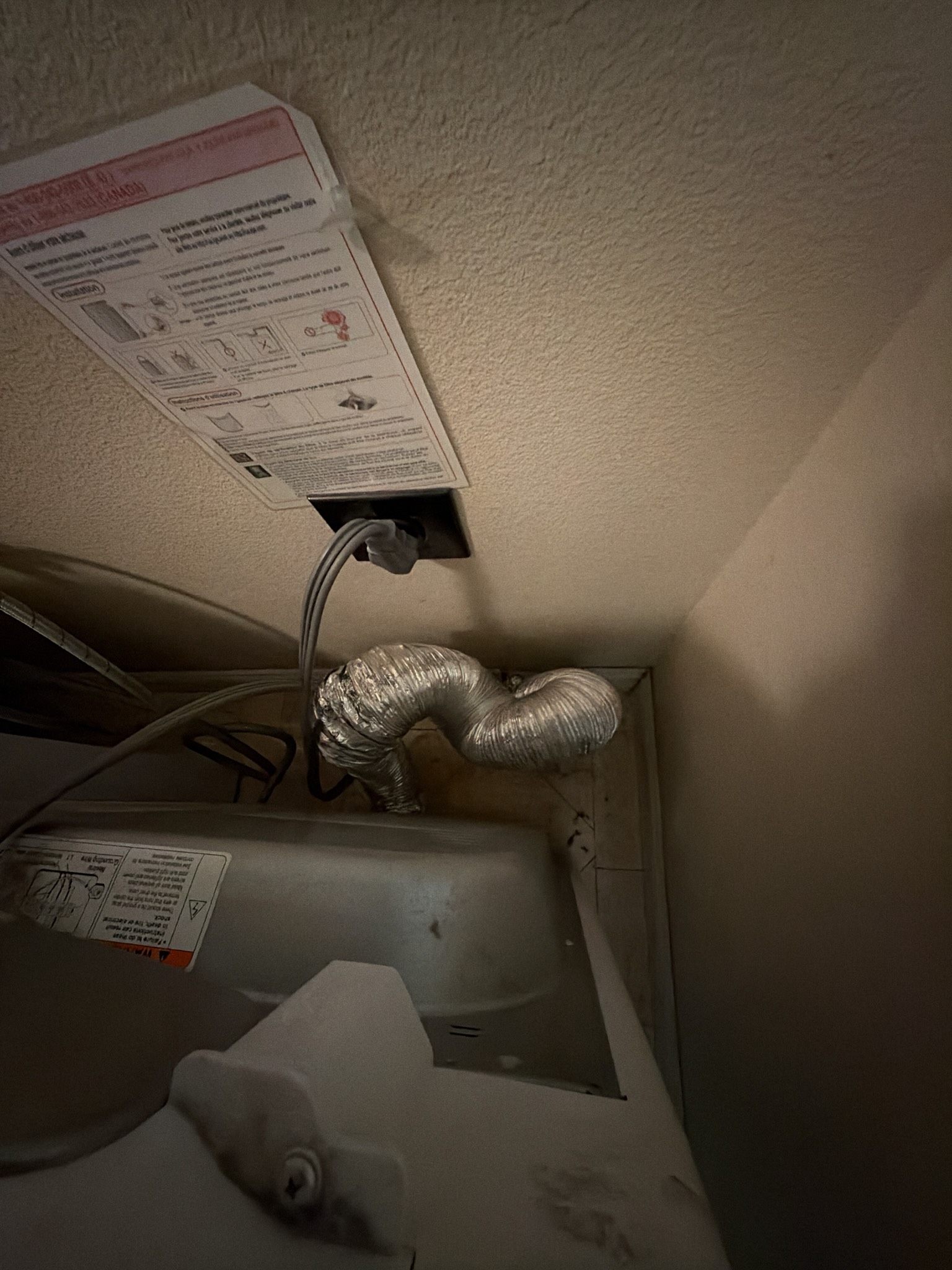
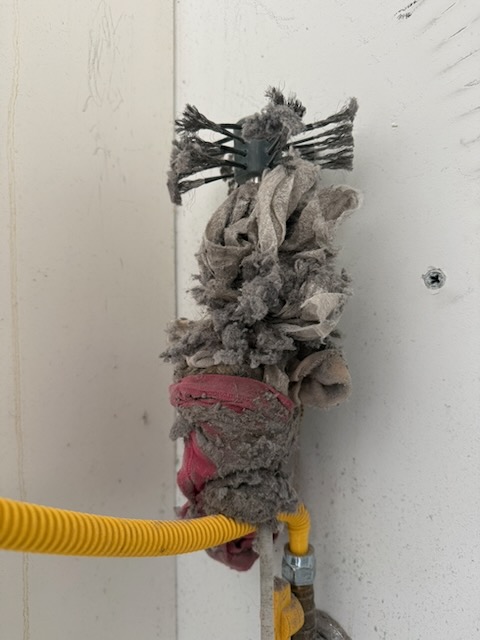
What California requires (CMC 504.4.2.1): a domestic dryer moisture exhaust duct may not exceed 14 feet of combined horizontal and vertical length, including two 90-degree elbows, with two feet deducted for each additional 90-degree elbow. The duct must be rigid metal with smooth interior surfaces, at least 4 inches in diameter. Runs longer than that require a listed booster fan, sized per the fan manufacturer's instructions.
Warning signs the dryer is already giving you
A restricted vent announces itself well before it ignites. Any of these is worth acting on:
- Clothes come out warm but still damp, or need a second cycle to finish.
- The laundry room gets noticeably hot or humid while the dryer runs.
- A burning or hot-lint smell during a cycle.
- Lint collecting around the exterior vent hood, or a damper flap that never opens.
- The dryer shutting itself off mid-cycle, which is the high-limit thermostat intervening.
We wrote these up in more detail in signs your dryer vent is clogged and why your dryer takes two cycles to dry.
What actually lowers the risk
- Clean the lint screen every load. The cheapest, highest-return habit in the house.
- Have the full duct professionally cleaned on a schedule. Annually is the realistic baseline for most homes, and sooner with heavy use, pets, or a long run. See how often dryer vents should be cleaned in California.
- Replace foil or vinyl transition duct with rigid metal or a UL-listed semi-rigid product, and leave enough clearance that it is not crushed when the dryer goes back.
- Never vent a dryer indoors, including into an attic, crawl space, or garage. Those lint-catching indoor "vent kits" are not a substitute for a duct to the outside.
- Keep a working smoke alarm near the laundry area, plus a carbon monoxide alarm if the dryer is gas.
- Do not run the dryer unattended overnight or while the house is empty.
If you suspect a fire has already started in the duct: get everyone out and call 911. Do not open the dryer door or the duct, because the rush of air can feed the fire. Opening up a smoldering lint duct is a job for the fire department, not a homeowner.
Why homeowners call Dryer Vent Specialists
- A licensed California contractor, not a carpet-cleaning add-on. We work to the California Mechanical Code, and we will tell you when a duct needs replacing instead of just cleaning it again.
- CDET certified and veteran owned, with technicians trained specifically on dryer exhaust rather than general duct work.
- Documented before and after. You get photos of your own duct, so the condition of the system is something you can see rather than take on faith.
Dryer fires are among the most preventable fires in a house, because the leading cause is a maintenance task rather than a defect. The data is consistent on that point: failure to clean drives a third of dryer fires and half of the deaths. If your dryer has been taking longer than it used to, or you cannot remember the last time the duct itself was cleaned, that is the signal. Dryer Vent Specialists serves homeowners, HOAs, and property managers across the San Mateo County Peninsula, and we document every system we touch. Property managers can also read our dryer vent maintenance guide for property managers.