Pacifica · Residential Dryer Vent Cleaning Inspection
Dryer Vent Cleaning & Duct Repair in Pacifica, CA
A Pacifica home required full dryer vent cleaning, inspection, and duct repair after a previously installed semi-rigid transition duct, a disconnected booster fan, and a lint-blocked exterior termination were found creating serious fire and carbon monoxide hazards.
Completed May 23, 2026
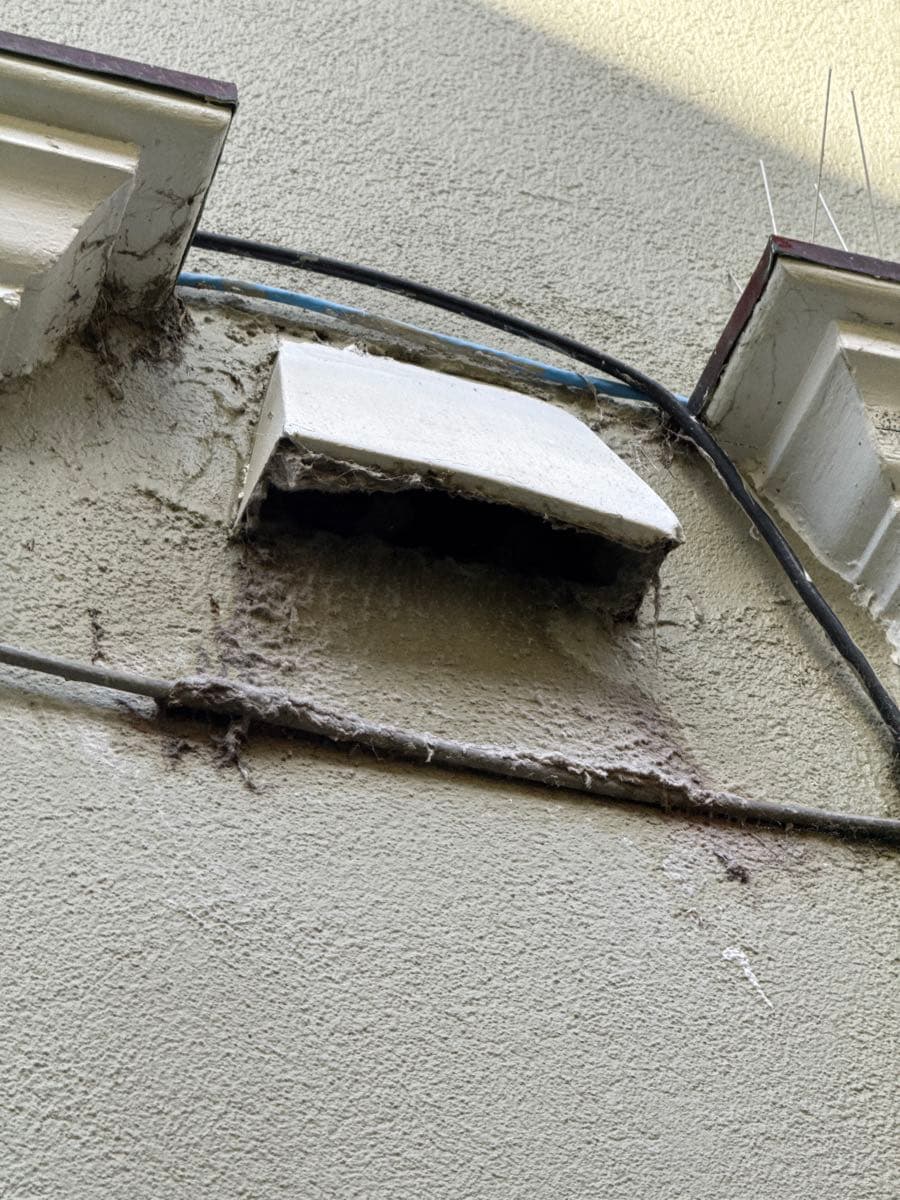
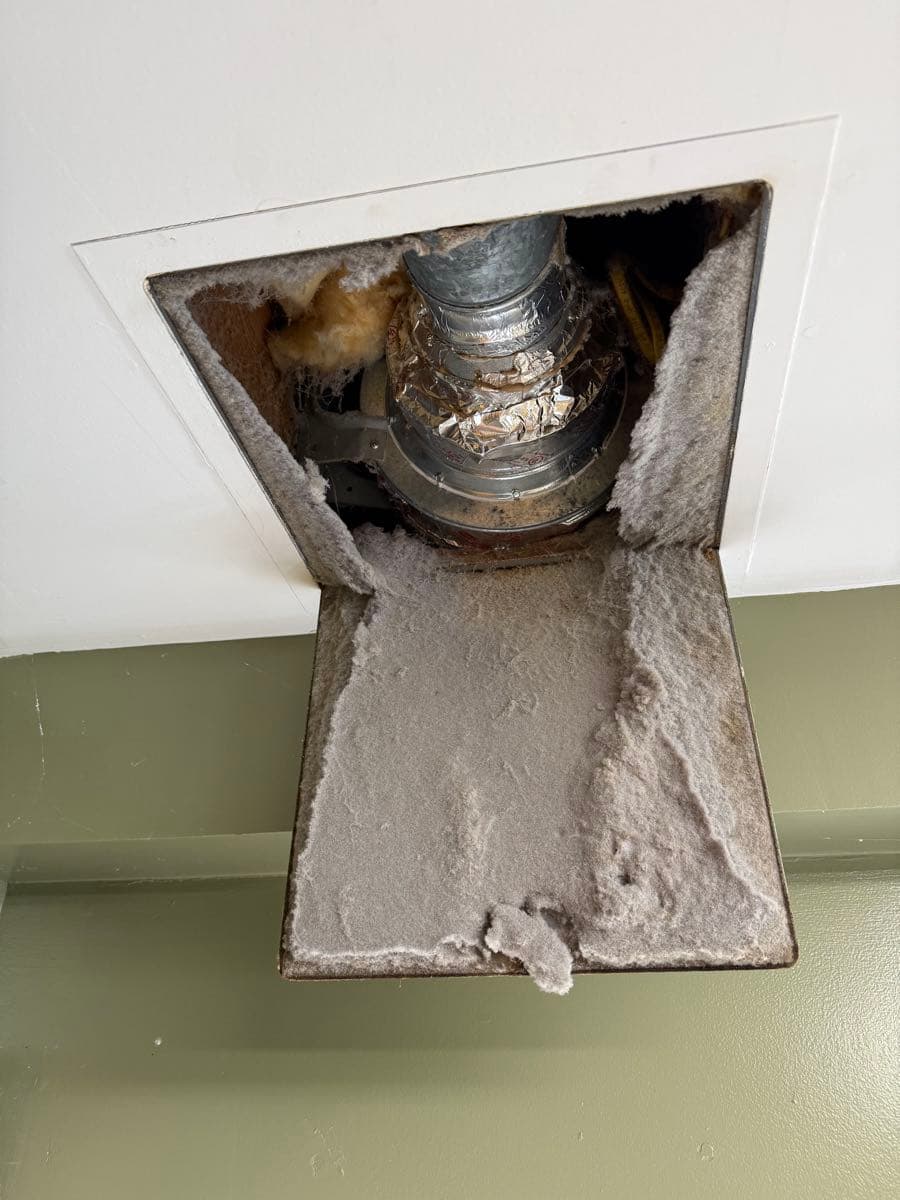
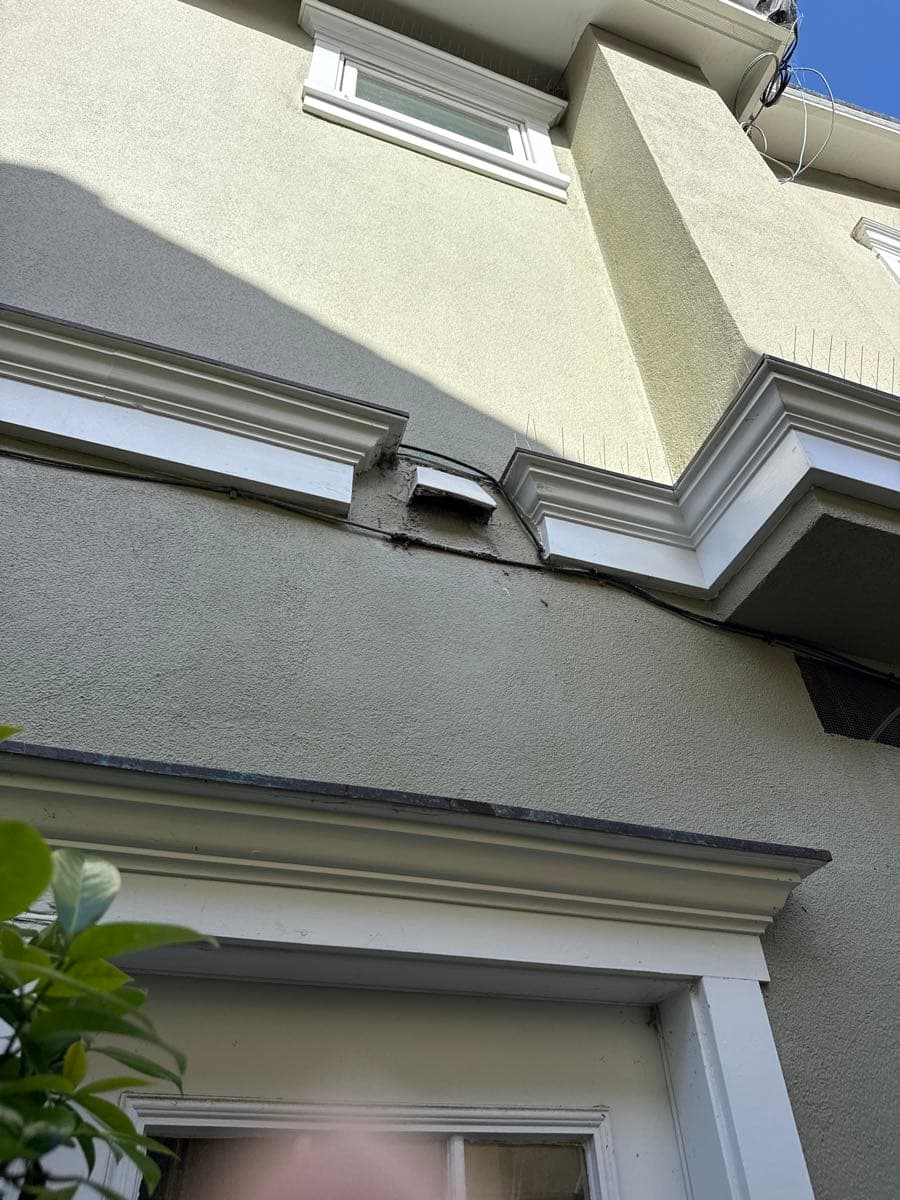
Wet, compacted lint had packed into the corners of the exterior vent cap, preventing the backdraft damper from closing and allowing outside air and pests to enter the duct system.
What We Found in Pacifica
When our technician arrived at this Pacifica residence, the dryer exhaust system had multiple compounding issues that together created an urgent fire and carbon monoxide risk. The most visible problem was at the exterior termination cap: heavy, wet lint had packed into the corners of the flap opening, physically wedging the backdraft damper in a partially open position. Under IRC M1502.3, every dryer vent termination must be equipped with a functioning backdraft damper that closes freely when the dryer is not running. A wedged-open damper allows outside air, moisture, and pests to enter the duct system freely, and the saturated lint surrounding it was a clear sign of long-term restricted airflow.
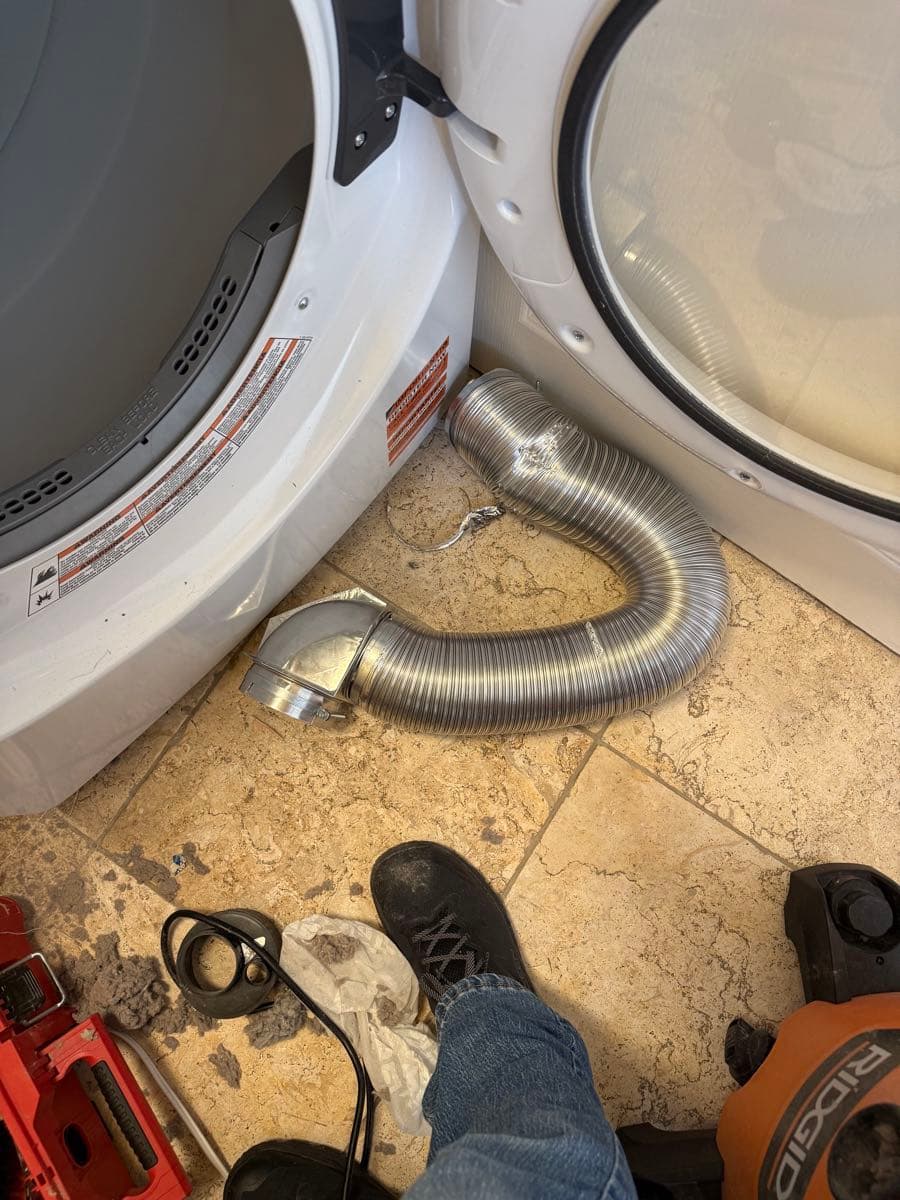
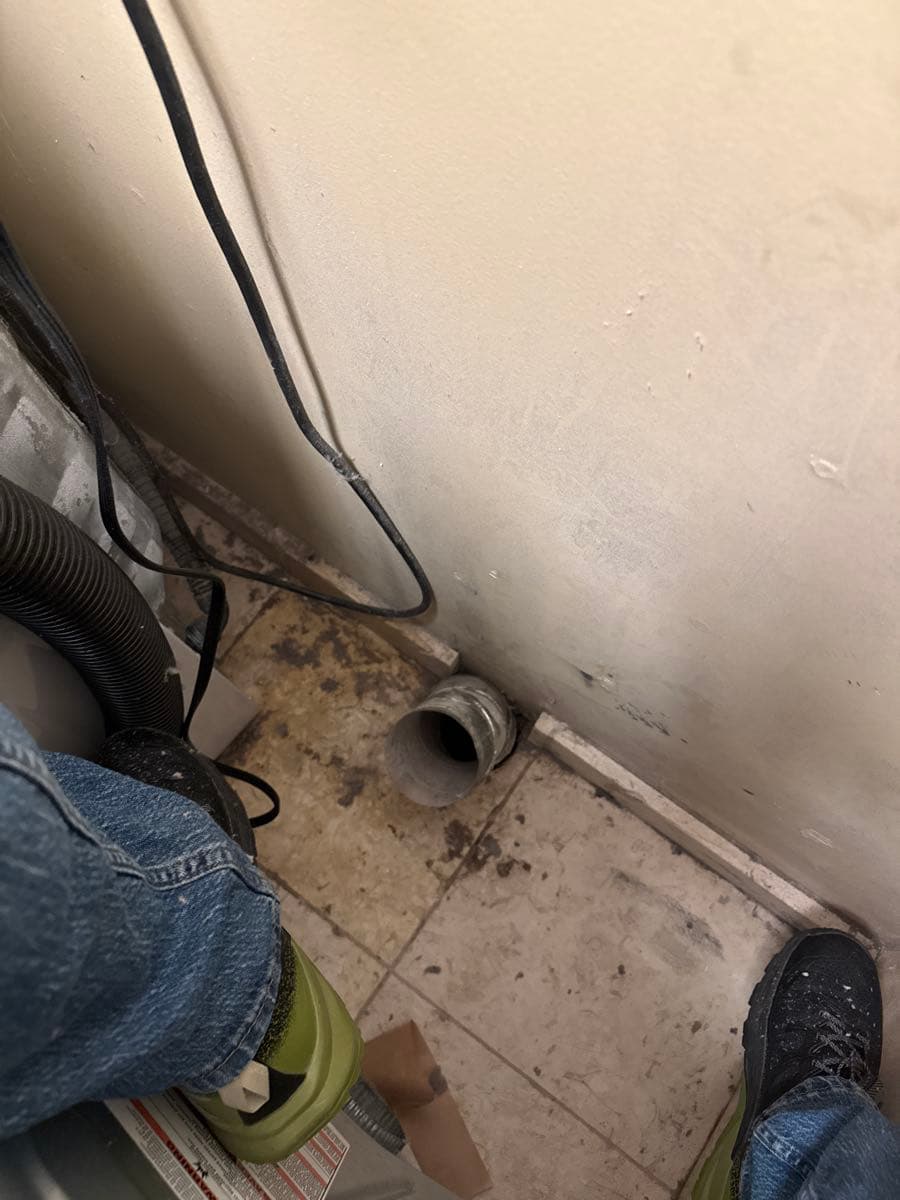
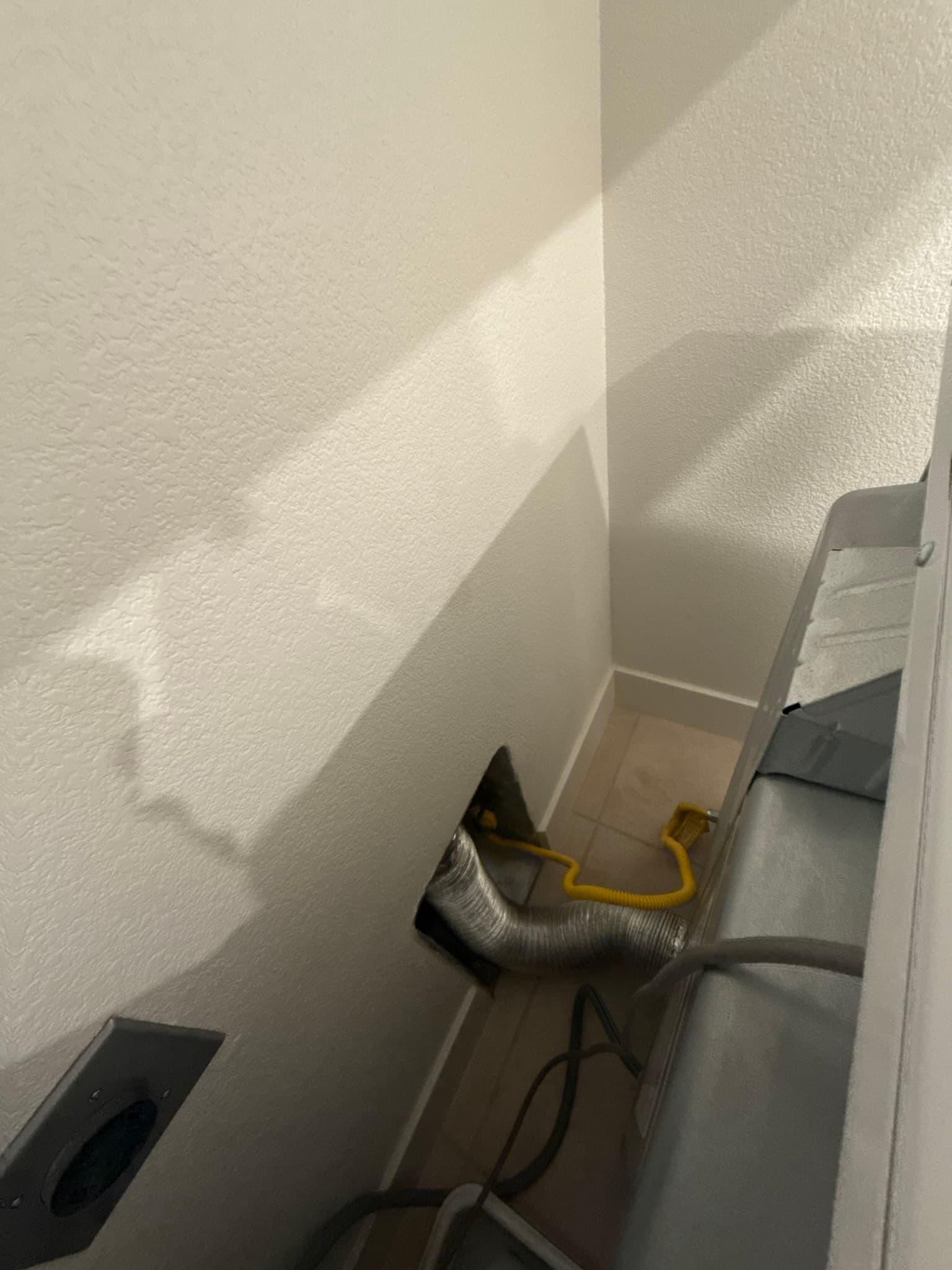
Inside, the transition duct connecting the dryer to the main exhaust run was a semi-rigid aluminum duct installed during a prior Lowe's appliance setup. Rather than being routed directly and compactly per IRC M1502.4.3 (single length, UL 2158A listed, maximum 8 feet, not concealed), the duct had been run in an excessively long, coiled path along the floor. This configuration is a code violation on multiple counts: it creates kinks and sags that restrict airflow below the minimum threshold required by most dryer manufacturers (approximately 300 CFM), and it promotes lint accumulation and moisture retention in every low point. The sagging floor-level routing also violates proper slope and support requirements under IRC M1502.4.2.
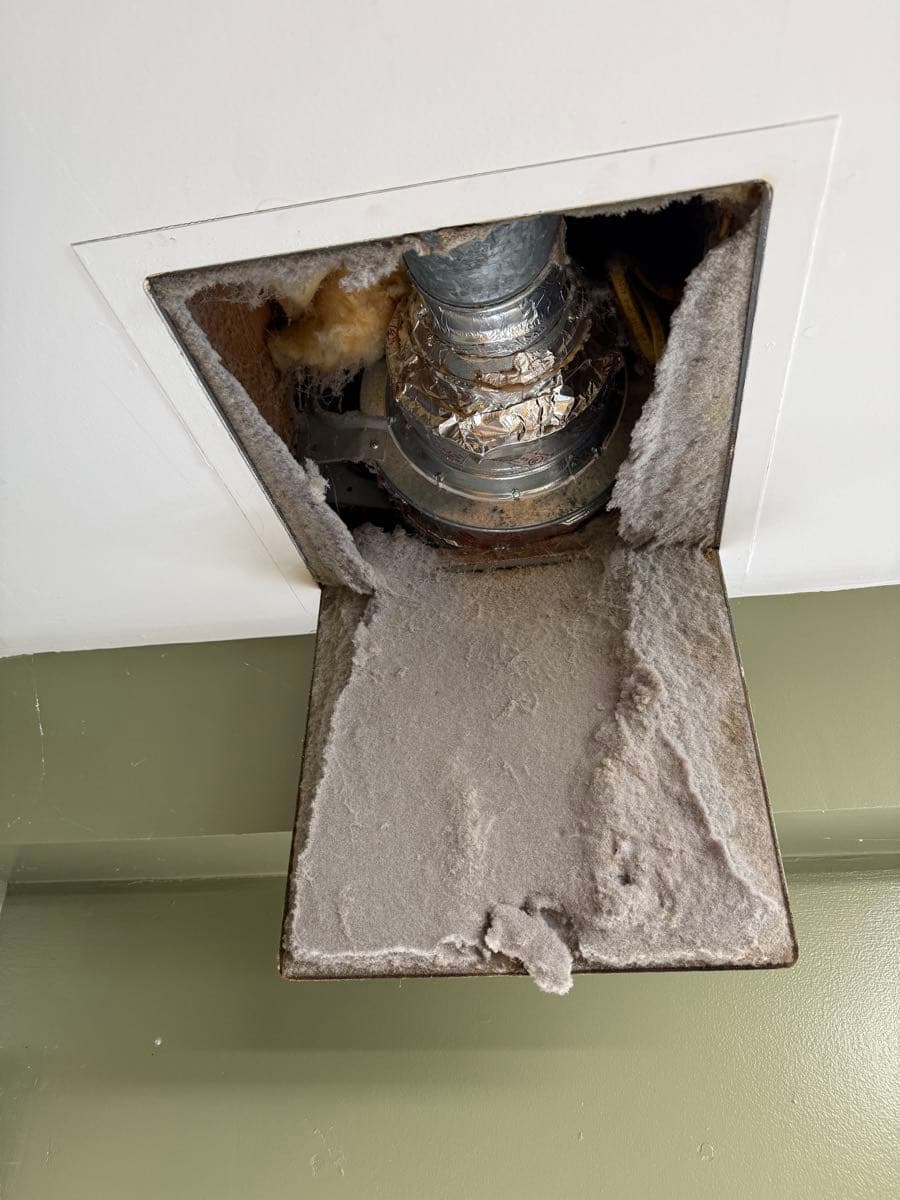
A third hazard was discovered in the garage: an inline booster fan that had been installed in the duct run but was fully disconnected from its electrical supply. A non-functioning booster fan acts as a complete physical obstruction inside the duct, blocking the exhaust path entirely. Even if it had been wired and running, IRC M1502.4.5 explicitly prohibits domestic booster fans in dryer exhaust systems. Only UL 705-listed dryer exhaust duct power ventilators may be used per IRC M1502.4.4. In addition, this installation involved a gas dryer, which elevates the carbon monoxide risk whenever the exhaust path is obstructed or venting into the structure.
What We Did and the Outcome
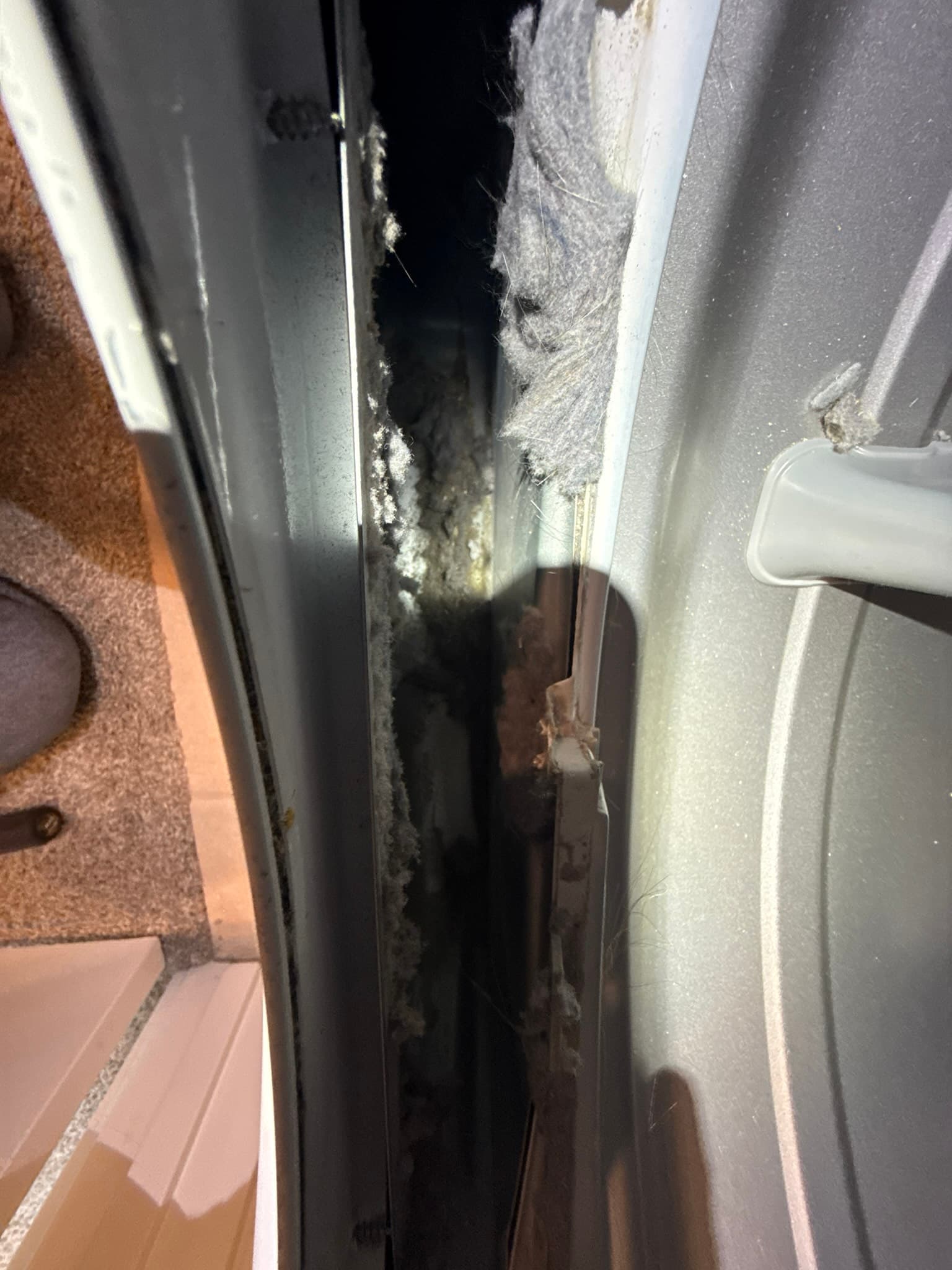
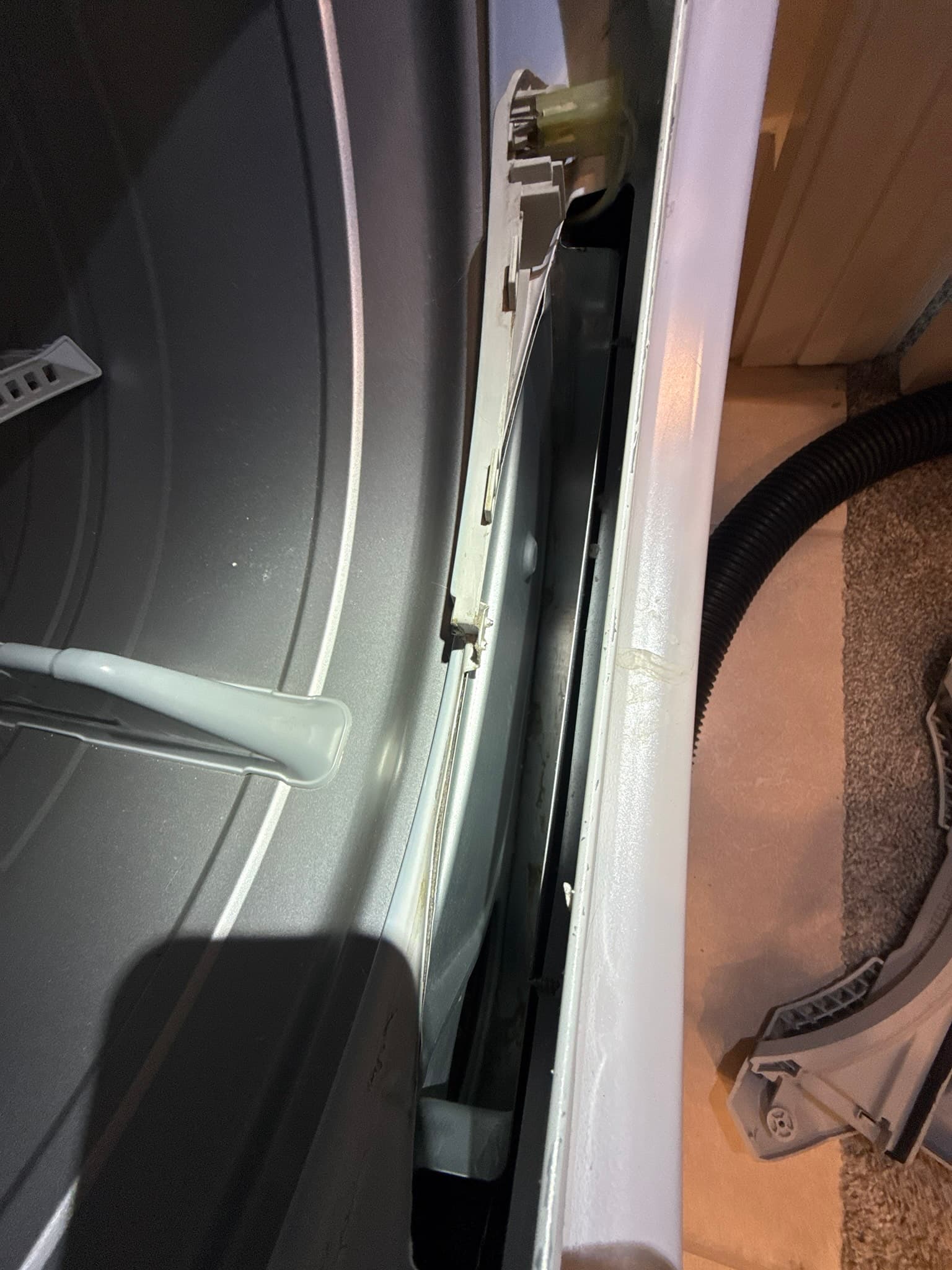
Our team performed a full cleaning of the main exhaust duct and the appliance interior, removing the heavy lint deposits that had built up throughout the system. The non-compliant transition duct was removed and replaced with a properly sized, code-compliant semi-rigid metal section routed directly and secured with approved clamps. The disconnected booster fan was removed from the duct path, eliminating the blockage and the code violation simultaneously. The exterior termination cap was cleaned of all compacted lint, the damper flap was freed and confirmed to open and close freely, and the surrounding cap was inspected for proper seating. With the duct path cleared, the transition duct correctly installed, and the exterior termination functioning as designed, the system was restored to safe, code-compliant operation for this Pacifica household.
Project photos
9 photos
Need similar work in Pacifica?
Get a free quote - same-week appointments usually available.