
San Francisco · Residential Dryer Exhaust Cleaning Inspection
San Francisco Residential Dryer Vent Cleaning and Inspection
Dryer Vent Specialists completed a full cleaning and inspection of two residential dryer exhaust systems at a San Francisco home, addressing lint accumulation, non-standard termination locations, and flexible duct concerns to restore safe, code-compliant airflow.
Completed June 19, 2026
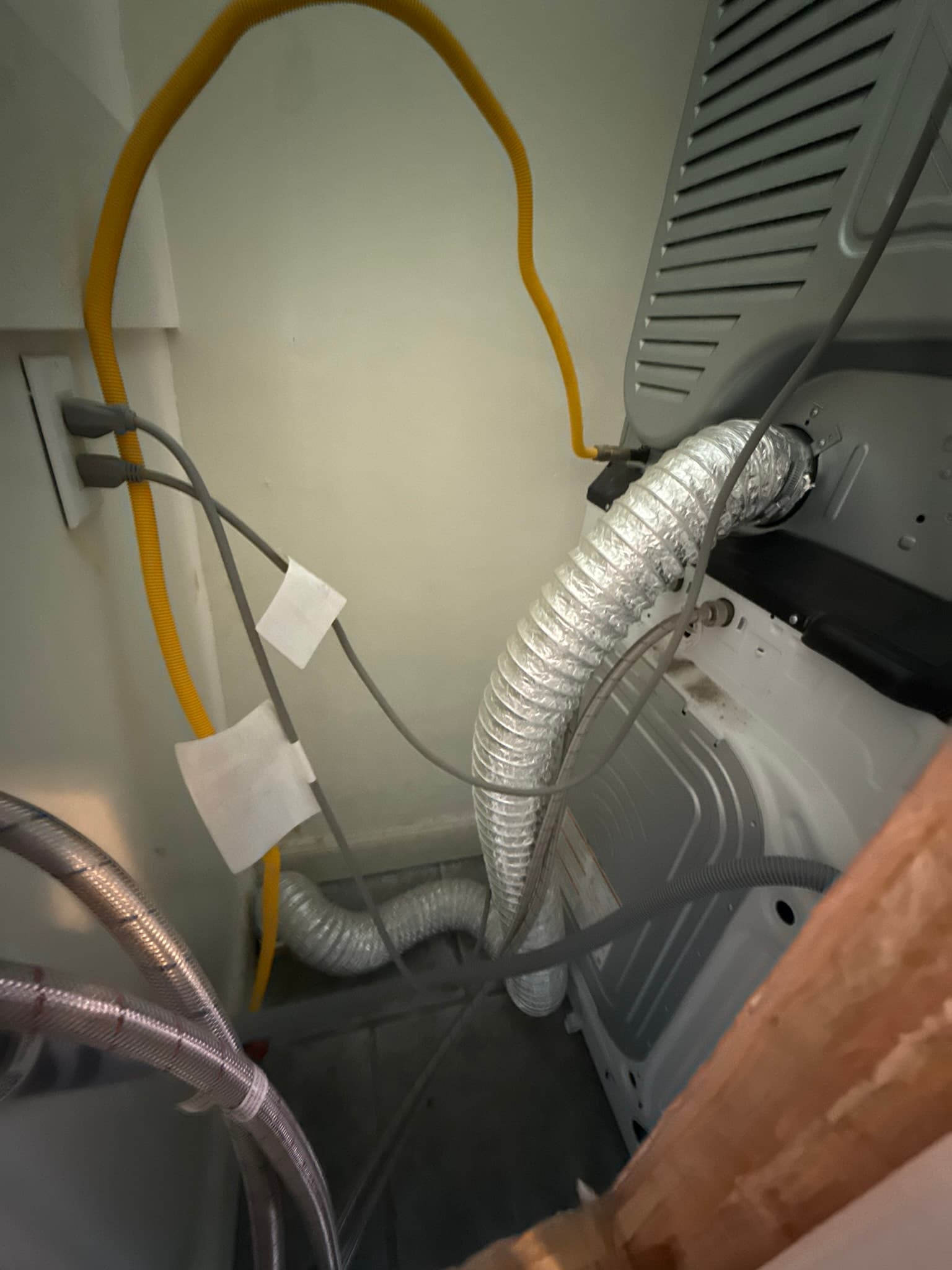
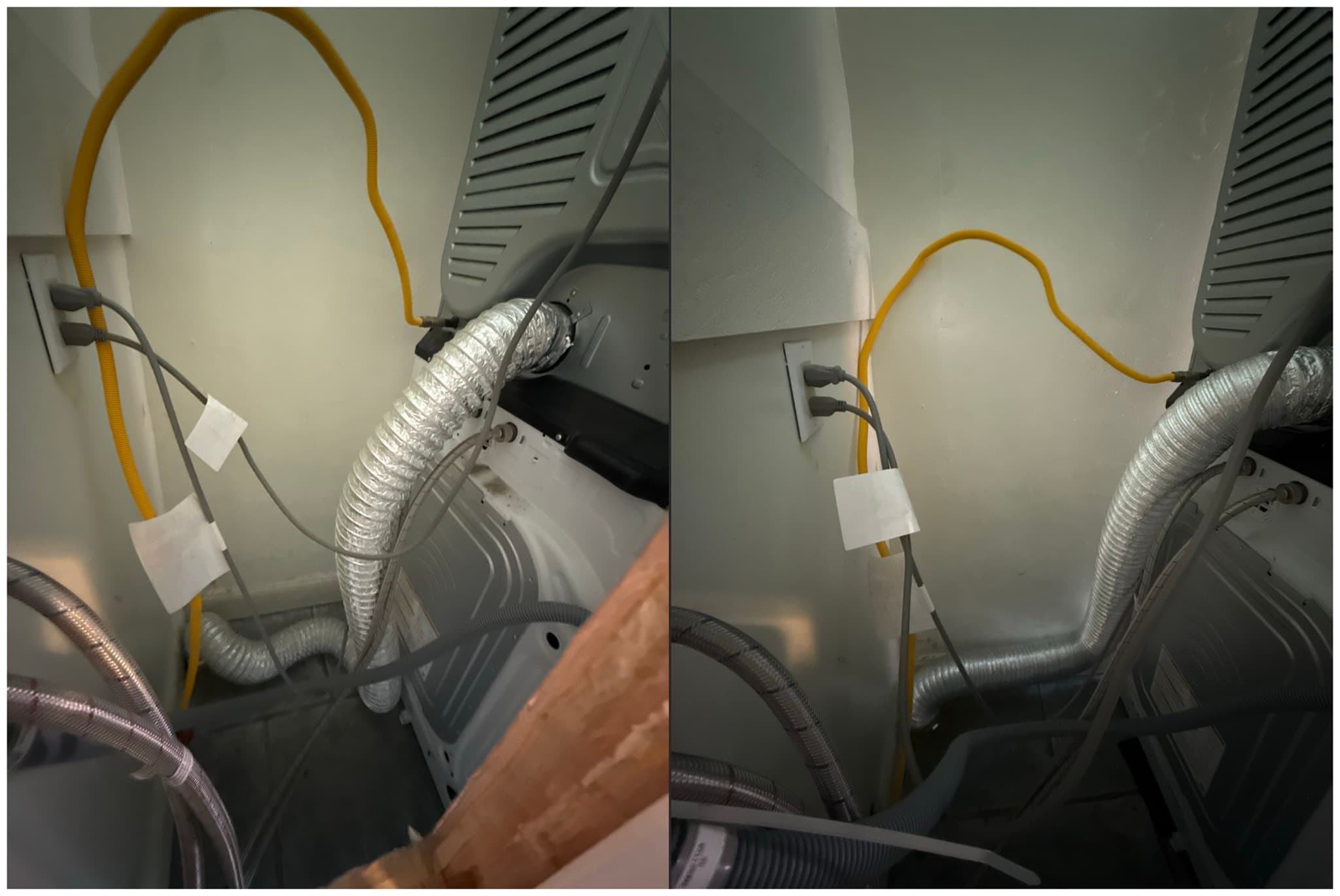
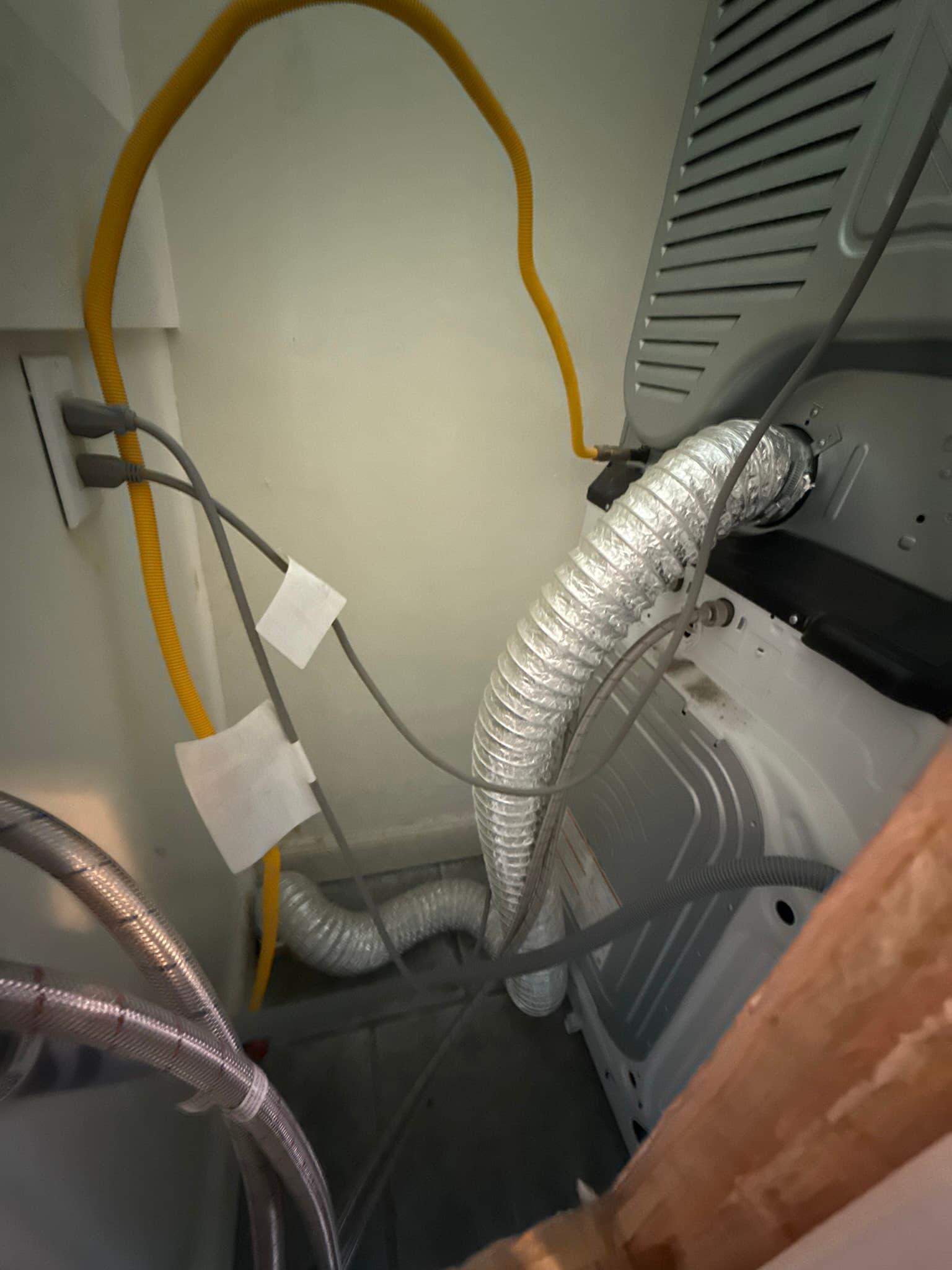
Kinked flexible transition duct with multiple bends behind the dryer, a common cause of reduced airflow and lint trapping
Two-Dryer Exhaust Service in San Francisco
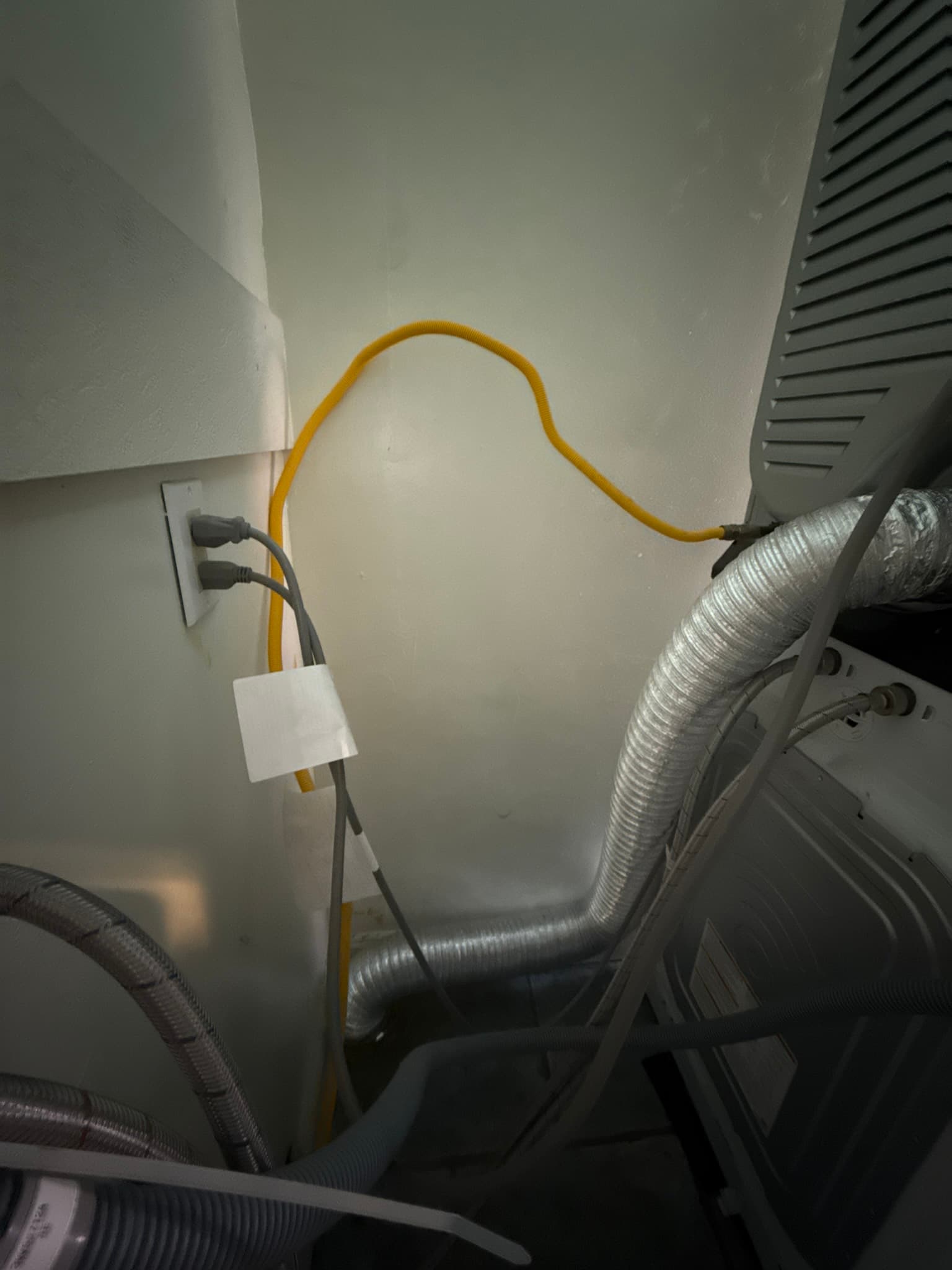
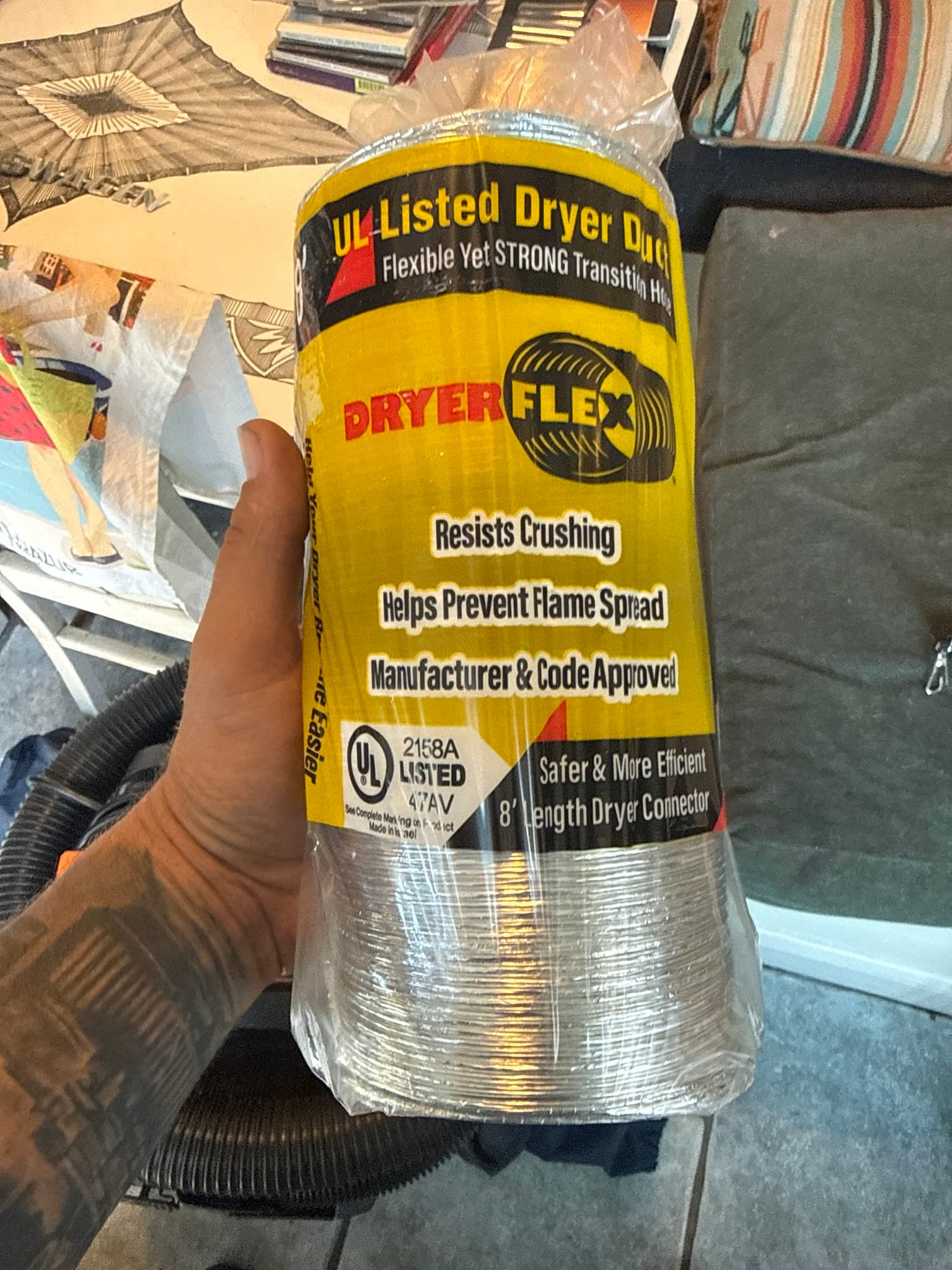
Our technician visited a residential property in San Francisco to clean and inspect two dryer exhaust systems. Both units were located in a confined laundry area where multiple duct runs converged near the ceiling, creating a complex installation that required careful evaluation before cleaning. The transition duct on one dryer was confirmed to be a UL-listed 2158A fire-rated flexible connector, which meets IRC M1502.4.3 requirements for transition duct material. A new 8-foot UL-listed, crush-resistant aluminum transition duct was on hand to support any needed replacement during the visit.
Lint Accumulation and Duct Routing Concerns
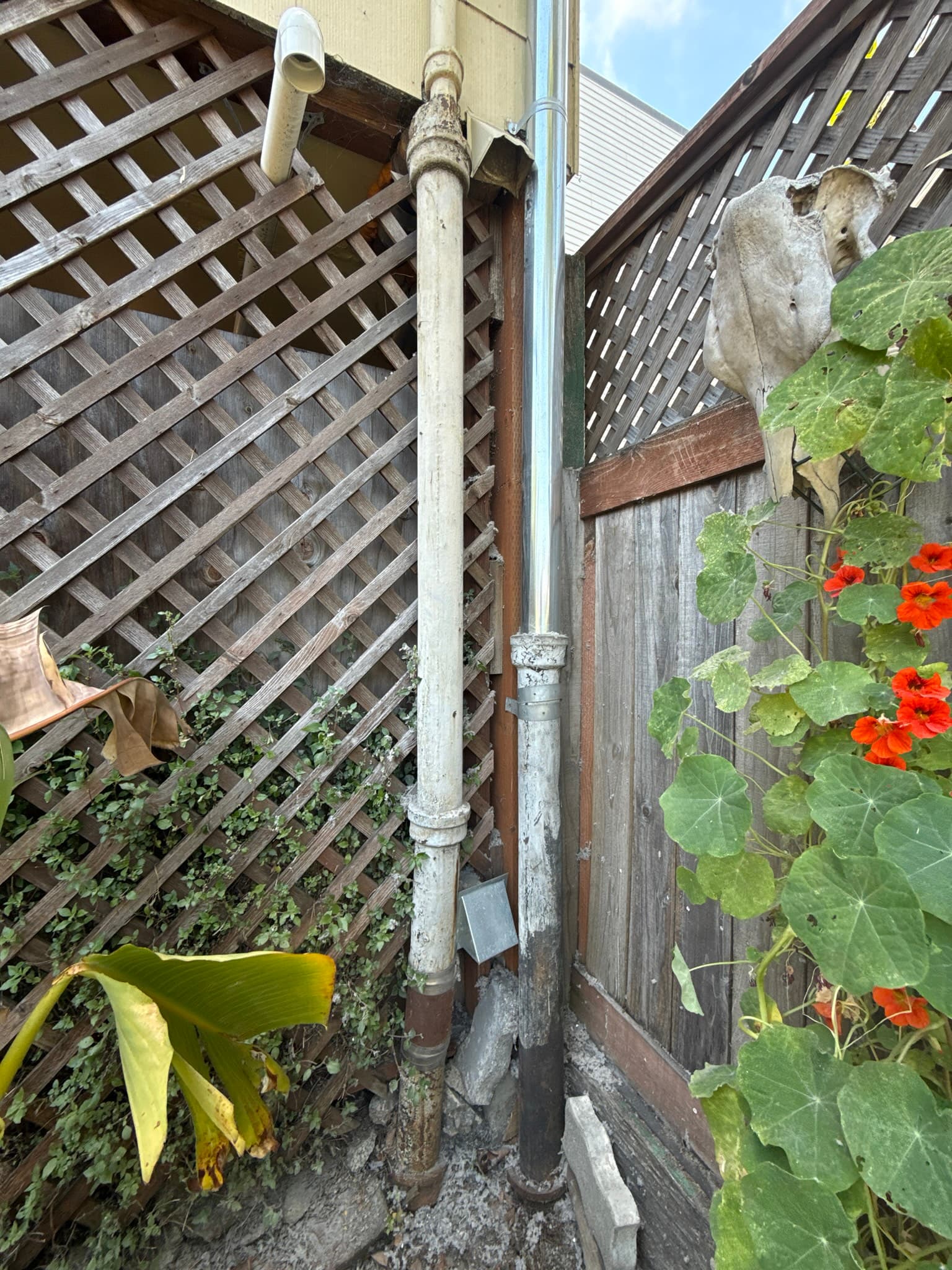
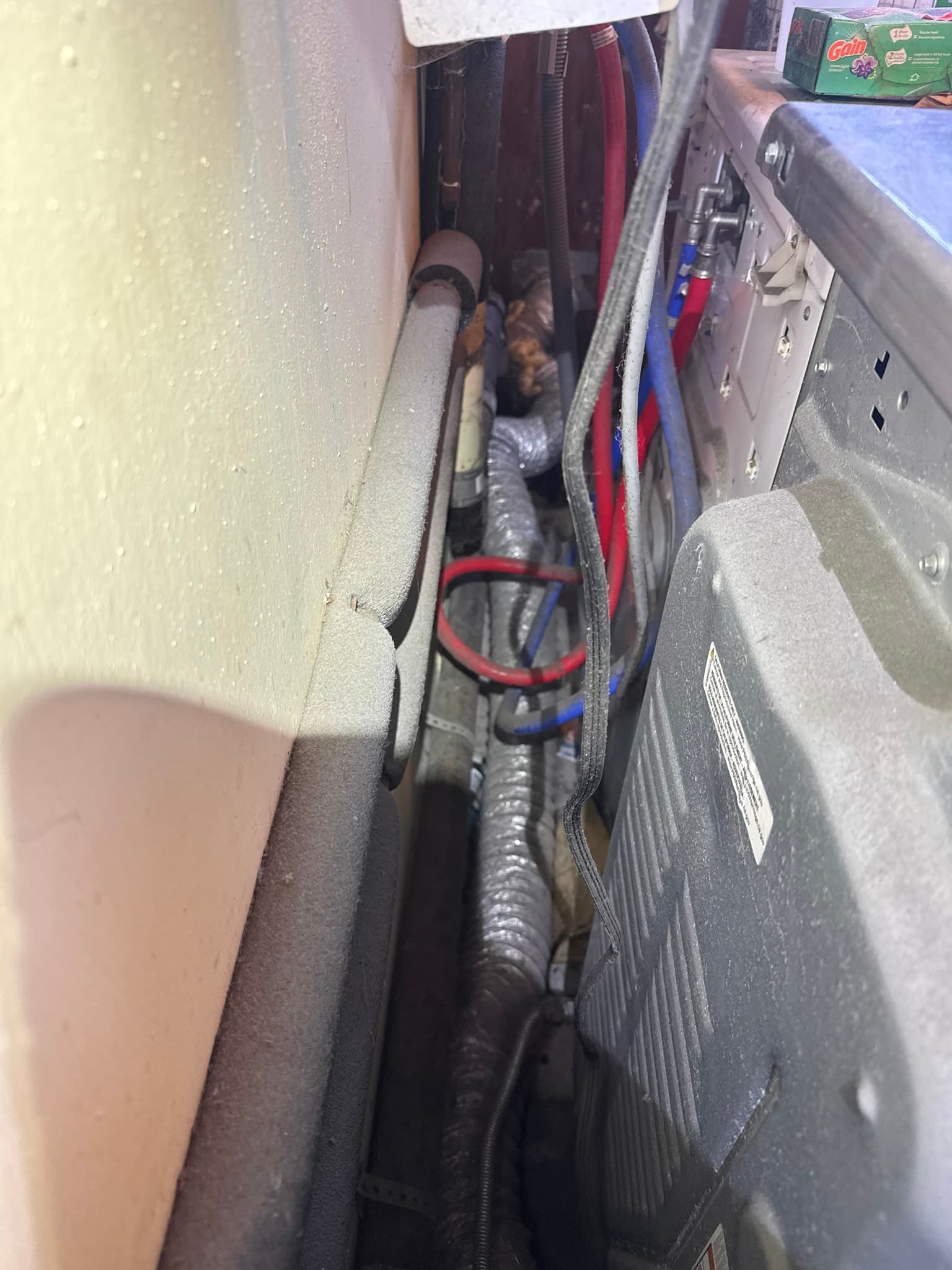
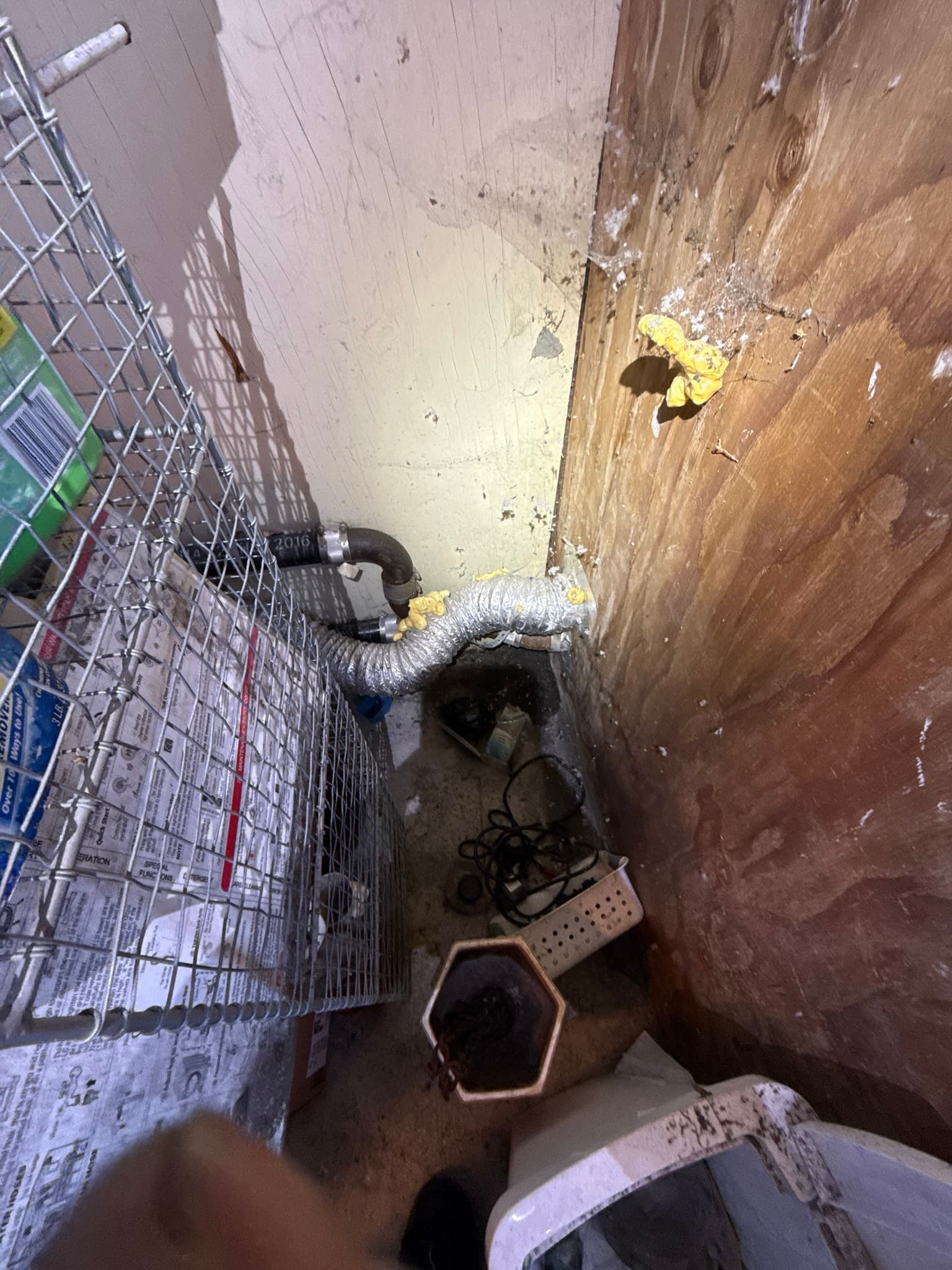
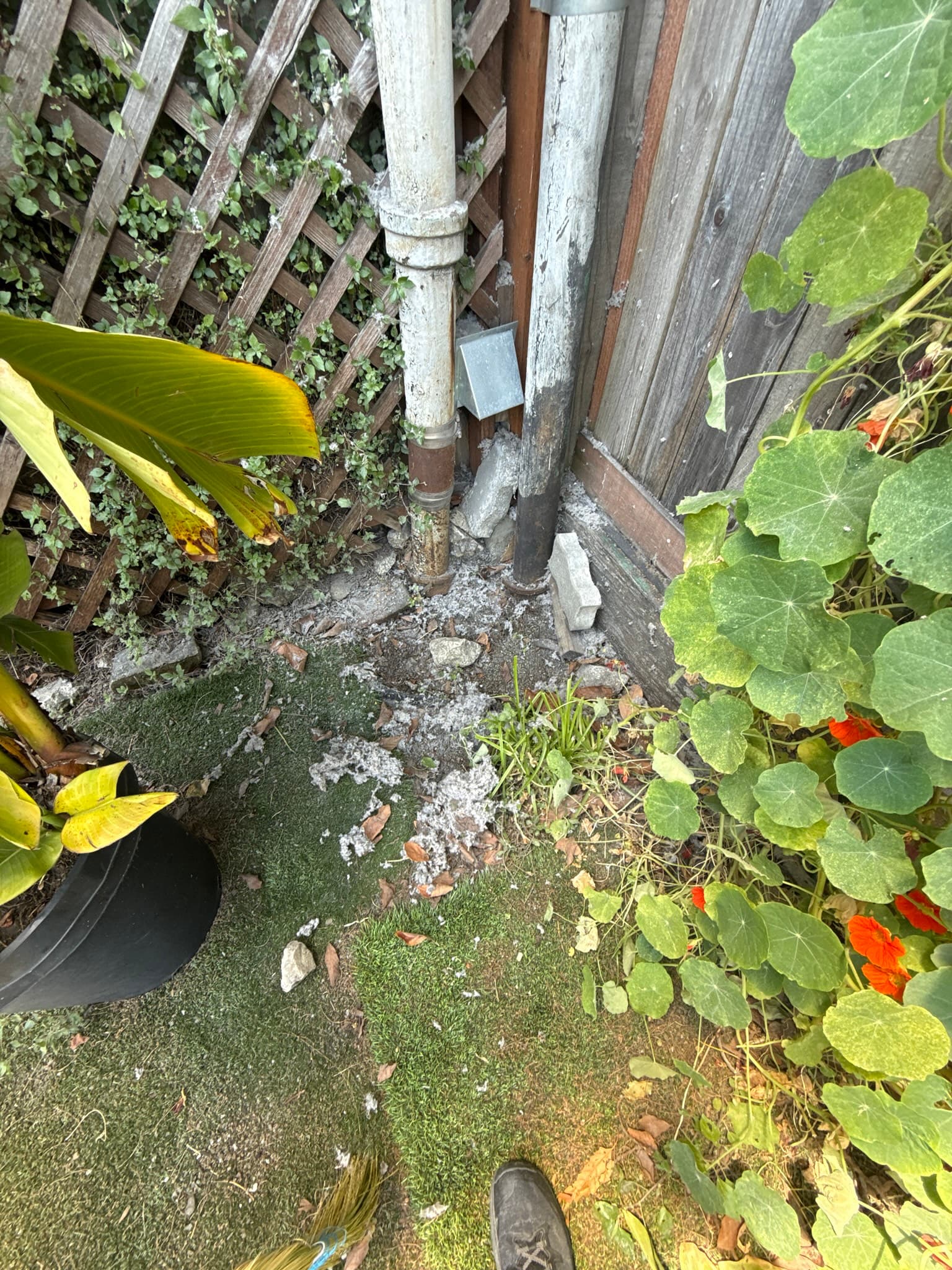
Both systems showed evidence of lint buildup, with heavy accumulation visible on the exterior surfaces of the flexible duct sections and surrounding surfaces in the laundry space. Exterior vent caps mounted through a wooden fence showed soiling from accumulated lint and debris, indicating restricted airflow at the termination points. Severe lint buildup of this kind is the leading cause of residential dryer fires, with the U.S. Fire Administration reporting roughly 2,900 home dryer fires annually attributed to lint accumulation. Full rotary brush cleaning was performed on both duct runs to restore airflow. The flexible foil duct sections were noted for future replacement with rigid or semi-rigid metal duct per IRC M1502.4.2, as flexible foil material is more prone to kinking, sagging, and lint trapping over time.
Termination and Installation Observations
Both dryers terminated through openings in a wooden fence on the exterior of the property. While the terminations are structurally secure and do vent to the outside as required by IRC M1502.2 and M1502.3, fence-mounted terminations present ongoing accessibility and maintenance challenges. Dense vegetation and debris around the exterior caps were cleared during the visit. The periscope-style vent caps were inspected for backdraft damper function, as IRC M1502.3 requires that termination caps be equipped with a gravity-operated backdraft damper, with screens explicitly prohibited. The duct routing behind both dryers included multiple bends and flexible sections that can reduce the effective equivalent duct length, a factor governed by IRC M1502.4.6.1, which limits the total equivalent run to 35 feet with each 90-degree elbow deducting 5 feet from that maximum.
Outcome and Recommendations
Following cleaning, both dryer exhaust systems were left clear of significant lint accumulation and the exterior termination areas were cleared of debris. The technician noted that the flexible foil transition duct sections should be upgraded to UL-listed semi-rigid or rigid metal duct at the next service opportunity to improve long-term reliability and reduce fire risk. Fence-mounted terminations should be monitored regularly for vegetation overgrowth and debris buildup given their non-standard placement. Annual cleaning is recommended for both systems given the routing complexity and the volume of use a two-dryer household generates.
Project photos
9 photos
Need similar work in San Francisco?
Get a free quote - same-week appointments usually available.