
San Francisco · Residential Dryer Exhaust Cleaning Inspection
San Francisco Dryer Vent Cleaning & Tankless Water Heater Service
A San Francisco home with a severely lint-clogged dryer exhaust and a booster fan buried behind the dryer got a full inspection, cleaning, and transition duct replacement, plus annual descaling for the tankless water heater.
Completed September 25, 2026
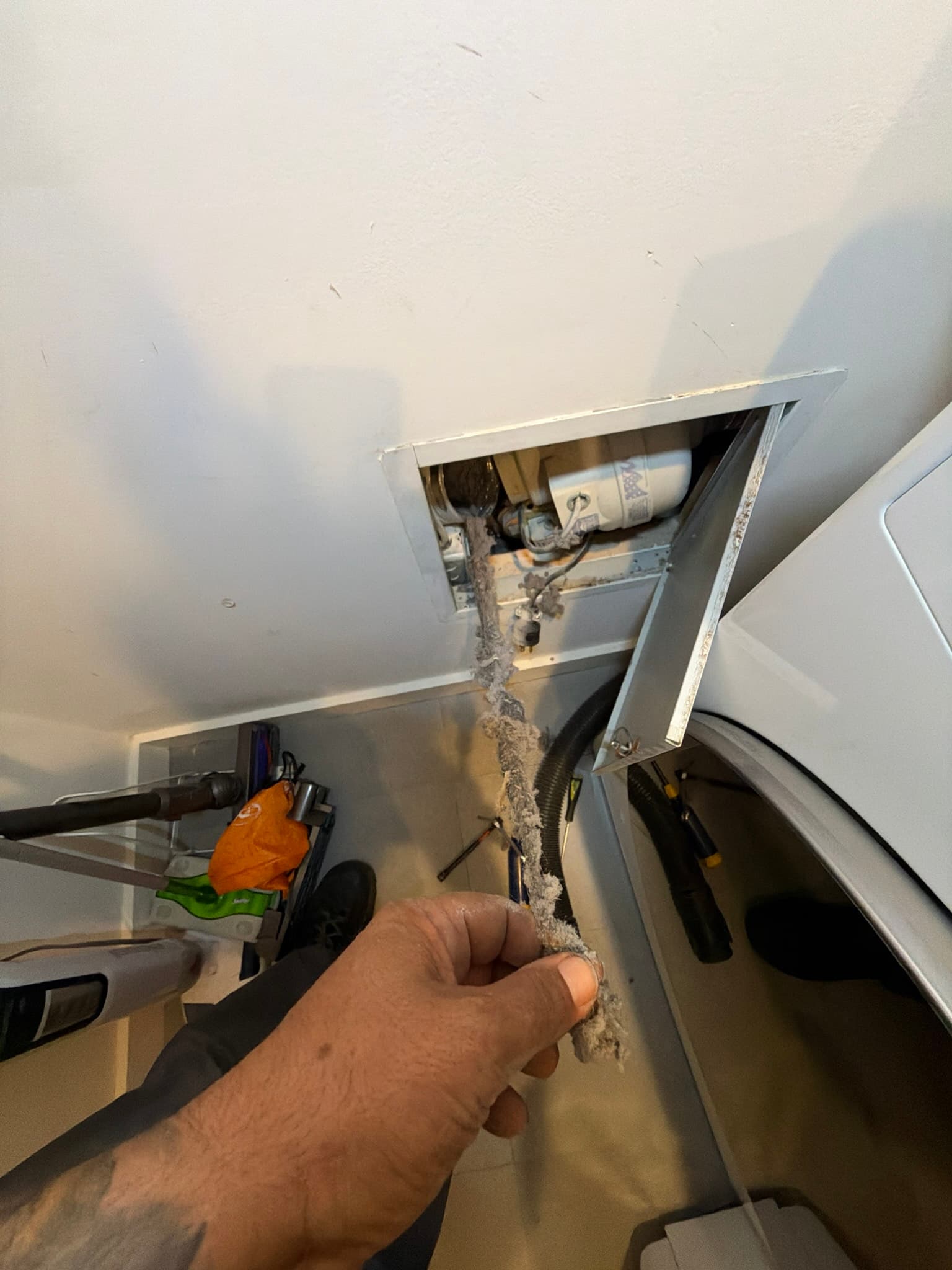
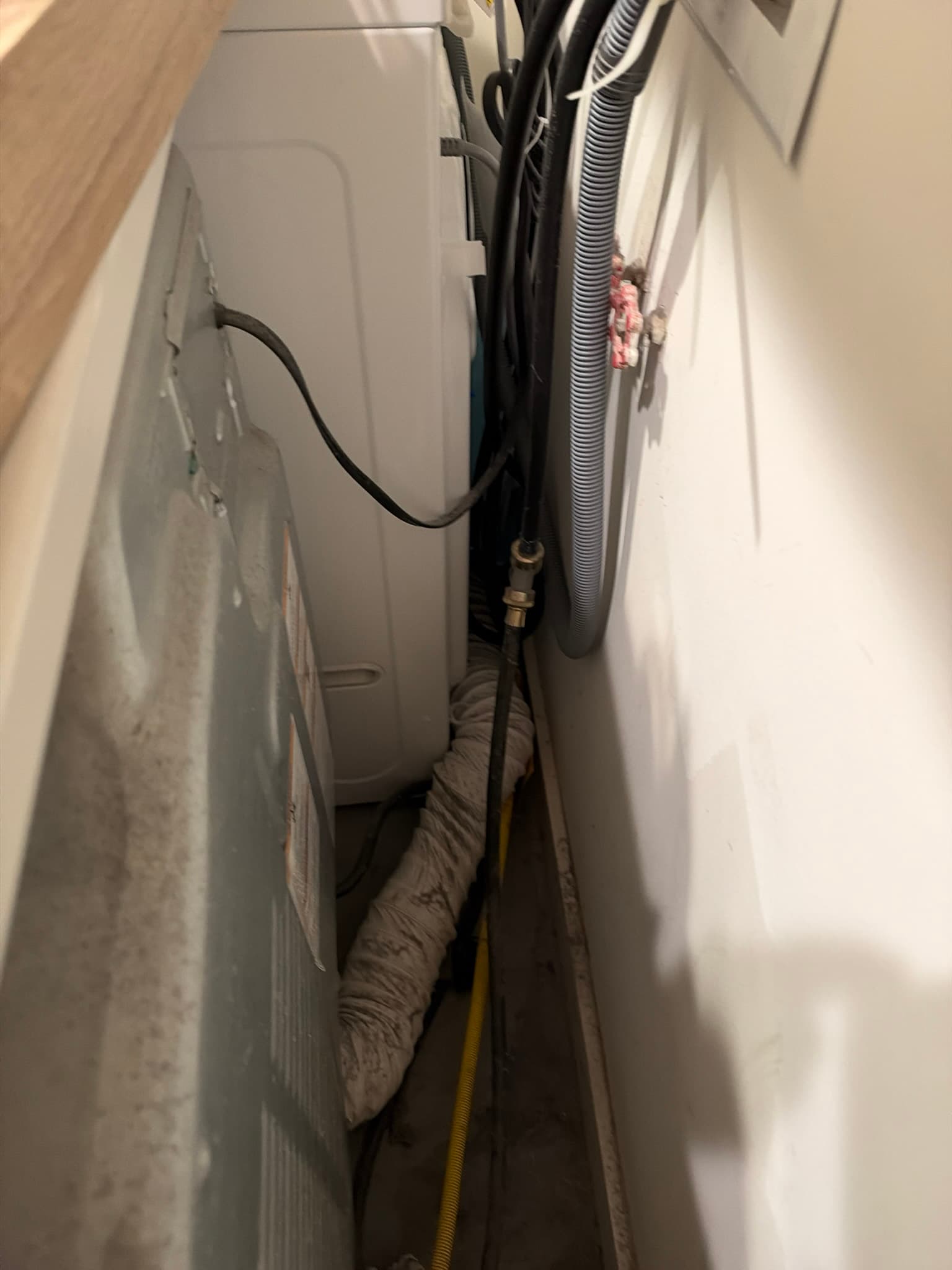
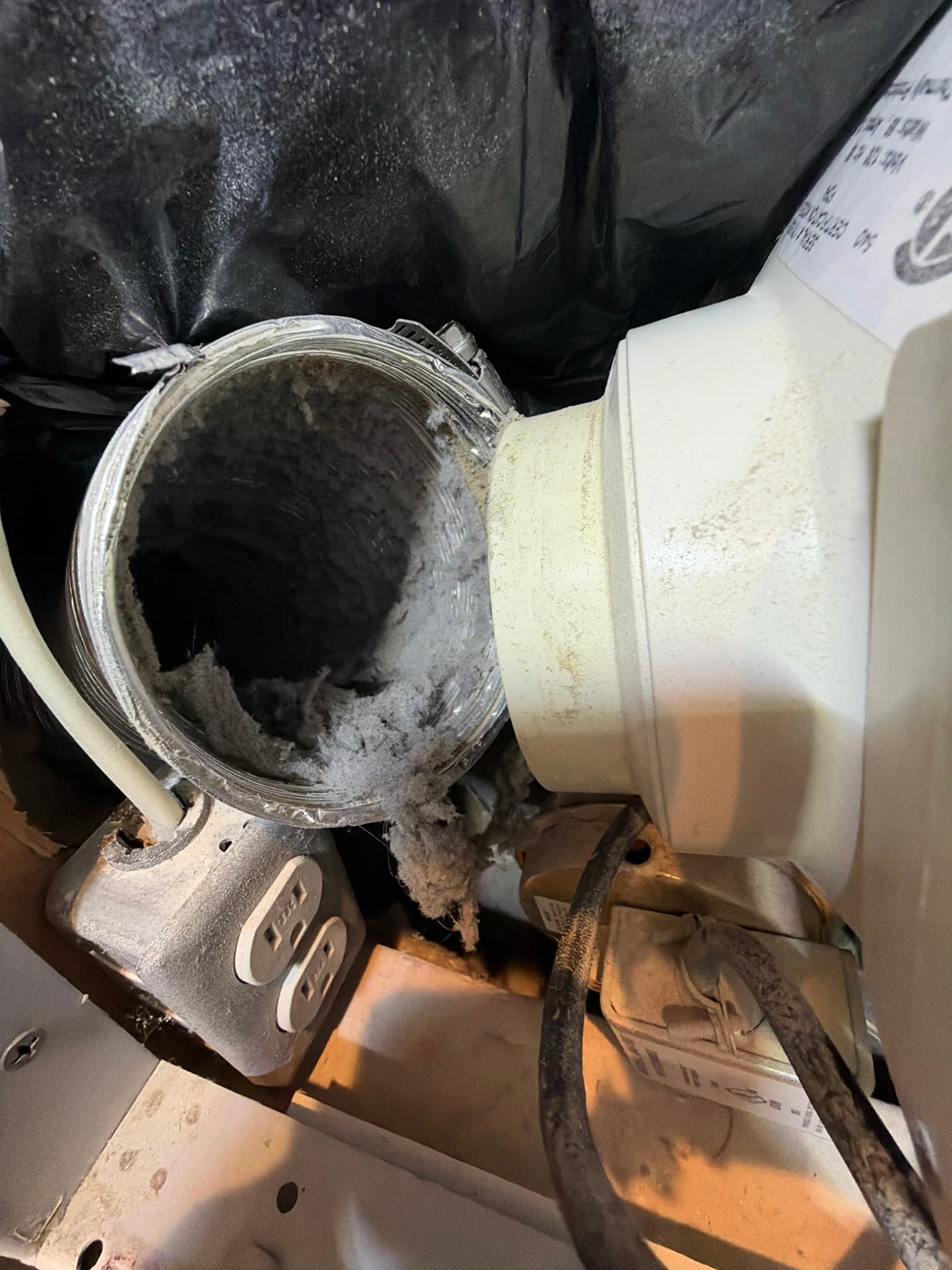
Before: heavy lint buildup found around the booster fan access point
What We Found
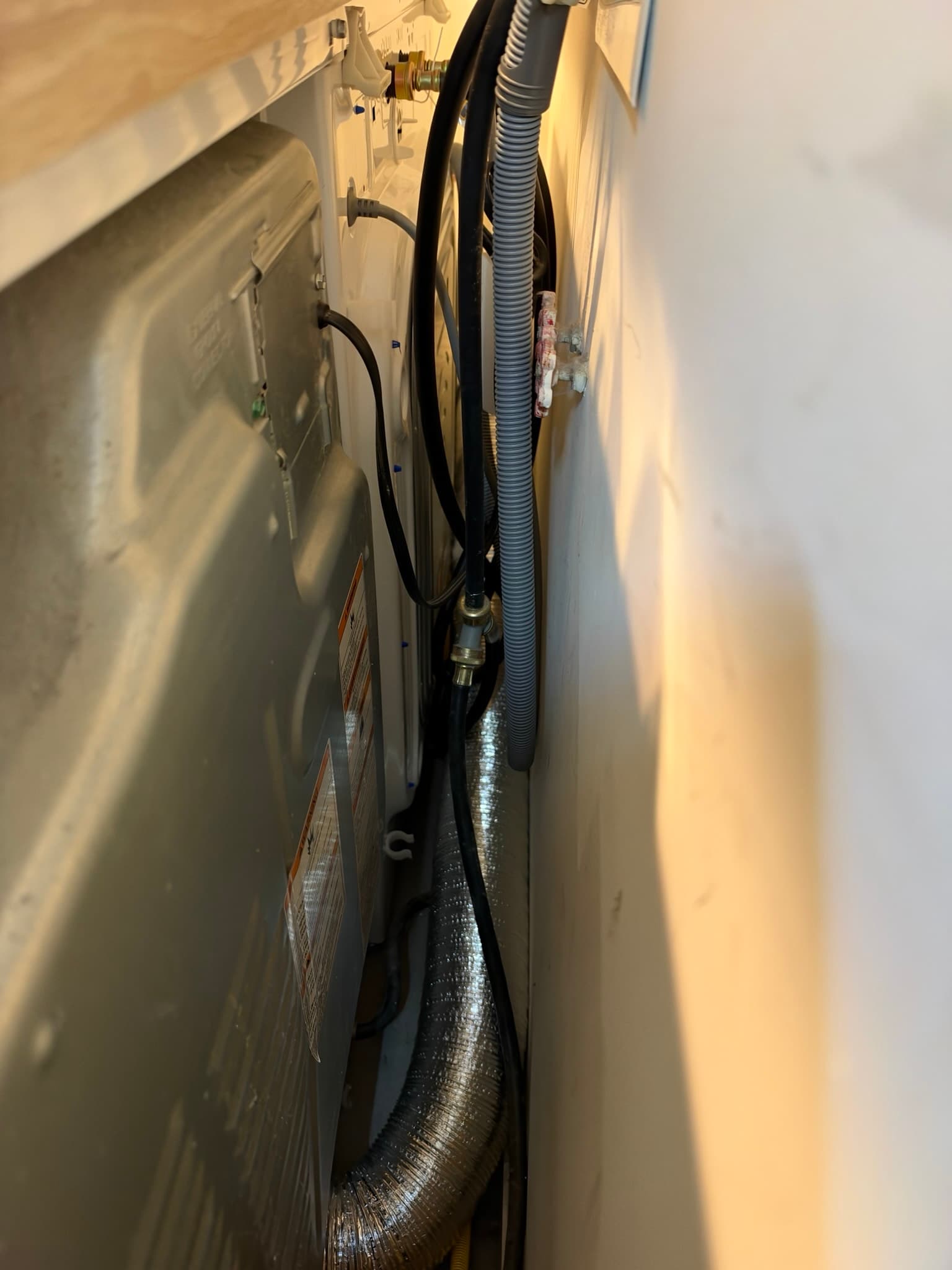
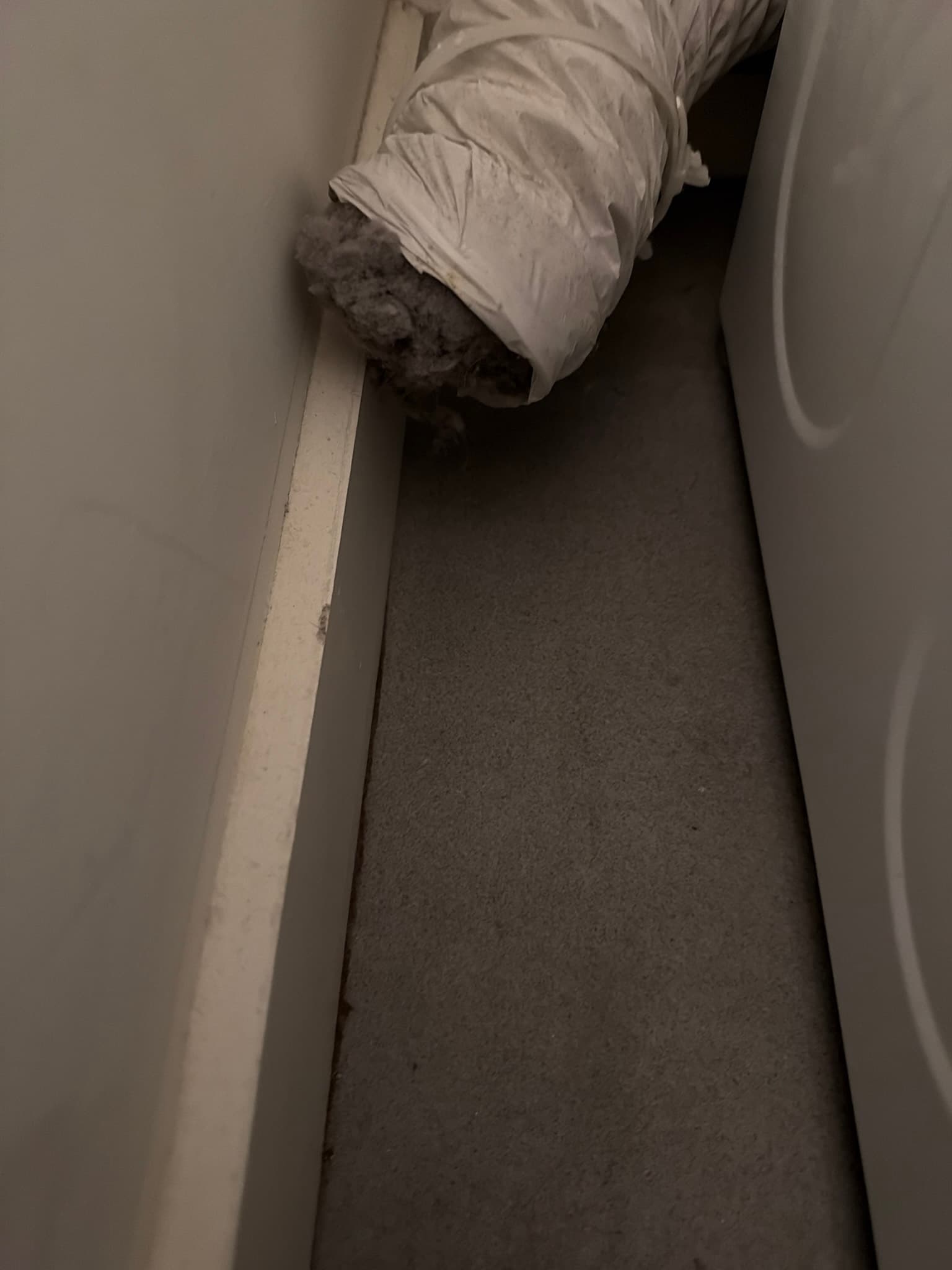
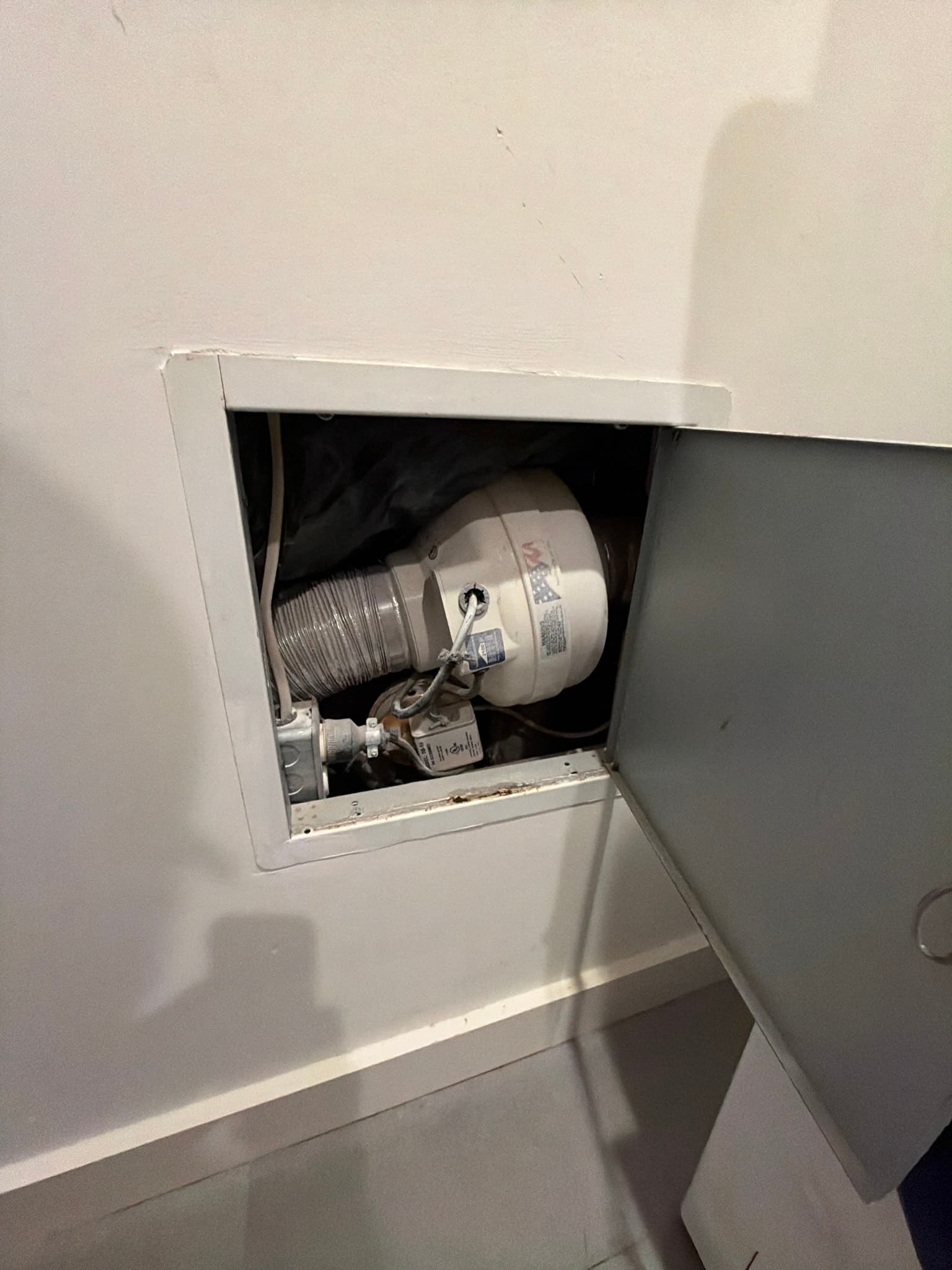
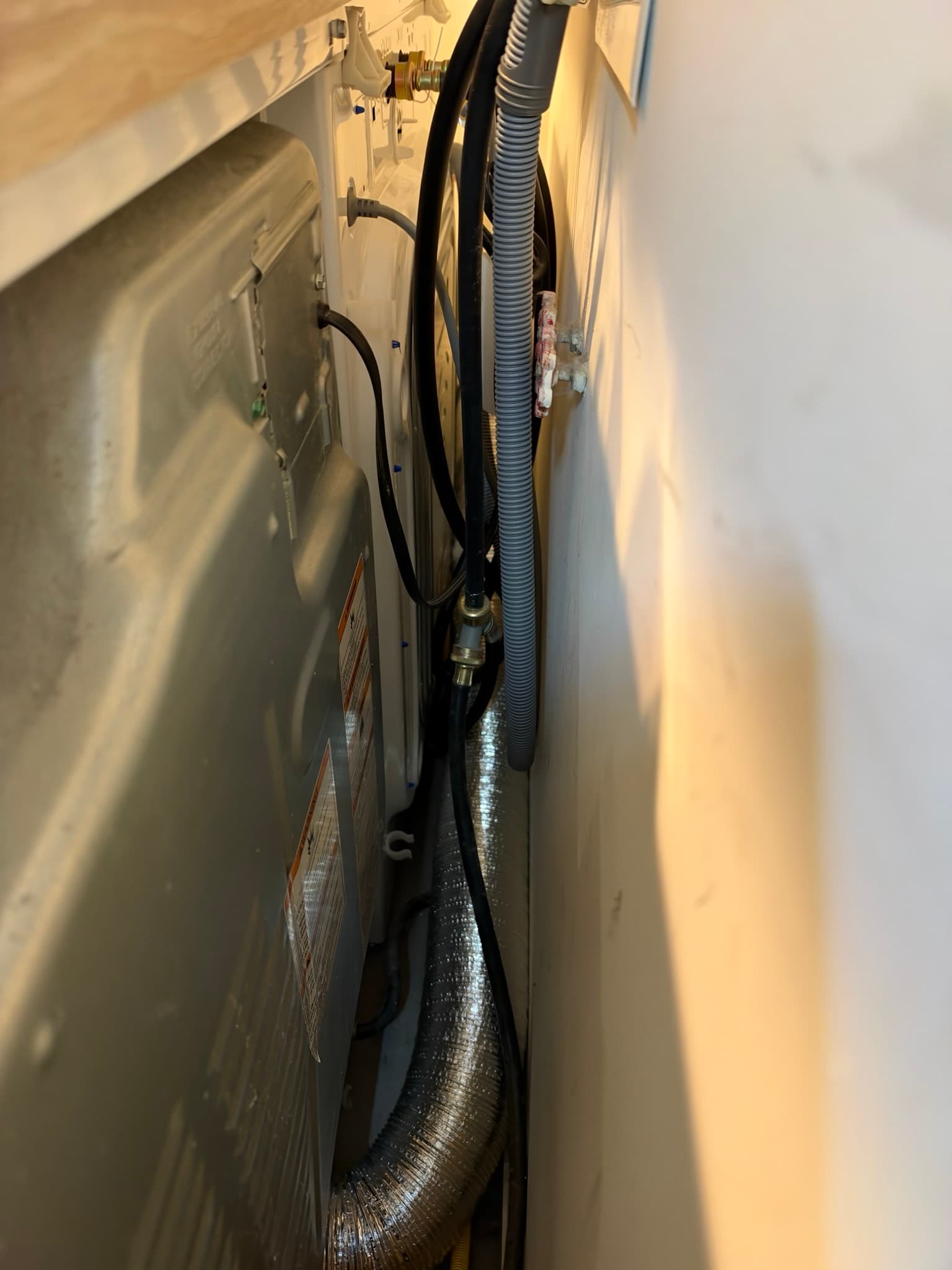
This San Francisco homeowner called us in because the flexible duct behind the dryer felt suspect, and once we opened the access panel behind the machine, it was clear the concern was well founded. The exhaust run totals roughly 25 feet of hard pipe, and nearly every foot of it was heavily saturated with lint. A section of semi-rigid metal duct, about 6 feet long, was routed through the wall to an inline booster fan mounted in a tight, low-clearance cavity, and the transition duct connecting the dryer to that wall opening was a Mylar (foil) type material rather than a listed metal transition duct. We also confirmed there is no vent hood at the exterior termination, and the duct run includes a 90-degree elbow oriented downward. Lint was visibly packed inside the transition connector, spilling out near the electrical outlet below it, and clinging to the wiring and framing surrounding the booster fan housing. This combination, heavy lint saturation plus a non-standard transition material plus an unusually cramped access point, is exactly the profile that leads to the roughly 2,900 home dryer fires the U.S. Fire Administration attributes to failure to clean dryer vents each year.
What We Did
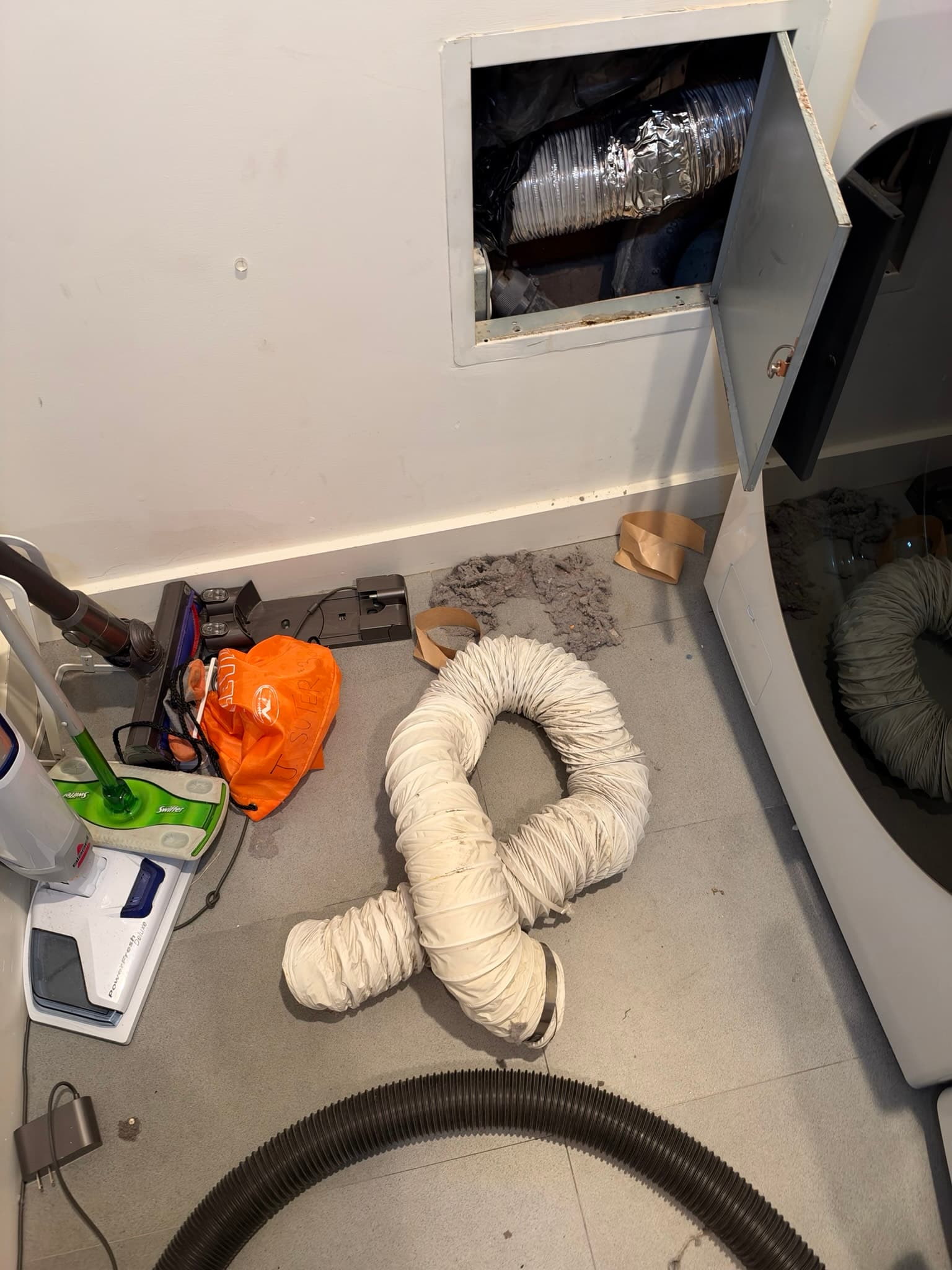
We performed a full residential dryer exhaust cleaning and inspection, working the entire run from the dryer connection to the exterior termination point. Using a drill-attachment rotary brush combined with a high-powered shop vacuum, we broke up and extracted the compacted lint mat lining the semi-rigid duct and the hard pipe downstream of it, pulling out a substantial pile of lint, fibrous debris, and even cardboard and paper remnants that had accumulated in the line. Because access to the booster fan was so limited working from behind the dryer, we removed the fan from the run and joined the two sections of semi-rigid ductwork in the wall directly, restoring a continuous path for airflow through that section. The old Mylar/foil transition duct was removed in its entirety and replaced with 8 feet of DryerFlex transition duct, secured at both ends with two DryerClamps. Unlike foil flex, this transition product is listed and labeled for dryer use, is not concealed within construction, and meets the intent of IRC M1502.4.3 requiring a single-length, code-compliant connector no longer than 8 feet between the dryer and the exhaust duct.
Airflow Verification and What's Left to Address
After cleaning and reconnecting the duct, we ran an airflow test at the dryer connection and measured 1,923 feet per minute, a sufficient rate that confirms the system is now moving air properly rather than fighting the resistance of a partially blocked, undersized foil connector. That said, two items from our inspection are worth flagging for future work at this property: the semi-rigid ductwork currently routed through the wall to reach the former booster fan location should eventually be removed and replaced with rigid hard pipe for a smoother, more lint-resistant interior surface, and the missing exterior vent hood should be addressed so the termination has a proper backdraft damper, since screens are prohibited at the terminus under IRC M1502.3 and an open, unprotected opening invites pests and weather intrusion. Neither of these was part of today's billed cleaning and inspection scope, but both are worth planning for on a future visit.
Tankless Water Heater De-Scaling
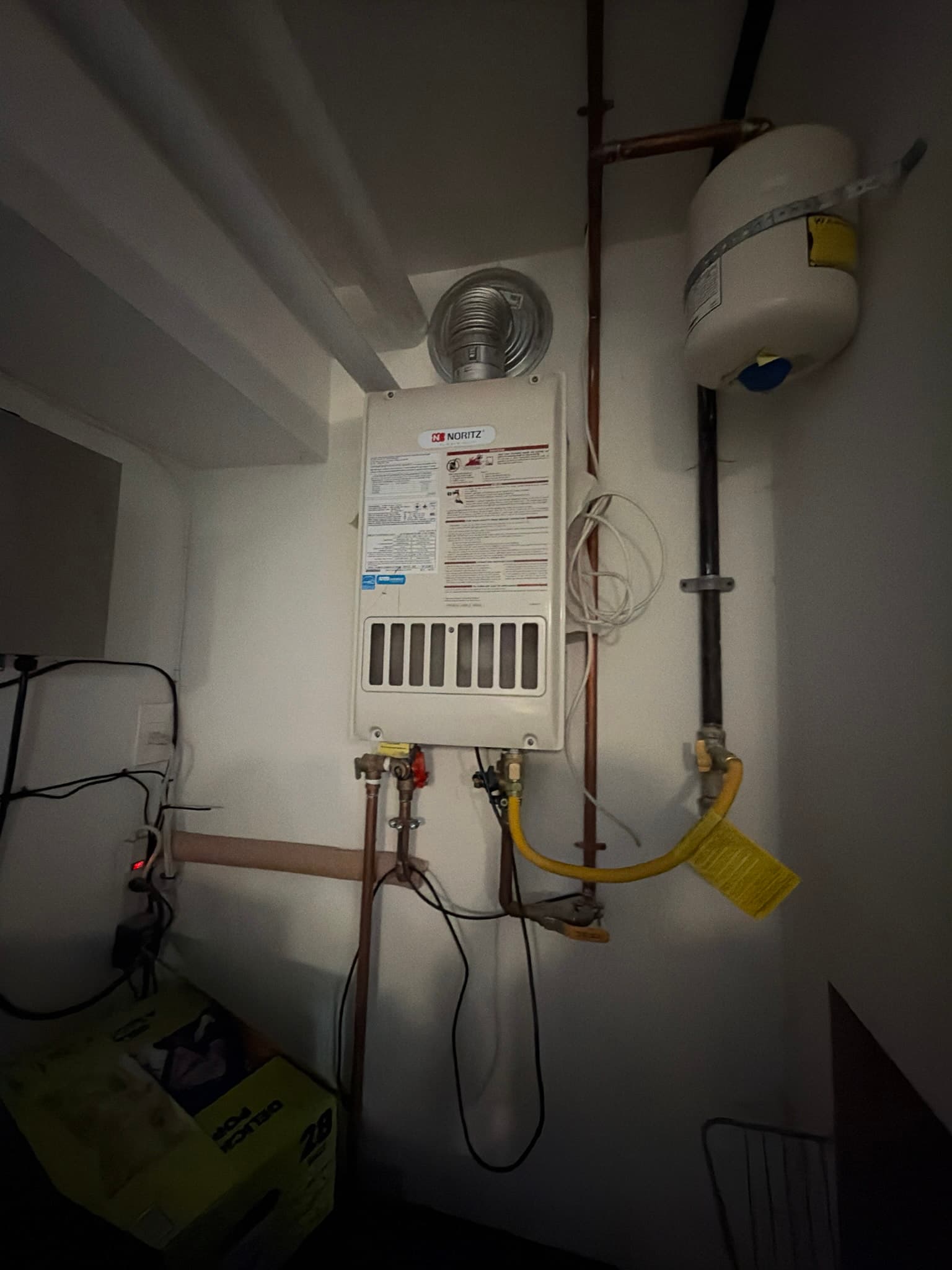
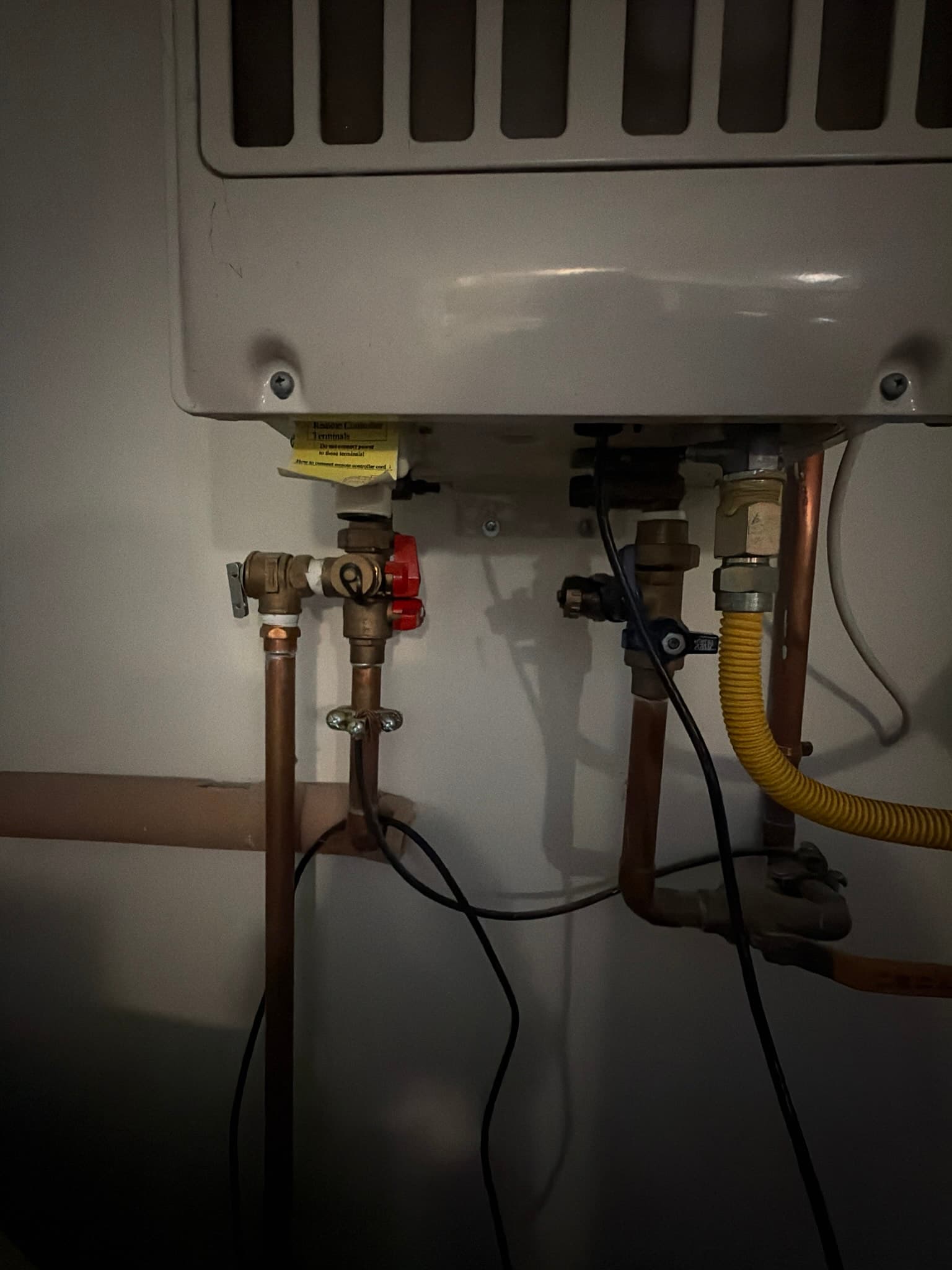
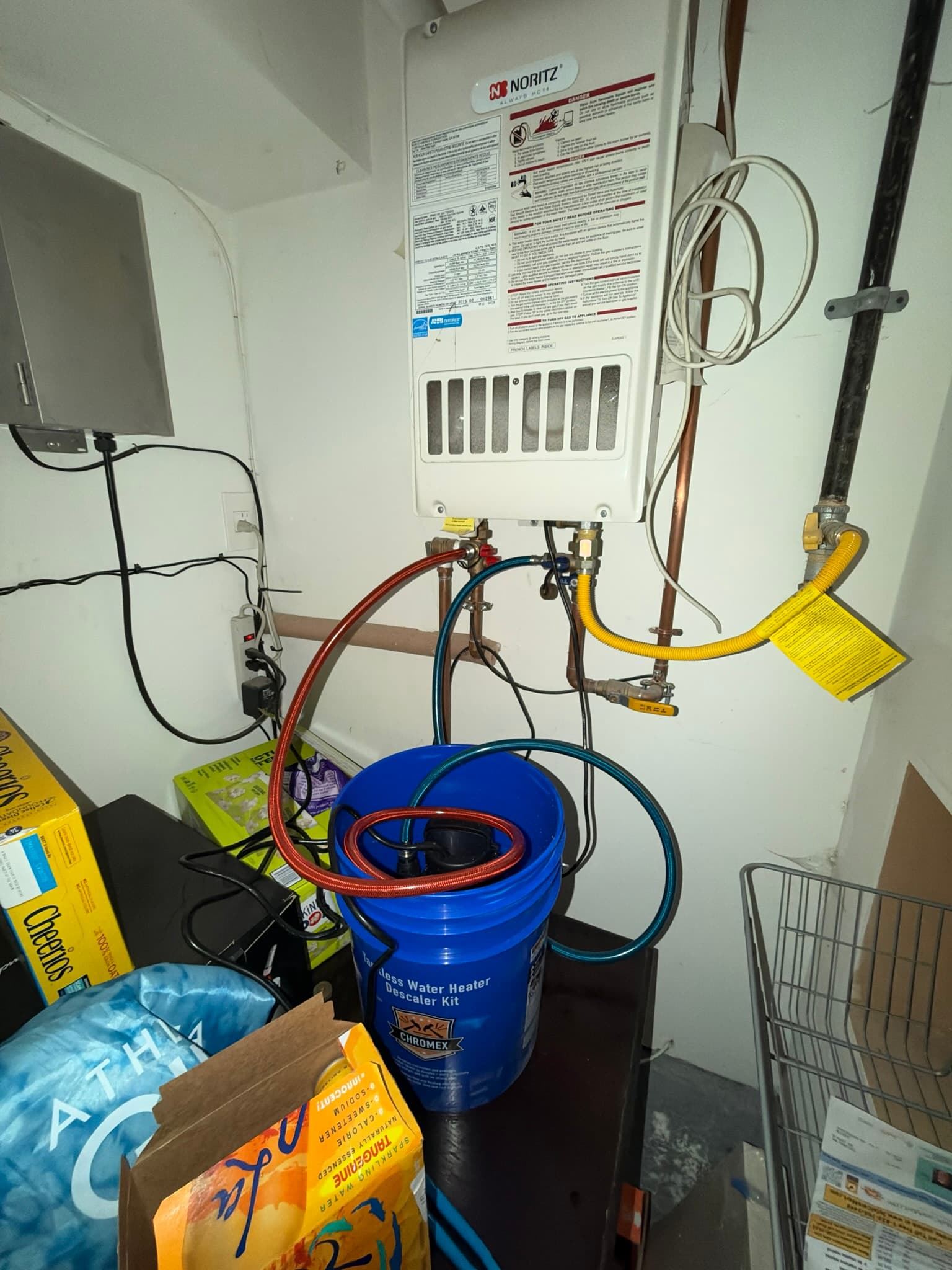
While on site, we also performed the annual de-scaling service on the home's tankless water heater. Using the Chromex NSF Certified Tankless Water Heater Descaling Solution, we isolated the unit at its service valves, circulated the solution through the heat exchanger with a pump and hose kit for a full treatment cycle to dissolve accumulated mineral scale, and cleaned the inlet and outlet filter screens. This kind of scale buildup is a normal byproduct of heating water above roughly 140 degrees Fahrenheit and, left unaddressed, insulates the heat exchanger walls, forces the unit to work harder, and can eventually trigger flow-sensor faults or efficiency loss. After descaling, we reran a test cycle and confirmed the unit is operating properly, with gas, water, and venting connections all intact and undisturbed.
The Outcome
This visit addressed every concern the homeowner raised: the full exhaust path was cleaned from the dryer to the exterior, the duct was inspected end to end for leaks and disconnections, and the suspect transition duct was replaced with a properly listed 8-foot DryerFlex assembly and clamps rather than left in its original foil condition. Airflow at the dryer connection now tests at a healthy 1,923 feet per minute, well above the threshold where lint settling and overheating become a concern. Alongside the dryer vent work, the tankless water heater received its annual descaling service, protecting the manufacturer's warranty terms and keeping the unit running efficiently. The homeowner has a clear picture of the two remaining upgrade items (hard pipe in place of the wall's semi-rigid section, and a proper exterior vent hood) for a future service visit.
Project photos
11 photos
Need similar work in San Francisco?
Get a free quote - same-week appointments usually available.