
Hillsborough · Residential Fire Code Compliance Install
Hillsborough, CA Dryer Vent Duct Replacement & Wall Cap Upgrade
A Hillsborough home required a full 90-linear-foot dryer duct replacement with fire-rated DryerFlex and two new MagVent wall-mount assemblies to bring an oversized, non-compliant exhaust system up to current code standards.
Completed August 13, 2026
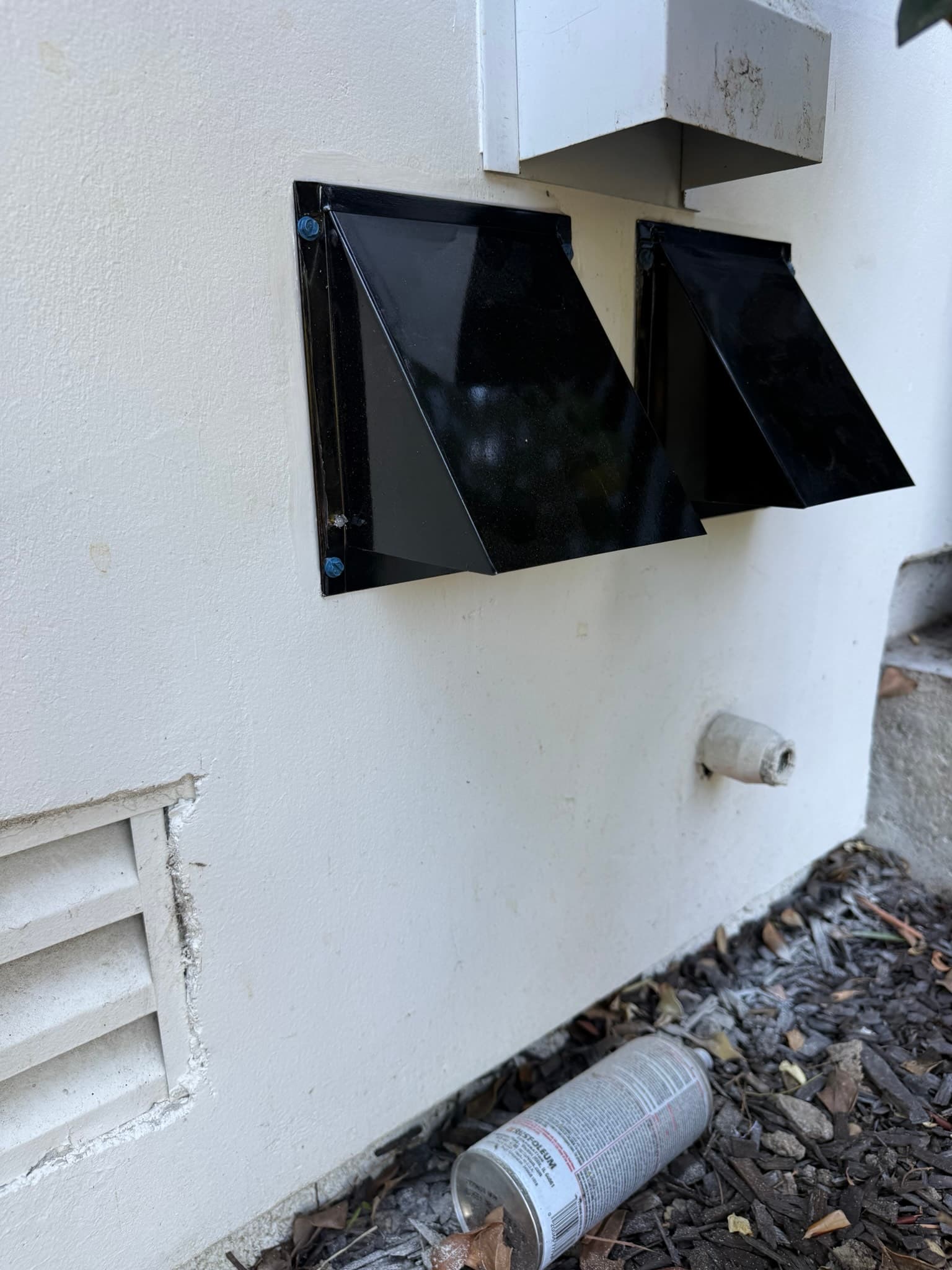
Painted the wall hoods black to match the trim and the windows on the house
What We Found
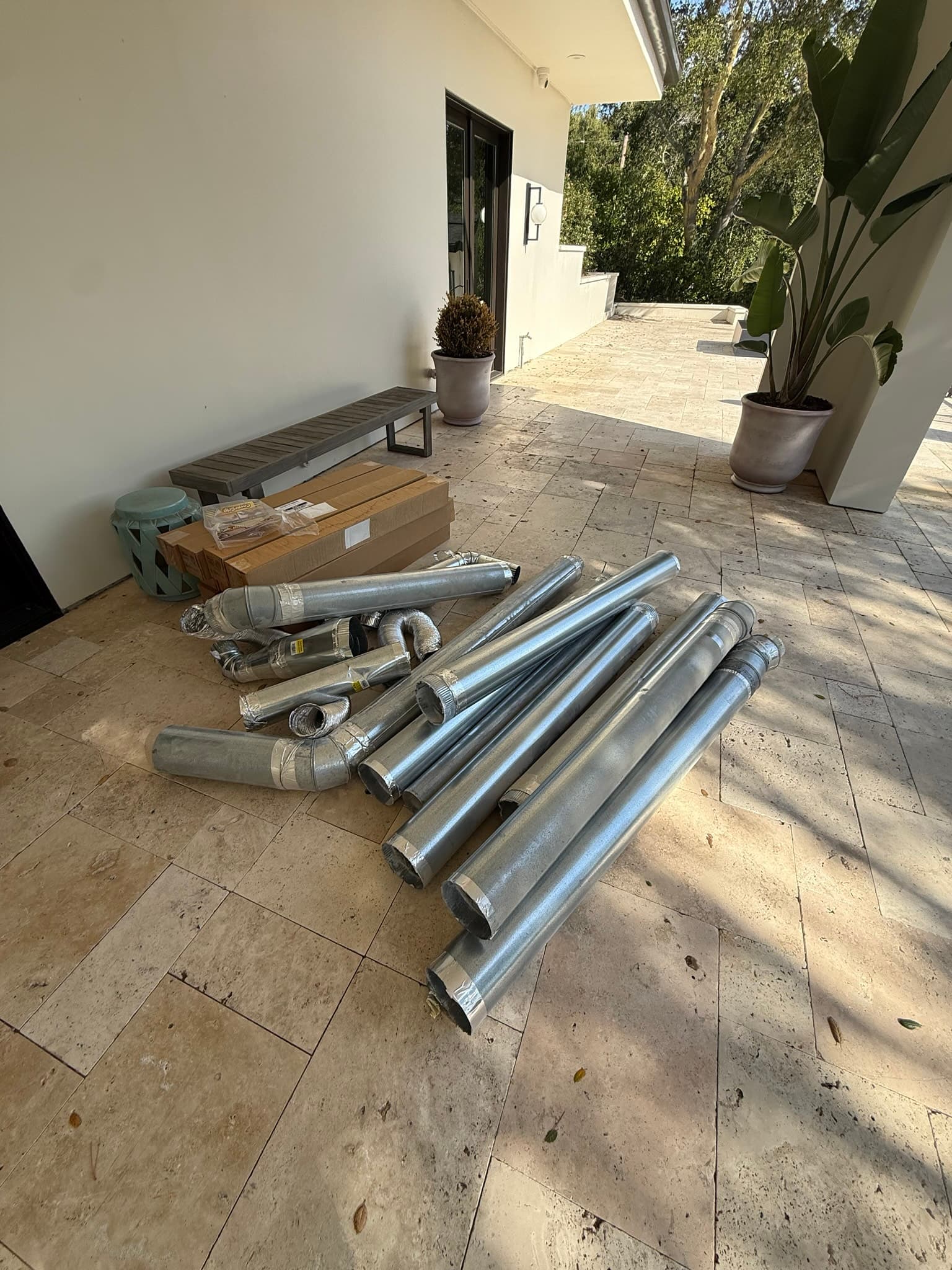
When our technicians arrived at this Hillsborough residence, the dryer exhaust system presented several serious concerns. The existing duct run measured approximately 90 linear feet and had been constructed with 6-inch-diameter pipe, which is not an approved size for residential dryer exhaust. IRC M1502.4.1 requires smooth-interior metal duct of 4-inch nominal diameter, and the oversized pipe not only fails that standard but also reduces exhaust velocity, allowing lint to settle and accumulate along the run rather than being carried cleanly to the exterior. The original ductwork was removed in its entirety, and the sections laid out on the patio showed the full scope of what had to come out: multiple rigid elbows, taped connectors, and a periscope-style termination cap, all in the wrong diameter.
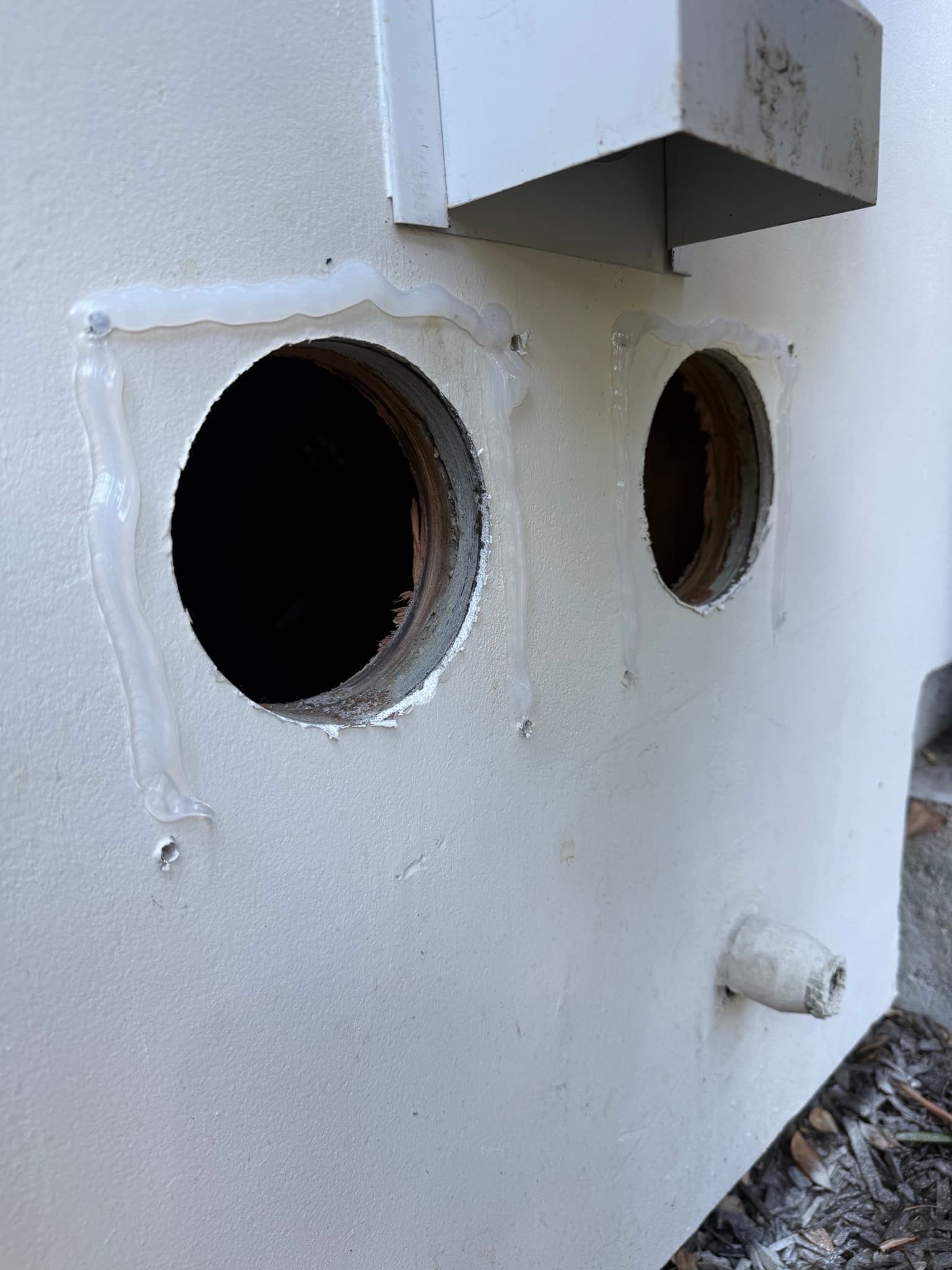
At the two exterior wall penetrations, the openings lacked proper vent hoods with functioning dampers. Both penetrations showed weathering and discoloration around the perimeter, consistent with moisture intrusion and prolonged use without correctly fitted caps. Without dampers, unconditioned air, pests, and moisture can enter the duct system freely when the dryer is not running, creating conditions that accelerate lint accumulation and can contribute to mold growth inside the duct cavity.
What We Did: Duct Replacement
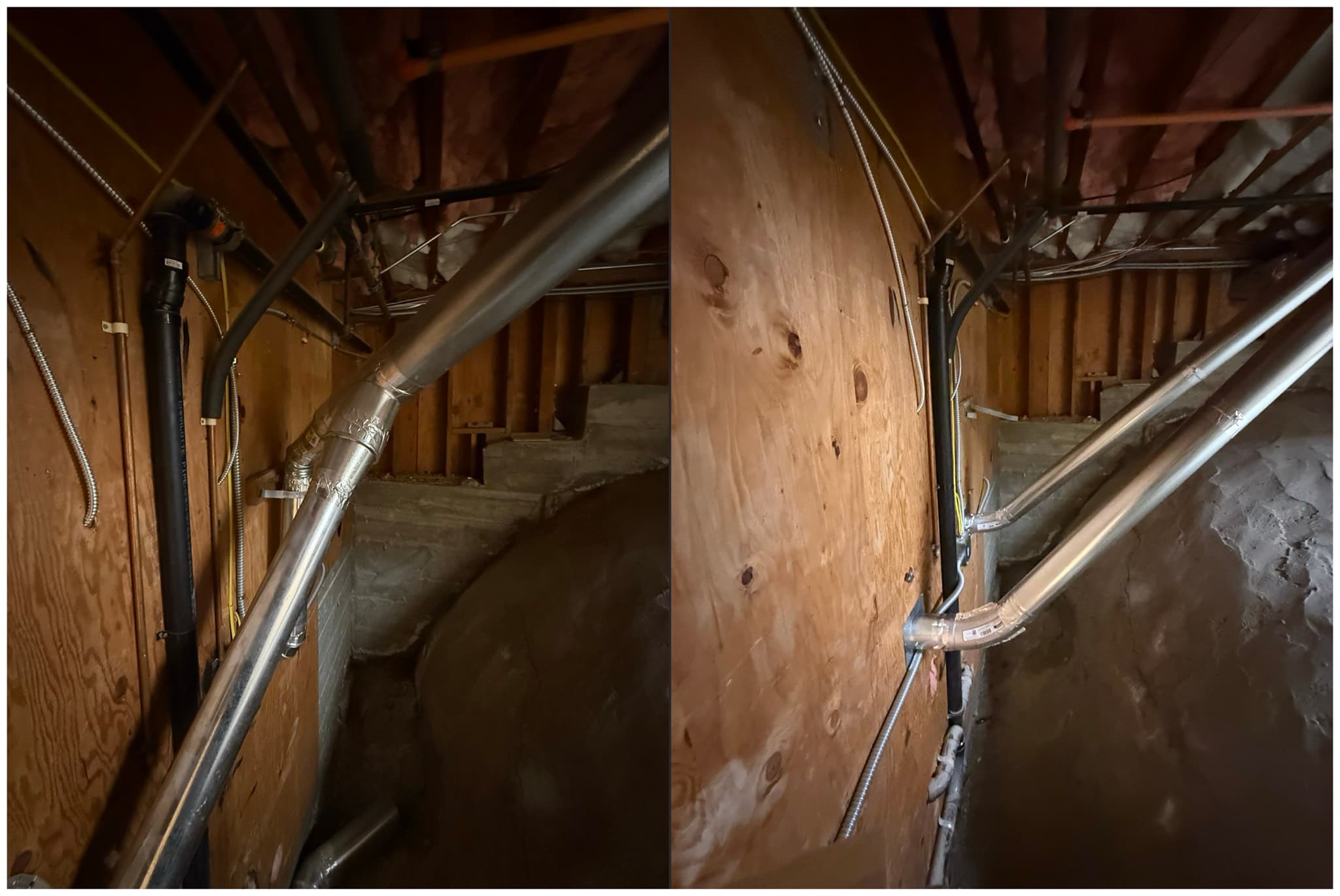
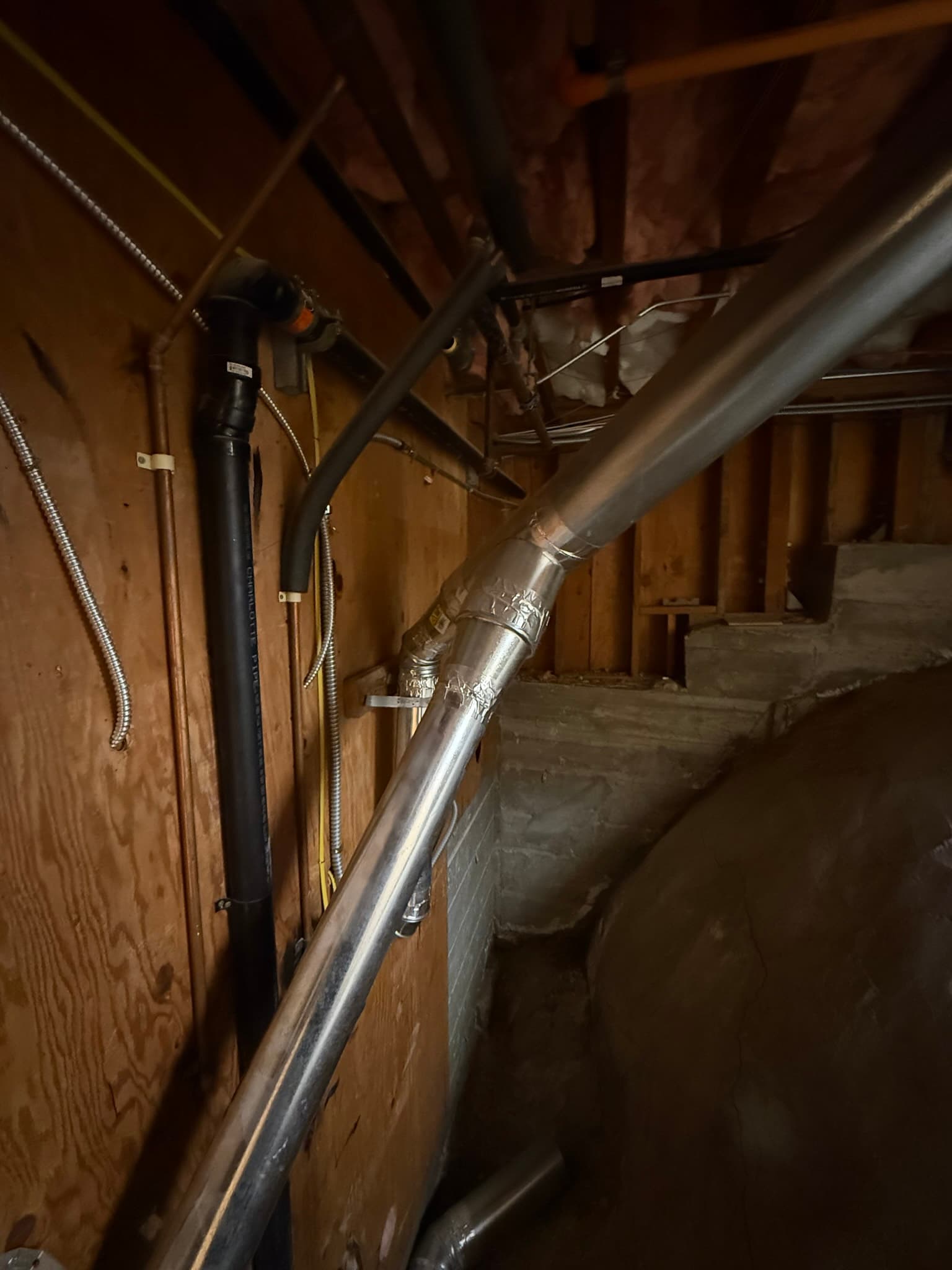
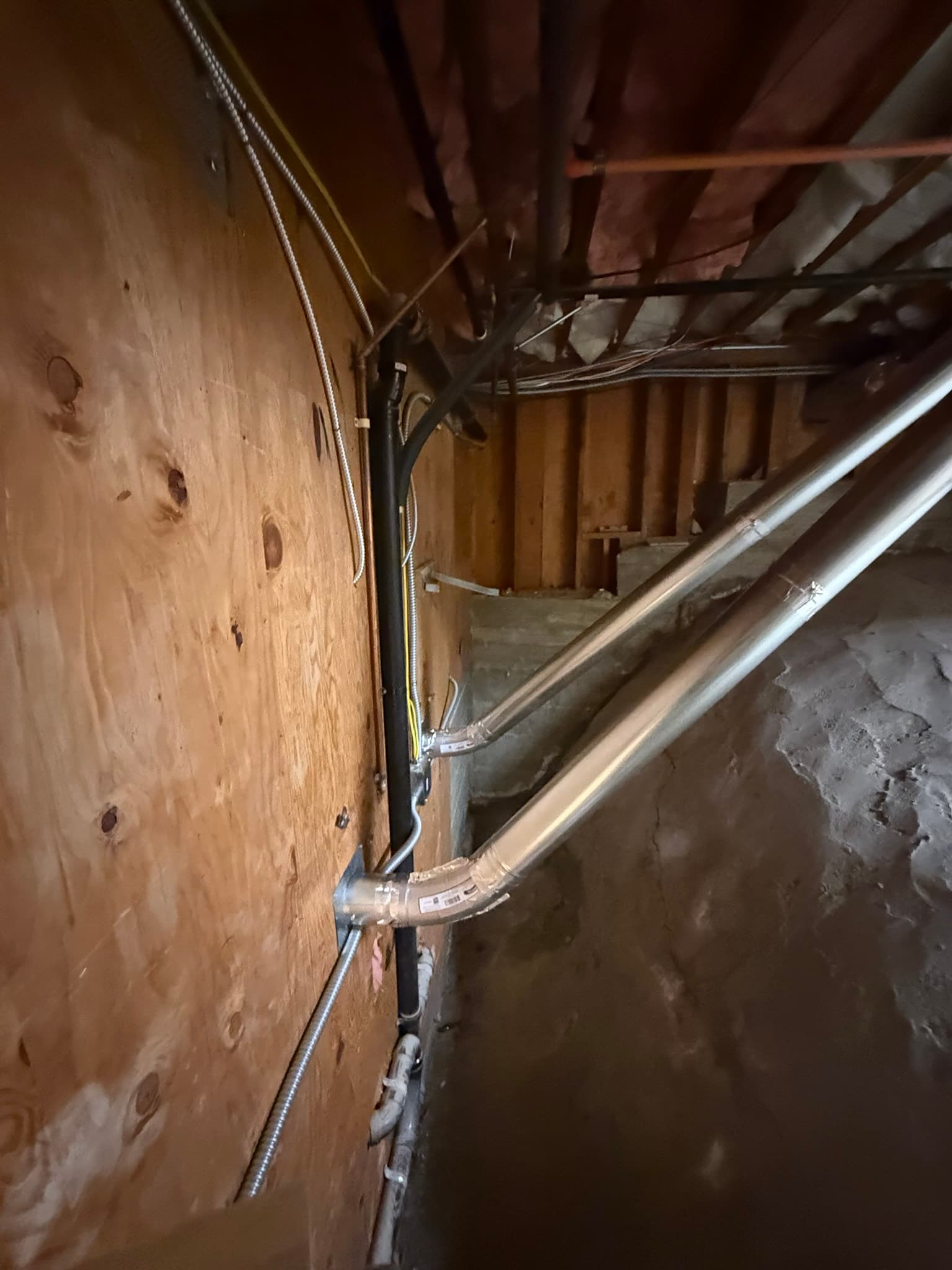
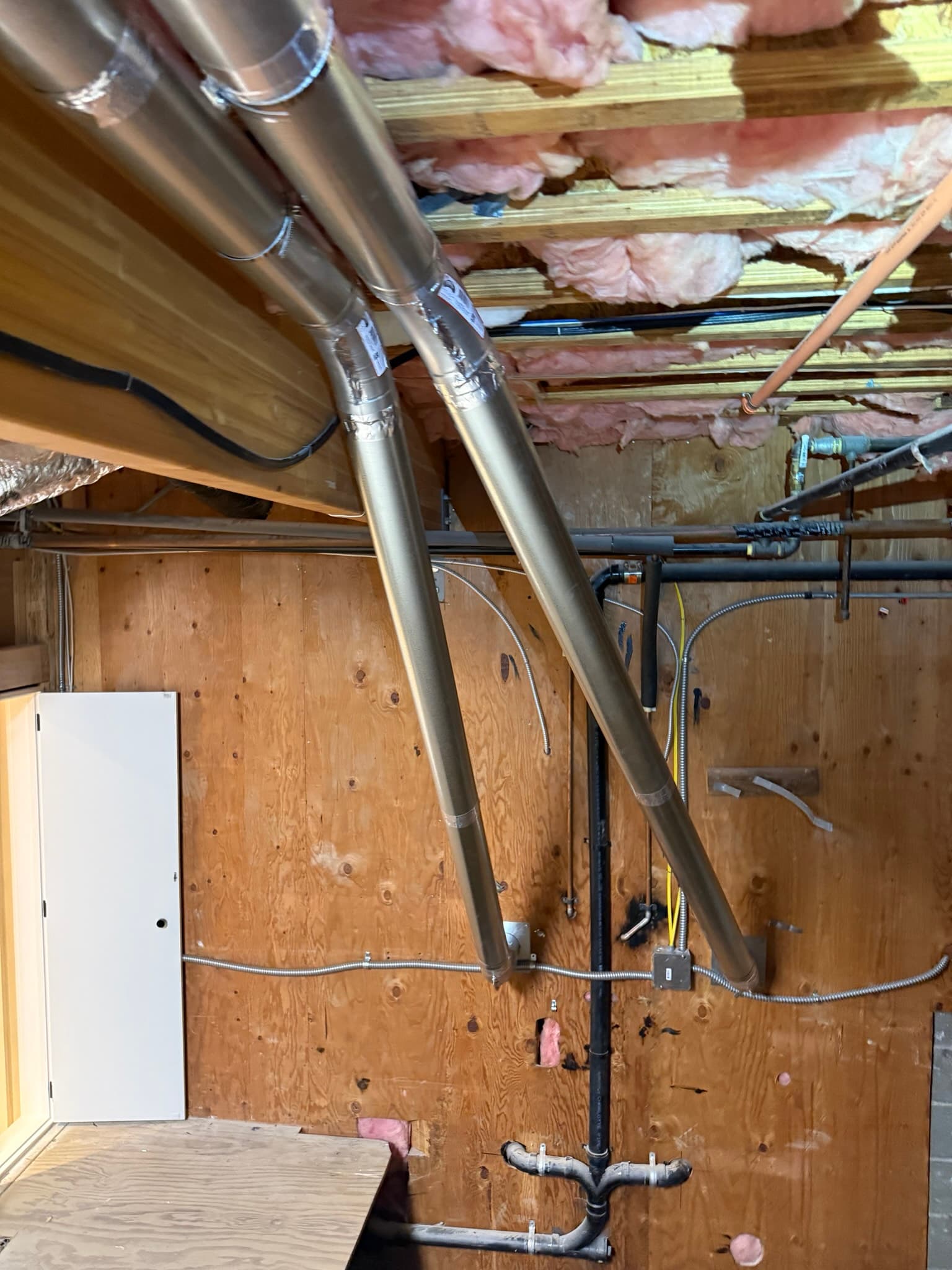
We removed all 90 linear feet of the existing 6-inch ductwork and replaced the entire run with 4-inch DryerFlex, a fire-rated semi-rigid metal duct that meets the smooth-interior requirements of IRC M1502.4.1 and the minimum 26-gauge wall thickness required for dryer exhaust. DryerFlex is constructed to maintain its circular cross-section even through the framing transitions and attic routing required by this installation, unlike foil flex duct, which can sag and kink under its own weight. Every joint in the new run was oriented male-into-female in the direction of airflow and sealed with UL 181B-FX listed metal foil tape, with mechanical fasteners that do not protrude more than 1/8 inch into the duct interior, consistent with IRC M1502.4.2. The ductwork was supported at intervals not exceeding 12 feet throughout the attic run.
Because this system runs 90 linear feet, the equivalent length of the exhaust path was a key consideration. IRC M1502.4.6.1 sets a baseline maximum of 35 equivalent feet from the transition duct connection to the exterior terminal, with each 90-degree elbow deducting 5 feet from the allowable run. The new duct path was engineered to minimize direction changes and keep the equivalent length within compliant limits, or to account for labeling requirements under IRC M1502.4.7 where applicable.
What We Did: Wall Vent and MagVent Installation
At the two exterior wall penetrations, we installed a pair of Existing Dryer Wall Vent enclosures, each paired with a MagVent 90 Degree Dryer Vent Path fitting. The wall vent enclosures feature a heavy-gauge Galvalume steel body with powder-coat finish, meeting or exceeding all applicable code requirements for exterior terminations. These are purpose-engineered for both replacement and new-construction applications, and their clean profile integrates neatly with the home's exterior. At the homeowner's request, the exterior vent hoods were painted black to coordinate with the window trim and exterior accent colors, giving the finished installation a cohesive, intentional appearance rather than the mismatched look common with off-the-shelf caps.
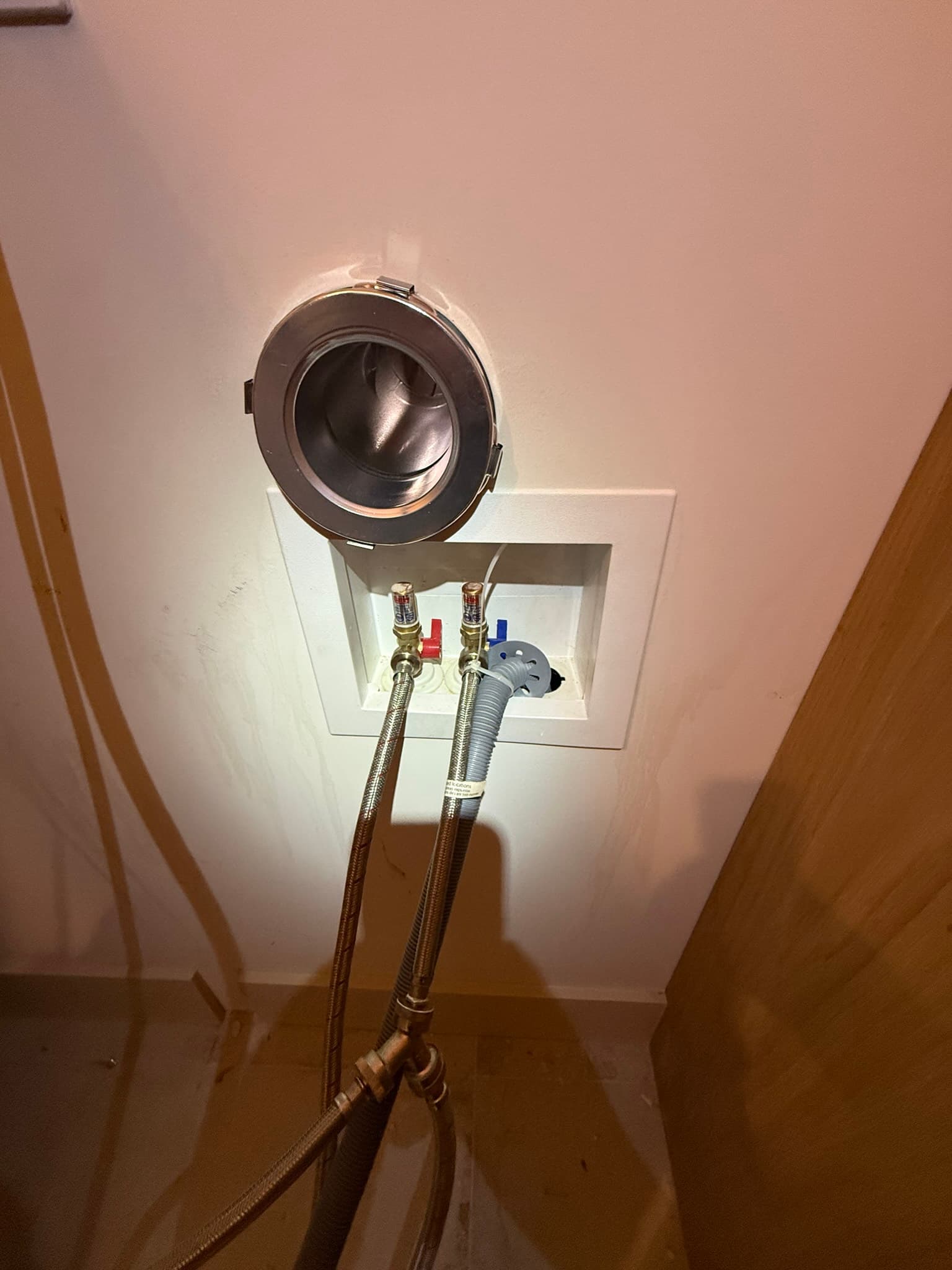
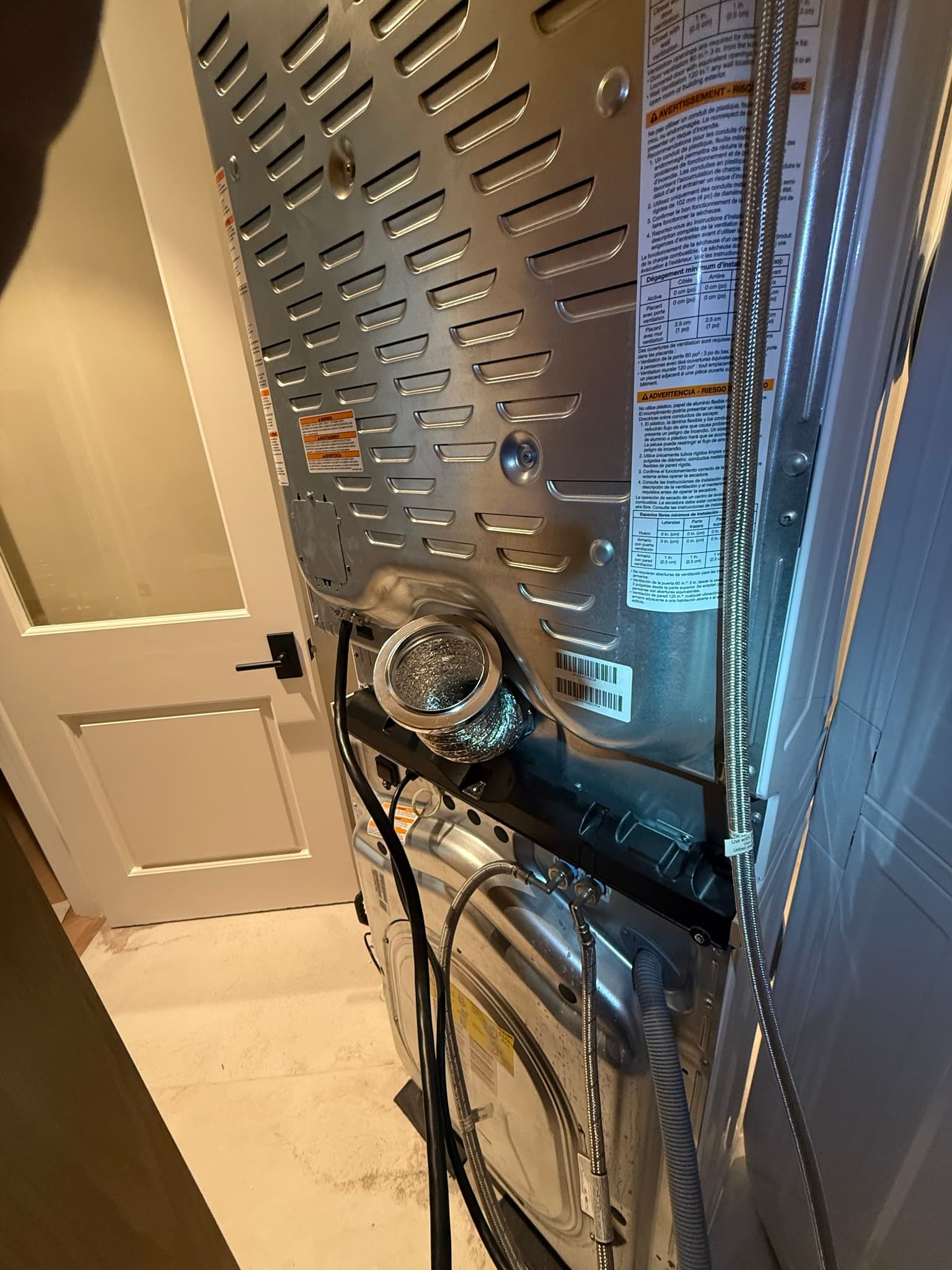
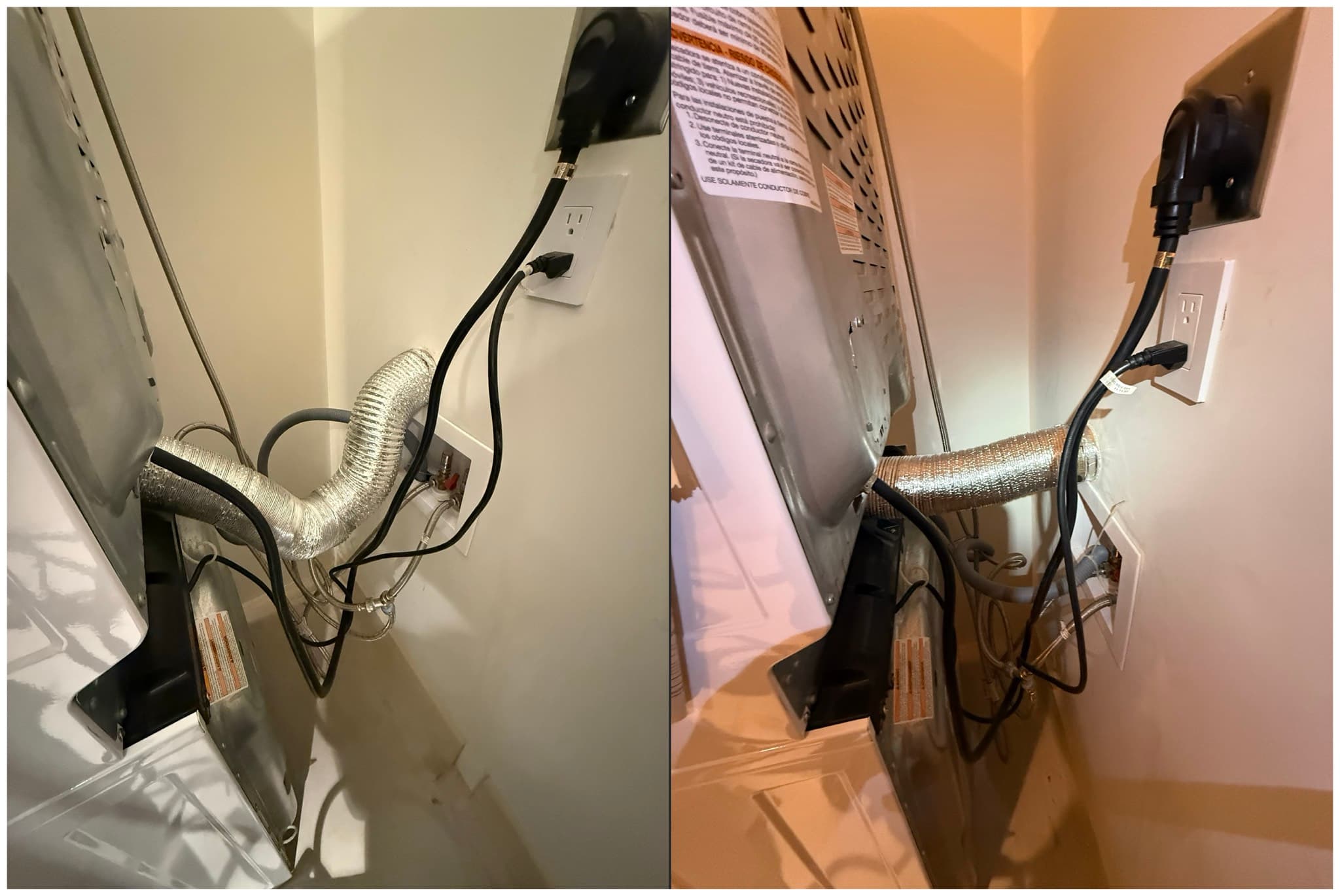
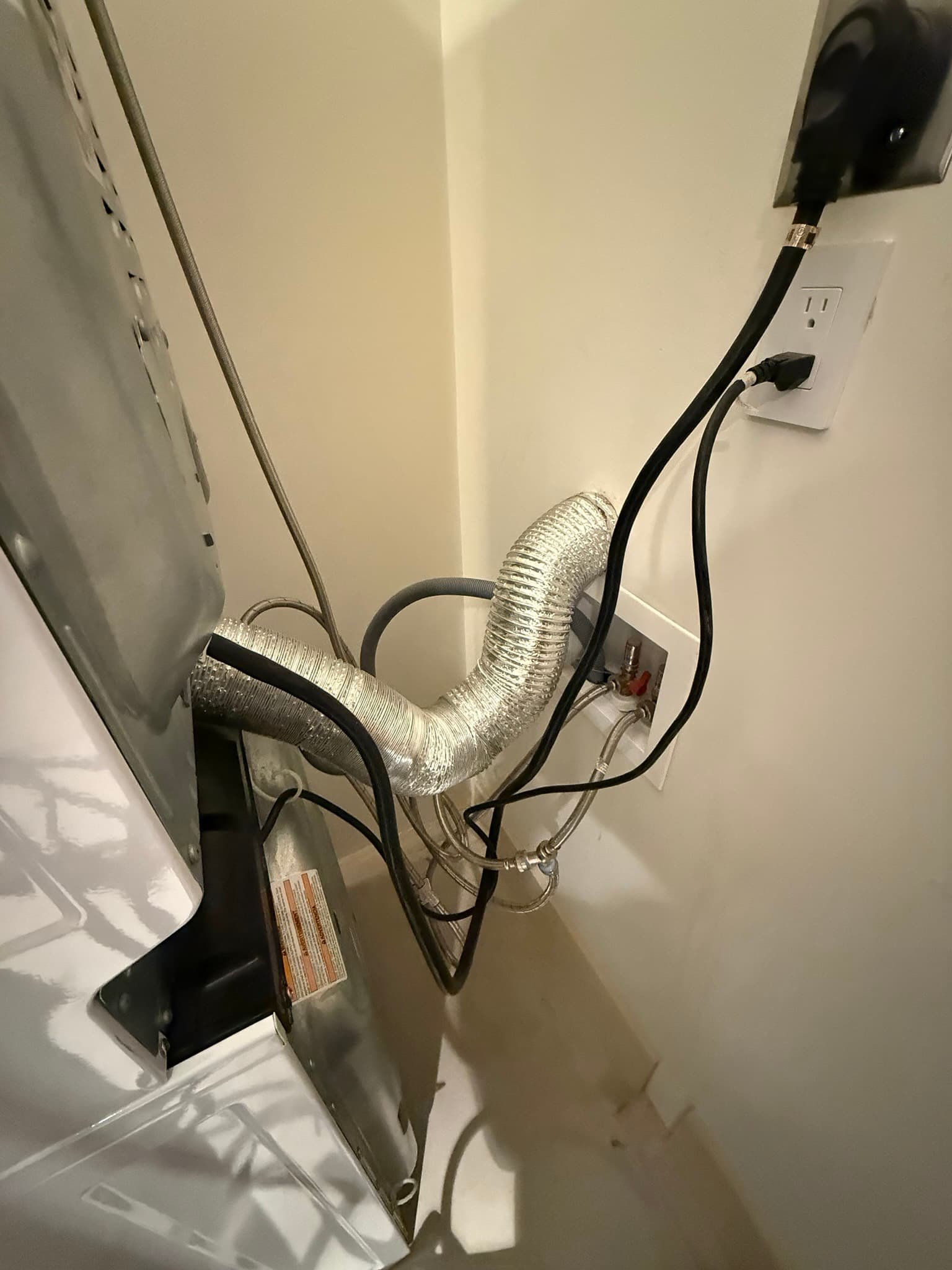
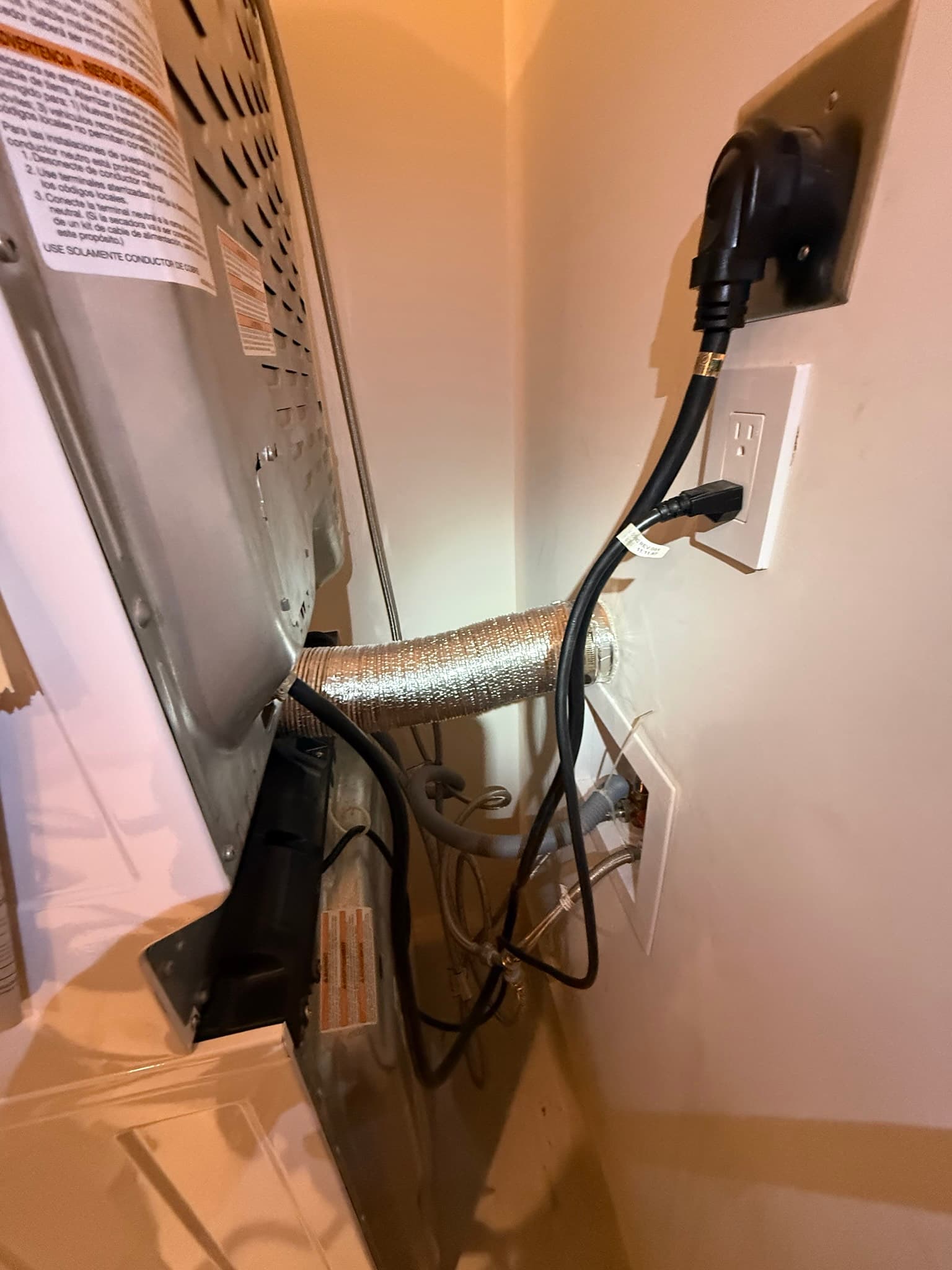
The MagVent 90 Degree fittings installed at both dryer locations use a magnetic coupling system that creates a secure, airtight connection between the dryer's exhaust outlet and the wall duct without the need for a traditional flexible transition duct crammed into a tight space behind the unit. Each unit includes a 12-inch transition duct connected to the magnetic ring, which locks onto the corresponding wall-mount receiver. This design eliminates the crushing and kinking that commonly occurs when a standard flexible duct is compressed between the dryer rear panel and the wall, a condition that reduces airflow below the 300 CFM minimum most dryer manufacturers require and that can constitute a violation of IRC M1502.4.3.
Airflow Verification and Final Result
After completing the duct installation and cap replacements, airflow was measured using a handheld anemometer at the exhaust outlet. The reading of 1,476 feet per minute confirms strong, unrestricted exhaust velocity through the new 4-inch system, a significant improvement over what the undersized, oversized-diameter original ductwork was capable of delivering. Proper exhaust velocity means lint is carried out of the system rather than depositing on duct walls, which directly reduces fire risk and extends the service interval between cleanings.
The completed system in this Hillsborough home now consists of 90 linear feet of 4-inch, 26-gauge DryerFlex duct routed through the attic and wall cavities, terminating at two powder-coated Galvalume steel wall vent enclosures fitted with MagVent 90 Degree wall-mount receivers. Both dryer connections use MagVent magnetic coupling assemblies with 12-inch transition ducts. The entire installation is code-compliant with IRC M1502, brings the exhaust diameter into the required 4-inch standard, and provides the homeowner with a system that is safer, more efficient, and dramatically easier to service and inspect going forward.
Project photos
12 photos
Need similar work in Hillsborough?
Get a free quote - same-week appointments usually available.