
Los Altos
Dryer Vent Wall Penetration Service in Los Altos, CA
A Los Altos laundry room with two side-by-side dryers had a disconnected vent system that was exhausting lint directly into the wall cavity. Our journeyman technicians performed the hands-on labor to clear the area, reconnect the exhaust system, and restore safe vent operation.
Completed July 31, 2026
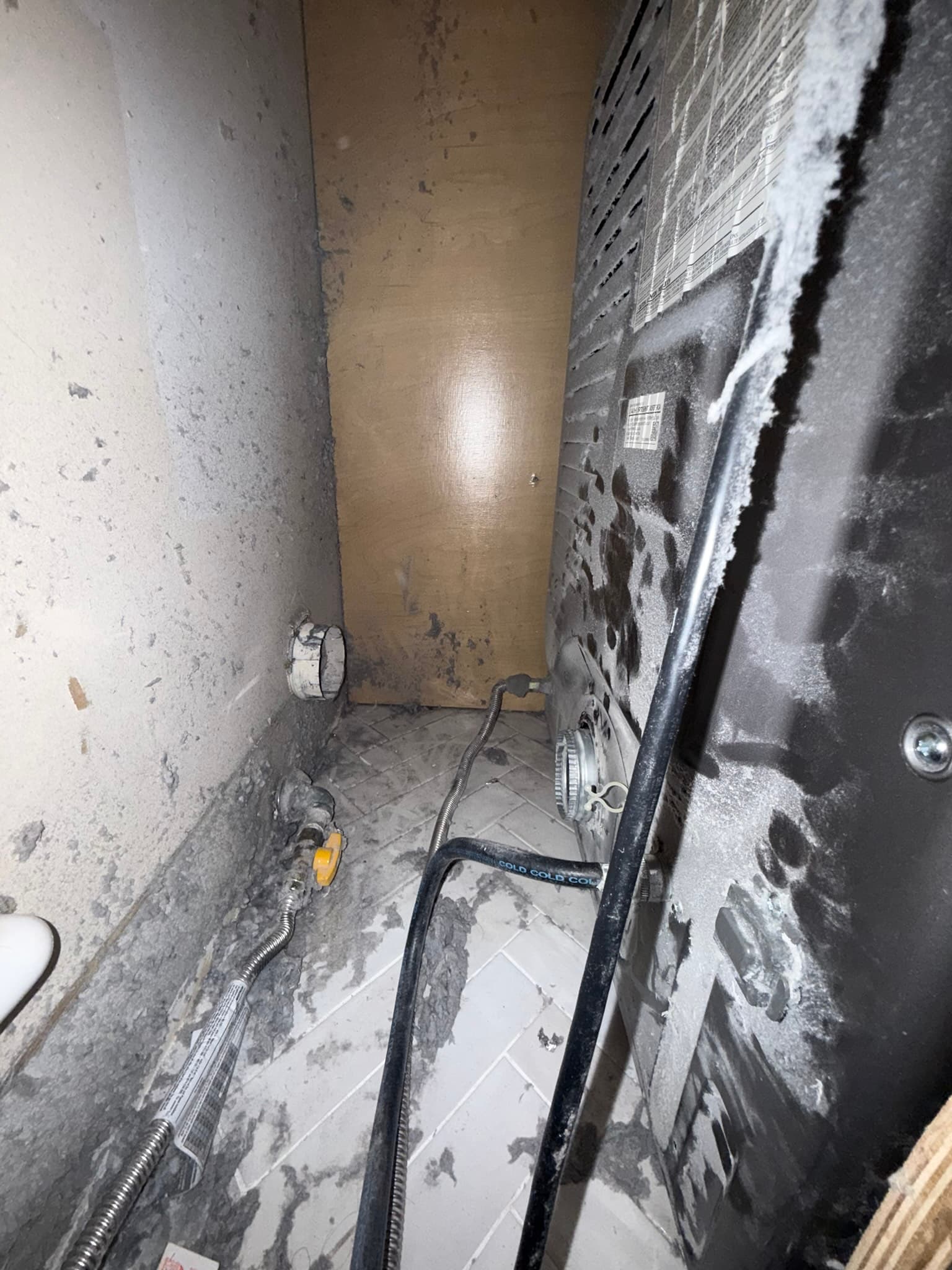
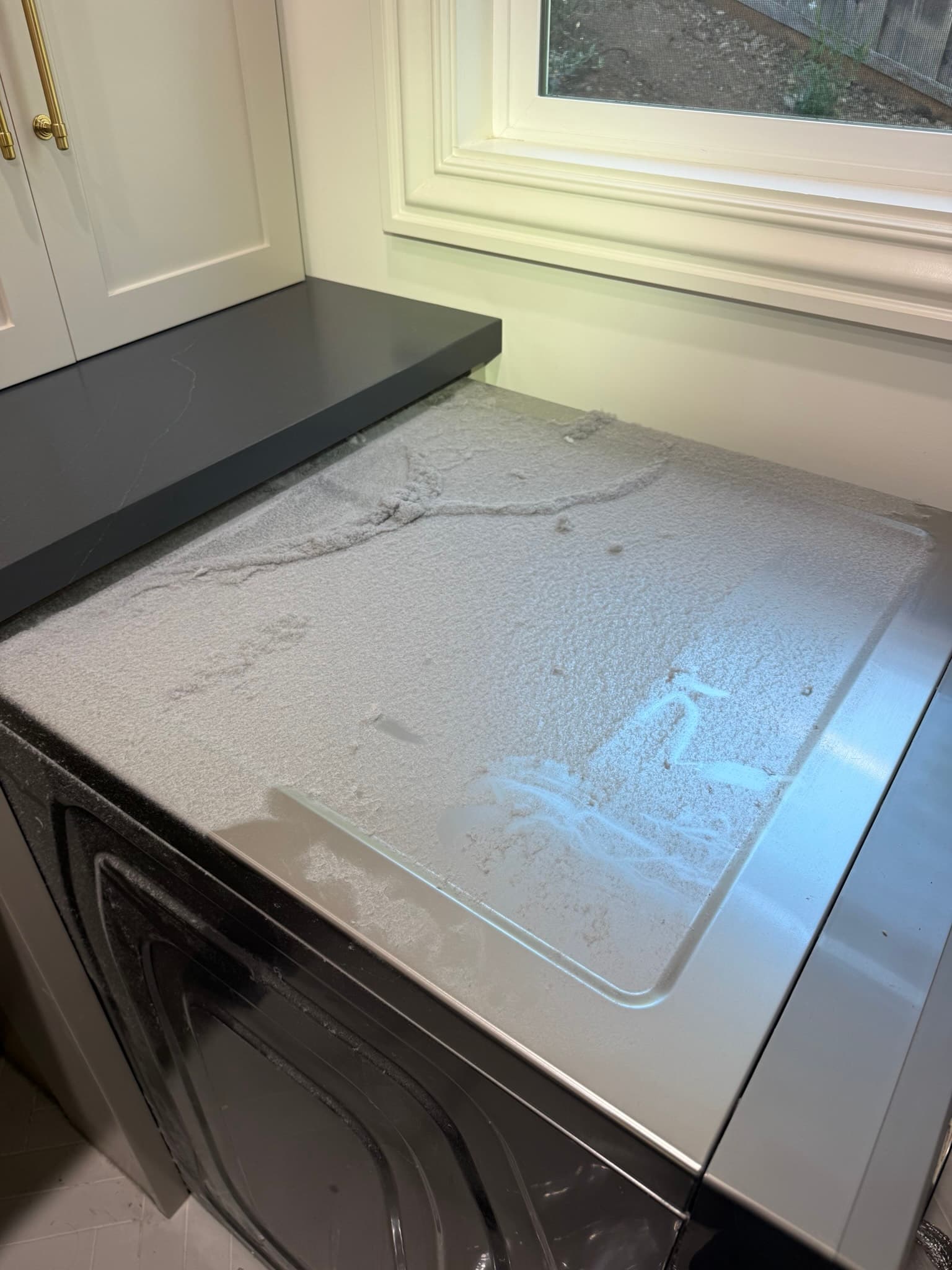
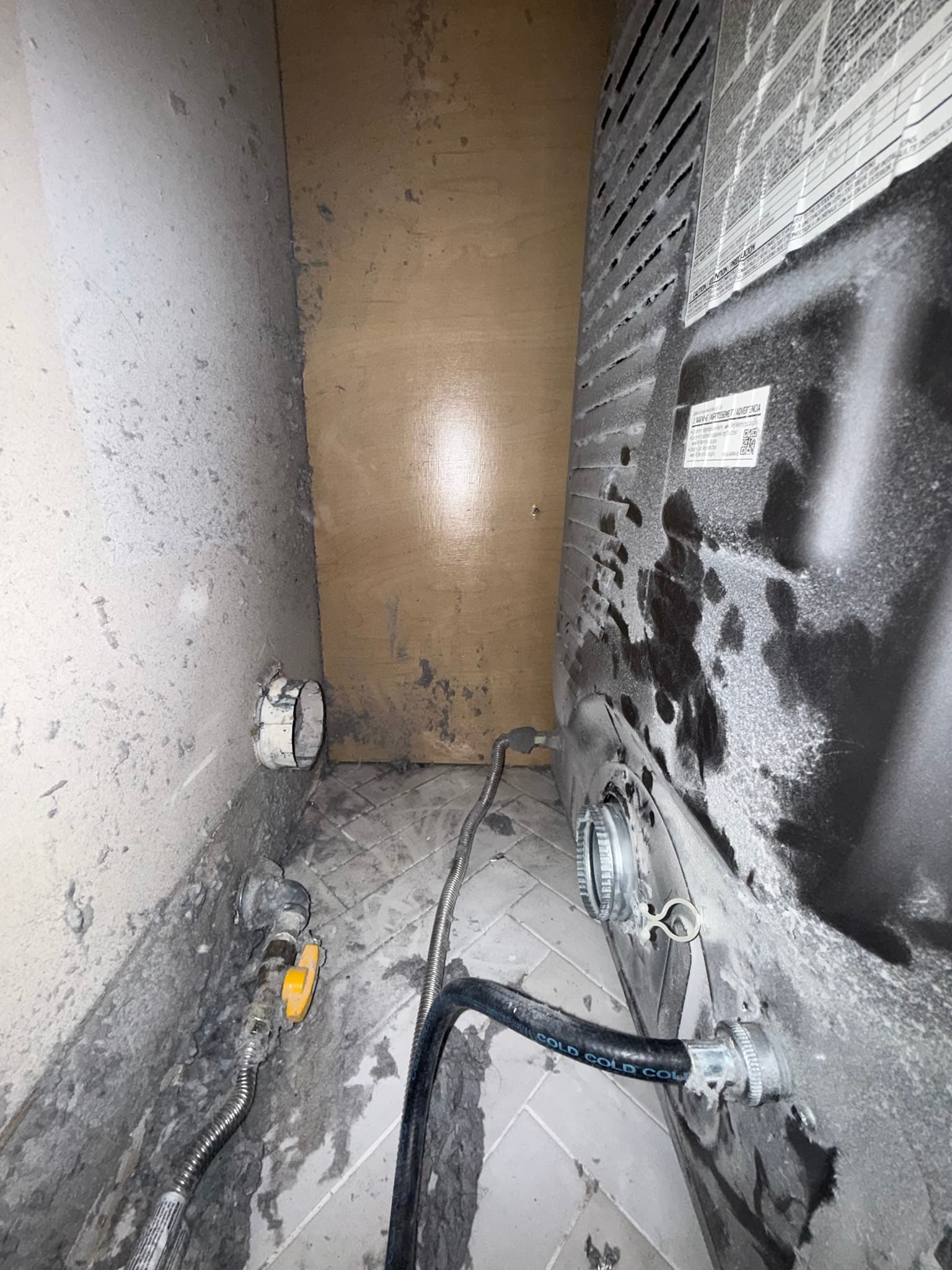
Heavy lint buildup behind the dryer resulted from the vent being disconnected from the exhaust system.
What We Found
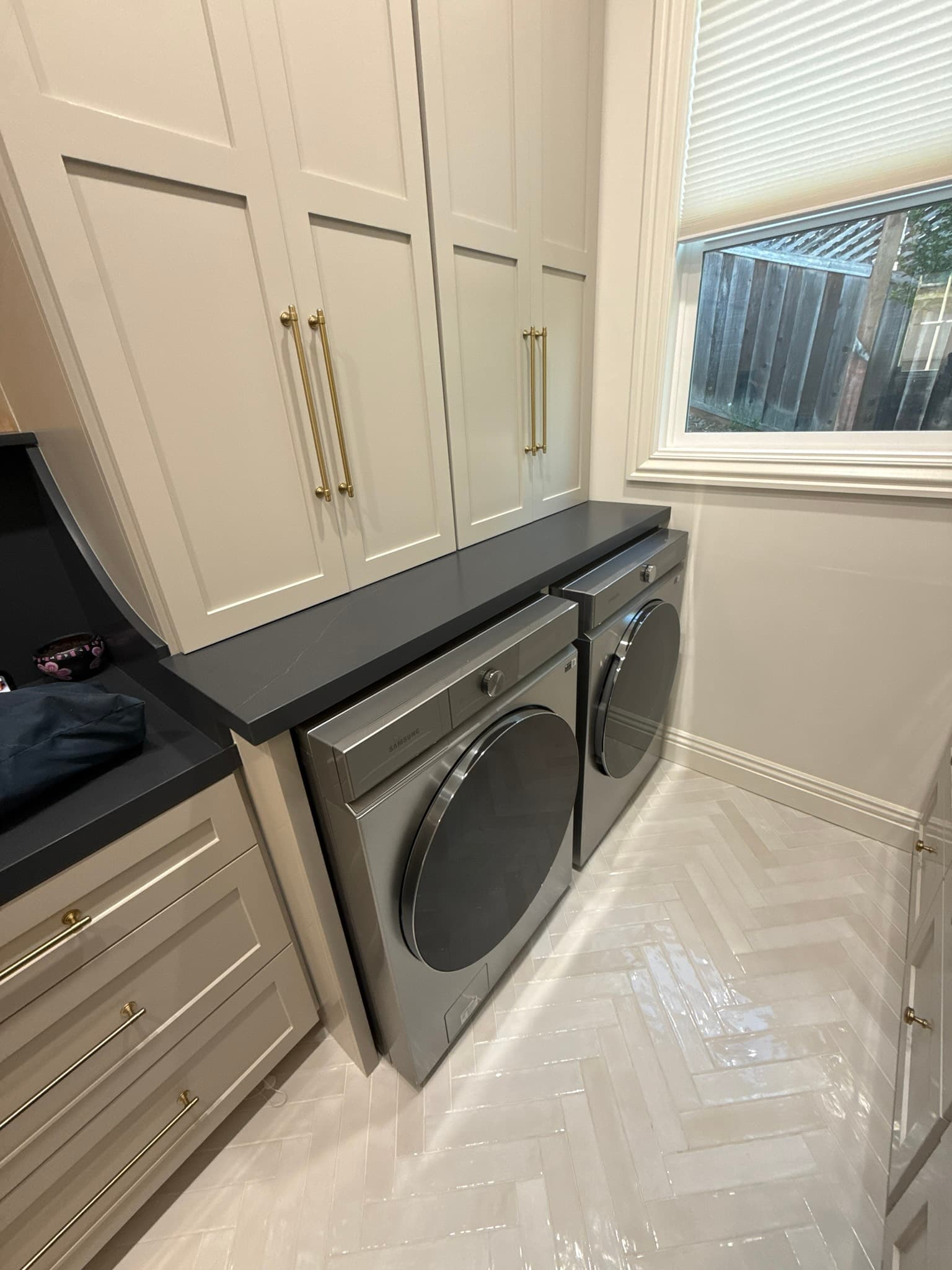
When our technicians arrived at this Los Altos home, they discovered a laundry setup with two front-load dryers installed side by side beneath custom cabinetry. The space looked clean and finished from the front, but a closer inspection behind the appliances told a very different story. The existing dryer vent was completely disconnected from the exhaust system, meaning every cycle was blowing hot, lint-laden air directly into the wall cavity and the space behind the machines rather than to the exterior of the home.
The consequences of that disconnection were immediately visible. The area behind the dryers had accumulated a heavy layer of compacted lint and dust on the walls, floor, and surrounding surfaces. A disconnected dryer vent is one of the more serious hazards in residential laundry installations. Per IRC M1502.2, the dryer exhaust system is required to convey moisture and combustion byproducts to the outdoors. When that path is broken, moist, hot air saturates the wall structure and creates conditions favorable to mold growth, while lint accumulating on building surfaces creates a direct fire risk.
The Condition of the Duct Itself
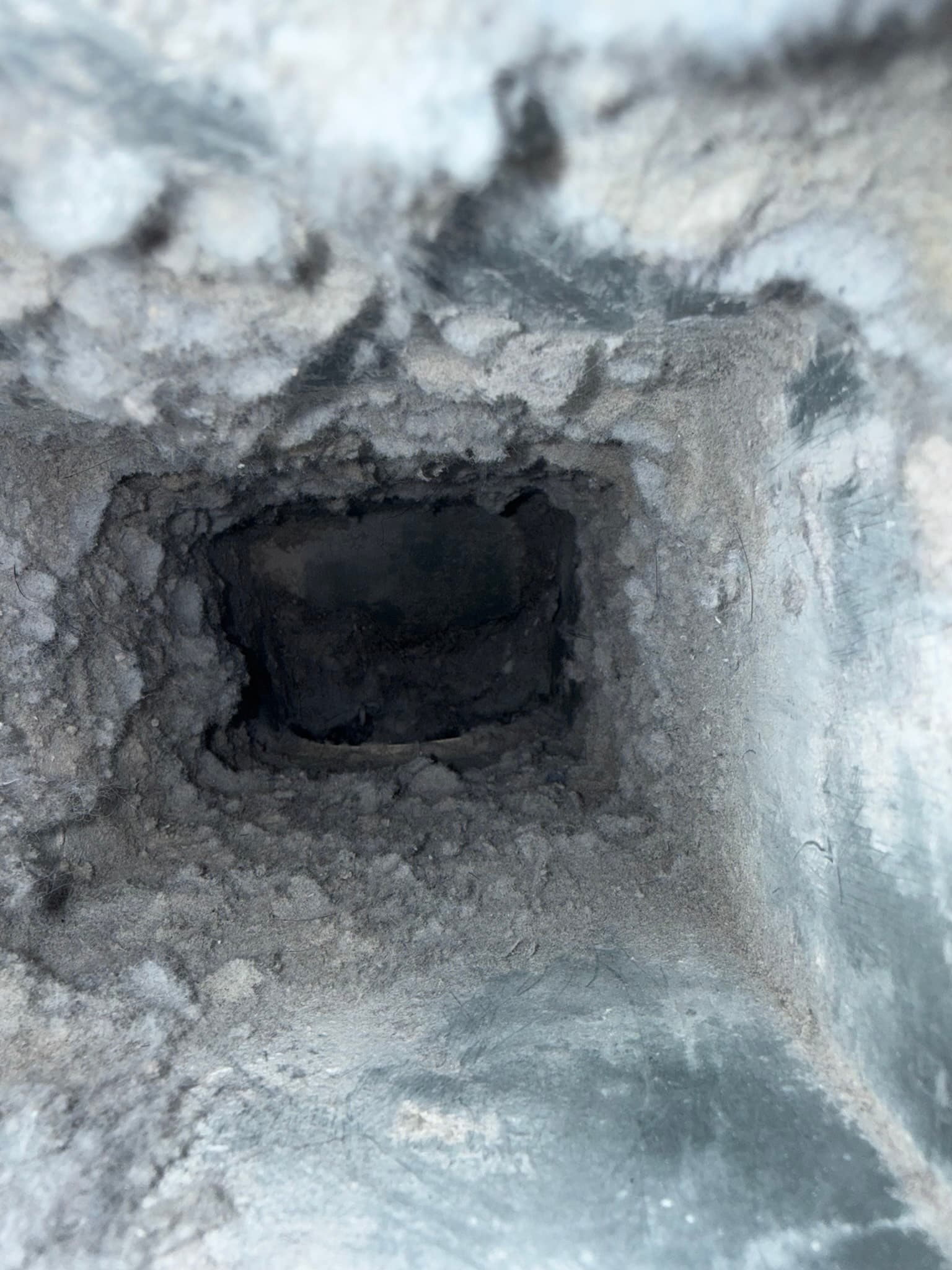
Beyond the disconnection, the duct interior showed severe lint buildup. The main dryer vent was more than half blocked with compacted lint, leaving only a small opening at the center of the duct bore. This level of restriction dramatically reduces airflow, forcing the dryer to run longer cycles, overheat, and work harder than it was designed to. Lint visible on top of the dryer cabinet and around the lint trap area confirmed that the exhaust had nowhere effective to go for an extended period.
The flexible duct visible behind the machines showed multiple connection points secured with hose clamps, and the routing included a periscope-style rigid elbow transitioning toward the exterior wall. Lint and dust had accumulated heavily on the adjacent wall surfaces and around those connection points, consistent with a system that had been venting into the space rather than through the wall for a significant amount of time.
What We Did
Two journeyman technicians completed the labor-intensive work required to address this installation. This type of wall penetration service demands experienced hands: the technicians had to carefully work in the tight space behind the appliances, clear the heavily soiled surfaces, and ensure the exhaust path was properly established through the exterior wall. The behind-dryer area was thoroughly cleaned of the accumulated lint and debris that had built up as a result of the disconnected vent, removing material that represented a direct fire hazard had it been left in place.
The work performed at this Los Altos property reflects the kind of detail-oriented labor that a two-technician crew is specifically suited for. One technician working alone in a confined space with two appliances and significant lint accumulation would face both safety and efficiency challenges. The journeyman-level skill brought to this job ensured the penetration work and the cleanup behind the machines were handled correctly and thoroughly.
Why This Work Matters
A dryer vent that is not connected to the exterior exhaust path fails on multiple levels simultaneously. The moisture alone from a typical dryer cycle can introduce pints of water vapor into a wall cavity per load, and over weeks or months that moisture accumulates into a structural and air-quality problem. The lint hazard is equally serious: the National Fire Protection Association consistently identifies lint accumulation as one of the leading causes of residential dryer fires, and a disconnected vent deposits that lint exactly where it is most dangerous, directly onto building materials inside the wall.
For homeowners in Los Altos and throughout the Bay Area, proper dryer vent maintenance and installation are not optional details. The compact, high-end laundry configurations common in the area, with stacked or side-by-side units tucked under cabinetry, can mask serious vent problems behind a finished appearance. Regular professional inspection is the only reliable way to confirm that the exhaust path behind the machines is intact and clear all the way to the exterior termination point.
The Outcome
Following the completion of the journeyman labor at this property, the space behind the dryers was cleared of the accumulated lint and debris, and the vent system was addressed through the exterior wall penetration. The work ensures that dryer exhaust now has a clear, intended path to the outside rather than into the building structure. Homeowners with similar dual-dryer configurations are encouraged to schedule periodic inspections to confirm that connections remain secure, particularly in installations where the appliances are pushed close to the wall and the duct connections are not easily visible during routine use.
Project photos
6 photos
Need similar work in Los Altos?
Get a free quote - same-week appointments usually available.