
San Francisco · Residential Fire Code Compliance Install
Dryer Vent Duct Replacement & Inspection - San Francisco
A San Francisco home's dryer exhaust system had a non-compliant transition duct that was replaced with 4 feet of UL 2158A-listed DryerFlex and secured with two DryerClamps, restoring safe, code-compliant airflow to the exterior.
Completed August 24, 2026
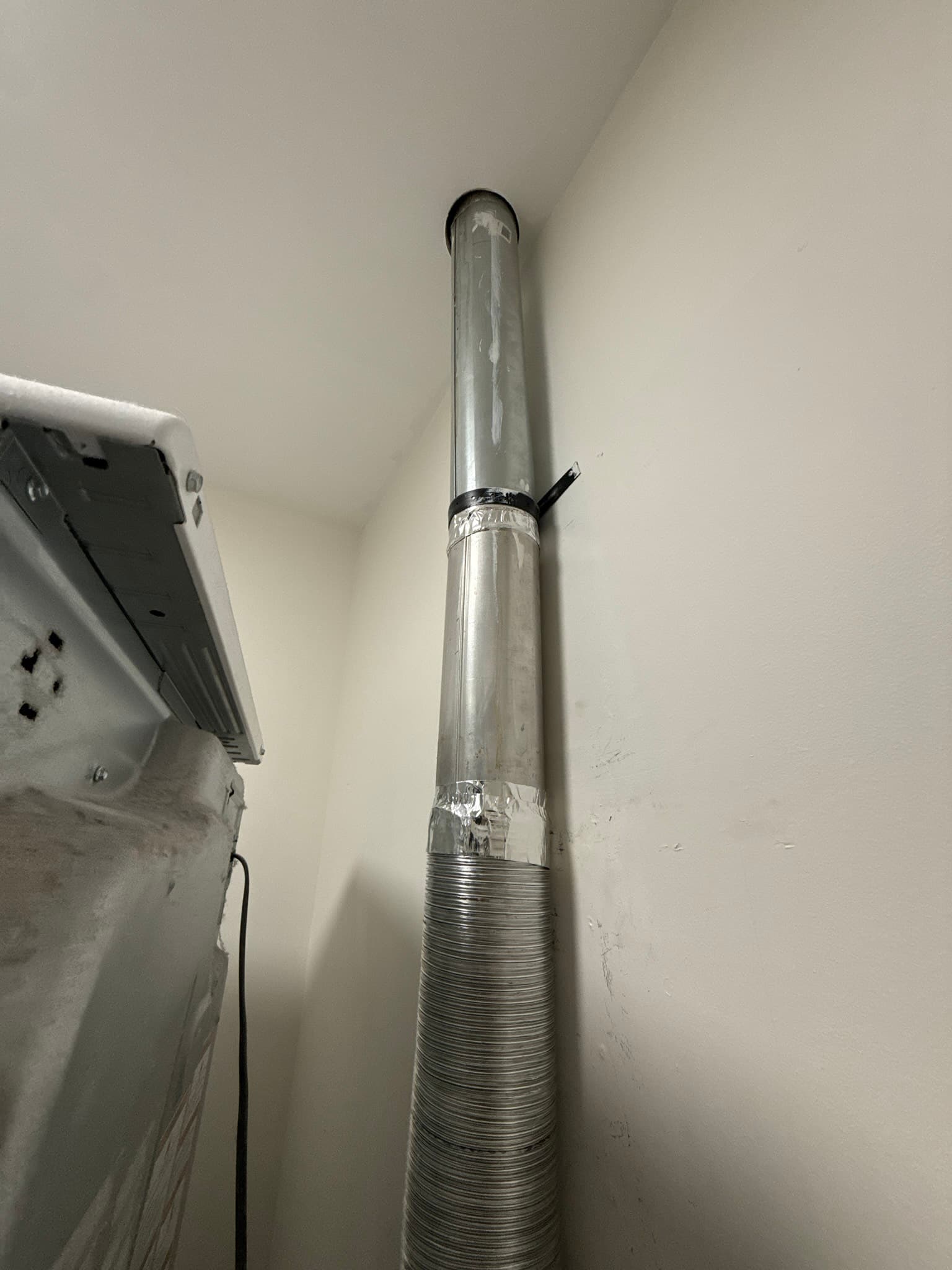
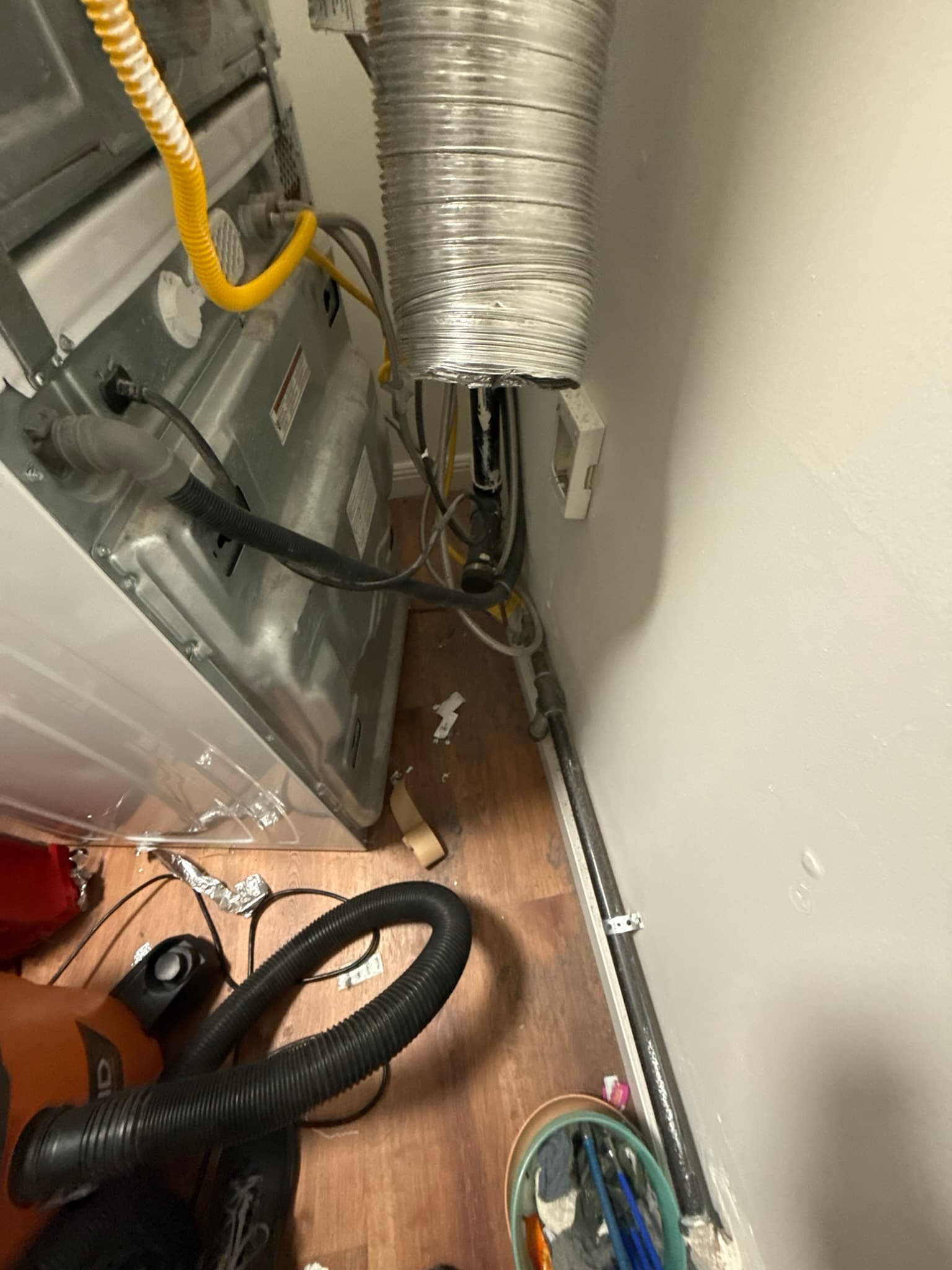
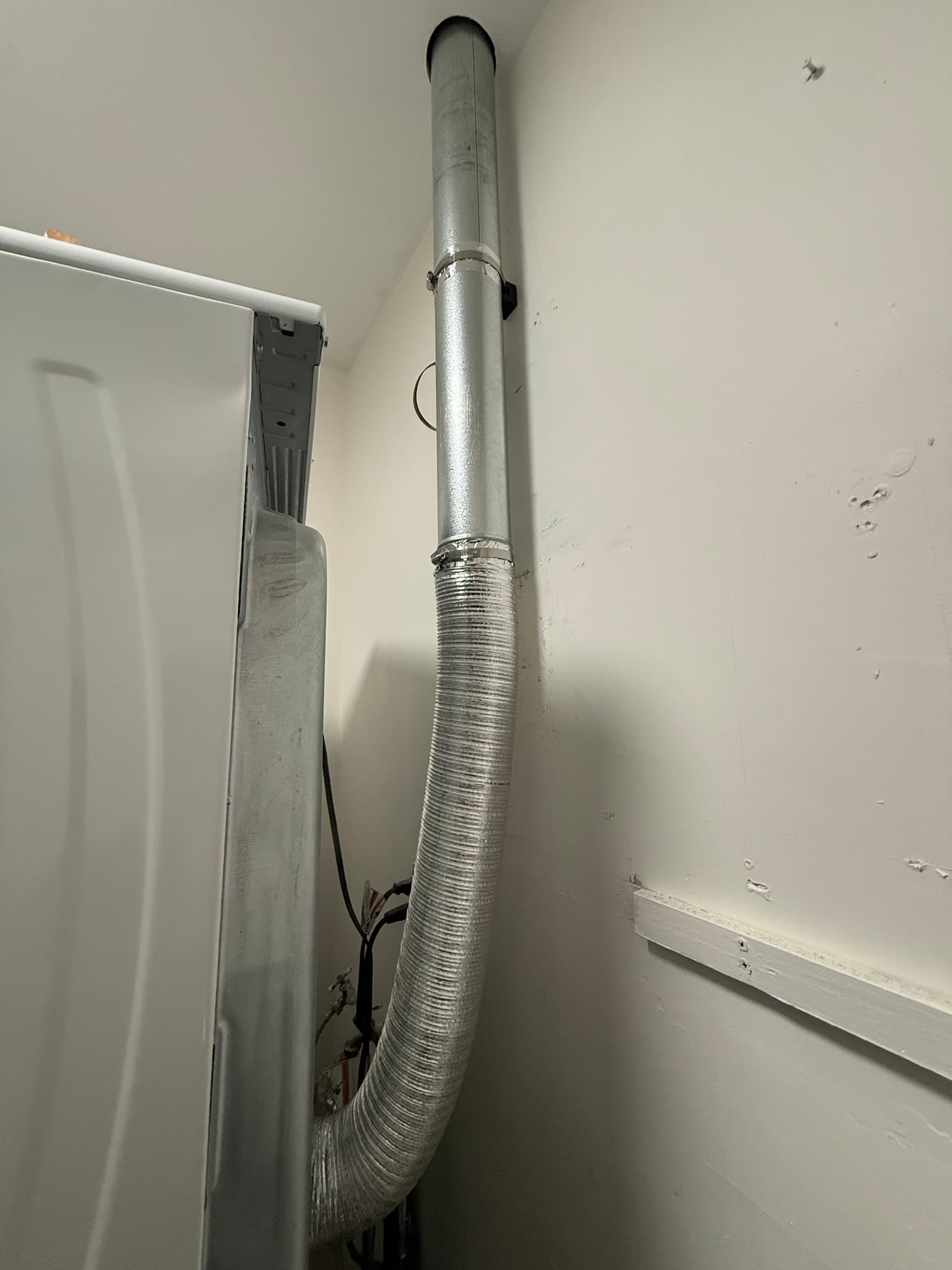
The transition duct and rigid duct connection running vertically along the interior wall toward the exterior termination.
What We Found
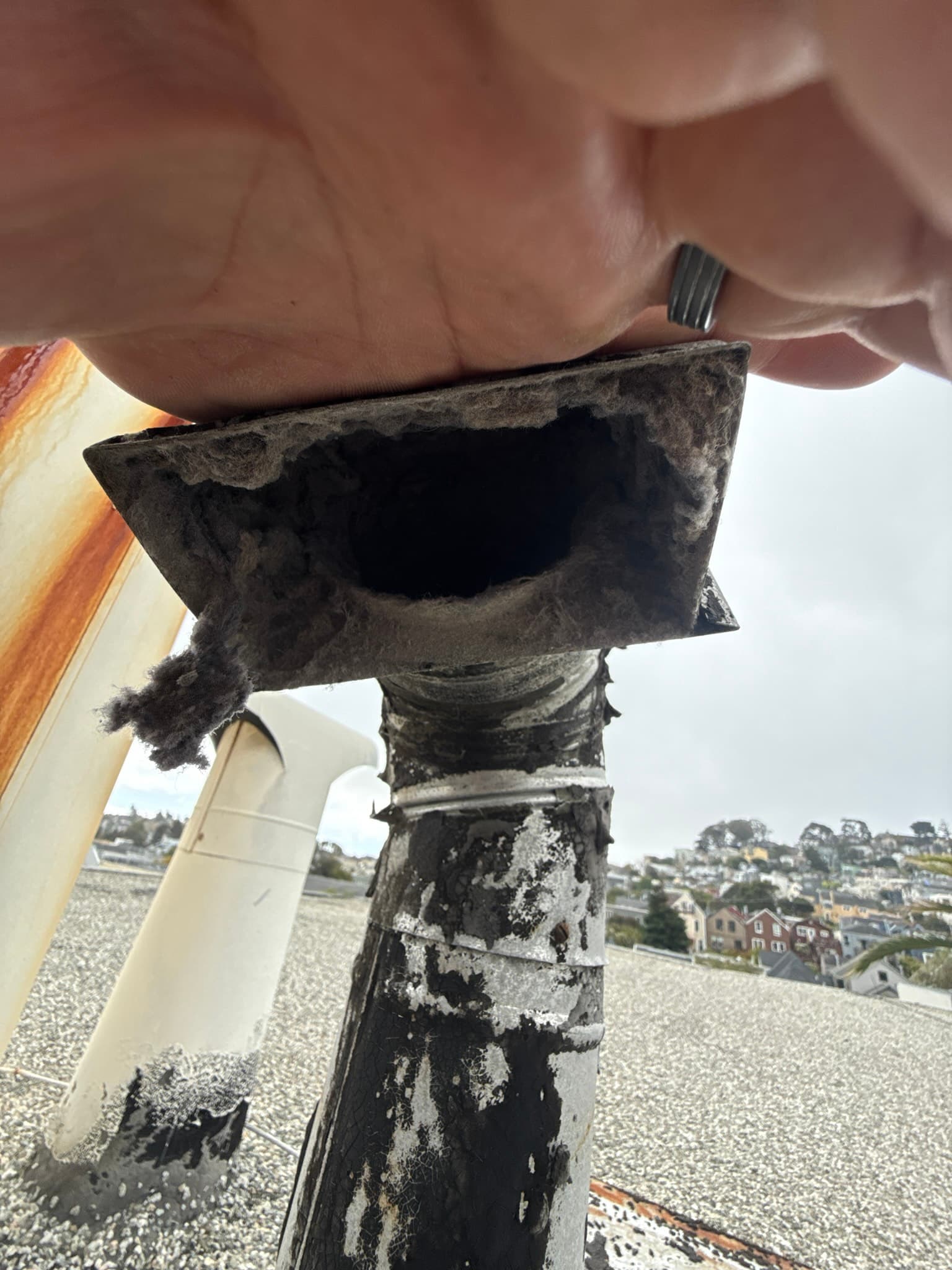
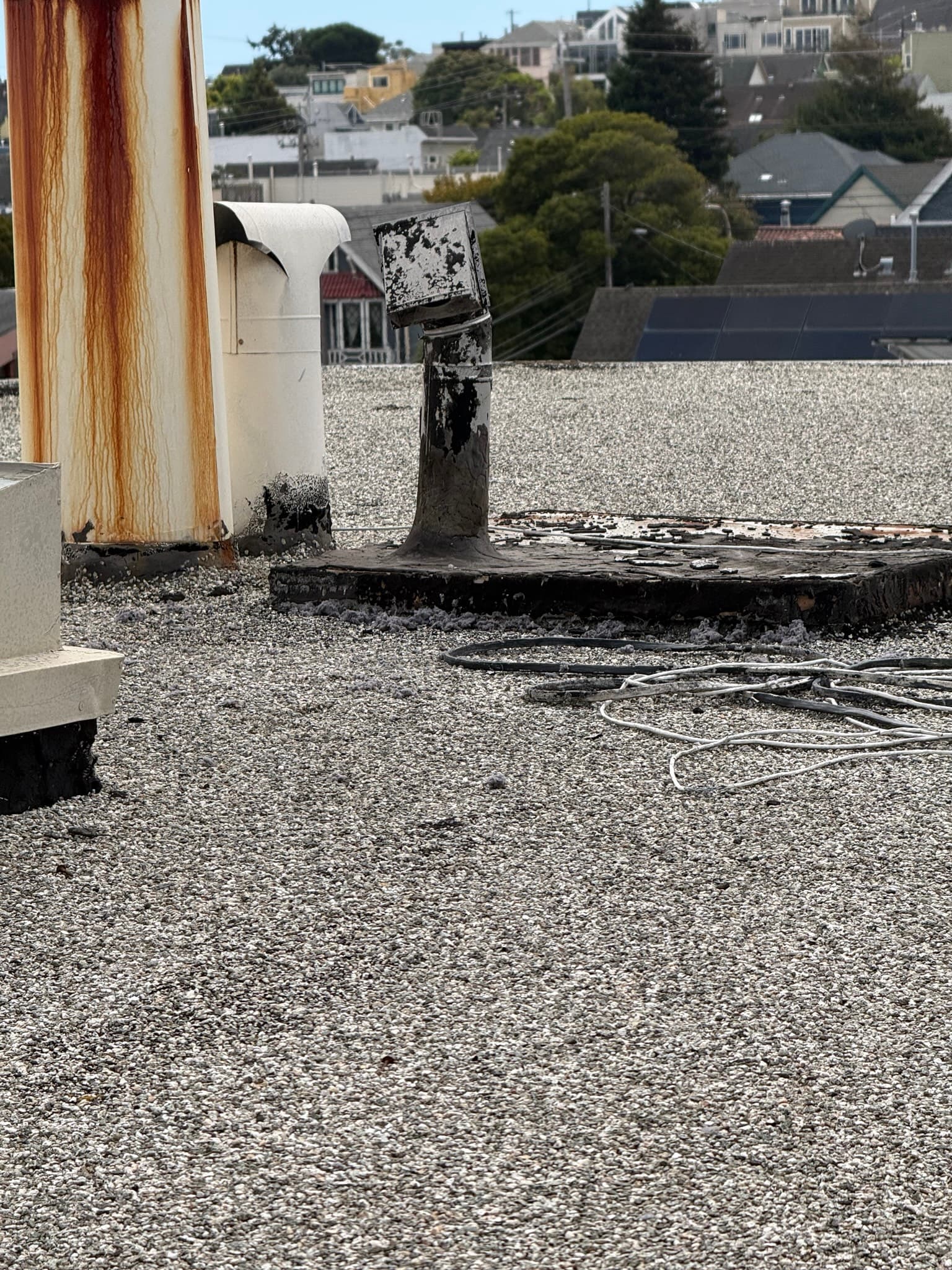
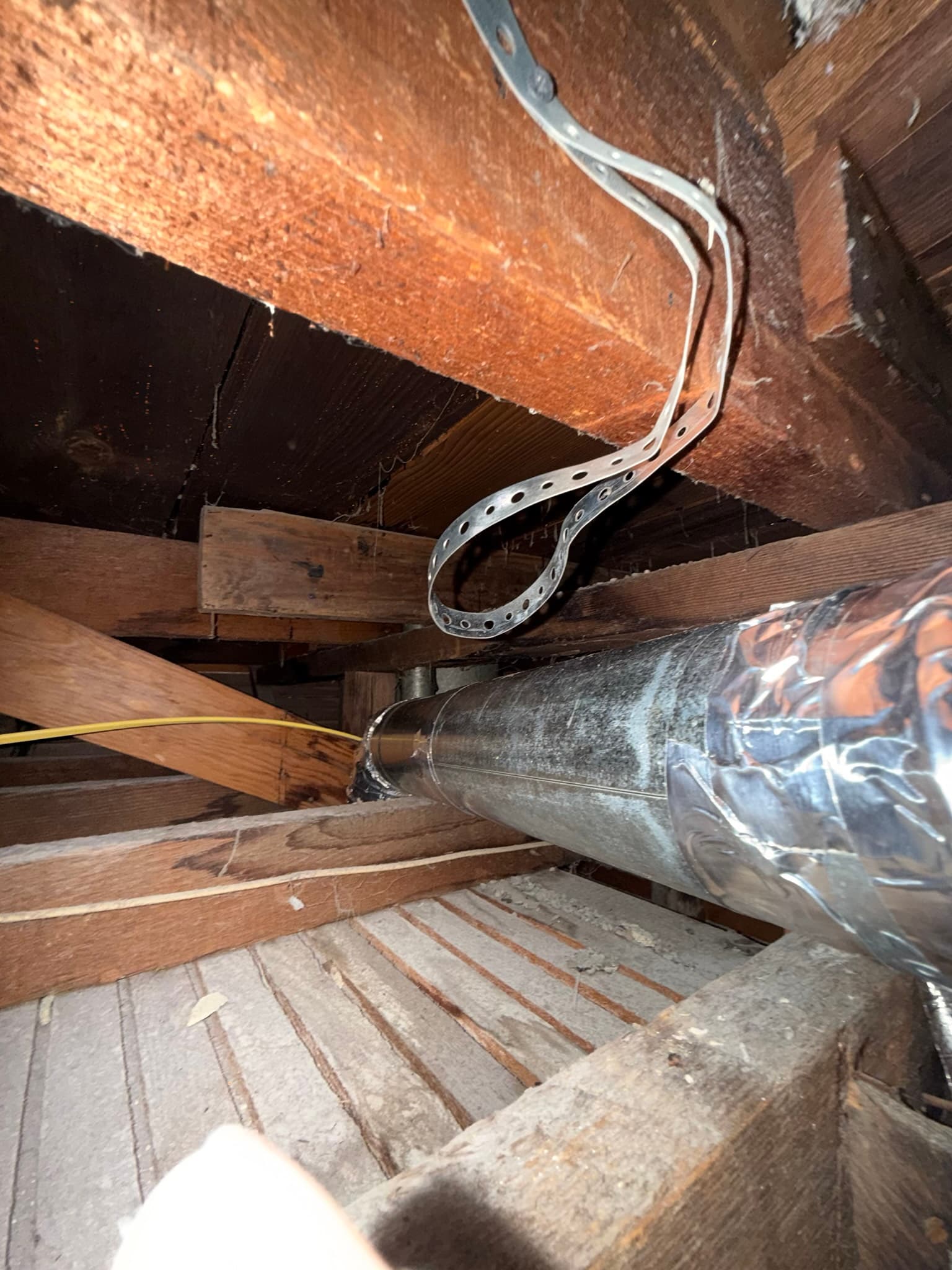
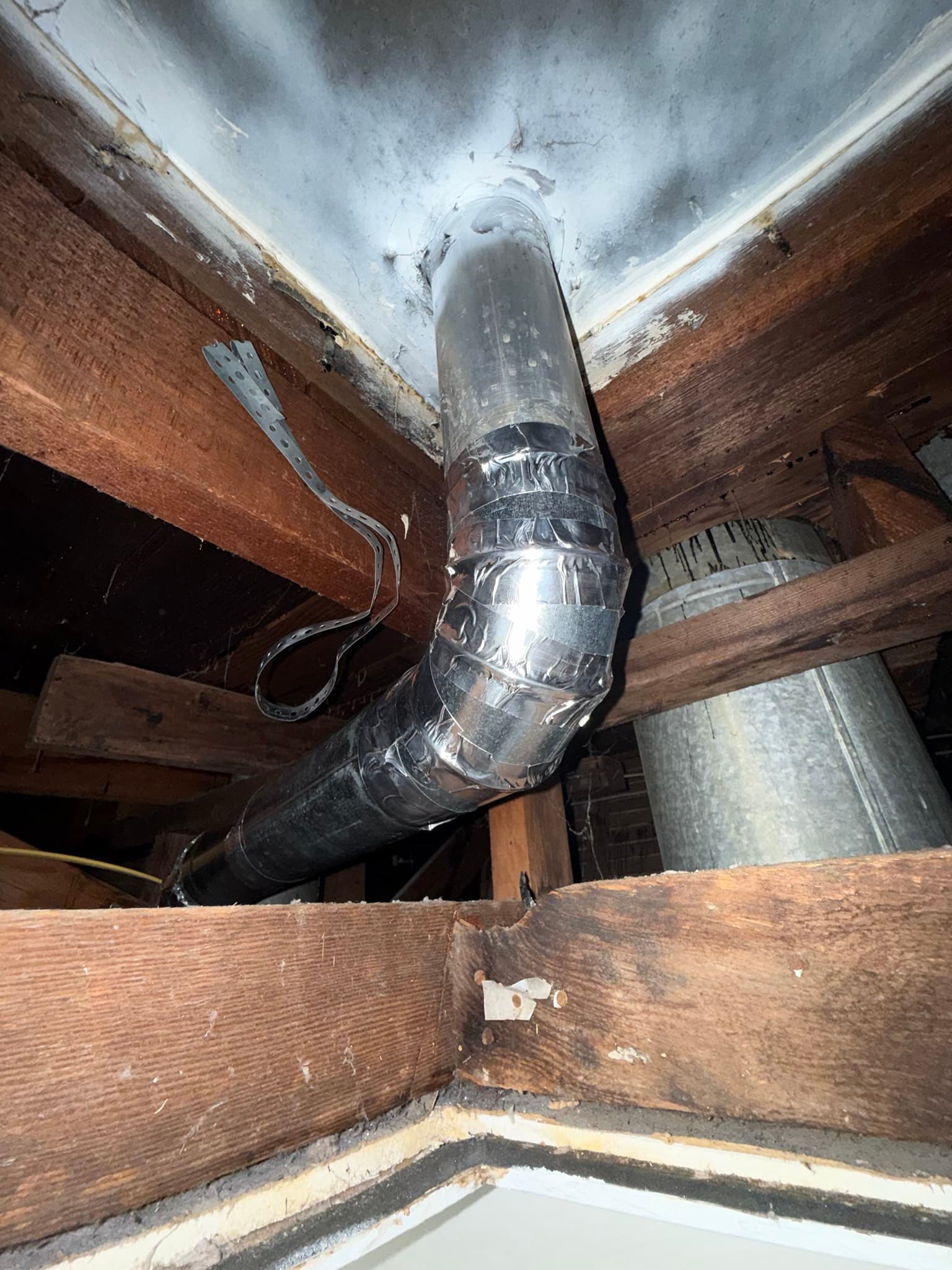
When our technician arrived at this San Francisco residence, the first thing that stood out was the condition of the exterior vent termination. The wall cap was heavily clogged with compacted lint and debris, and the metal duct connector below it showed significant corrosion and white efflorescence, both signs of long-term moisture exposure and restricted airflow. A blocked termination like this forces the dryer to push against back-pressure on every cycle, which shortens the life of the appliance, extends drying times, and allows lint to accumulate deeper in the duct system.
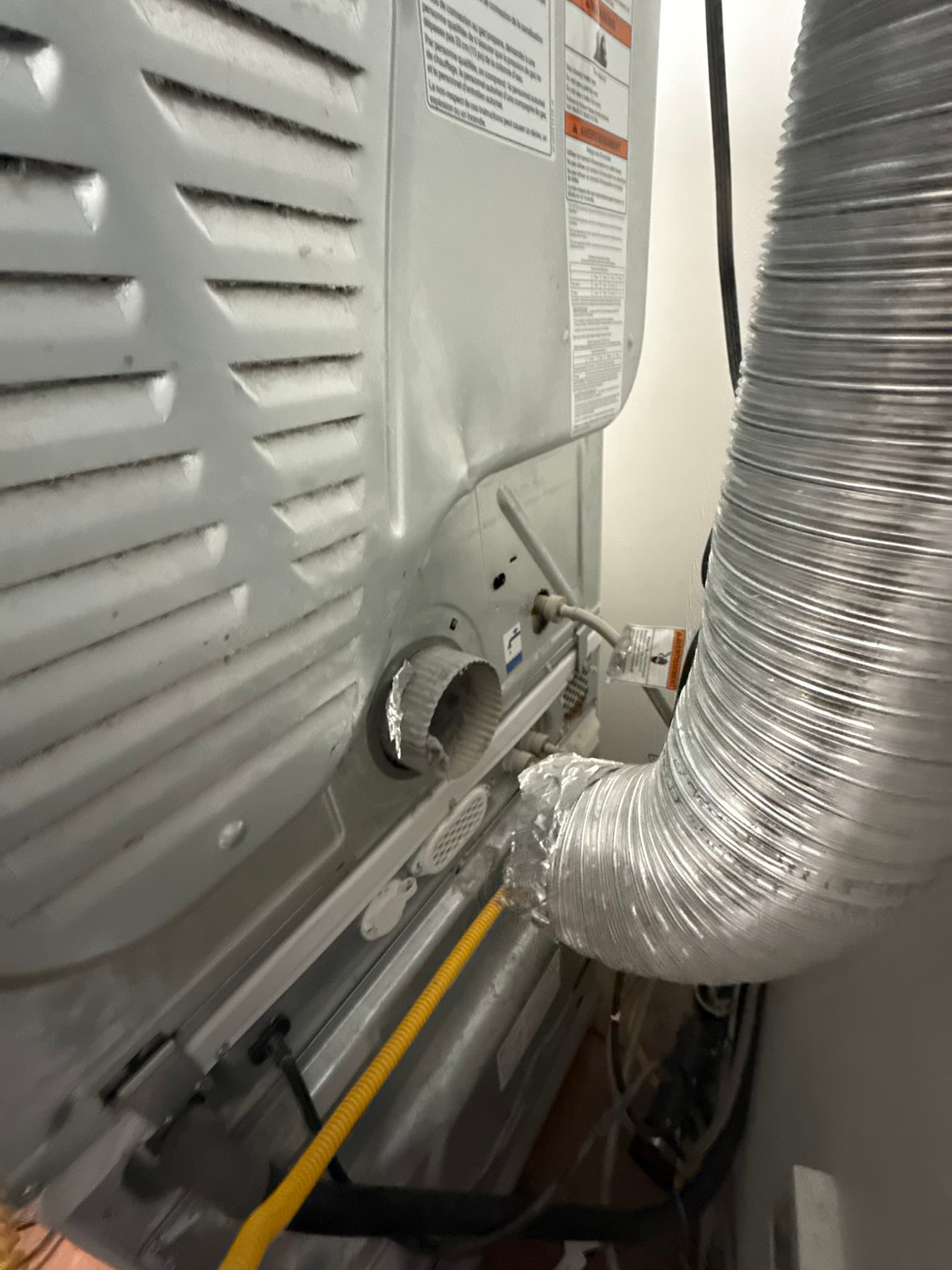
Behind the dryer, the transition duct connecting the appliance outlet to the rigid exhaust duct run was the critical problem. The existing flexible connector did not meet current requirements under IRC M1502.4.3, which mandates that transition ducts be a single length listed and labeled to UL 2158A, no longer than 8 feet, and never concealed within construction. The connection was also not properly secured. Across systems like this, improperly rated or poorly secured transition ducts are among the most common sources of lint escape into the wall cavity and reduced exhaust performance.
What We Did
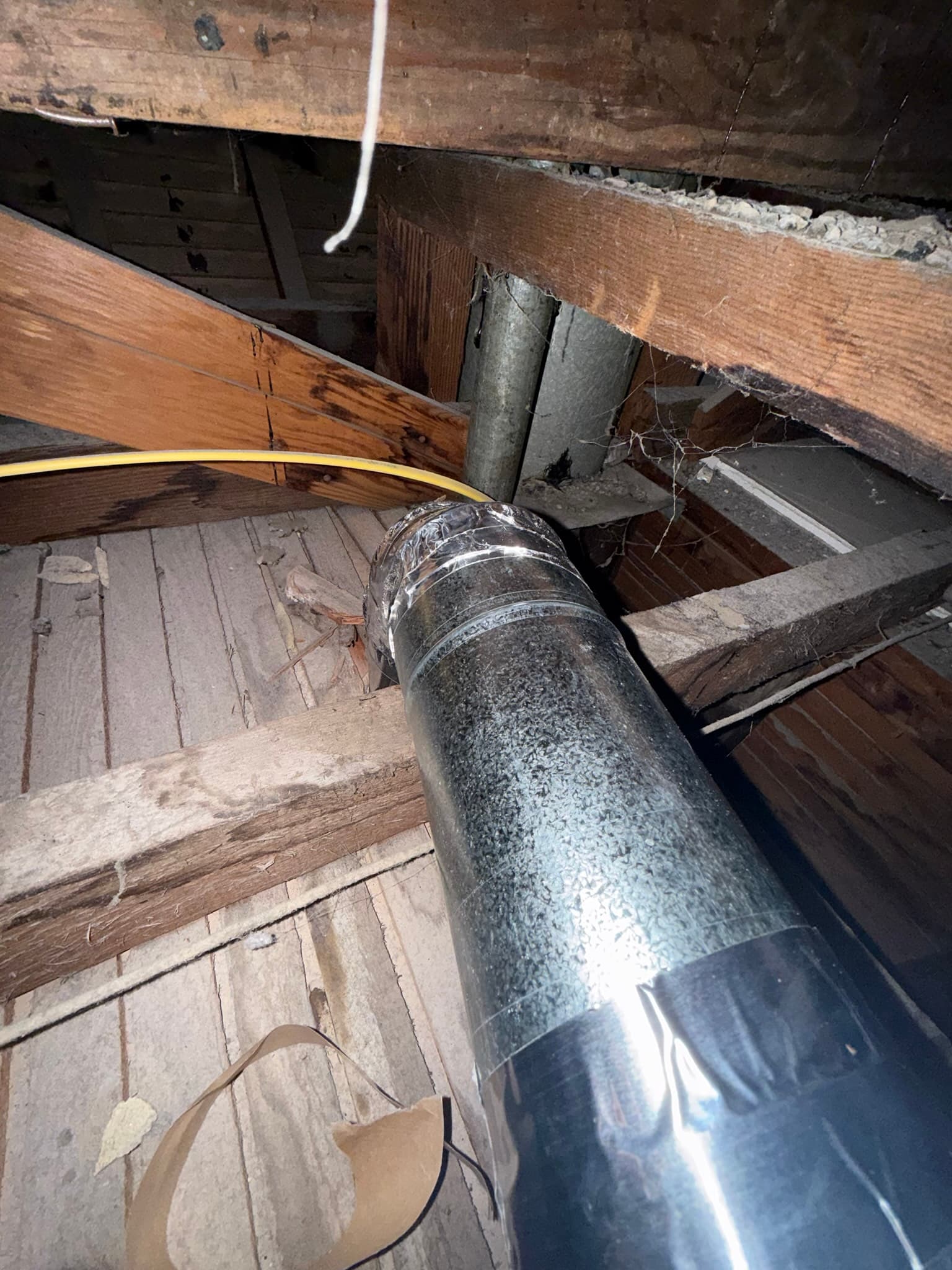
Our technician removed the non-compliant transition duct and replaced it with 4 feet of DryerFlex semi-rigid transition duct, a product listed to UL 2158A for dryer exhaust service. The new section was cut to the precise length needed for a clean, low-restriction path from the dryer outlet to the wall connection point, keeping the run well within the 8-foot maximum allowed by code. Both ends were fastened using two DryerClamps, which create a secure, airtight connection that will not loosen over time the way simple friction fits or standard hose clamps tend to do.
The total billed duct work covered 5 linear feet of the transition zone, accounting for the new DryerFlex section plus the connection fittings at each end. Every joint was oriented male-into-female in the direction of airflow, consistent with the installation requirements of IRC M1502.4.2, which also prohibits fasteners that protrude more than 1/8 inch into the interior of the duct, a detail that matters because protruding screws snag lint and create restriction points.
Airflow Verification
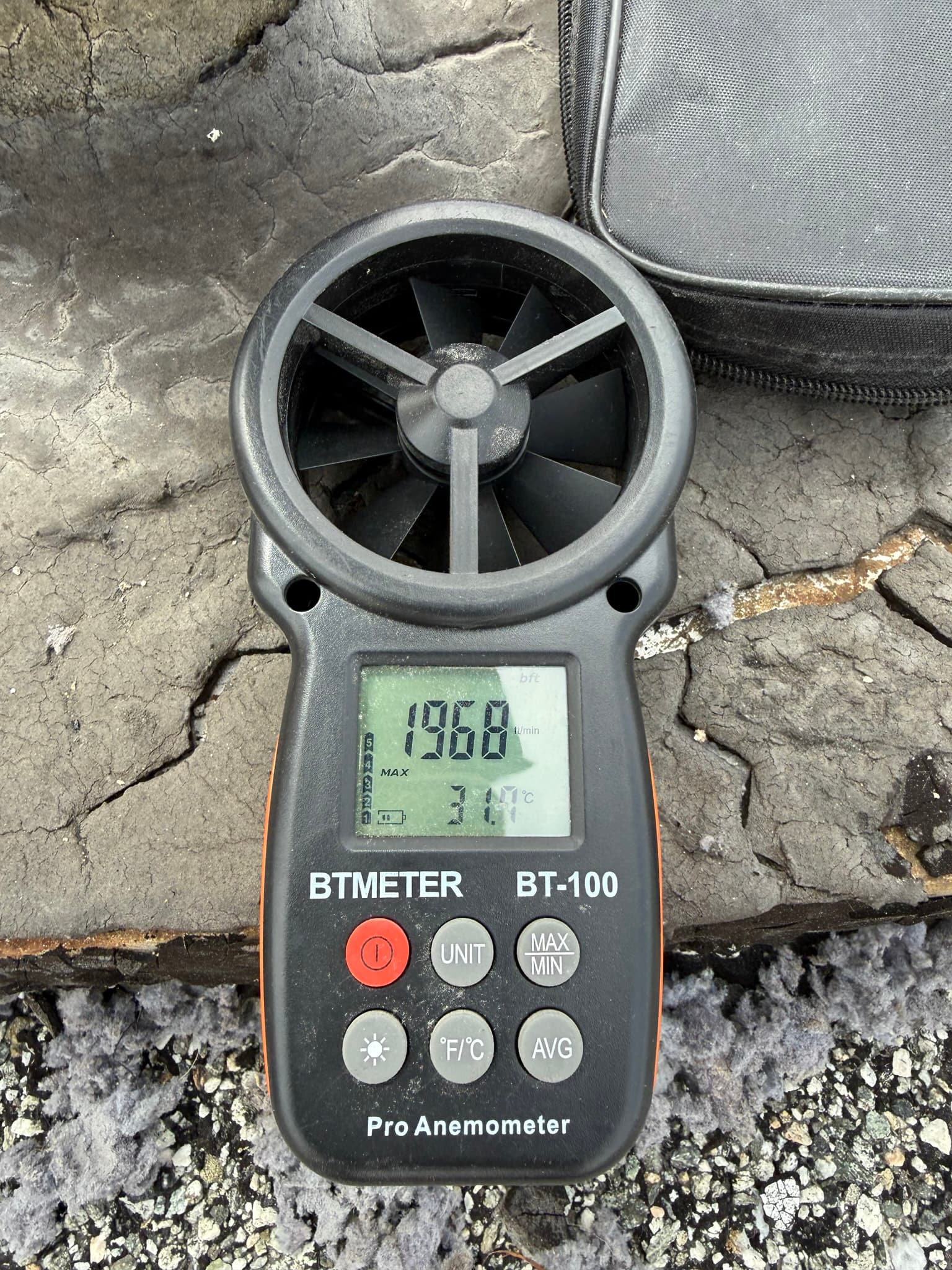
After installation, the system was tested for exhaust airflow using a calibrated anemometer at the exterior termination. The measured result came in at approximately 1,968 feet per minute, which substantially exceeds the commonly cited minimum threshold of around 1,200 feet per minute for adequate dryer exhaust performance. A reading in this range confirms that the new transition duct is flowing freely, that the exterior cap is not causing meaningful restriction, and that the dryer will be able to complete a normal load efficiently without overworking its motor or depositing lint inside the duct system.
Why the Transition Duct Matters
The transition duct is the one section of a dryer exhaust system that is allowed to be flexible, precisely because it needs to accommodate the dryer being pulled forward for service. But that flexibility comes with strict rules. Foil flex duct and vinyl duct are both prohibited under IRC M1502.4.1 because they cannot withstand the temperatures dryer exhaust can reach, their ribbed interiors trap lint at a much higher rate than smooth-wall duct, and they are prone to sagging and kinking behind the appliance. DryerFlex is specifically engineered to meet the UL 2158A listing requirement: it uses a robust semi-rigid construction that resists kinking, maintains a smooth interior for lint flow-through, and holds its shape even when the dryer is repositioned. Securing it with dedicated DryerClamps rather than improvised fasteners ensures the joint integrity holds across years of vibration and heat cycling.
The Outcome
With the new 4-foot DryerFlex transition duct and two DryerClamps in place, this San Francisco home's dryer exhaust system now meets IRC M1502.4.3 requirements at the transition zone and delivers confirmed, strong airflow to the exterior. The dryer can exhaust hot, moist, lint-laden air completely on every cycle, which means shorter drying times, lower energy use, and significantly reduced fire risk. Homeowners in San Francisco's older housing stock frequently encounter dryer vent systems that were installed before current codes were adopted, and this job is a clear example of how a targeted, properly specified repair can bring a system back into full compliance without a complete duct replacement.
Project photos
12 photos
Need similar work in San Francisco?
Get a free quote - same-week appointments usually available.