
San Mateo · Residential Dryer Exhaust Cleaning Inspection
Dryer Vent Cleaning & Wall Cap Replacement in San Mateo
A San Mateo home received a full dryer exhaust cleaning and inspection, a new exterior wall vent installation, and a repaired transition duct connection - restoring safe, code-compliant airflow from the dryer to the outdoors.
Completed August 12, 2026
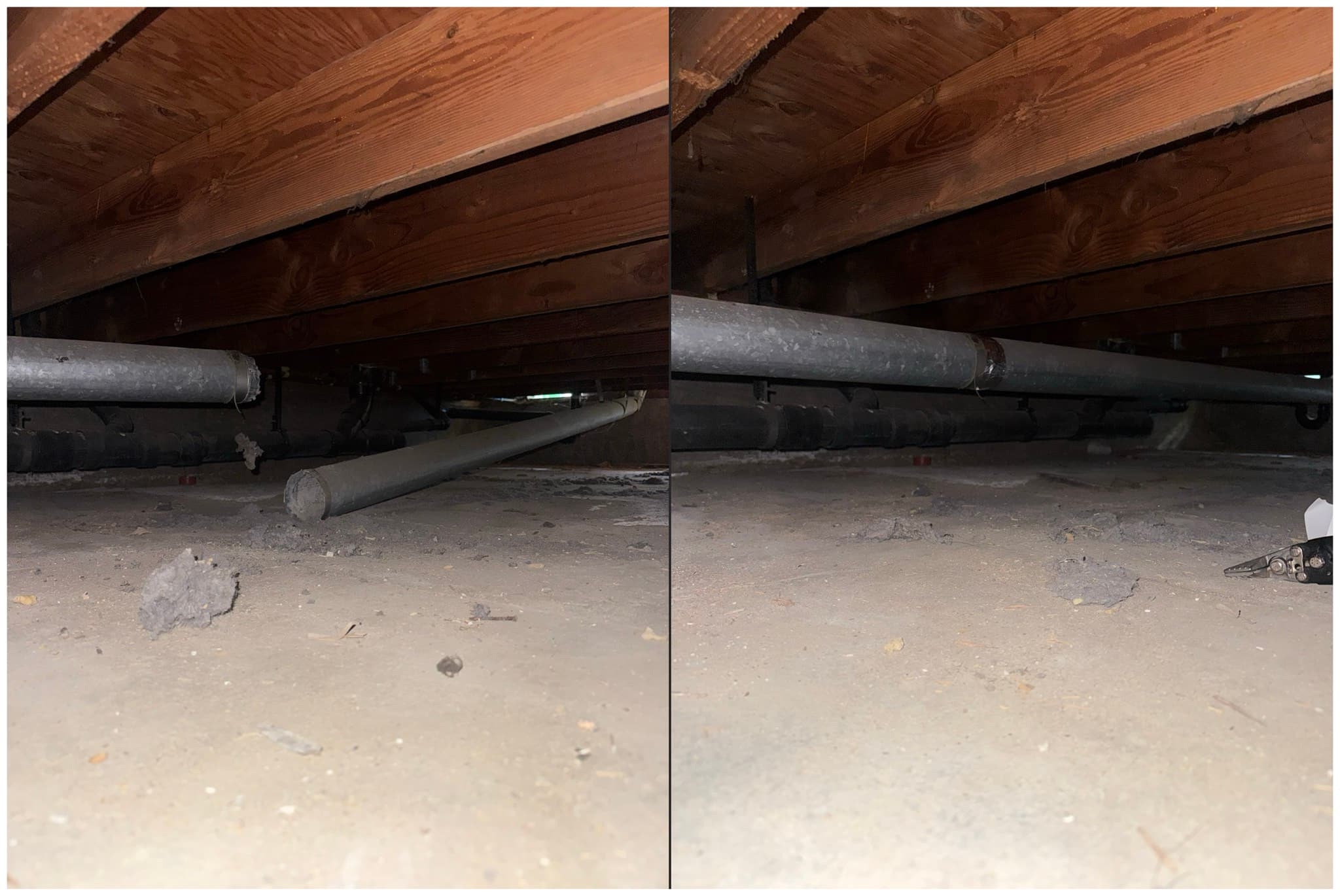
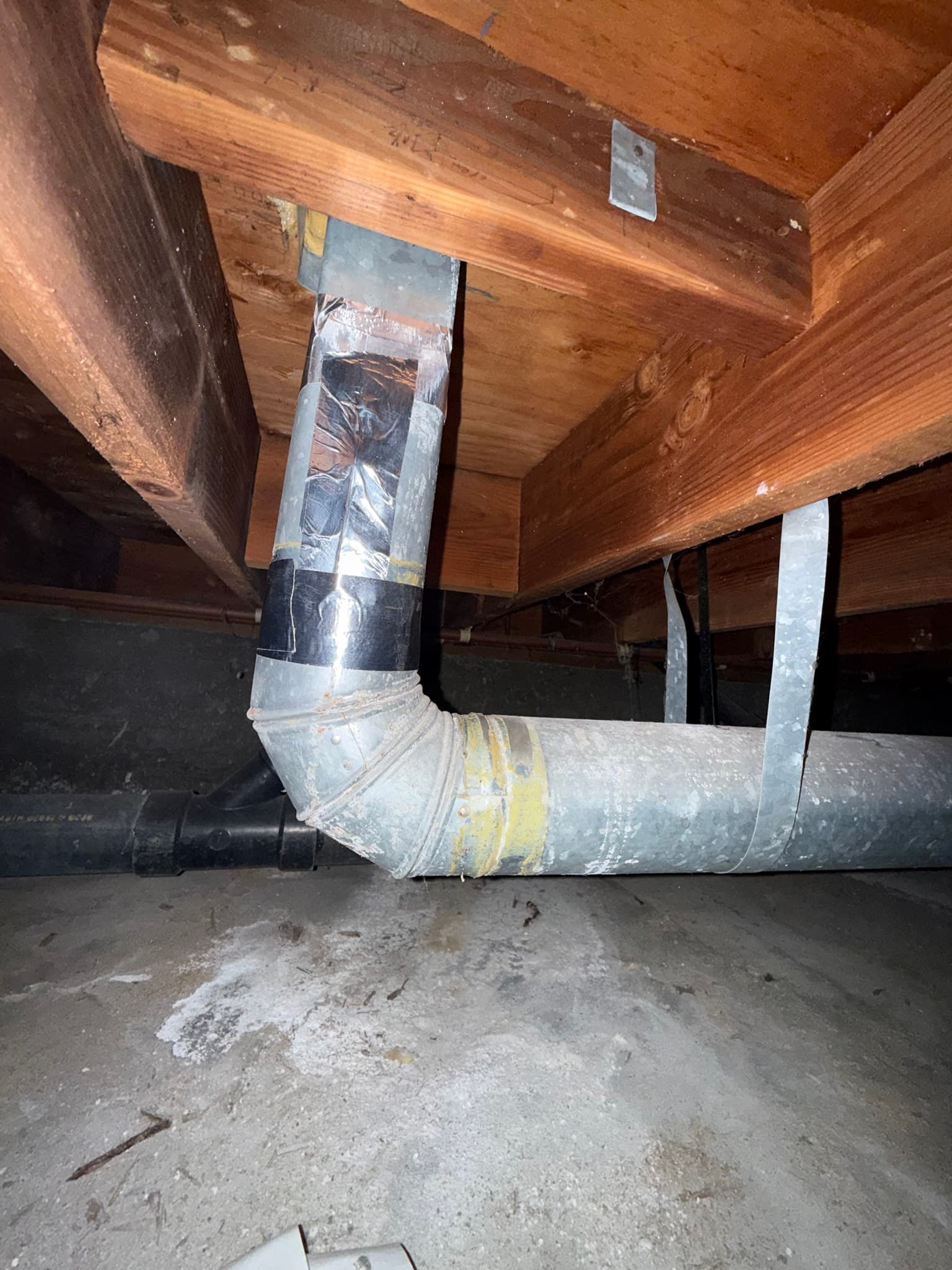
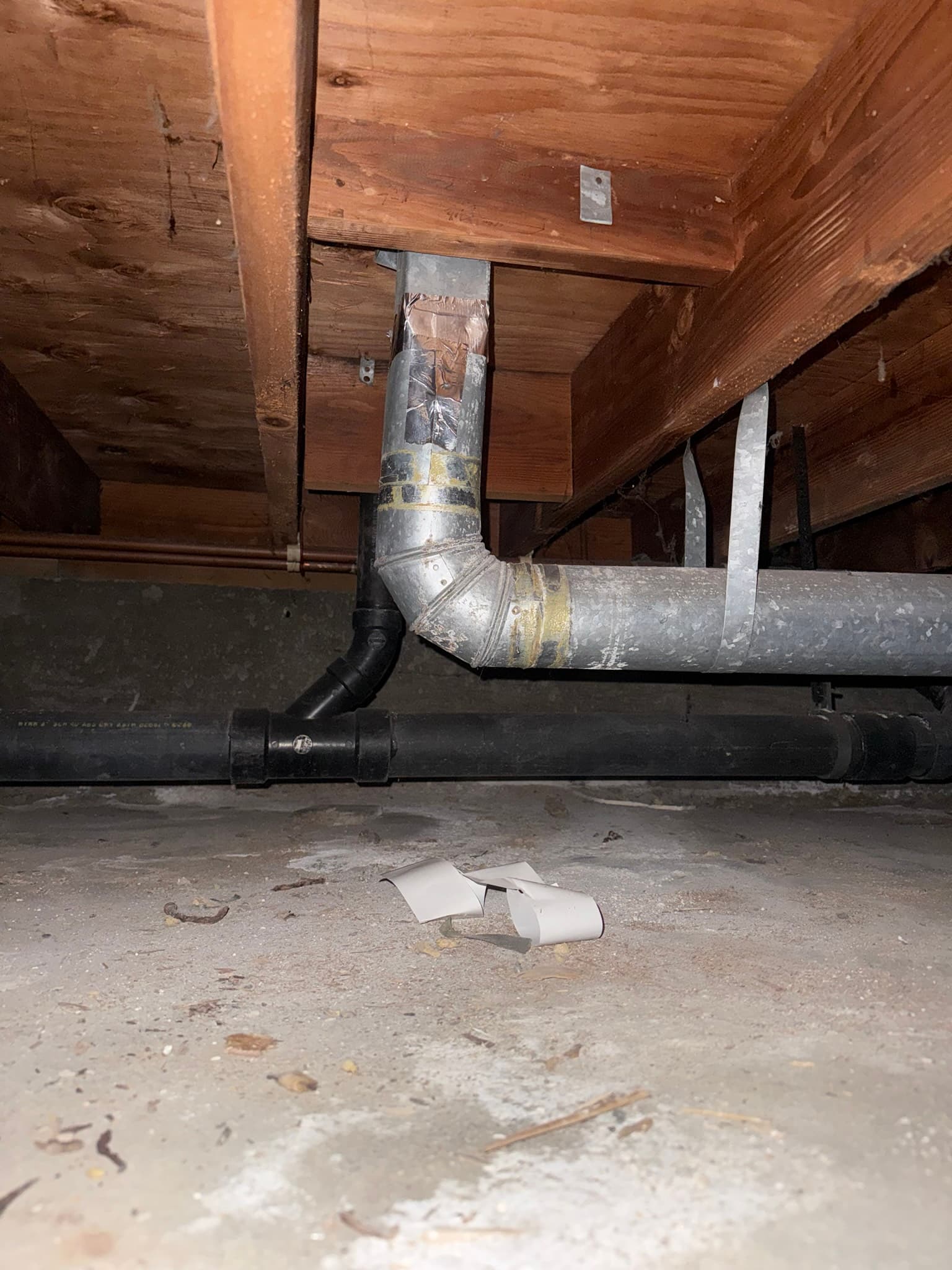
The previously disconnected duct joint, refastened with screws and sealed with foil tape and properly supported
What We Found
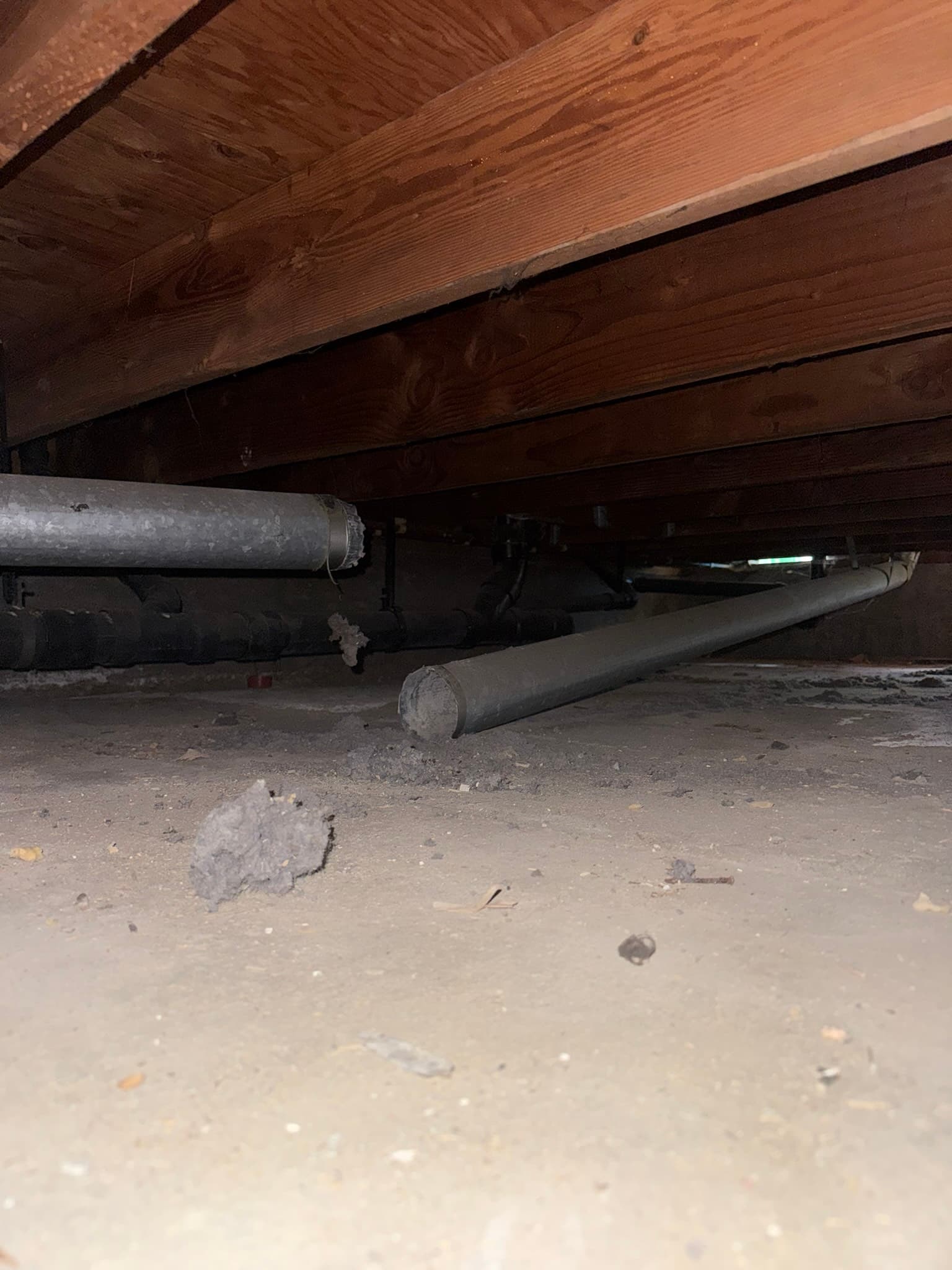
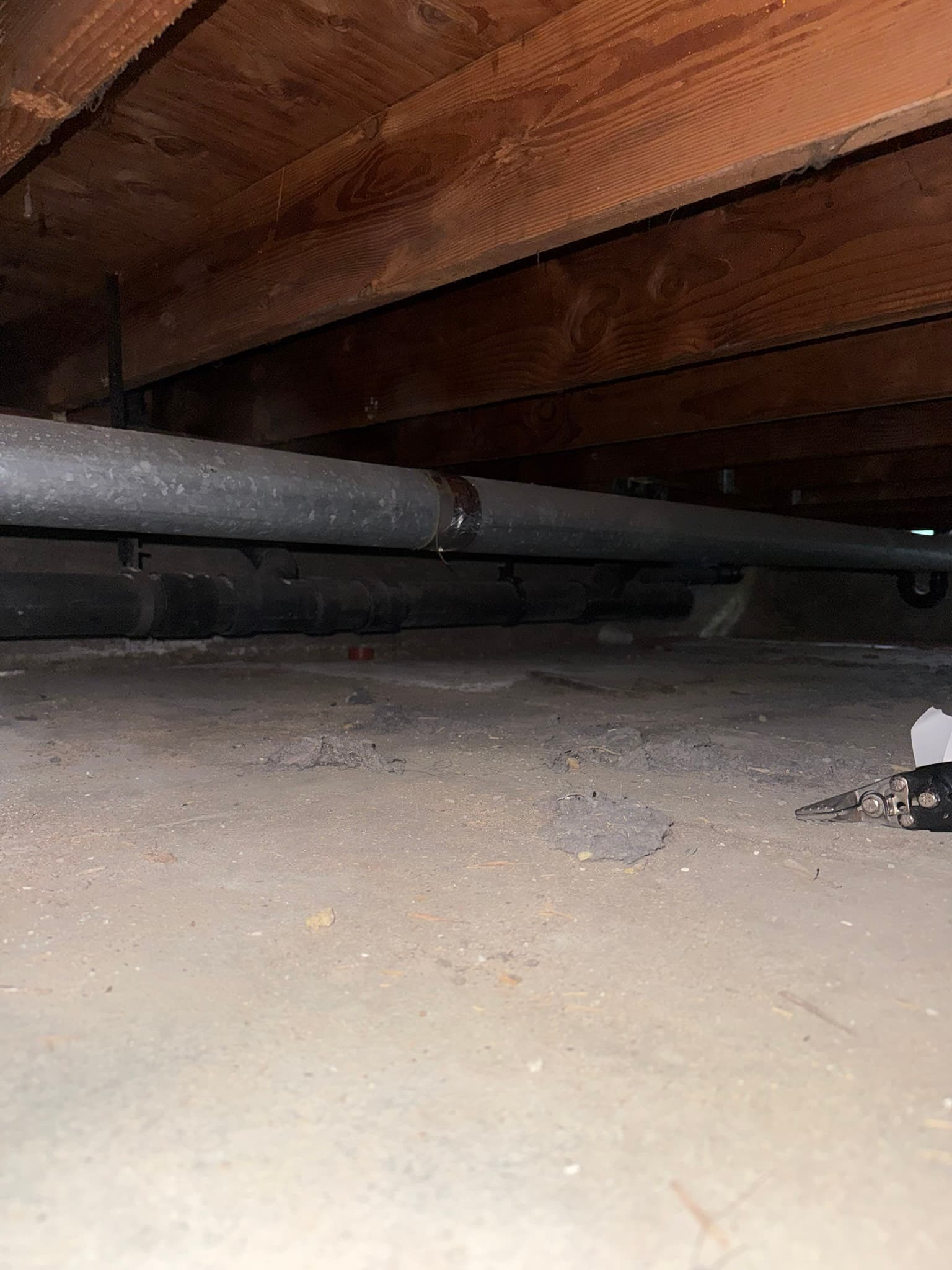
When our technician arrived at this San Mateo residence, the dryer exhaust system showed several conditions that needed attention before the next laundry cycle. The ductwork running through the crawl space was heavily coated with compacted lint on its exterior surfaces, and debris had accumulated on the surrounding concrete floor, pointing to a long history of reduced airflow and minimal maintenance. More urgently, a joint in the duct had been left disconnected by a previous service company. A disconnected duct joint is a serious code violation under IRC M1502.2, which requires the exhaust system to convey all moisture and lint to the outdoors. When a joint separates, hot, moist, lint-laden air blows directly into the crawl space or wall cavity, creating conditions for mold growth, surface lint accumulation, and, in a gas dryer installation, potential carbon monoxide exposure.
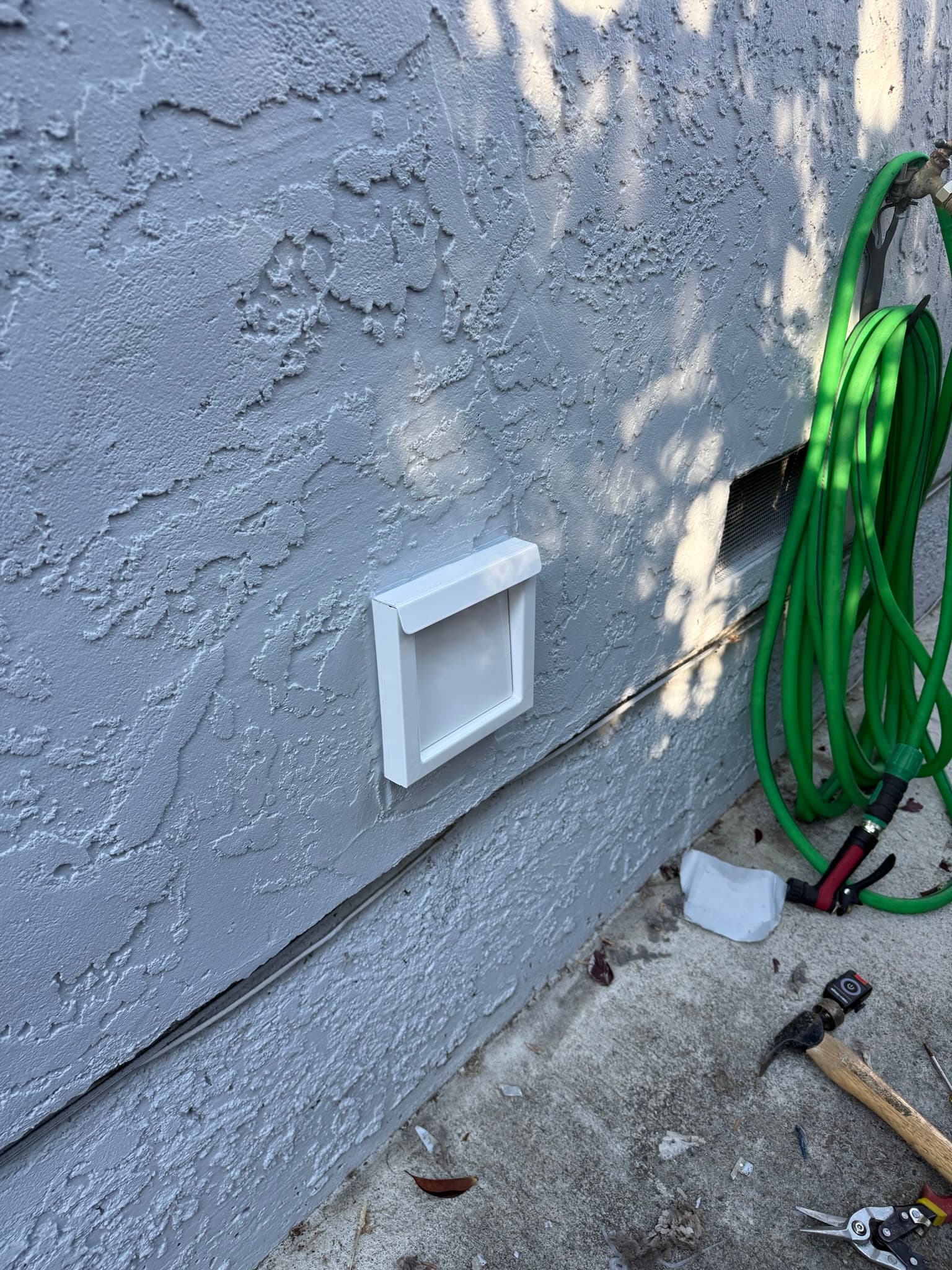
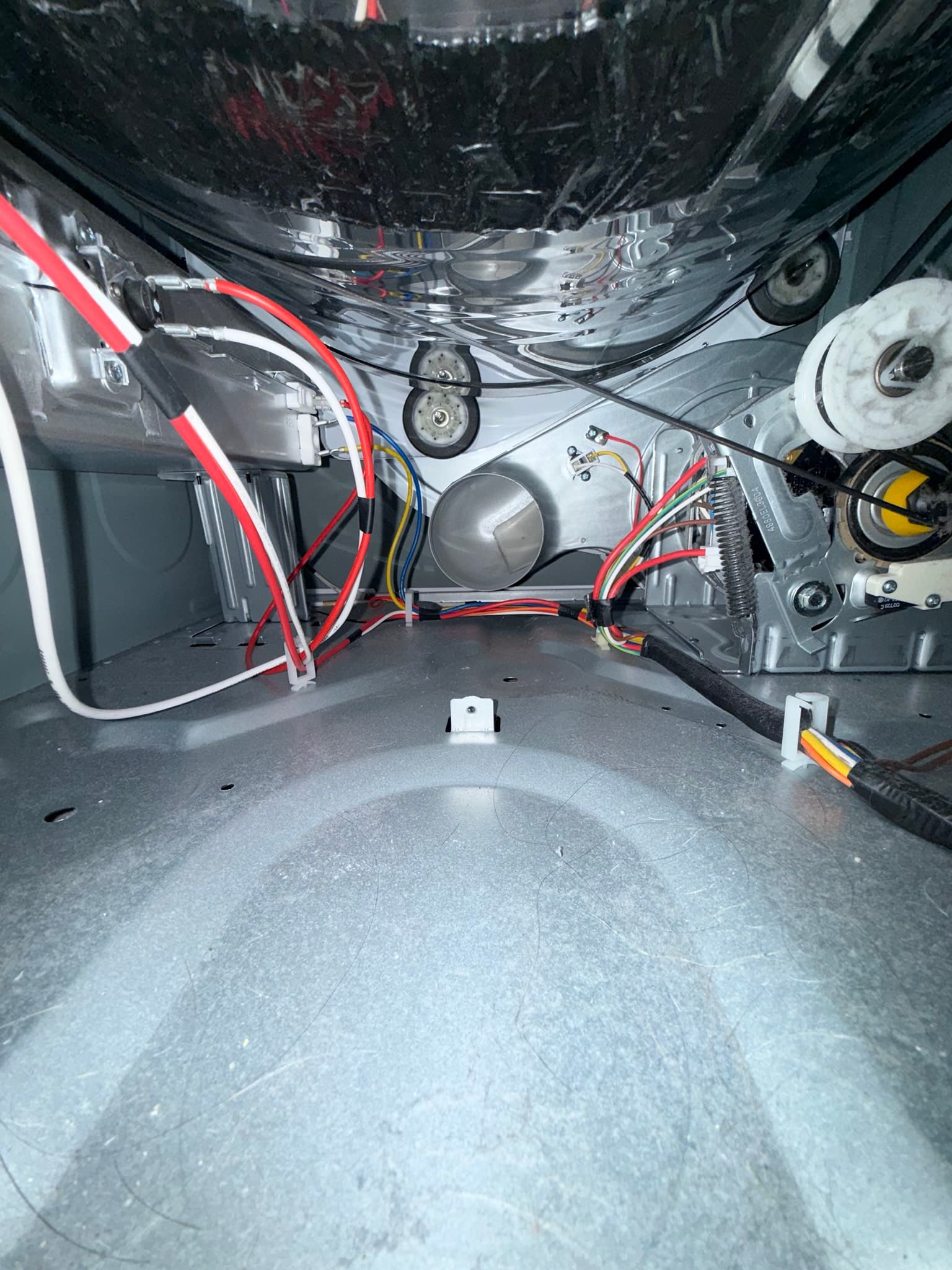
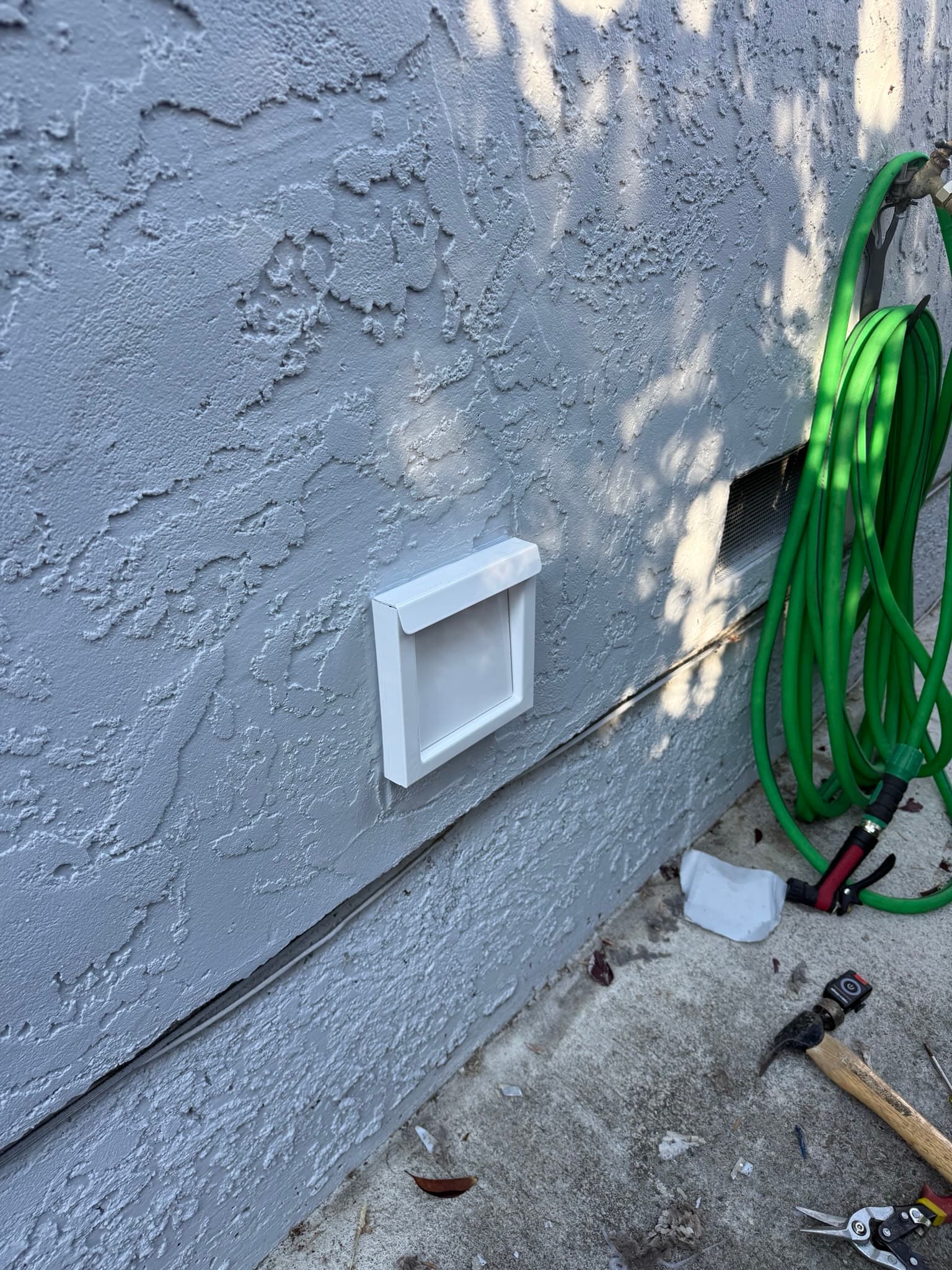
The technician also noted that the existing exterior termination cap needed to be replaced. The old cap was not meeting current performance standards, and a new wall vent was required to provide a reliable, magnetically-latched backdraft damper as called for under IRC M1502.3. During the visit, the transition duct connecting the back of the dryer to the in-wall duct run was also assessed and found to require replacement.
What We Did: Duct Repair and Transition Duct Replacement
The disconnected duct joint in the crawl space was reconnected and properly fastened using two sheet metal screws, then sealed with foil tape rated for dryer exhaust applications. This brought the joint back into compliance with IRC M1502.4.2, which requires all duct joints to be mechanically fastened and sealed. The repaired section was confirmed to be well-supported and free of movement, which is essential in a crawl space environment where vibration and settling can work connections loose over time.
The transition duct, which is the flexible connector between the dryer's exhaust outlet and the start of the rigid duct run, was replaced with 4 feet of DryerFlex transition duct, secured at both ends with two DryerClamps. DryerFlex is a UL 2158A-listed semi-rigid transition duct that is specifically manufactured for dryer exhaust service. At 4 feet in length it falls well within the 8-foot maximum allowed under IRC M1502.4.1 for transition ducts, and because DryerFlex is a smooth-interior, all-metal product, it does not trap lint the way accordion-style plastic or foil flex duct does. The clamp connections at each end eliminate the risk of the duct pulling free at the dryer outlet or wall collar.
What We Did: Exterior Wall Vent Installation
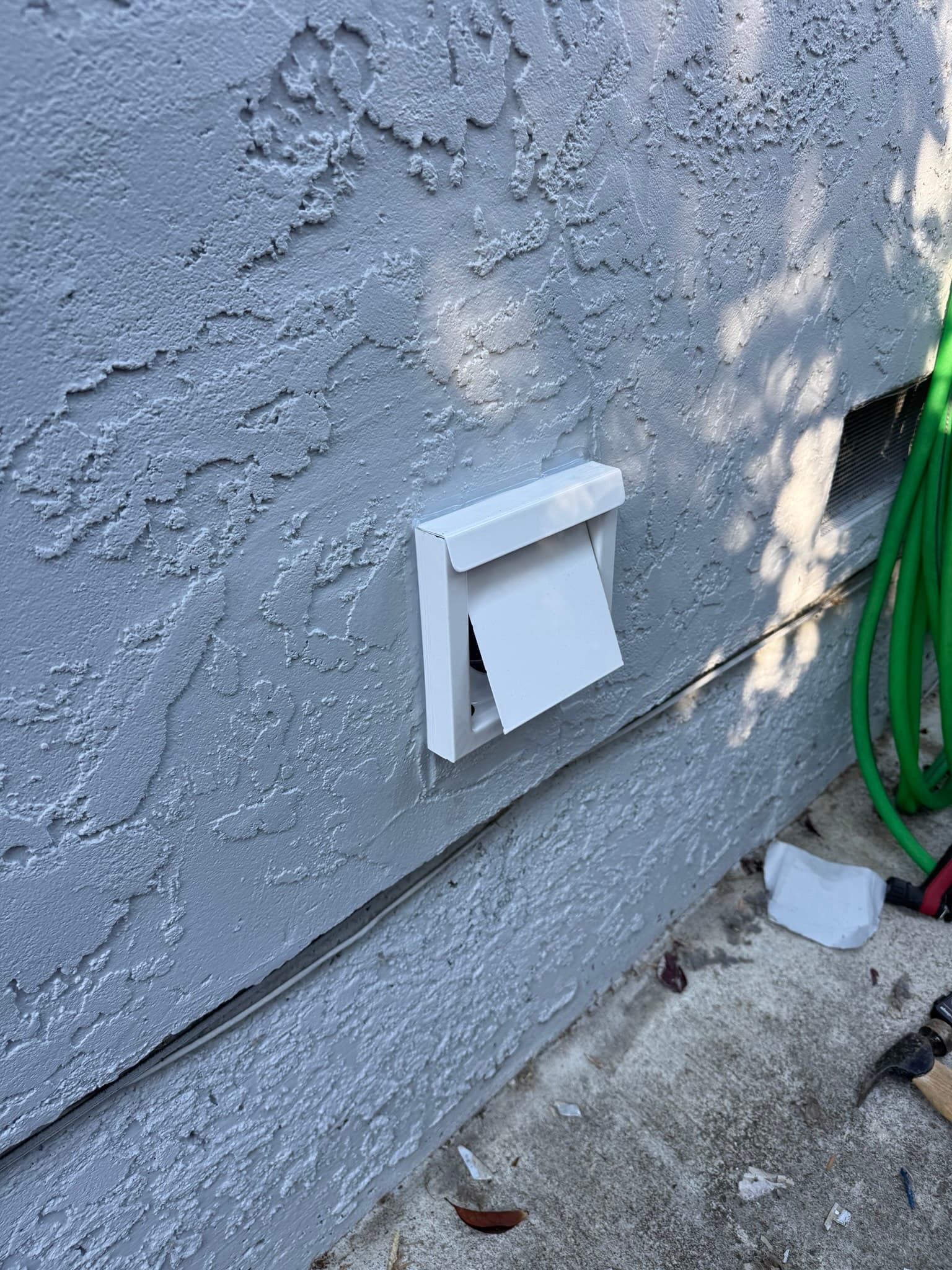
The old exterior cap was removed and replaced with a new Innovate dryer wall vent. This unit features a heavy-gauge Galvalume steel body with a powder-coat finish that resists corrosion and UV degradation, making it well-suited for the stucco exterior walls common throughout San Mateo. The design uses integrated magnets to hold the damper flap firmly closed whenever the dryer is not running, preventing backdrafts, cold air infiltration, and pest entry. The technician verified correct damper operation in both states: with the dryer off, the flap sat closed and held securely against its magnetic seat; with the dryer running, the flap opened fully, confirming unrestricted airflow to the exterior. The installation meets or exceeds the requirements of IRC M1502.3, which mandates a backdraft damper at the termination and prohibits any screen at the vent opening that could trap lint.
What We Did: Full Exhaust Cleaning and Inspection
With the duct connections restored and the new wall cap in place, the technician performed a complete dryer exhaust cleaning from the dryer connection all the way to the exterior termination. The cleaning process uses a drill-driven rotary brush to break up compacted lint deposits along the full length of the duct, followed by a high-powered shop vacuum to extract the loosened material. This combination is far more effective than compressed air alone, which can compact debris further down the line rather than remove it. Lint accumulation of the type visible throughout this crawl space is the leading contributing factor in residential dryer fires, with the U.S. Fire Administration attributing roughly 2,900 home dryer fires per year to this cause. Removing that accumulated material restores the airflow the dryer needs to operate safely and efficiently.
The Outcome
By the end of the visit, this San Mateo home had a fully reconnected, cleaned, and inspected dryer exhaust system terminating at a new, properly functioning exterior wall cap. The previously disconnected joint was refastened and sealed, the new 4-foot DryerFlex transition duct with DryerClamp connections provided a secure and code-compliant link between the dryer and the duct run, and the new Innovate wall vent confirmed proper damper operation under both static and operating conditions. Annual professional cleaning and inspection is the best way to keep the system in this condition going forward, as lint accumulation is an ongoing process that depends on dryer use frequency, duct length, and the number of bends in the run.
Project photos
9 photos
Need similar work in San Mateo?
Get a free quote - same-week appointments usually available.