
South San Francisco · Residential Dryer Exhaust Cleaning Inspection
Dryer Vent Cleaning & Inspection in South San Francisco
Dryer Vent Specialists completed a full residential dryer exhaust cleaning and inspection at a South San Francisco home, identifying several code violations including prohibited flexible duct material and improper installation practices, and installing a UL 2158A-rated transition duct to bring the system into compliance.
Completed July 16, 2026
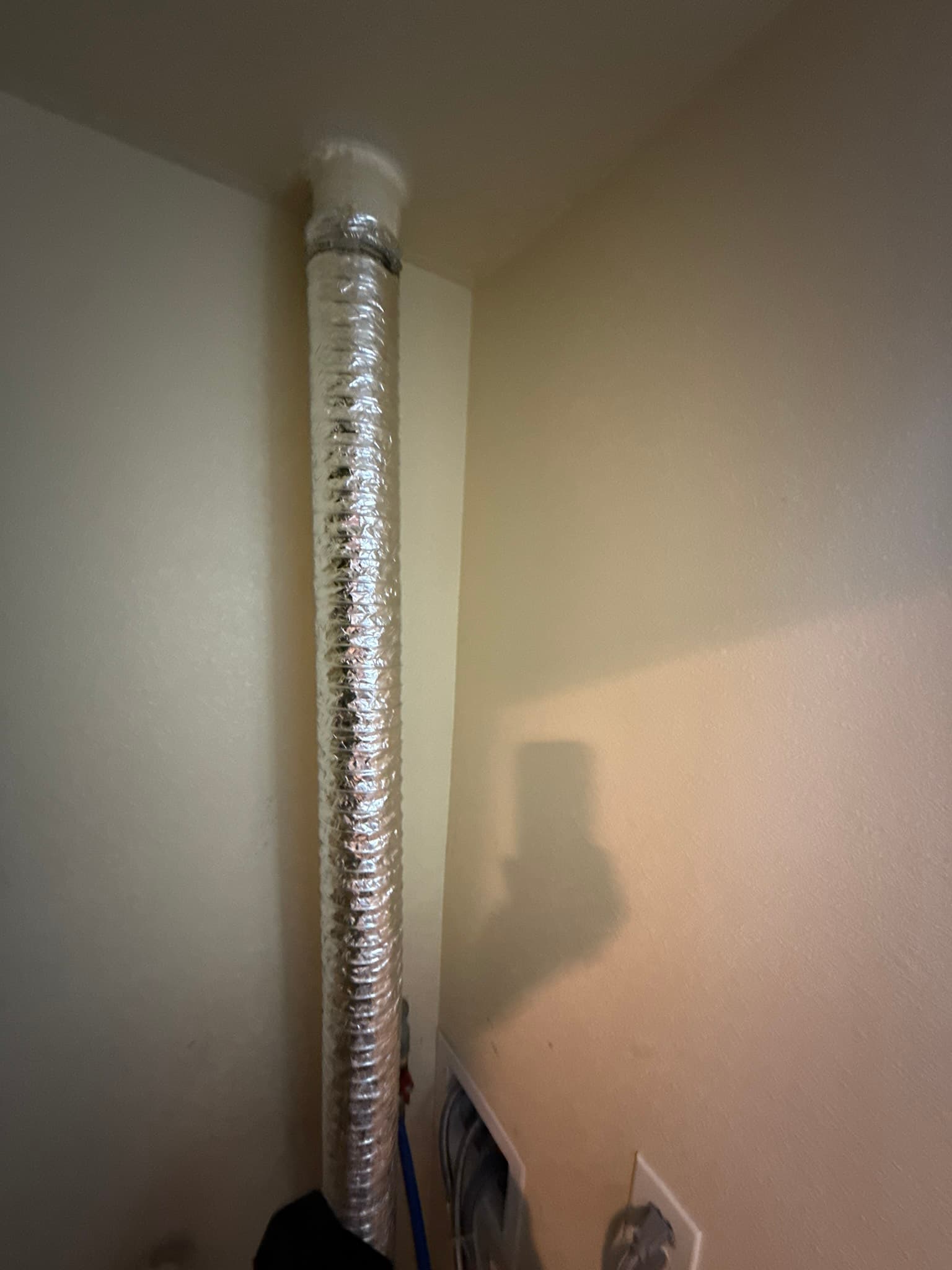
Non-compliant duct taped with cloth duct tape, which degrades under heat and is not an approved sealant
What We Found
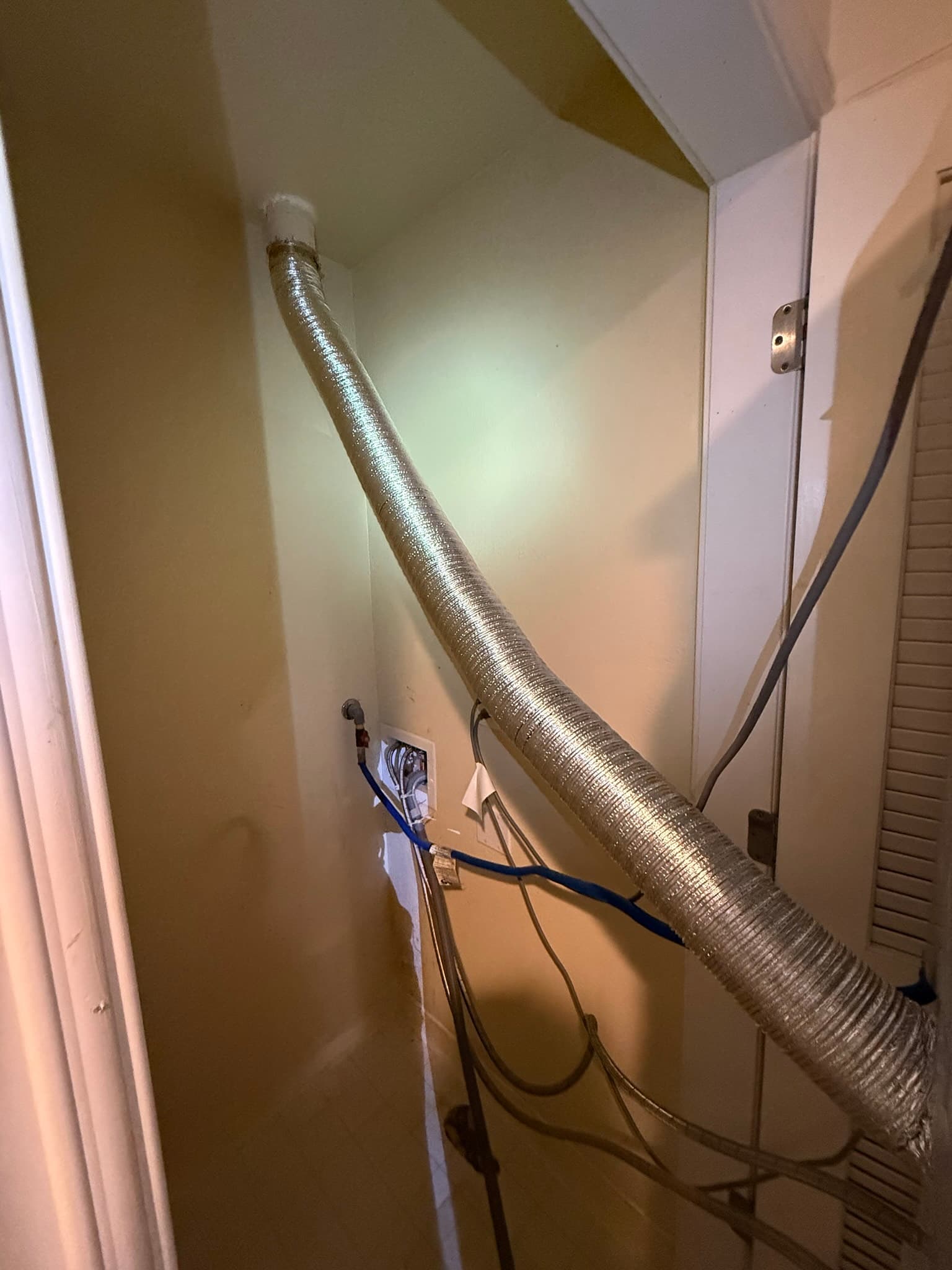
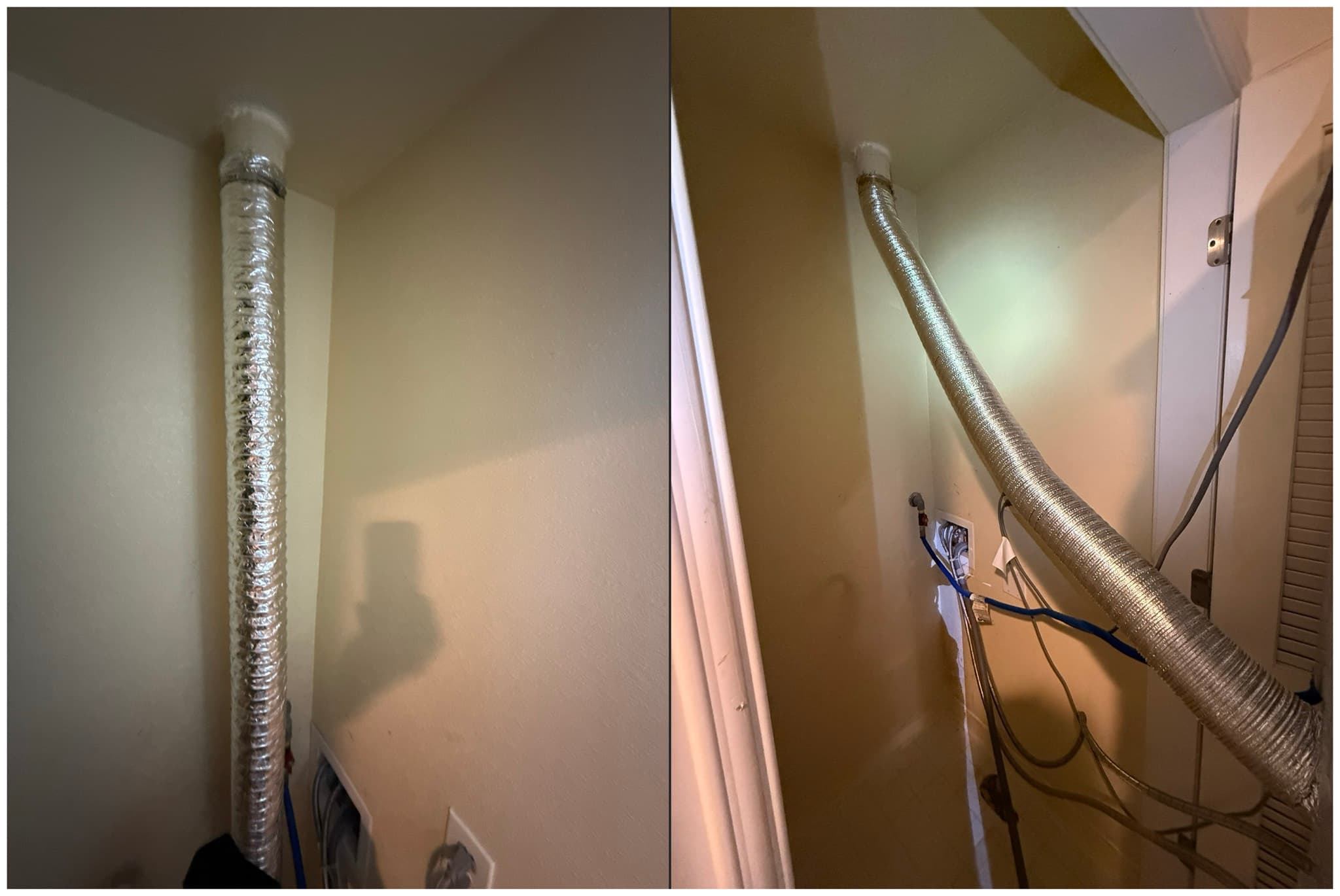
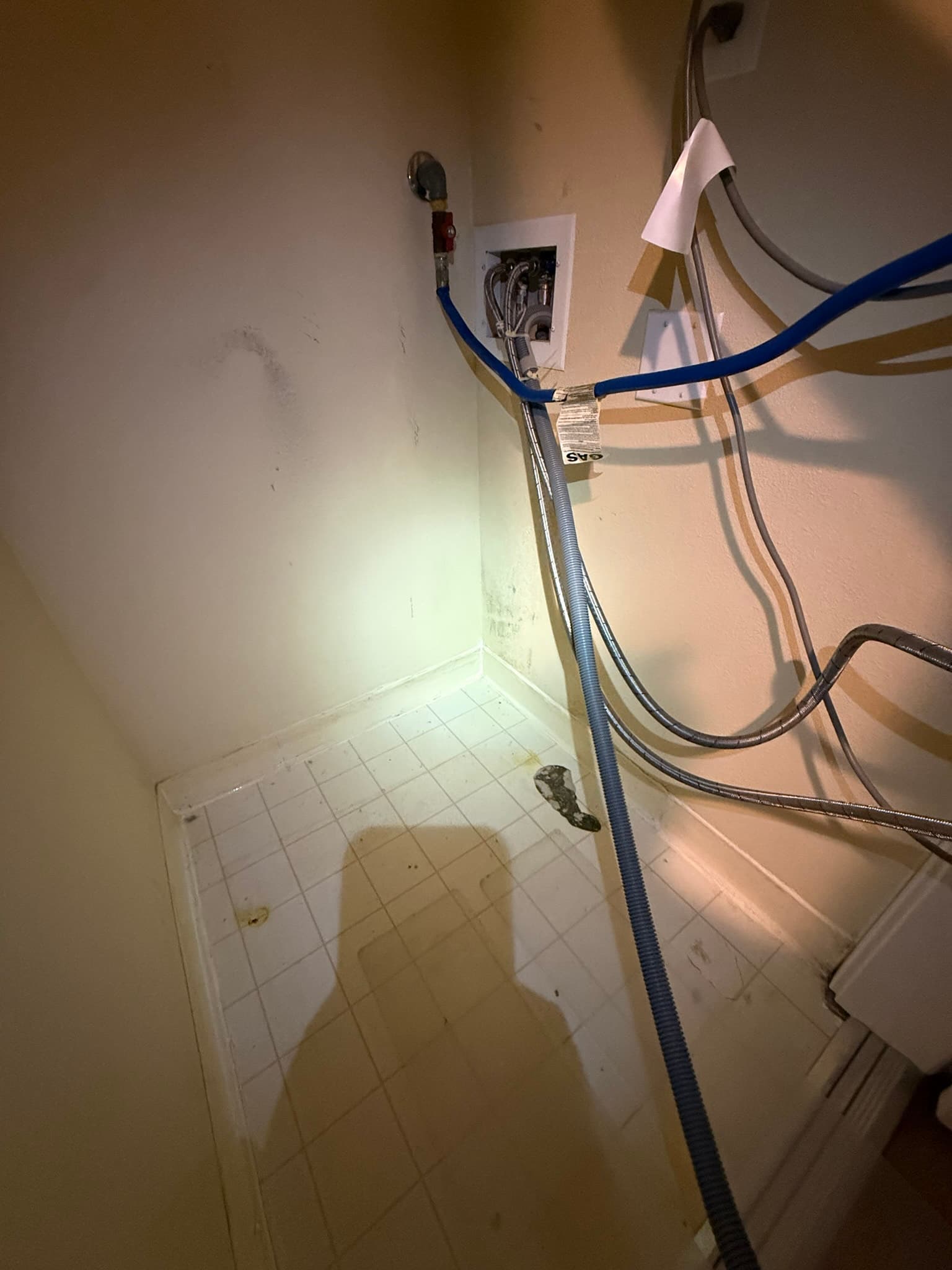
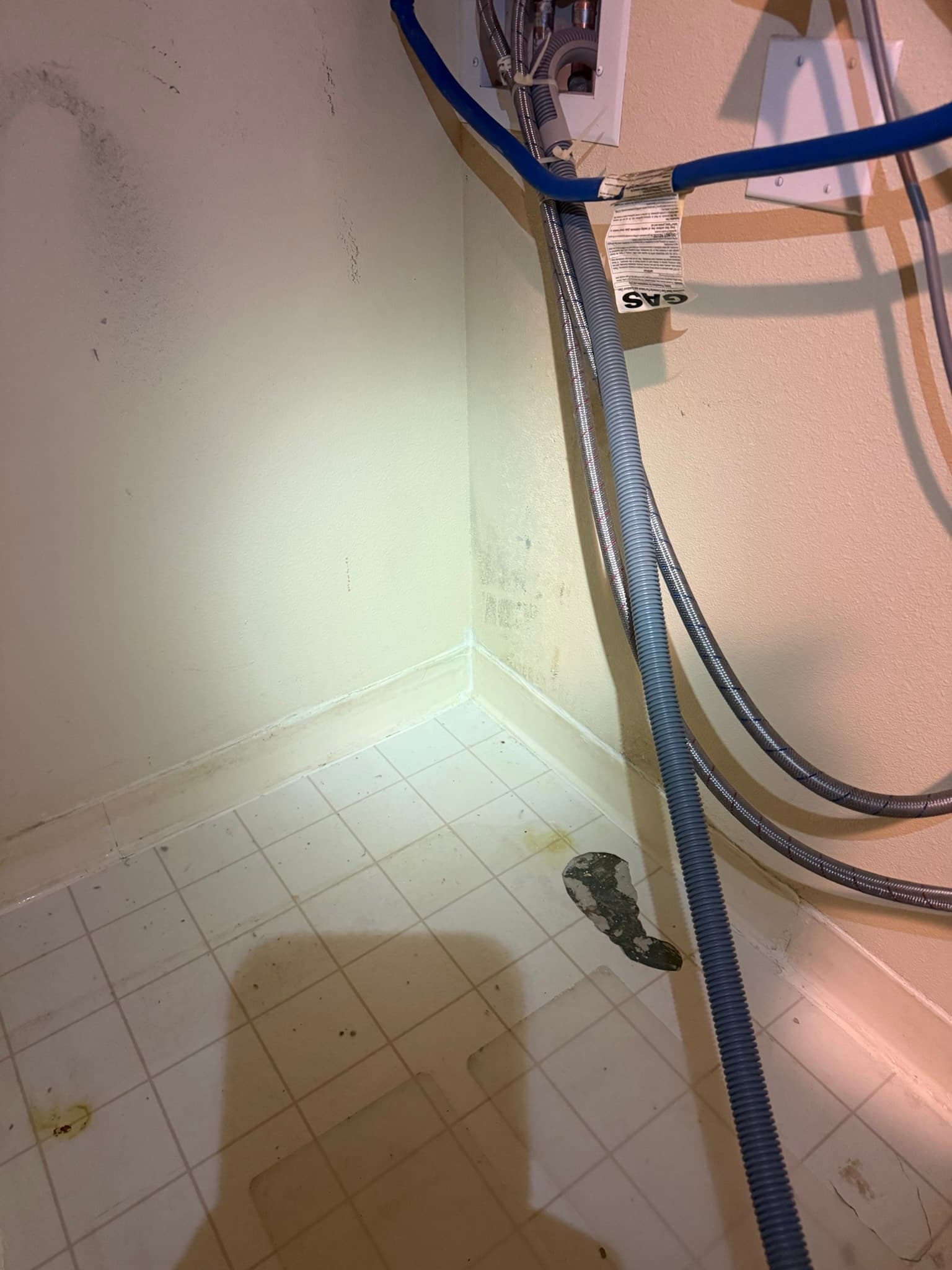
Our technicians arrived at a South San Francisco residence for a scheduled dryer exhaust cleaning and inspection. The existing installation presented several concerns that warranted immediate attention. The transition duct connecting the dryer to the wall was flexible foil-style material, a type explicitly prohibited under IRC M1502.4.1, which requires smooth-interior metal duct of no less than 0.0157 inch (No. 28 gauge). Foil flex duct features a ribbed interior surface that traps lint at rates four to eight times higher than smooth rigid duct, and it cannot reliably withstand the exhaust temperatures a residential dryer produces, which can exceed 200°F. The duct run also showed kinking along its length, lacked proper clamps or mechanical fasteners at connection points, and had unsupported spans that did not meet the maximum 4-foot support interval requirement. Visible moisture staining in the surrounding utility area indicated the system may have been venting improperly for some time.
Prohibited Materials and Installation Deficiencies
Photo documentation captured two distinct problem areas. In one section, flexible metallic duct was found routed diagonally through a wall cavity with multiple bends and no mechanical support, running in close proximity to electrical wiring. In a second area, duct material was wrapped along its full length with what appeared to be cloth-backed tape rather than UL 181B-FX listed metal foil tape. Cloth duct tape degrades rapidly under heat cycling and is not an approved sealing method per IRC M1502.4.2, which requires joints to be mechanically fastened and sealed with listed metal foil tape. Together, these deficiencies created elevated back-pressure, restricted airflow, and increased lint settlement risk inside the duct walls.
What We Did
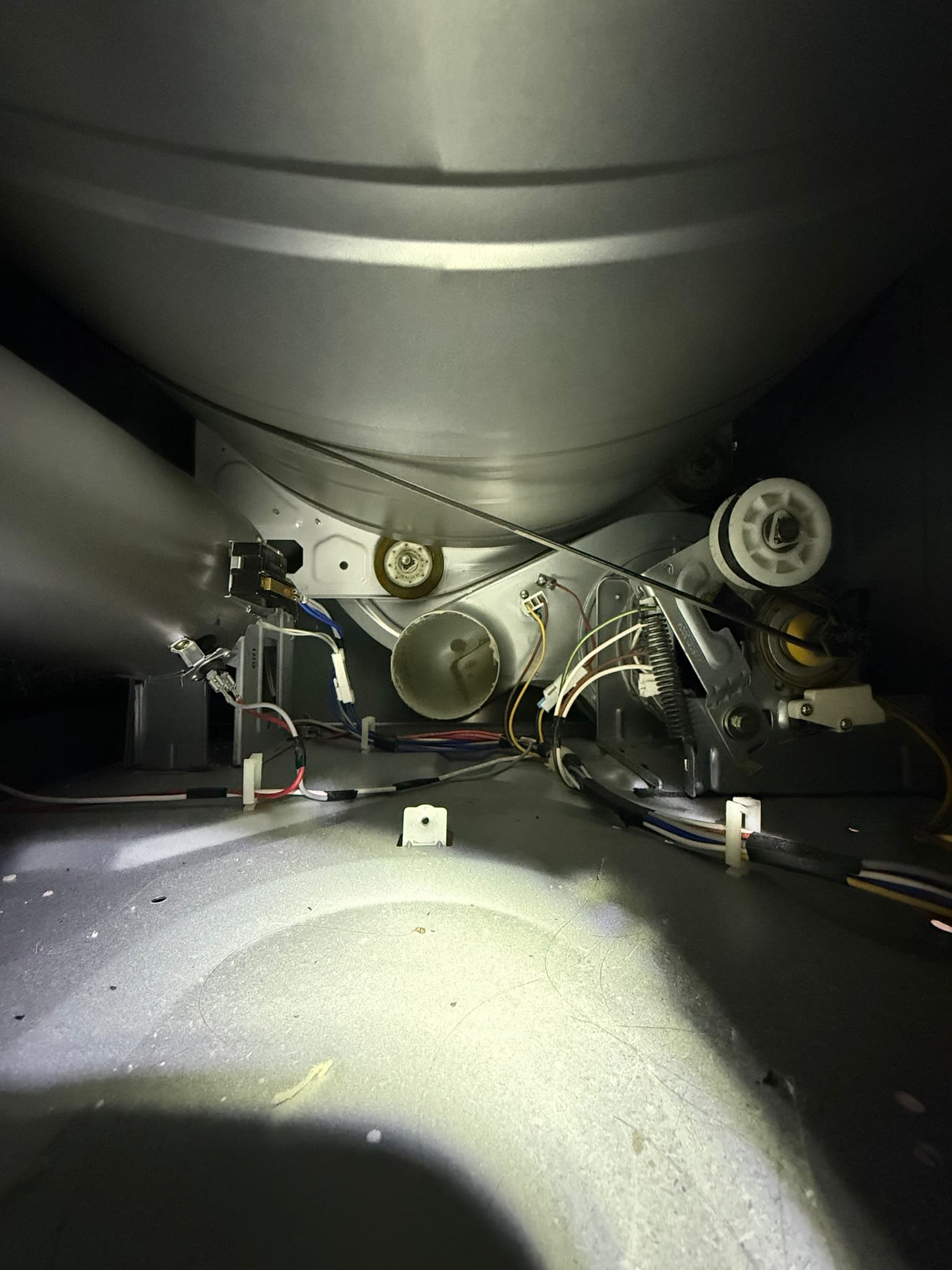
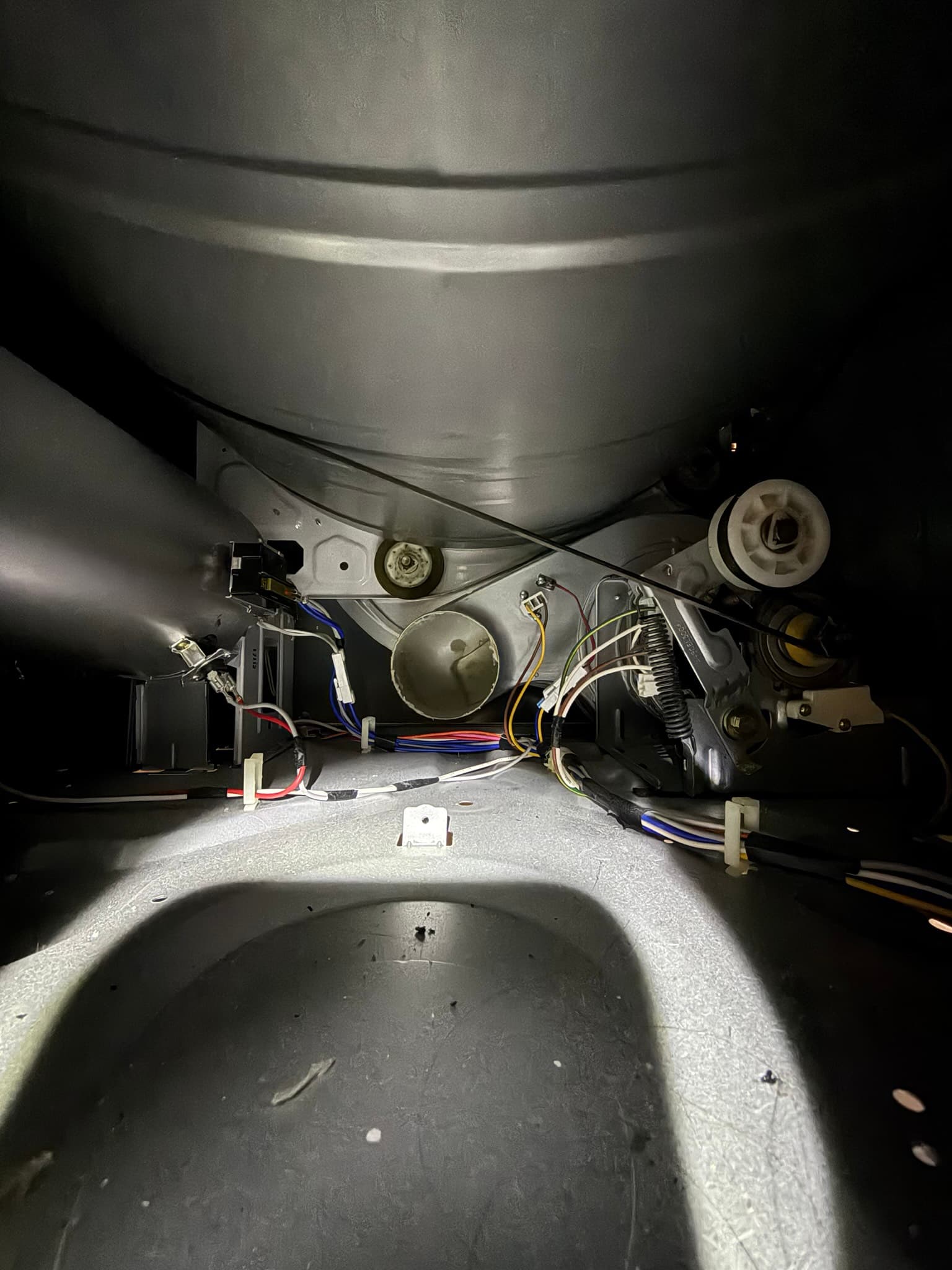
The technician performed a full cleaning of the dryer exhaust system using a rotary brush and high-velocity extraction to remove lint accumulation from the duct interior. The non-compliant flexible foil transition duct was removed and replaced with a UL 2158A-rated semi-rigid metal transition duct, properly sized at 4 inches in diameter and kept within the 8-foot maximum length allowed under IRC M1502.4.3. Connection points were secured with approved clamps, and all accessible joints were sealed with listed metal foil tape. The technician also inspected the dryer's internal components, including the blower wheel and felt drum seals, noting lint accumulation on interior surfaces that can affect heating efficiency over time.
Outcome and Recommendations
Following the cleaning and transition duct replacement, the exhaust pathway was verified to be clear and properly connected from the dryer outlet to the exterior termination. South San Francisco homeowners with older flexible or foil-style transition ducts are encouraged to schedule annual inspections, as lint accumulation and material degradation can develop quickly, particularly in installations with longer duct runs or multiple elbows. The U.S. Fire Administration estimates approximately 2,900 residential dryer fires occur each year, with lint accumulation identified as the leading contributing factor. Keeping the exhaust system clean and code-compliant is one of the most effective steps a homeowner can take to reduce that risk.
Project photos
7 photos
Need similar work in South San Francisco?
Get a free quote - same-week appointments usually available.