
San Mateo · Residential Dryer Exhaust Cleaning Inspection
Dryer Vent Cleaning & Inspection in San Mateo, CA
A San Mateo home received a full dryer exhaust cleaning, airflow inspection, and transition duct replacement to address severe lint buildup, a non-compliant duct connection, and a roof-mounted termination with restricted airflow.
Completed August 22, 2026
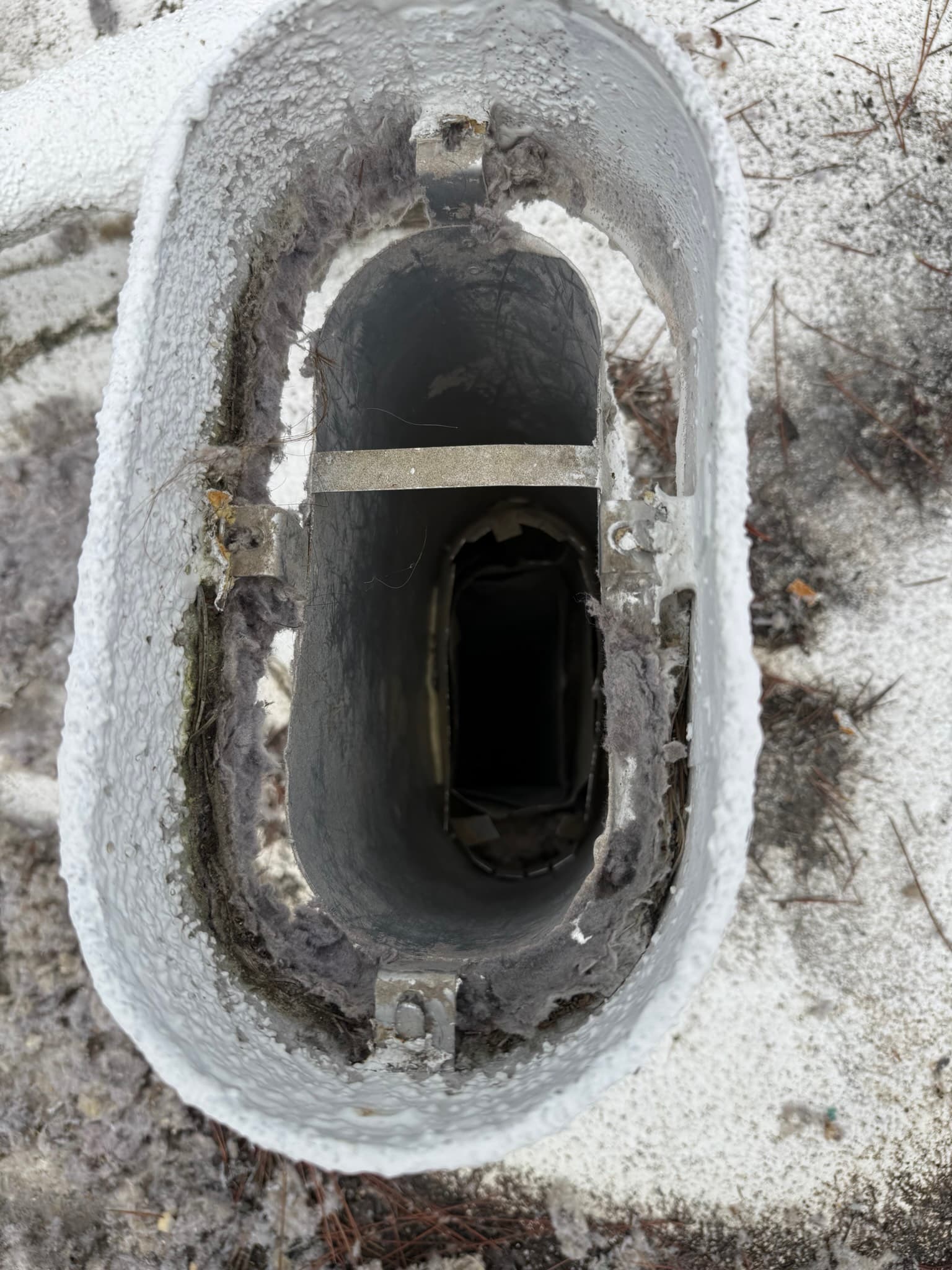
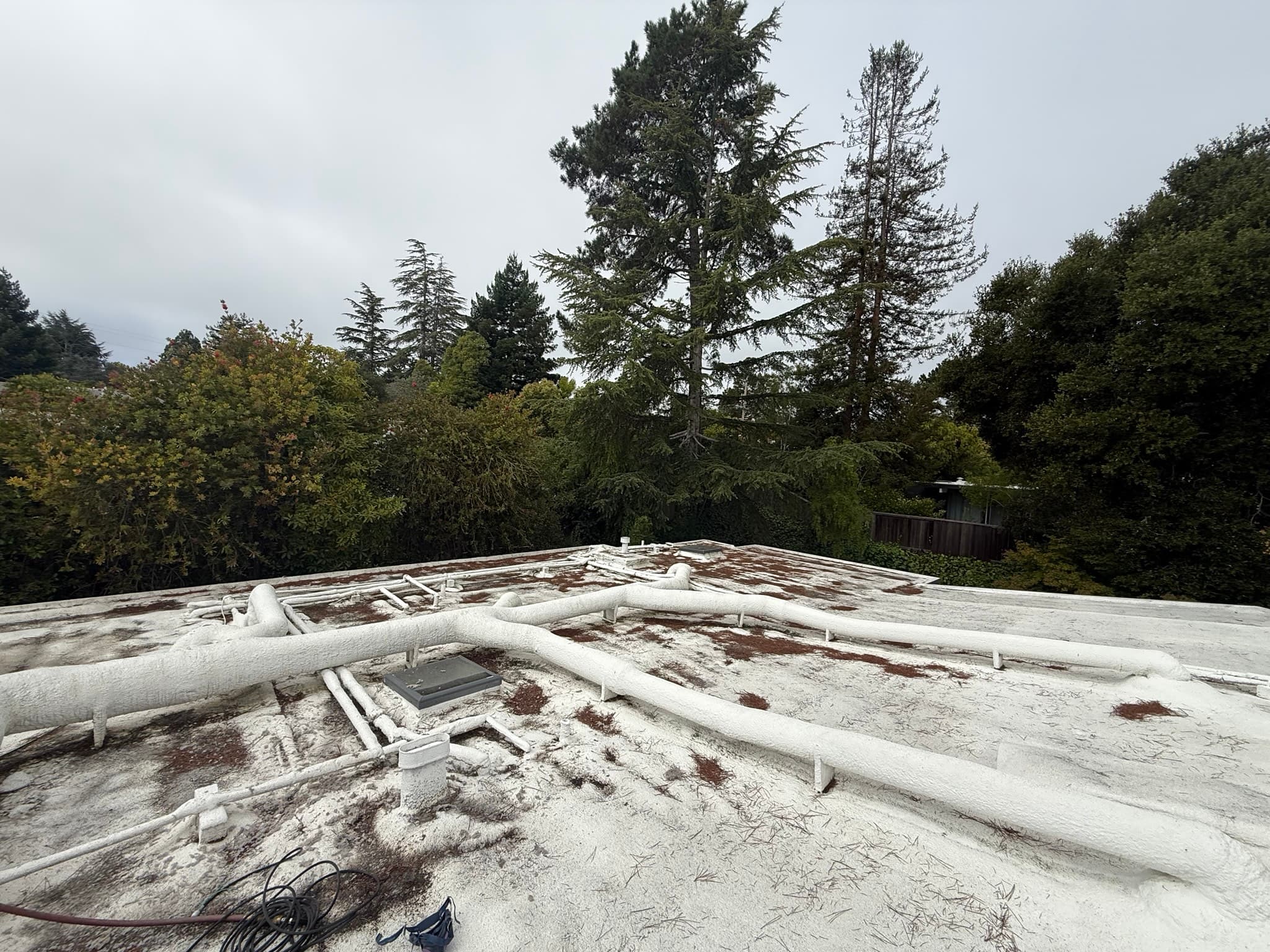
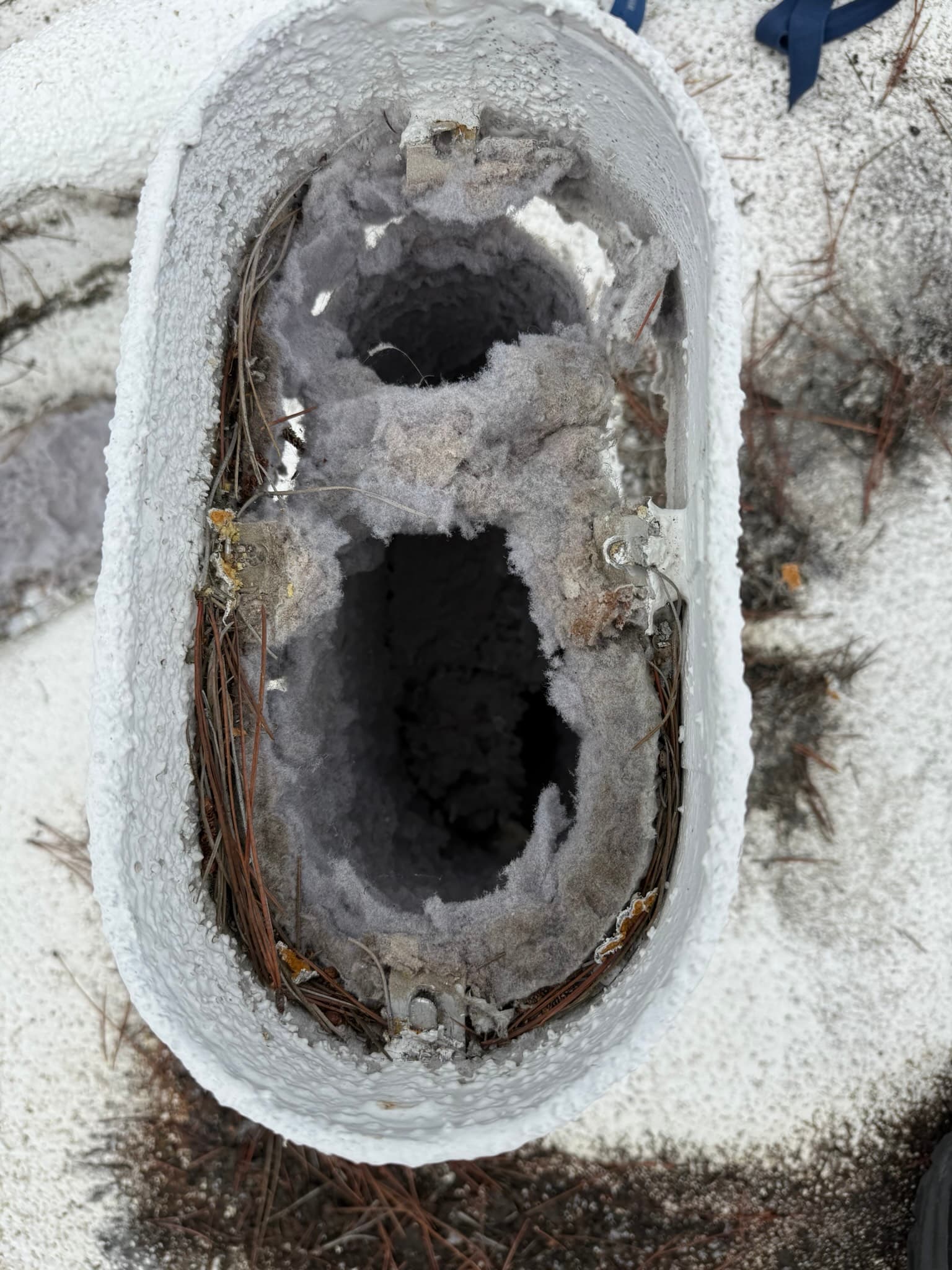
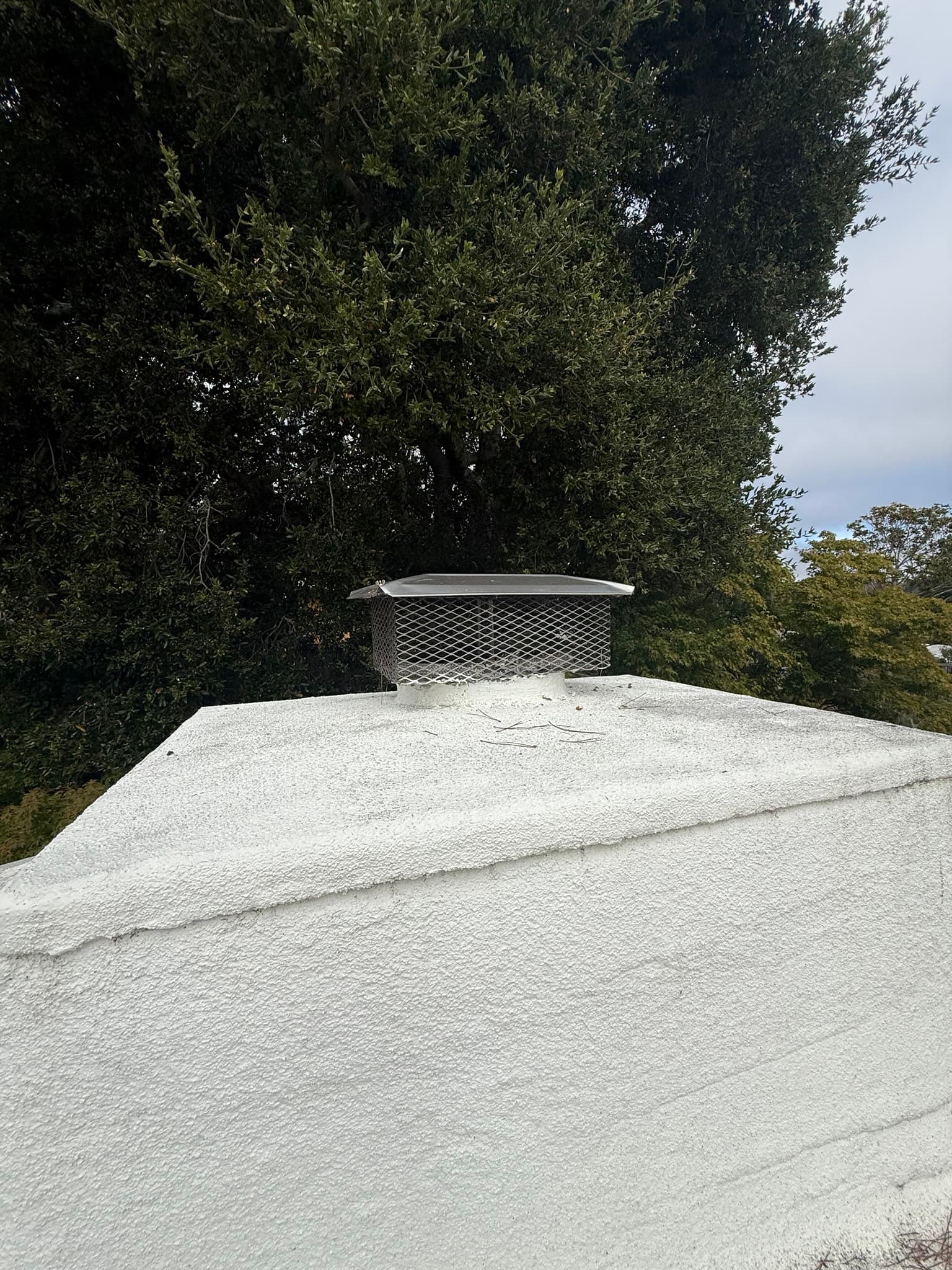
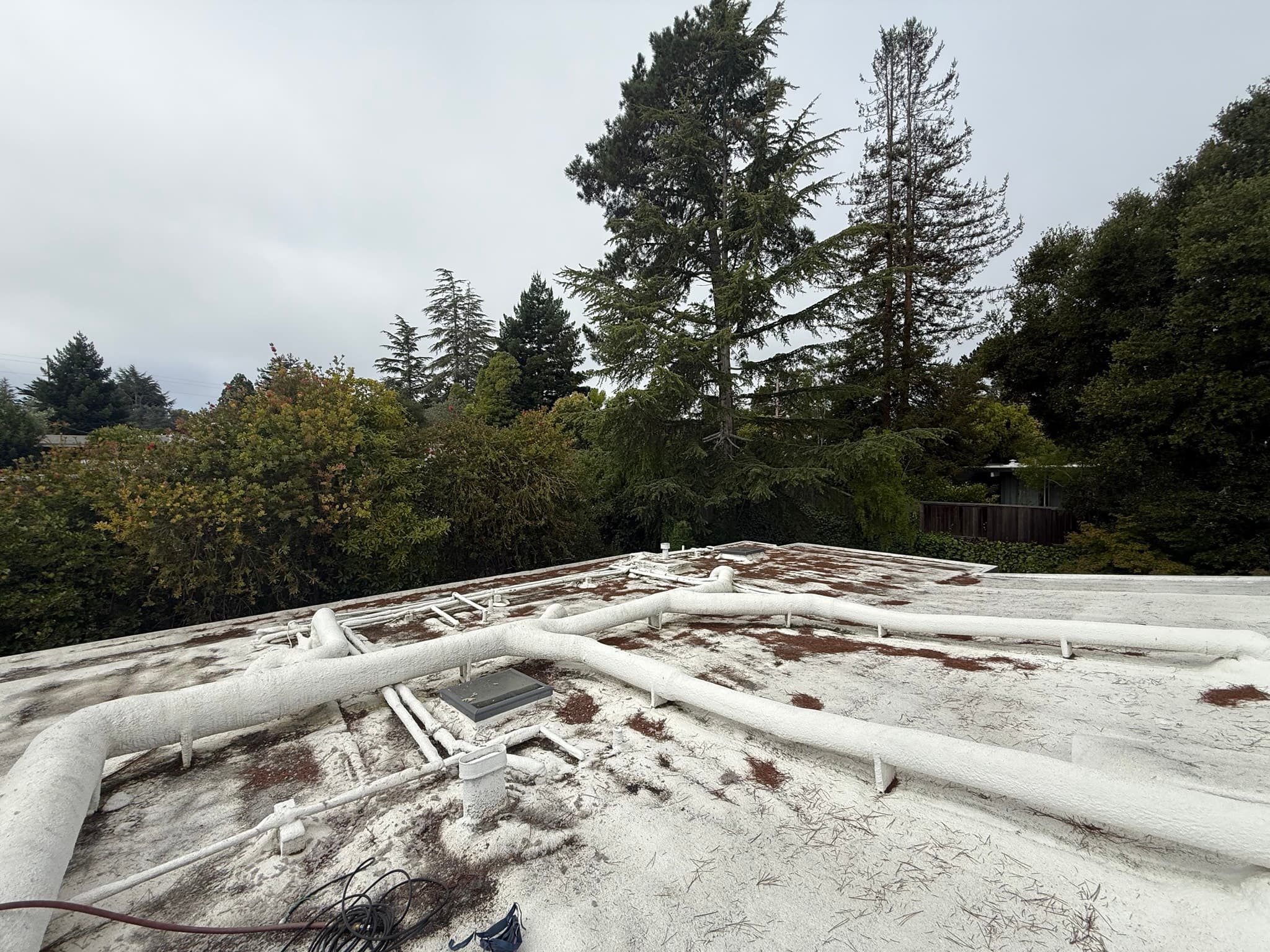
The roof-mounted dryer vent termination showed significant deterioration and blockage. Rectangular ductwork at this penetration is not ideal; code calls for a minimum 4-inch round diameter.
What We Found
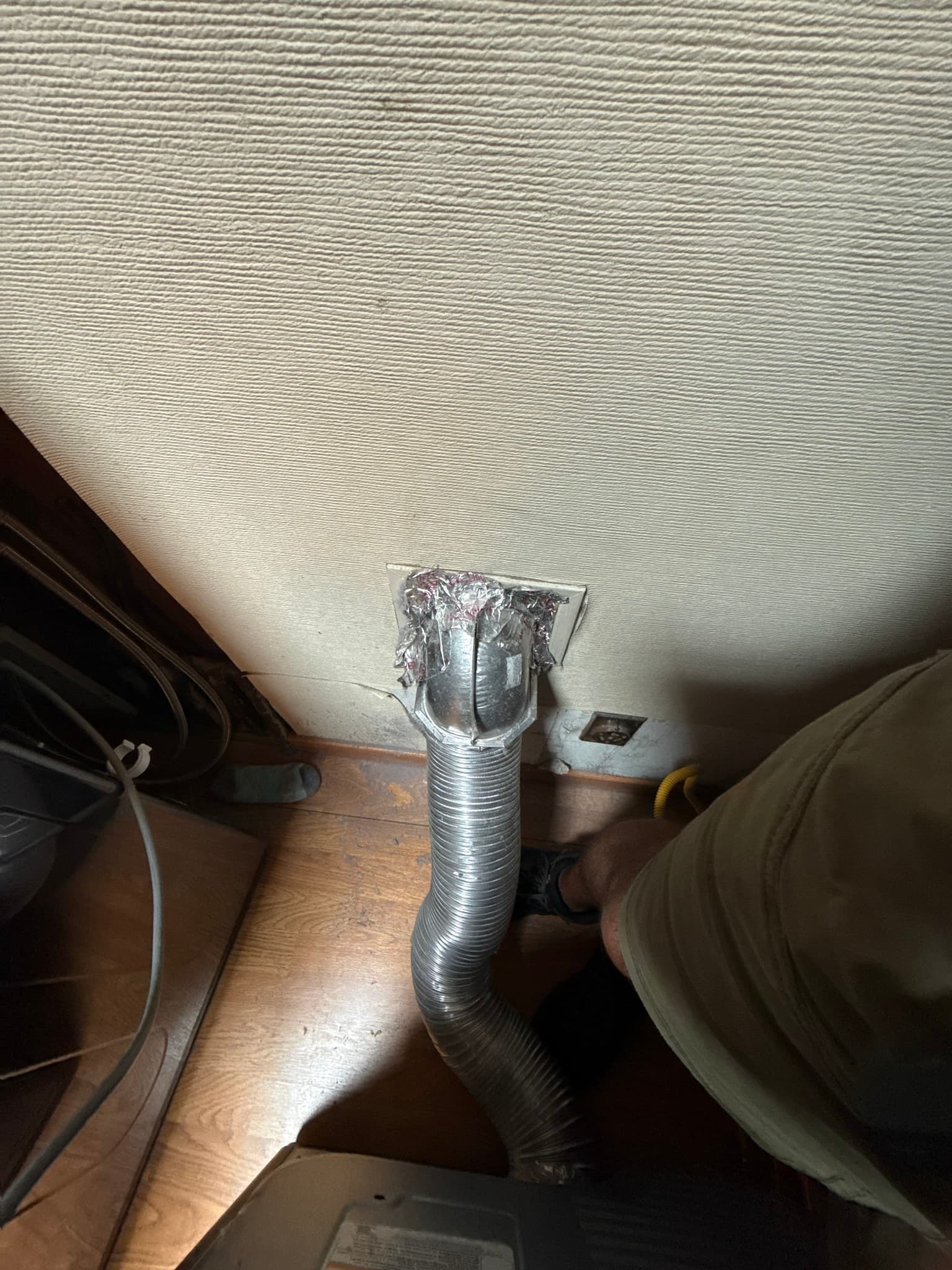
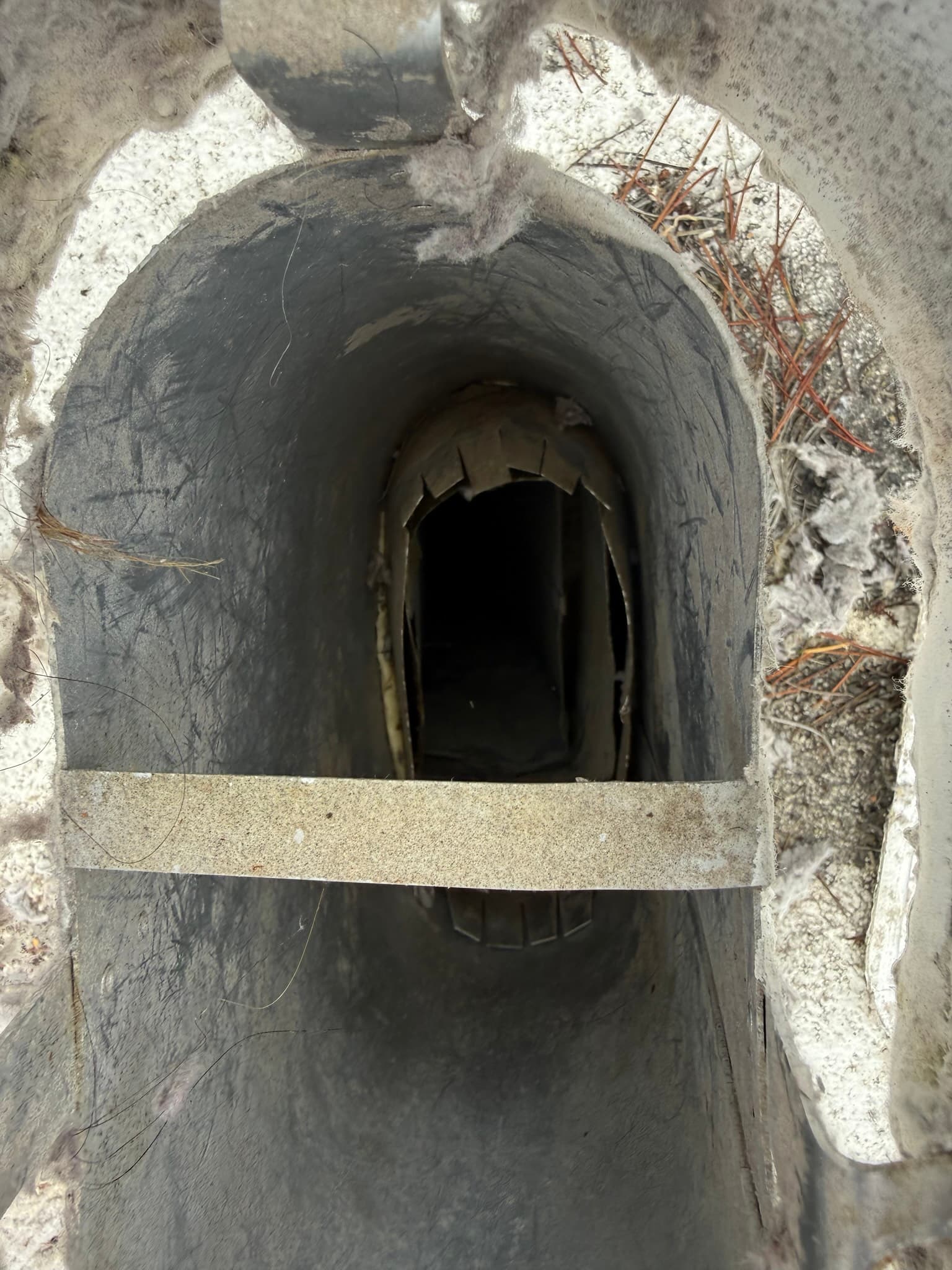
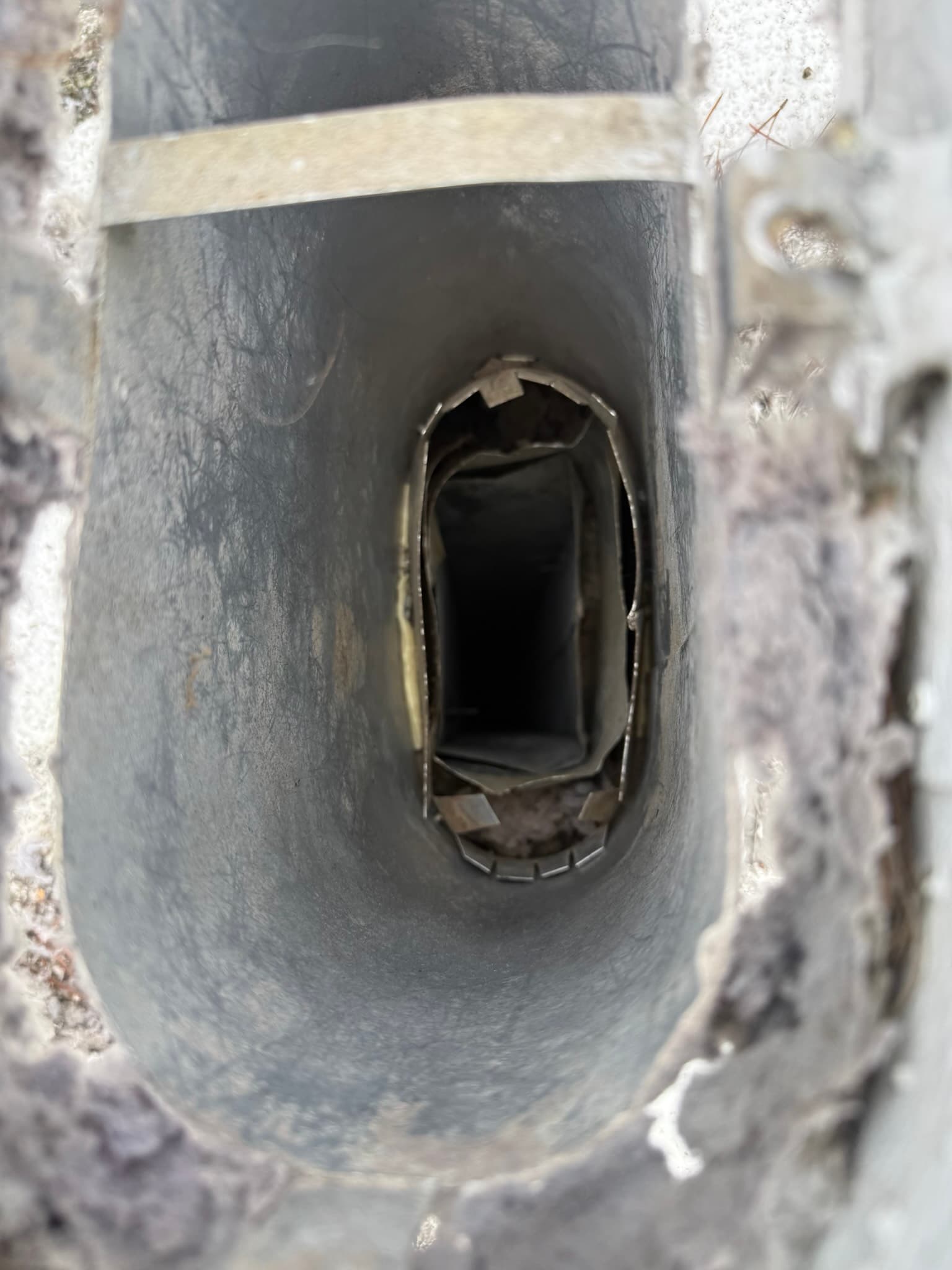
When our technician arrived at this San Mateo residence, the dryer exhaust system showed clear signs of long-term neglect at multiple points along its run. The exterior termination, which penetrates the roof, was visibly deteriorated: the vent cap housing was heavily soiled with dark staining and mold growth, and the interior of the duct appeared substantially obstructed. At the dryer end of the system, the flexible transition duct was connected to the wall outlet box using clear plastic wrapping rather than a proper mechanical clamp. That method is not a code-approved means of securing ductwork joints and does not meet the installation requirements for dryer exhaust systems.
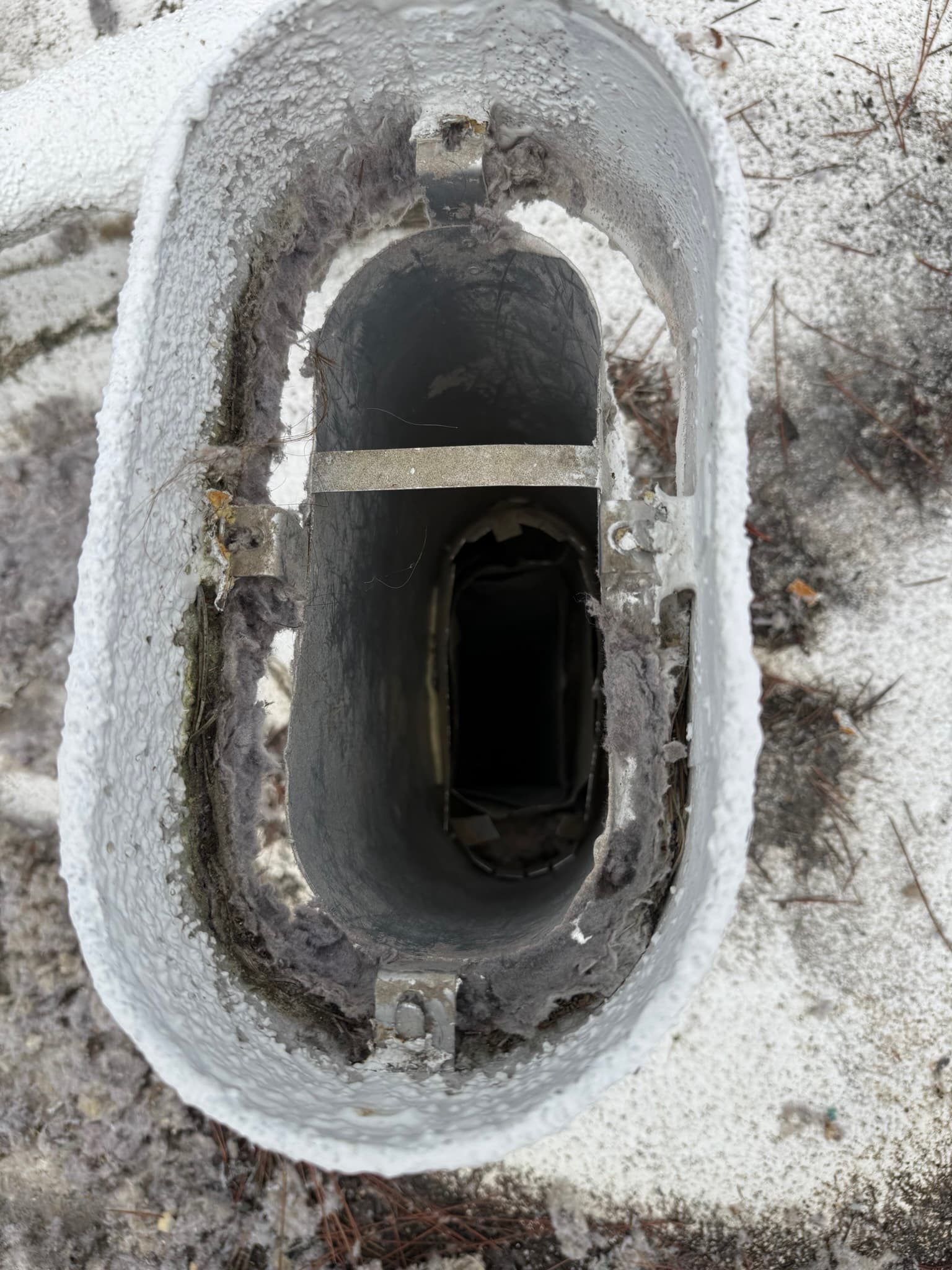
The roof-penetrating rectangular ductwork also raised a geometry concern. The mechanical code requires dryer exhaust duct to maintain a minimum 4-inch round diameter (IRC M1502.4.1 requires smooth interior metal duct of no less than 0.0157-inch thickness). Rectangular duct of equivalent cross-section is not the preferred configuration, as it reduces effective airflow area and promotes lint accumulation at corners. Our technician documented this condition for the homeowner's awareness.
The Lint Situation
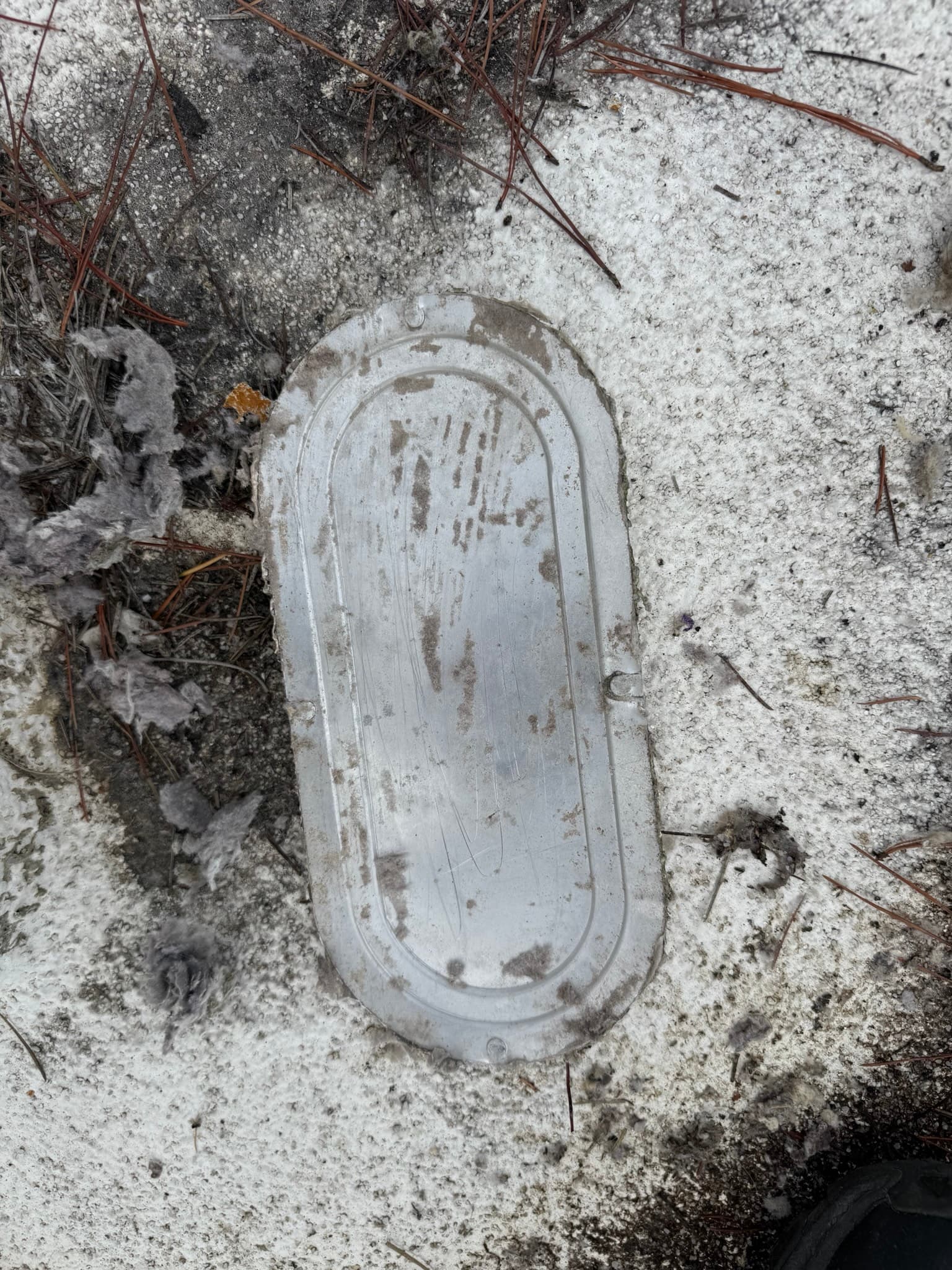
Inside the duct and at the exterior termination, lint accumulation was severe. The exterior vent opening showed dense lint coating the interior walls, and organic debris including dried plant material was packed around and inside the cap opening. A removed vent cap photographed on the ground revealed louver slots so clogged with compacted lint and dust that airflow through them would have been dramatically reduced. This level of occlusion, where lint narrows the effective duct diameter by more than half, forces the dryer to work against significant back-pressure, driving up drying times and putting the heating element and motor under sustained stress. Severe lint accumulation of this kind is the leading contributing factor in residential dryer fires, according to the U.S. Fire Administration.
What We Did: Deep Cleaning
Our technician performed a full residential dryer exhaust cleaning using a drill-attachment rotary brush system paired with a high-powered shop vacuum. This two-tool approach is essential for a thorough clean: the rotary brush scrubs compacted lint from the duct walls and breaks up any plugs or mats that have formed, while the shop vac captures the dislodged debris in real time and prevents it from settling elsewhere in the system. We cleaned the entire run from the dryer connection point through to the exterior cap, removing accumulated lint and debris from every accessible section of the duct. Following the cleaning, we conducted an airflow inspection to verify that exhaust was moving freely through the system.
What We Did: Transition Duct Replacement
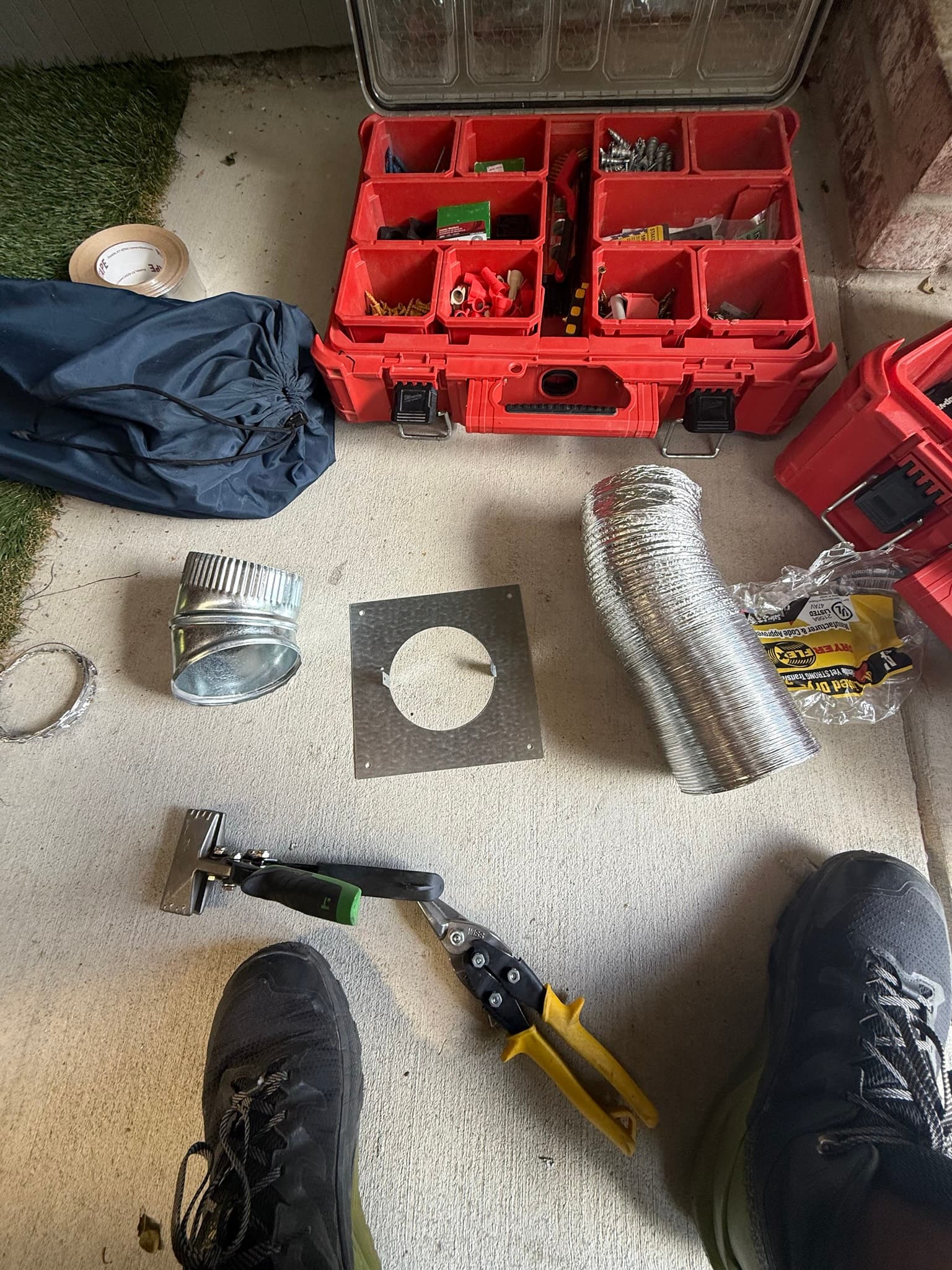
In addition to the cleaning, we replaced the existing transition duct connection at the dryer with 4 feet of DryerFlex transition duct, secured with two new DryerClamps. DryerFlex is a listed semi-rigid aluminum transition duct that meets the UL 2158A standard referenced in IRC M1502.4.3, which limits transition ducts to a maximum of 8 feet and requires that they be listed and labeled. The previous connection, which relied on plastic wrapping rather than a mechanical clamp, was a code violation and a potential separation point where hot, moist exhaust air could escape into the surrounding structure. The two DryerClamps create secure, airtight joints at both the dryer outlet collar and the wall connection, keeping the exhaust path fully contained and eliminating the risk of disconnection.
The Outcome
After cleaning and the transition duct replacement, the dryer exhaust system is operating with restored airflow and a fully secured connection at the dryer end. The homeowner was also informed about the nature of the roof-penetrating rectangular ductwork and the code preference for 4-inch round duct to support optimal exhaust velocity and minimize future lint accumulation. We recommend this system be inspected and cleaned on a regular schedule, as roof-terminated vents in climates like San Mateo's are particularly prone to organic debris intrusion and cap deterioration. Keeping the termination cap clean and the duct interior free of lint buildup is the most effective step a homeowner can take to prevent dryer fires and maintain drying efficiency.
Project photos
12 photos
Need similar work in San Mateo?
Get a free quote - same-week appointments usually available.