
San Mateo · Residential Dryer Exhaust Cleaning Inspection
Dryer Vent Cleaning & Inspection in San Mateo, CA
A San Mateo home's LG gas dryer had gone without vent service since 2019, resulting in severe lint accumulation that choked airflow and left the dryer unable to complete a cycle. Our technicians performed a full rotary-brush deep clean and inspection, clearing the blockage from the dryer connection all the way to the exterior cap.
Completed August 20, 2026
Verified customer review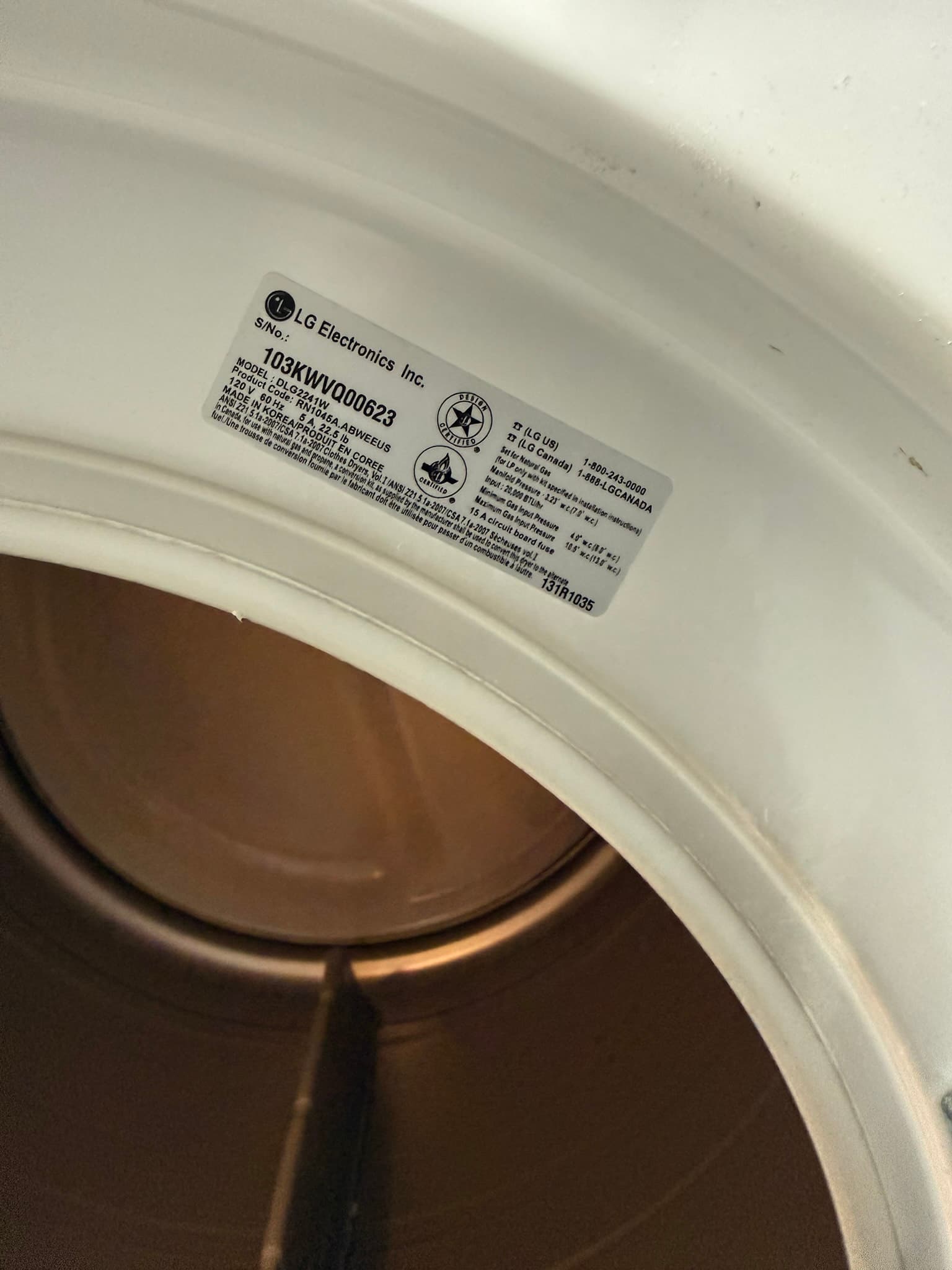
The LG gas dryer serviced at this San Mateo home
What We Found
When our technician arrived at this San Mateo residence, the LG gas dryer (visible on the manufacturer label in the photos) had not received any vent service since 2019 - more than six years of continuous use with no cleaning. The homeowner reported that the dryer had essentially stopped working, which is a classic symptom of a vent system that has become so restricted it can no longer exhaust heat and moisture fast enough for the appliance to function. The photos from this job tell the story clearly: a large, compacted mass of gray lint had accumulated at the exterior discharge opening, and the flexible metal duct sections running through the interior spaces were coated inside and out with fibrous debris.
The Severity of the Blockage
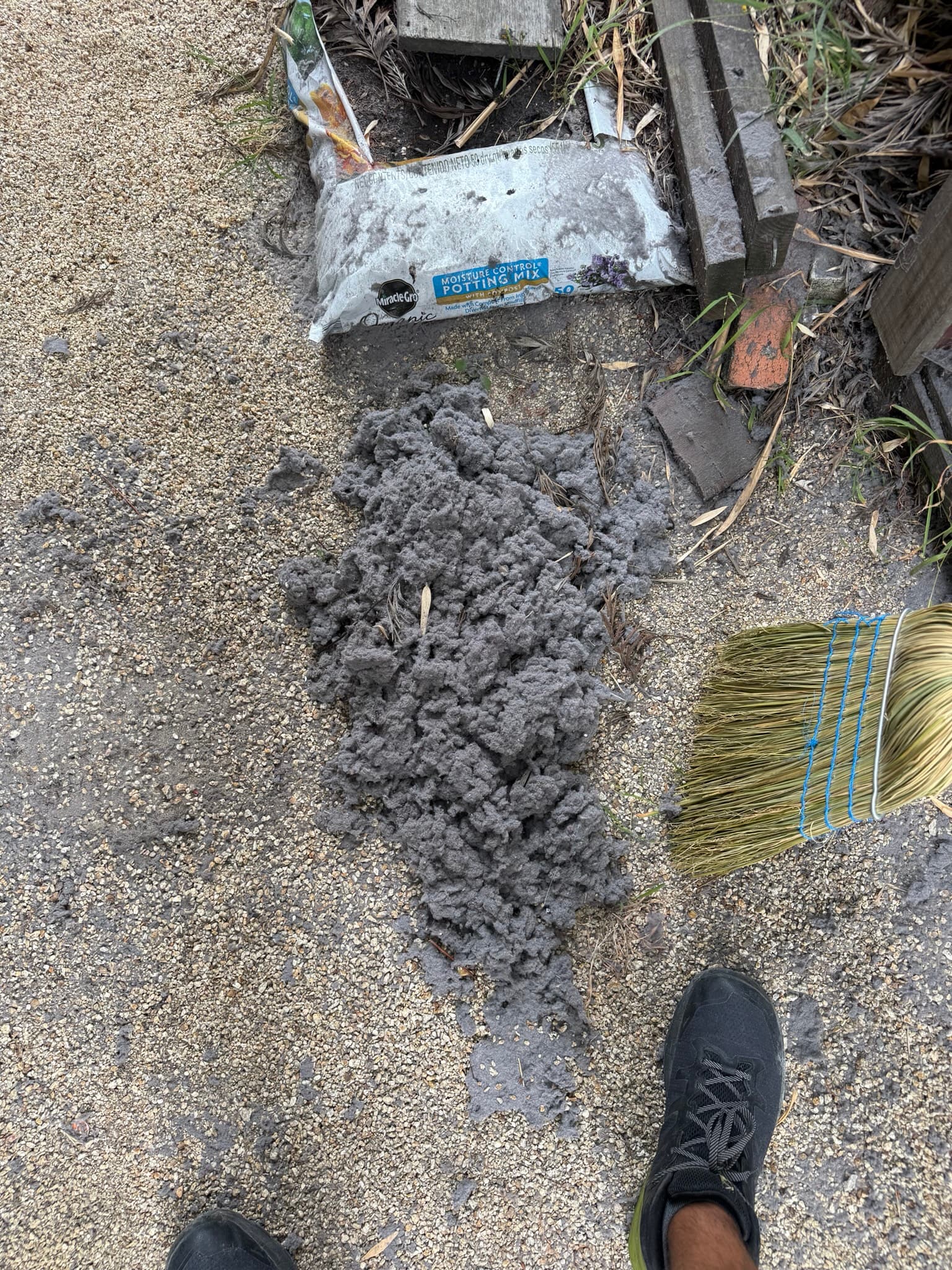
The exterior vent cap photo shows the scale of what was extracted: a substantial pile of compacted gray lint was laid out on the ground below the wall cap after removal, representing material that had built up over years of restricted airflow. When a duct becomes more than half occluded by compacted lint, back-pressure builds inside the exhaust system, causing exhaust temperatures at the dryer connection to climb well above safe operating levels. For a gas dryer, this combination of heat and lint accumulation represents a serious fire hazard. The U.S. Fire Administration documents thousands of residential dryer fires each year, and lint accumulation is consistently identified as the leading contributing factor. Beyond the fire risk, a dryer fighting this level of restriction draws more energy per cycle and suffers accelerated wear on its motor and heating components.
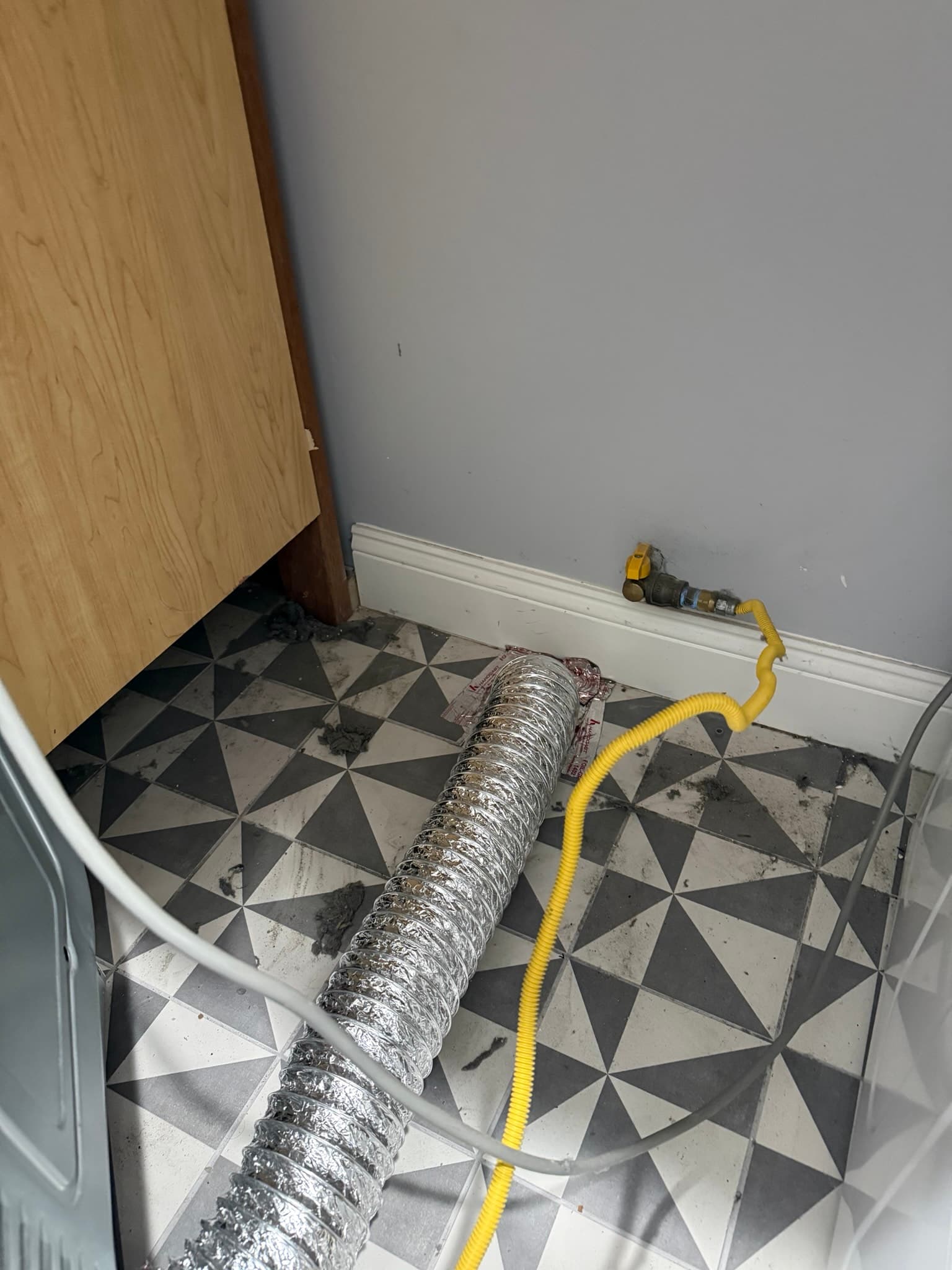
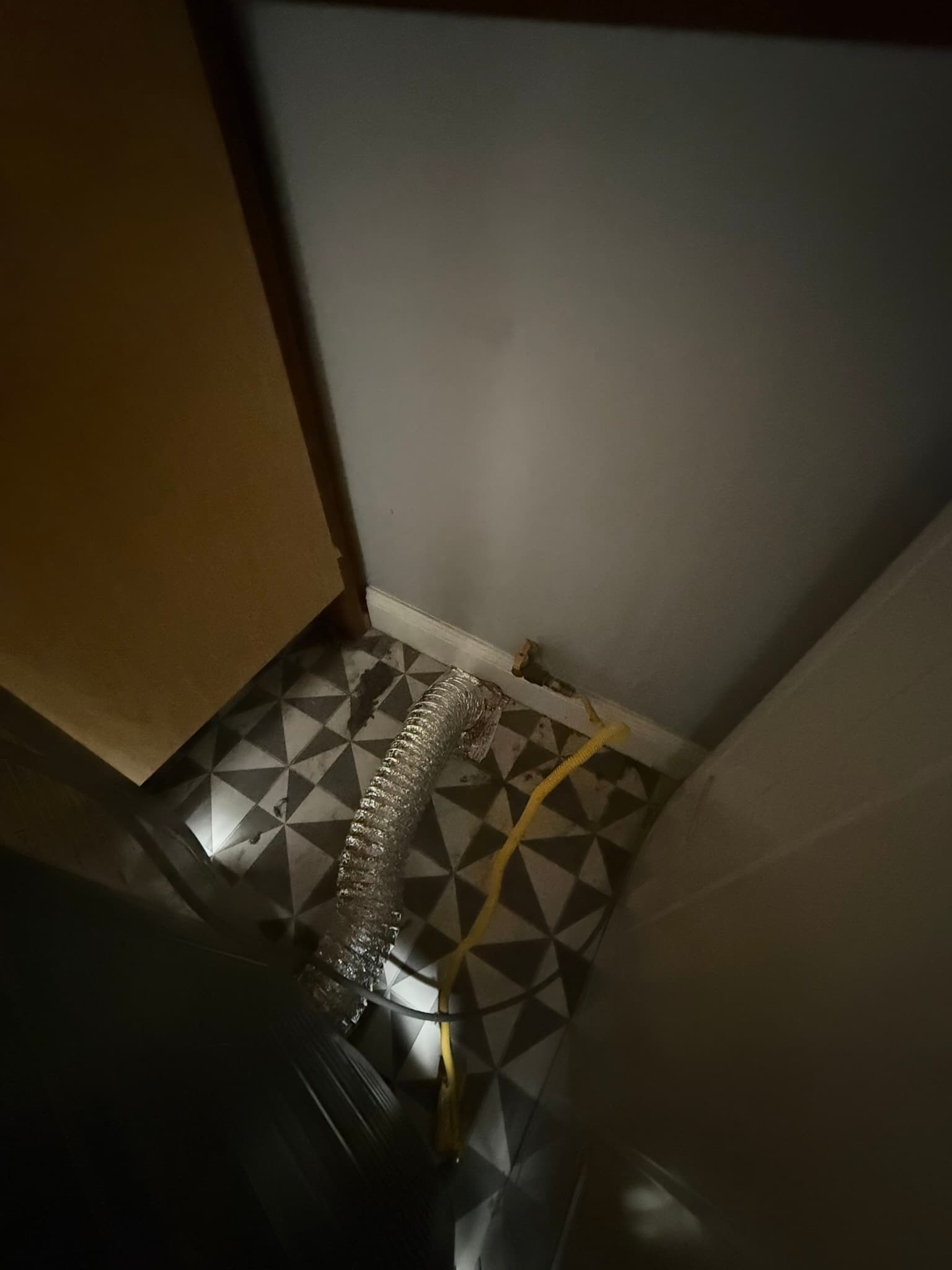
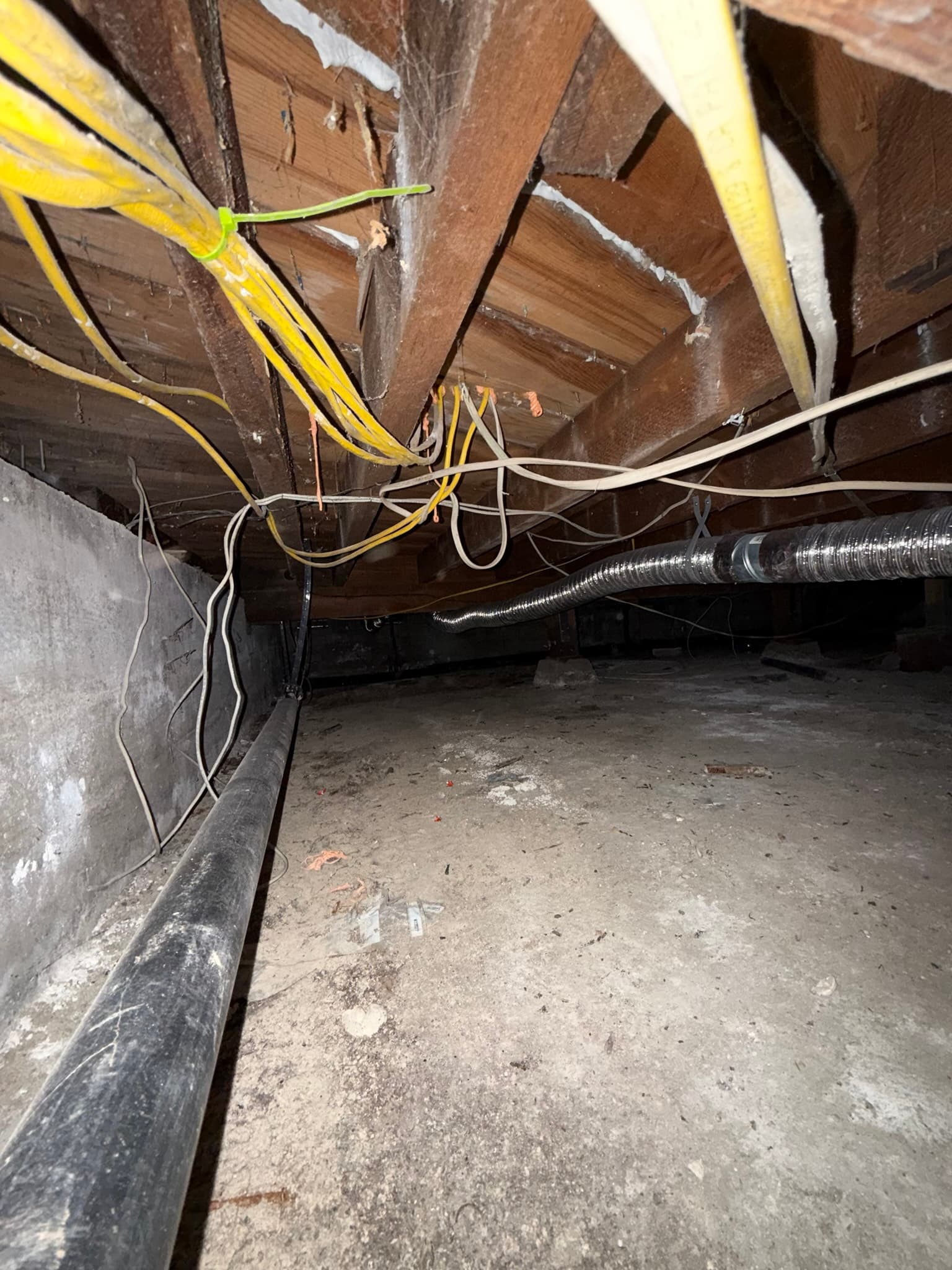
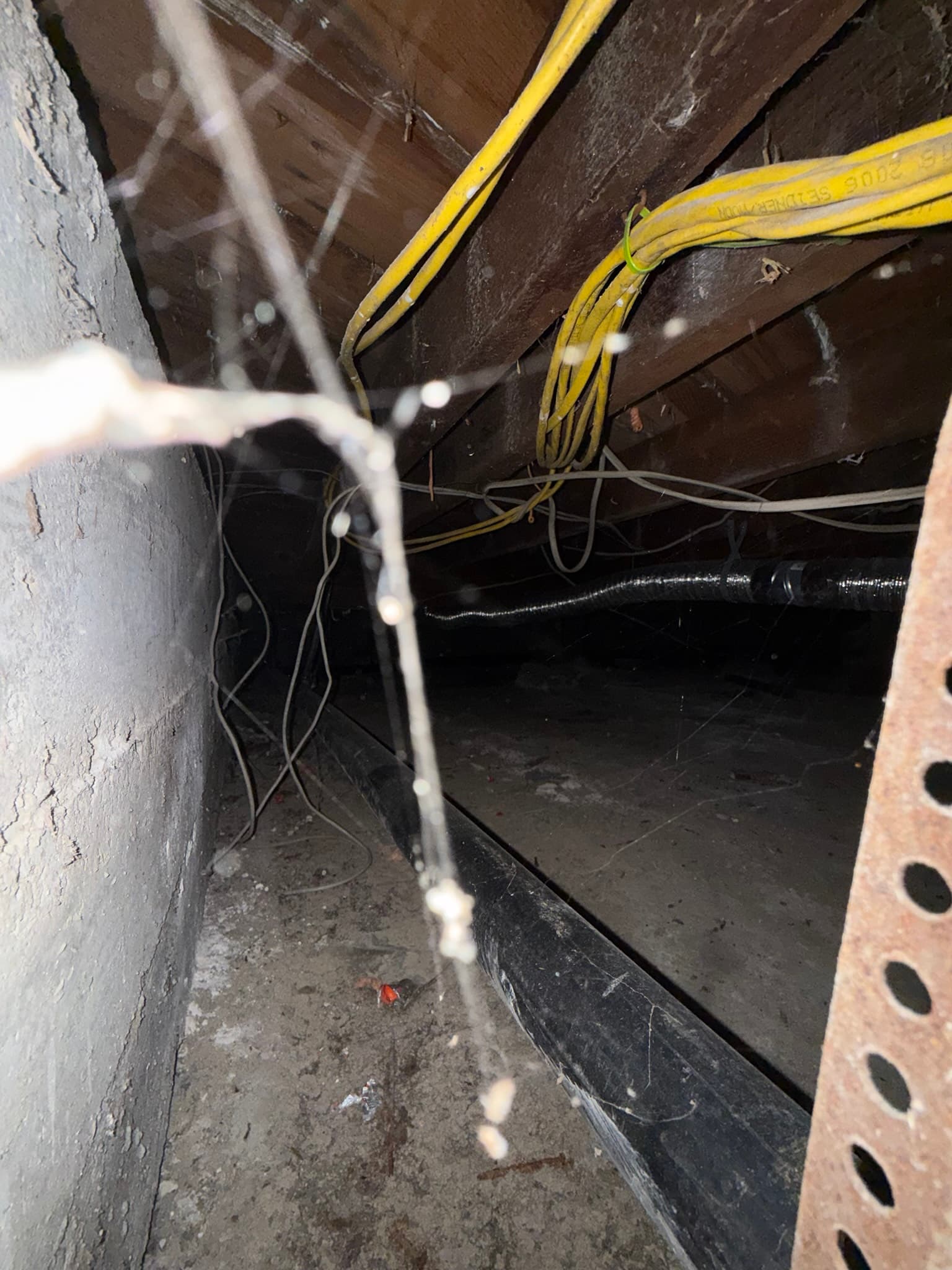
The flexible metal duct sections photographed in the interior spaces showed visible lint and dust coating on their exterior surfaces as well, evidence that the restriction had been forcing lint to settle throughout the system rather than carrying it cleanly to the outside. IRC M1502.2 requires that dryer exhaust systems convey moisture and debris directly to the outdoors; a duct choked with years of buildup cannot do that effectively.
What We Did
Our technician performed a Residential Dryer Exhaust Cleaning and Inspection using our standard deep-clean process. This involved a drill-attachment rotary brush system, which is driven through the full length of the duct to mechanically break up and dislodge compacted lint from the duct walls, followed by a high-powered shop vacuum to extract all loosened debris from the system. This process was applied from the dryer connection at one end all the way through to the exterior cap at the other, ensuring no section of the duct was left with residual buildup. The rotary brush method is significantly more thorough than compressed air alone because it physically scrubs the duct walls rather than simply pushing material further down the line. An airflow test and full inspection were included as part of the service visit.
Why Regular Cleaning Matters for Gas Dryers
Gas dryers introduce an additional safety consideration that electric models do not share. Because combustion is occurring inside the appliance, a blocked vent that traps heat and restricts exhaust can create conditions for elevated carbon monoxide production and accumulation in the living space. IRC M1502.2 is explicit that a dryer exhaust system must convey moisture and combustion byproducts to the outdoors through an independent duct system. Annual cleaning is the standard recommendation for most households, and homes where the dryer sees heavy use, or where the duct run is longer or has multiple elbows, may benefit from cleaning every six months. A six-year gap between service visits, as was the case here, will almost always result in the kind of severe restriction documented in these photos.
The Outcome
Following the rotary-brush cleaning and vacuuming, the duct was cleared of the accumulated lint from end to end. The dryer, which had been unable to complete cycles due to the restricted vent, was restored to functional exhaust conditions. Removing the blockage allows the appliance to exhaust heat and moisture at the rate it was designed for, reducing drying times, lowering energy consumption per load, and eliminating the fire hazard posed by the compacted lint mass that had built up at the exterior cap and throughout the duct interior. San Mateo homeowners with gas dryers are encouraged to schedule cleaning on a regular annual basis and not to wait for performance problems before calling, since the fire risk from lint buildup develops well before the dryer stops working entirely.
Project photos
6 photos
What the customer said
“Very good experience in dissecting problem with dryer and air duct. Matthew was on time and very helpful explaining potential hazards and what can be done in the future to better service our dryer needs.”
Need similar work in San Mateo?
Get a free quote - same-week appointments usually available.