
Half Moon Bay · Residential Dryer Exhaust Cleaning Inspection
Dryer Vent Cleaning & Inspection in Half Moon Bay, CA
A stacked gas dryer in Half Moon Bay was venting poorly, leaving the laundry room humid and taking longer than normal to dry clothes. We performed a full inspection, airflow test, deep rotary cleaning, and installed a new UL 2158A-rated transition duct to restore safe, efficient operation.
Completed July 7, 2026
Verified customer review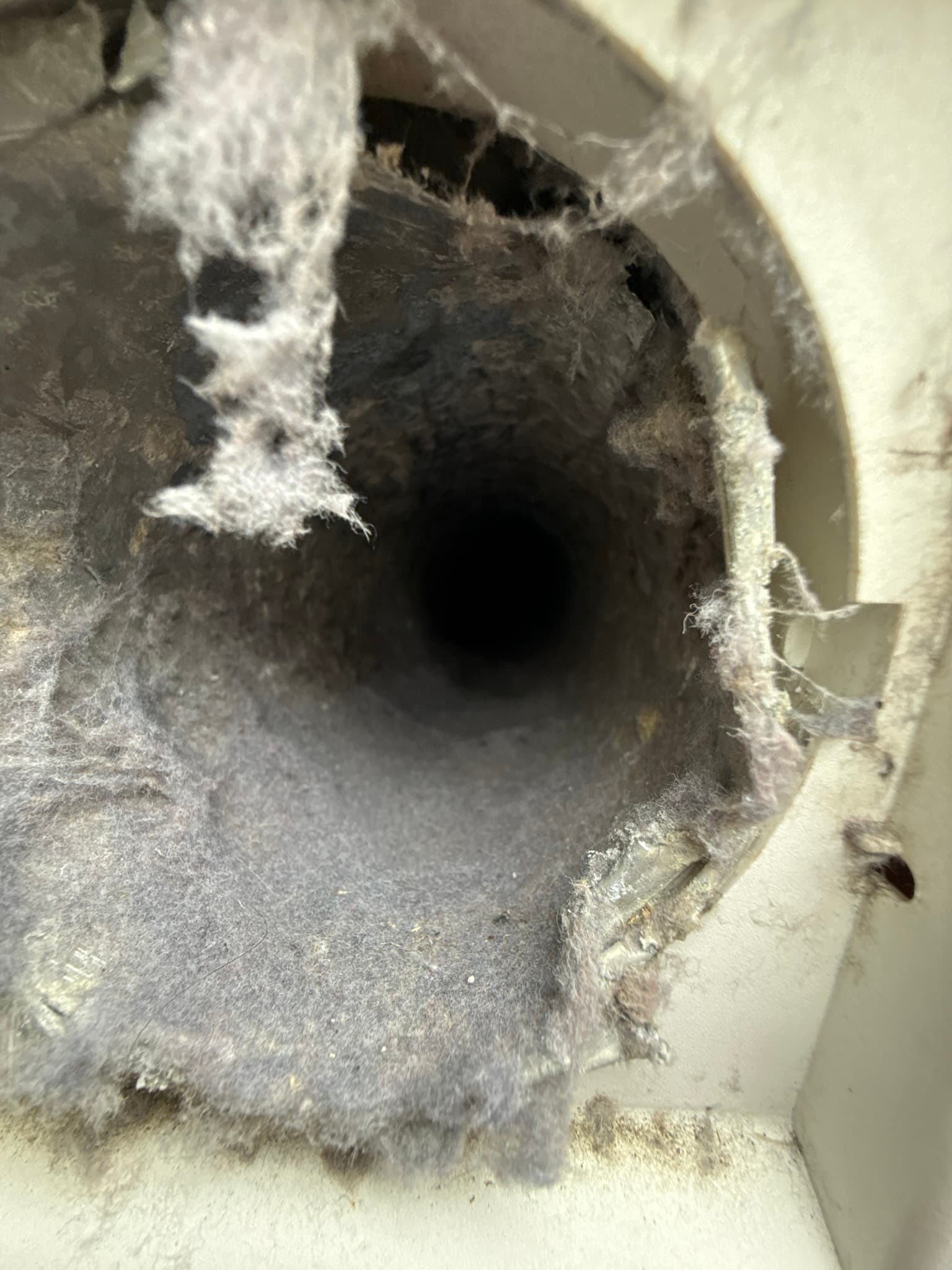
The duct interior on arrival: compacted lint had reduced the opening to a narrow passage, nearly blocking airflow entirely
What We Found
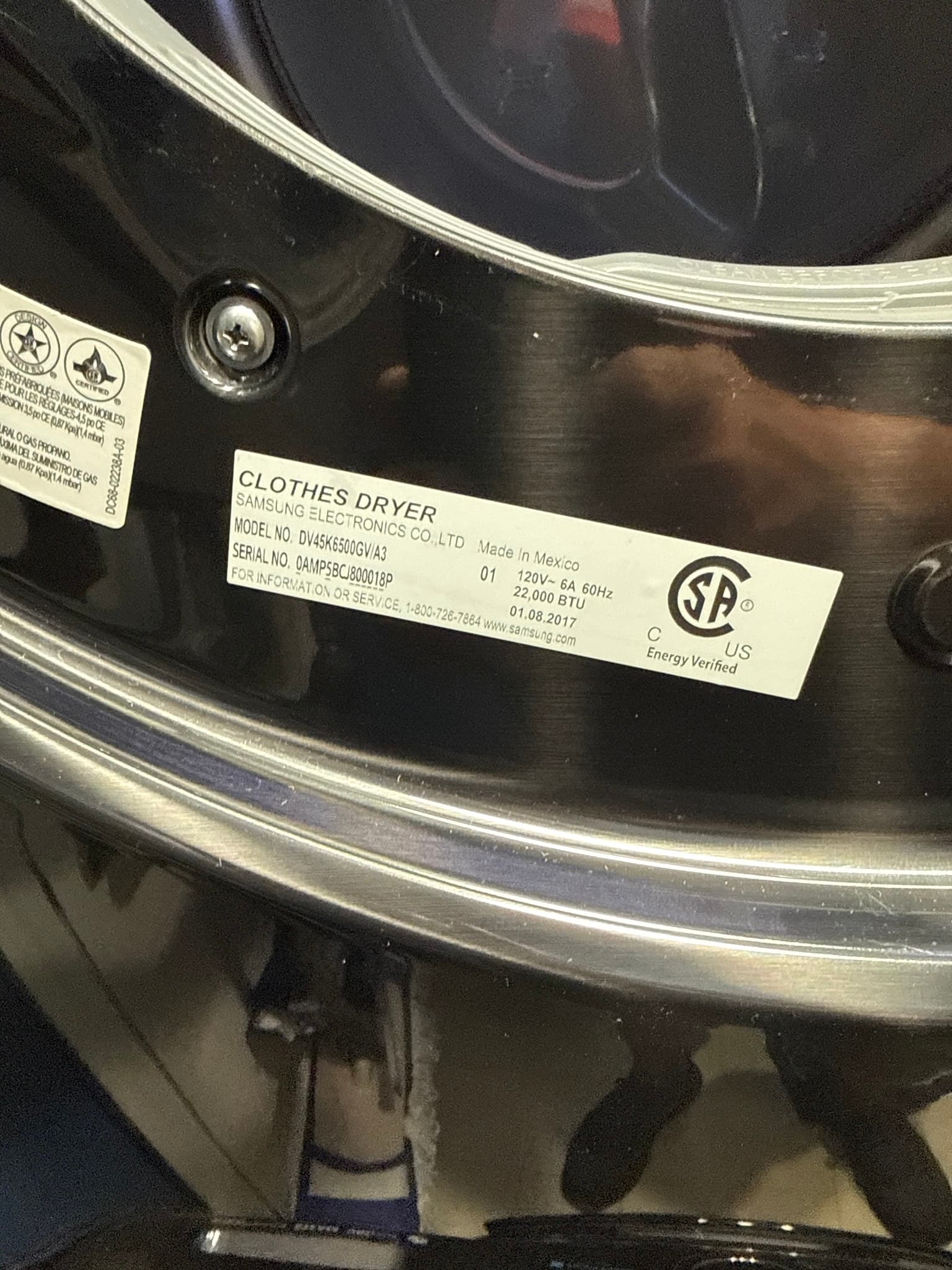
When we arrived at this Half Moon Bay home, the homeowner reported that the laundry room was becoming noticeably humid during drying cycles and that clothes were not drying efficiently. The setup was a stacked gas washer and dryer unit with an approximately 10-foot duct run through the crawlspace to an exterior wall cap. A quick look at the duct opening before we even started cleaning told the story: the interior was more than half blocked with compacted, fibrous lint coating the duct walls from end to end, leaving only a narrow dark passage through the center.
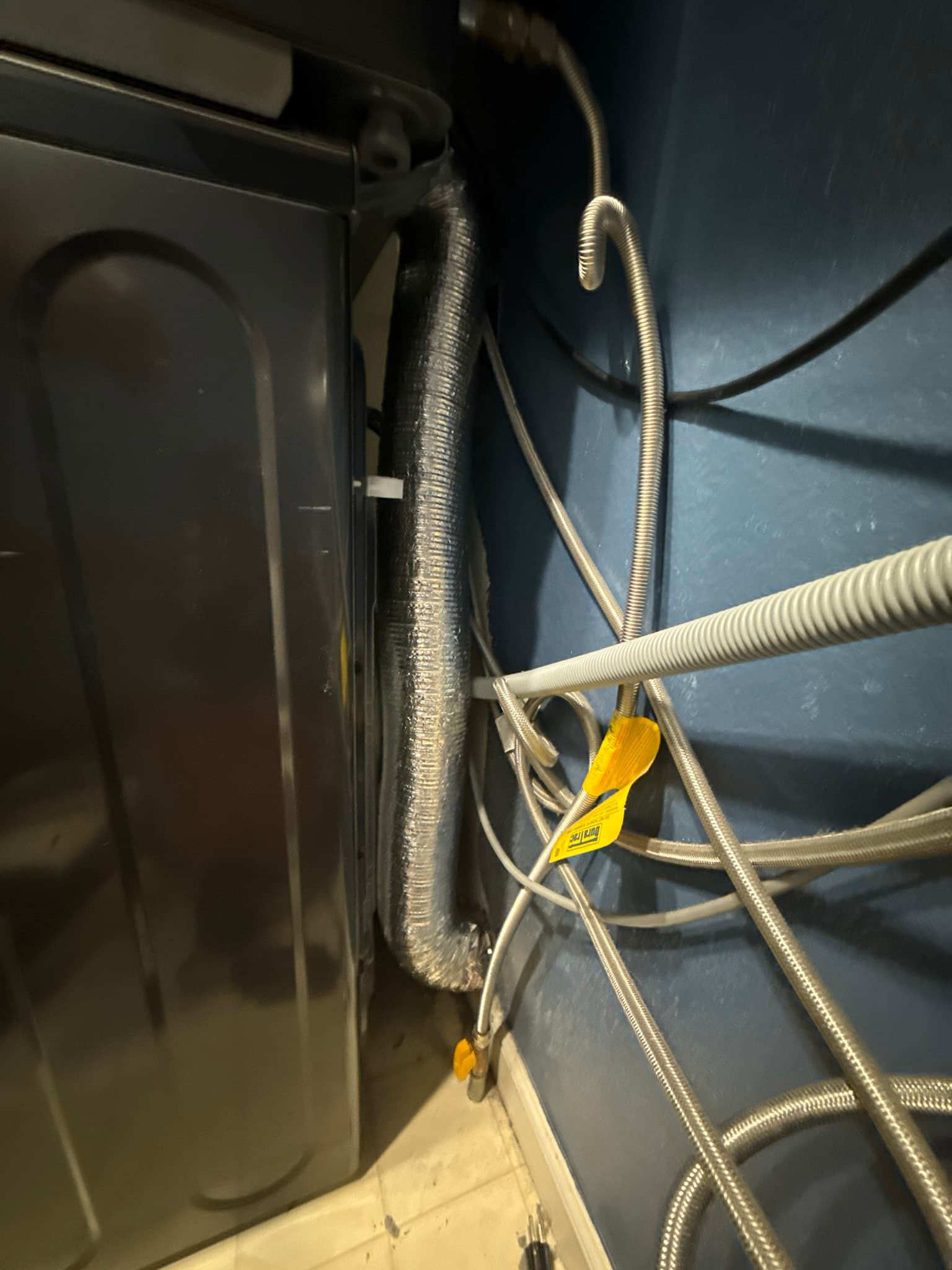
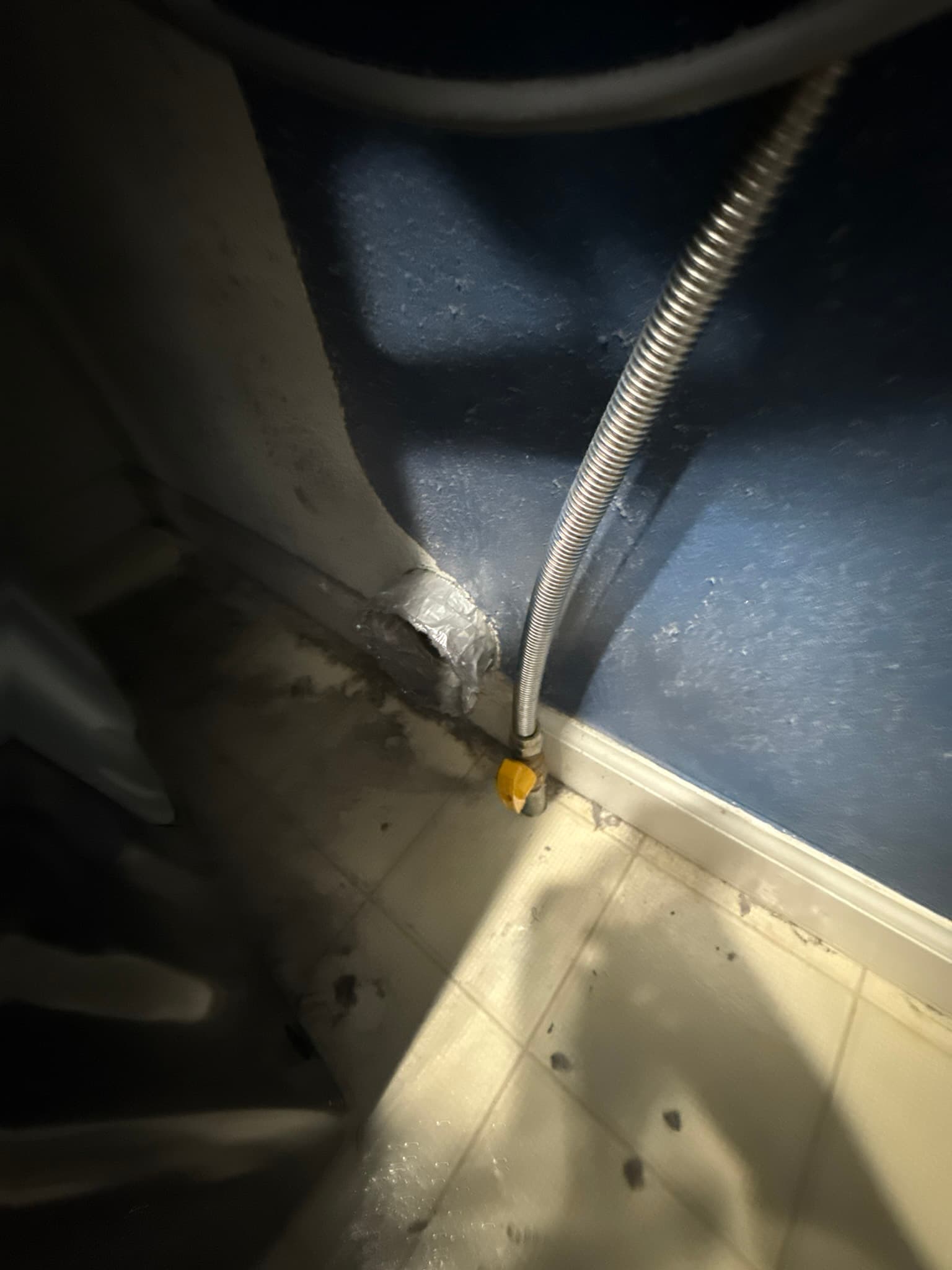
We also found that the existing transition duct connecting the back of the dryer to the wall was not up to current installation standards. The flexible section showed visible compression where it bent to reach the wall connection, and the fastening method did not meet code requirements for a mechanically secured joint. Zip-tie style fasteners were being used in place of proper metal clamps, and the overall connection created both an airflow restriction and a potential fire hazard right at the dryer exhaust outlet. For a gas dryer in particular, a compromised transition duct connection raises the risk of hot, moist exhaust spilling into the surrounding structure rather than being directed safely outside.
Why It Matters
Severe lint accumulation is the leading cause of residential dryer fires in the United States. When lint builds up to the degree we found here, the dryer cannot push exhaust air efficiently through the duct. Back-pressure increases, the dryer motor works harder, and exhaust temperatures at the connection point can climb well beyond safe operating limits. The humid laundry room the homeowner noticed was a direct symptom: moist exhaust air that could not escape efficiently was finding its way back into the space instead of clearing to the exterior. IRC M1502.1 requires that dryer exhaust systems be configured in accordance with the manufacturer's instructions, and IRC M1502.2 requires that the exhaust convey moisture fully to the outdoors. Neither standard was being met in the original condition of this installation.
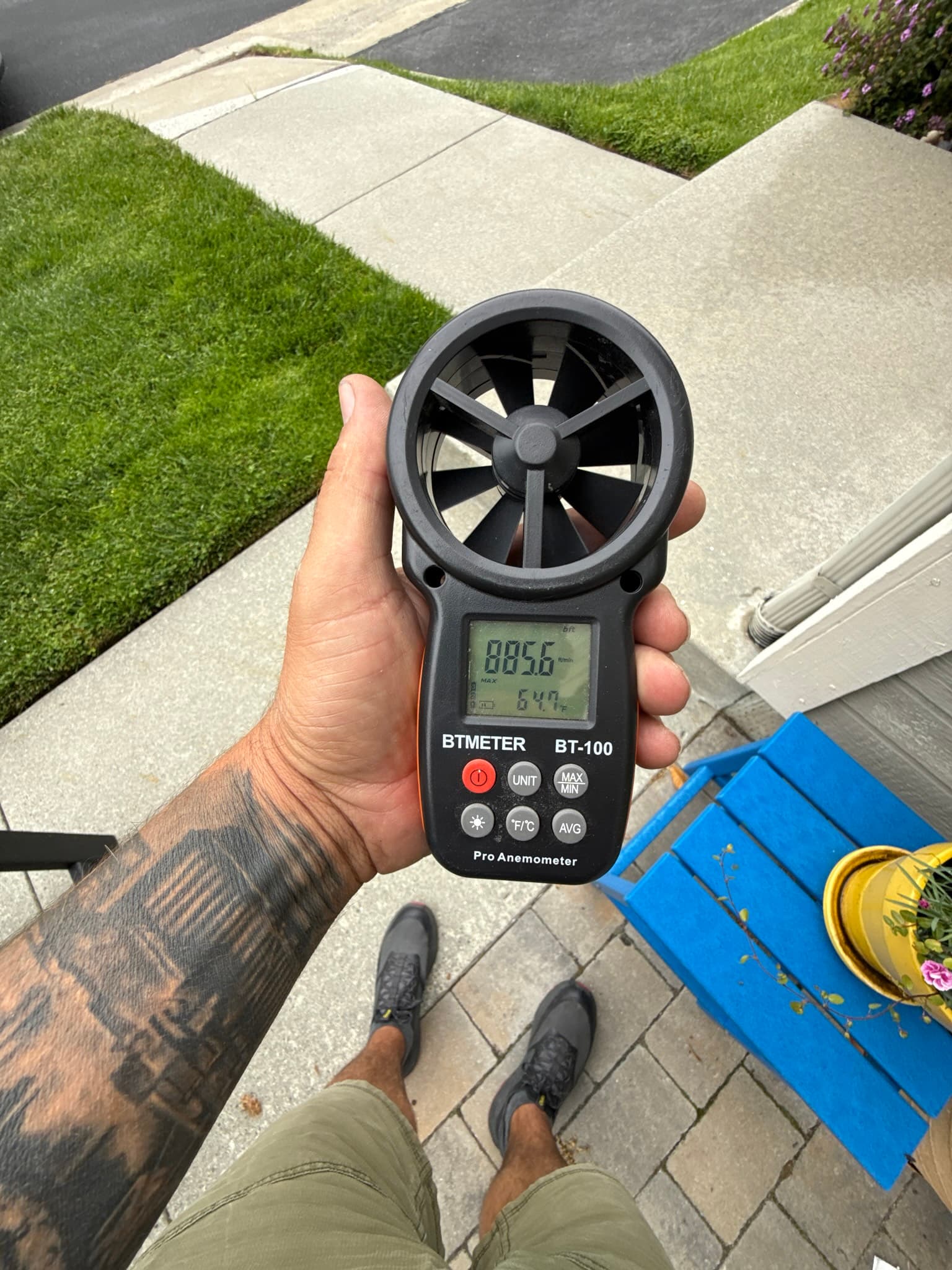
Our pre-service airflow measurement at the exterior cap confirmed what the visual inspection suggested: output was severely restricted, reading well below the 300-plus cubic feet per minute that most manufacturers specify as the minimum for proper dryer operation.
What We Did
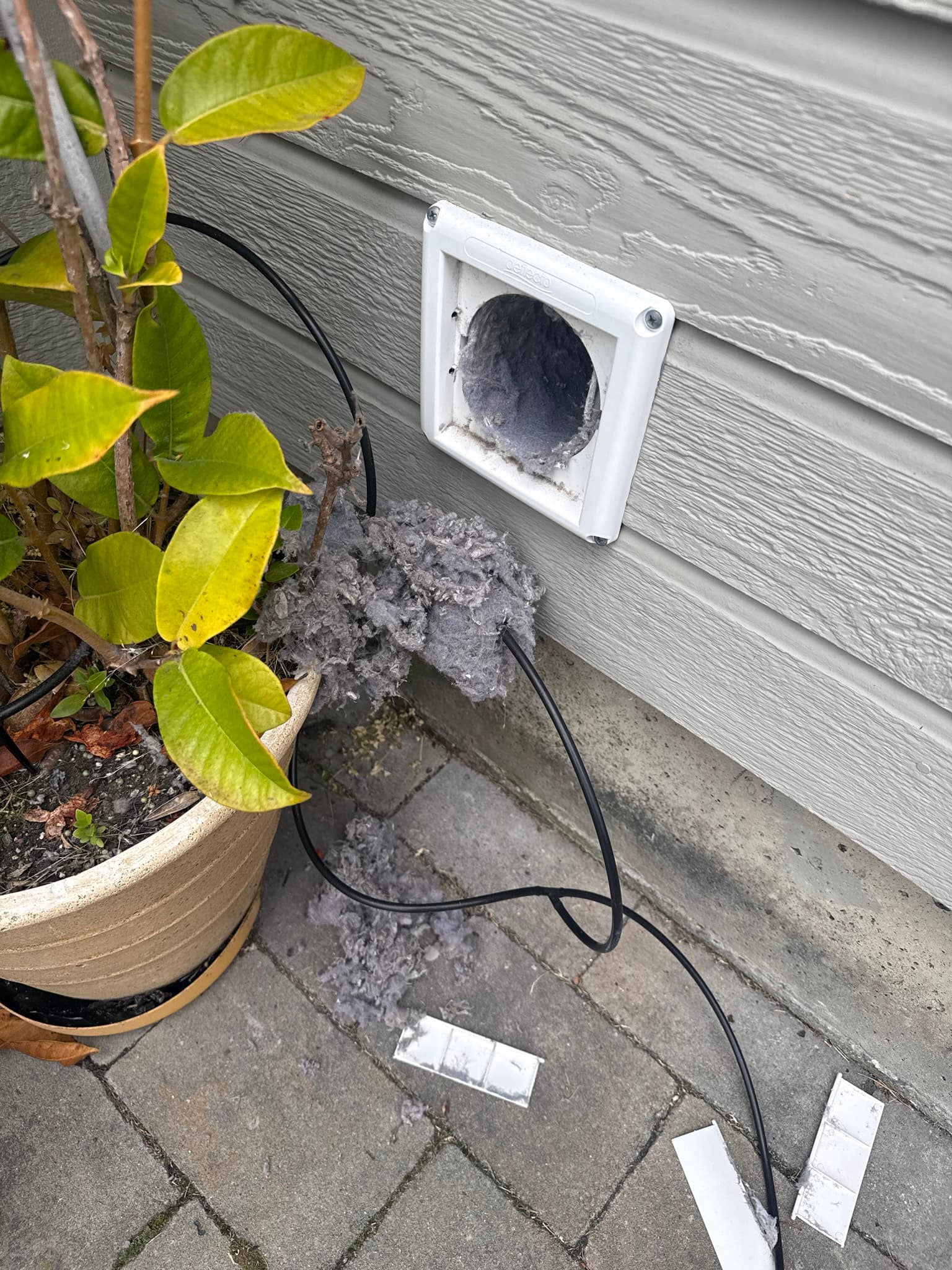
We performed our full Residential Dryer Exhaust Cleaning and Inspection service, which begins with disconnecting the dryer and the transition duct to give us clear access to the entire duct path. Using a drill-powered rotary brush combined with a high-powered shop vacuum, we worked through every inch of the approximately 10-foot duct run from the dryer connection point all the way to the exterior cap. The rotary brush system is specifically designed to dislodge compacted lint from duct walls without damaging the duct material, and the simultaneous vacuum suction captures the debris rather than pushing it further into the system. The exterior cap itself was also clogged with lint visible around and inside the louvers, so clearing it was part of the cleaning pass as well.
Once the duct run was clean, we replaced the old non-compliant transition duct with 4 feet of DryerFlex transition duct, a UL 2158A-listed semi-rigid connection rated for dryer exhaust applications. The new section was secured at both ends with two DryerClamps, providing the mechanically fastened, code-compliant joint that the previous installation lacked. DryerFlex is specifically designed for tight spaces like stacked dryer installations, where a rigid periscope or a sharply bent flexible section would otherwise create kinking and airflow loss right at the dryer outlet.
The Outcome
After completing the cleaning and installing the new transition duct, we reconnected the dryer, restored the gas supply, and verified the system with a post-service airflow test at the exterior termination. The improvement in output was substantial, with airflow restored to a level consistent with proper dryer operation. The exterior cap damper opened and closed freely. The duct run through the crawlspace is clear of lint accumulation, and the transition duct connection at the dryer is now properly secured and code-compliant.
Homeowners with stacked dryer configurations in Half Moon Bay and along the coast should be aware that the marine climate adds an extra layer of concern: exterior duct caps in this area are particularly susceptible to moisture intrusion and lint-trapping because of the persistent humidity. Scheduling a professional cleaning and inspection annually is the most effective way to keep the system operating safely and to catch connection or cap issues before they become hazards.
Project photos
6 photos
What the customer said
“Scheduling with DV Specialists was easy and quick. Mike provided our service, was friendly and competent, and explained everything he was doing. Our vent was pretty clogged, but Mike quickly cleared it. I would use DVSpecialists again and highly recommend them.”
Need similar work in Half Moon Bay?
Get a free quote - same-week appointments usually available.