
Redwood City · Residential Dryer Exhaust Cleaning Inspection
Dryer Vent Cleaning & Duct Replacement in Redwood City
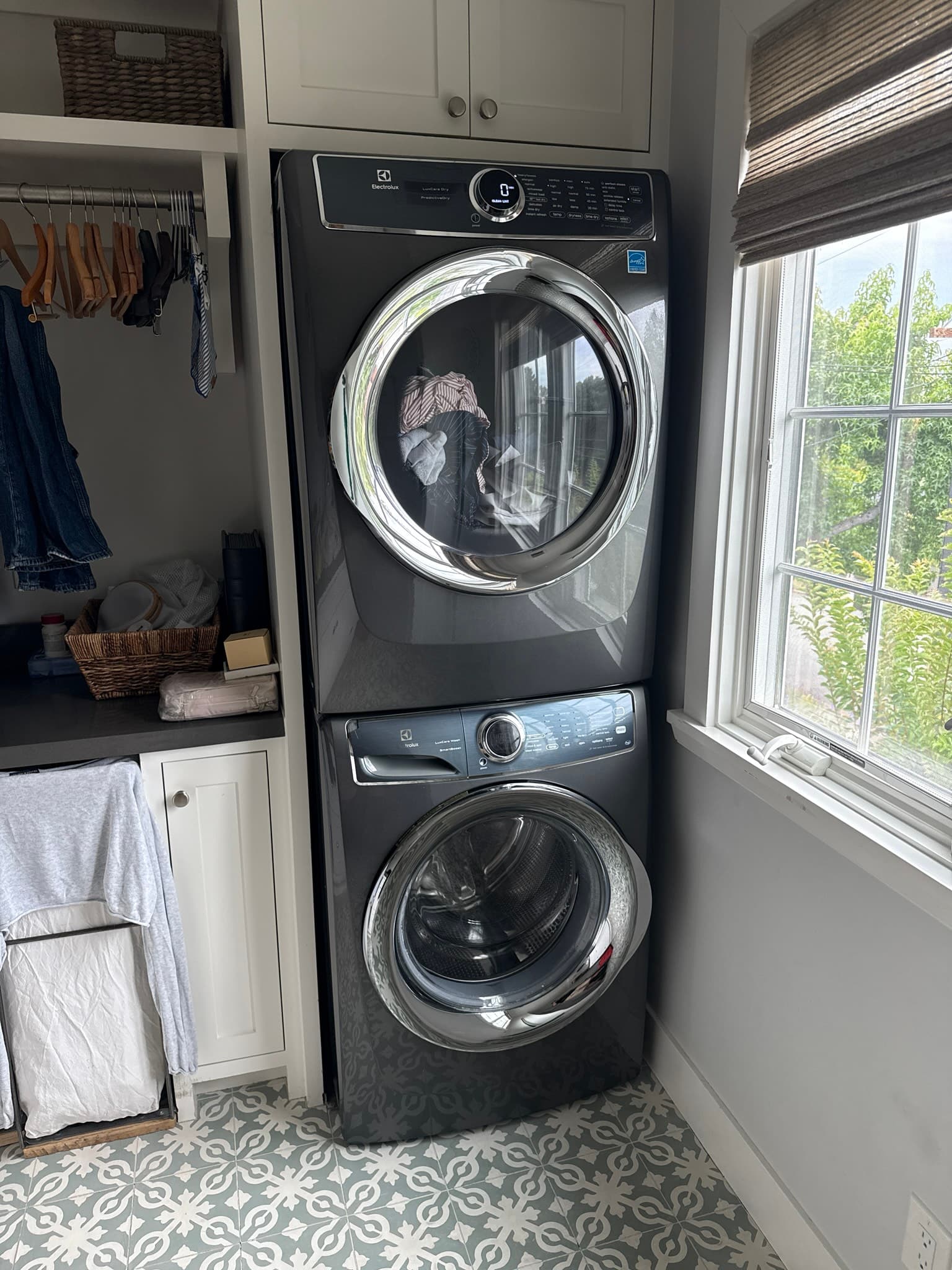
A Redwood City stacked Electrolux dryer had severe lint buildup, waterlogged flexible foil duct, and clothing items lodged deep inside the exhaust system. We performed a full cleaning and replaced the prohibited flex duct with rigid metal ductwork and a MagVent 90-degree connection for safe, code-compliant airflow.
Completed July 14, 2026
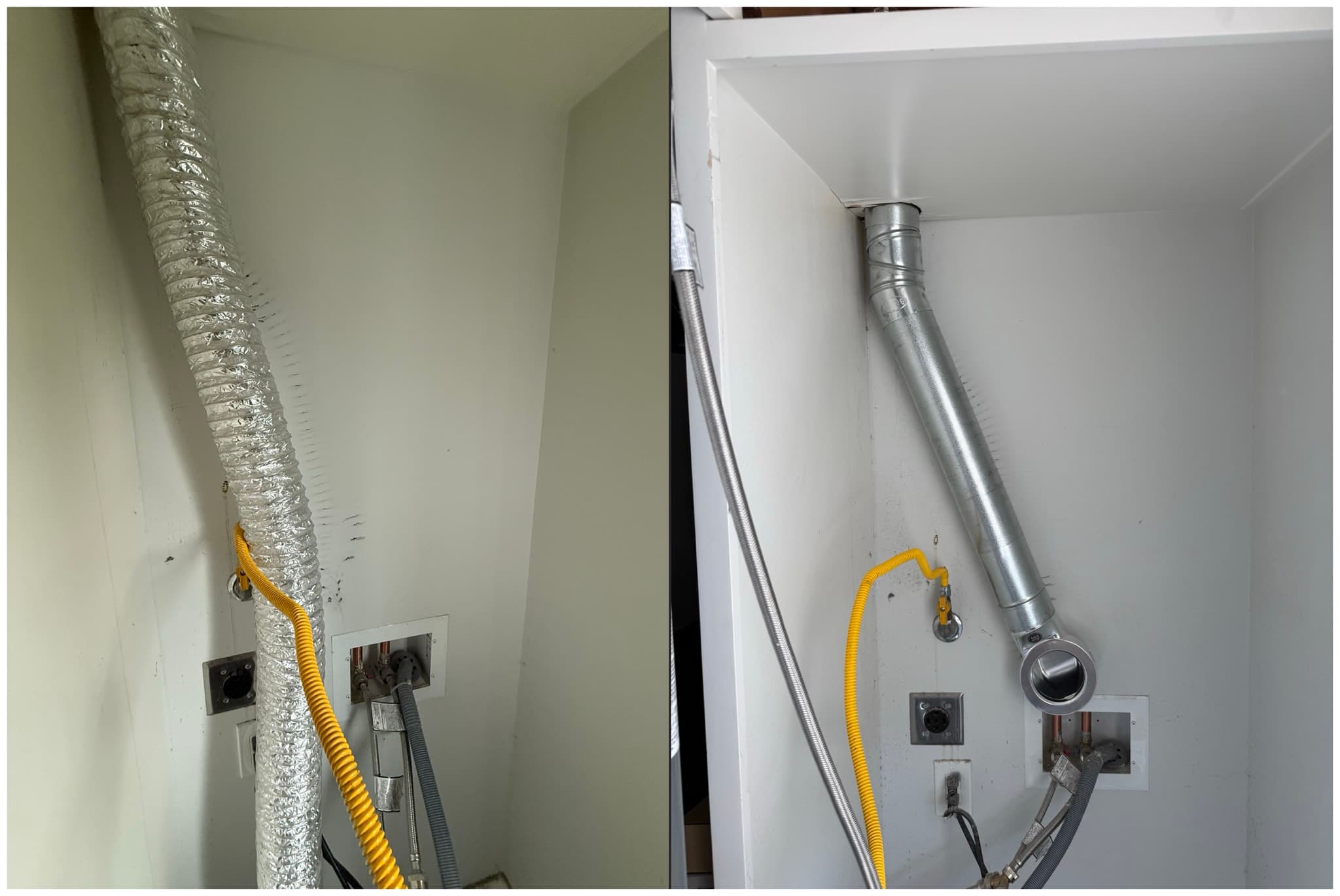
Before and after: the original compressed foil flex duct was replaced with rigid metal hard pipe and a MagVent connector, making the dryer easy to pull out for future service.
What We Found
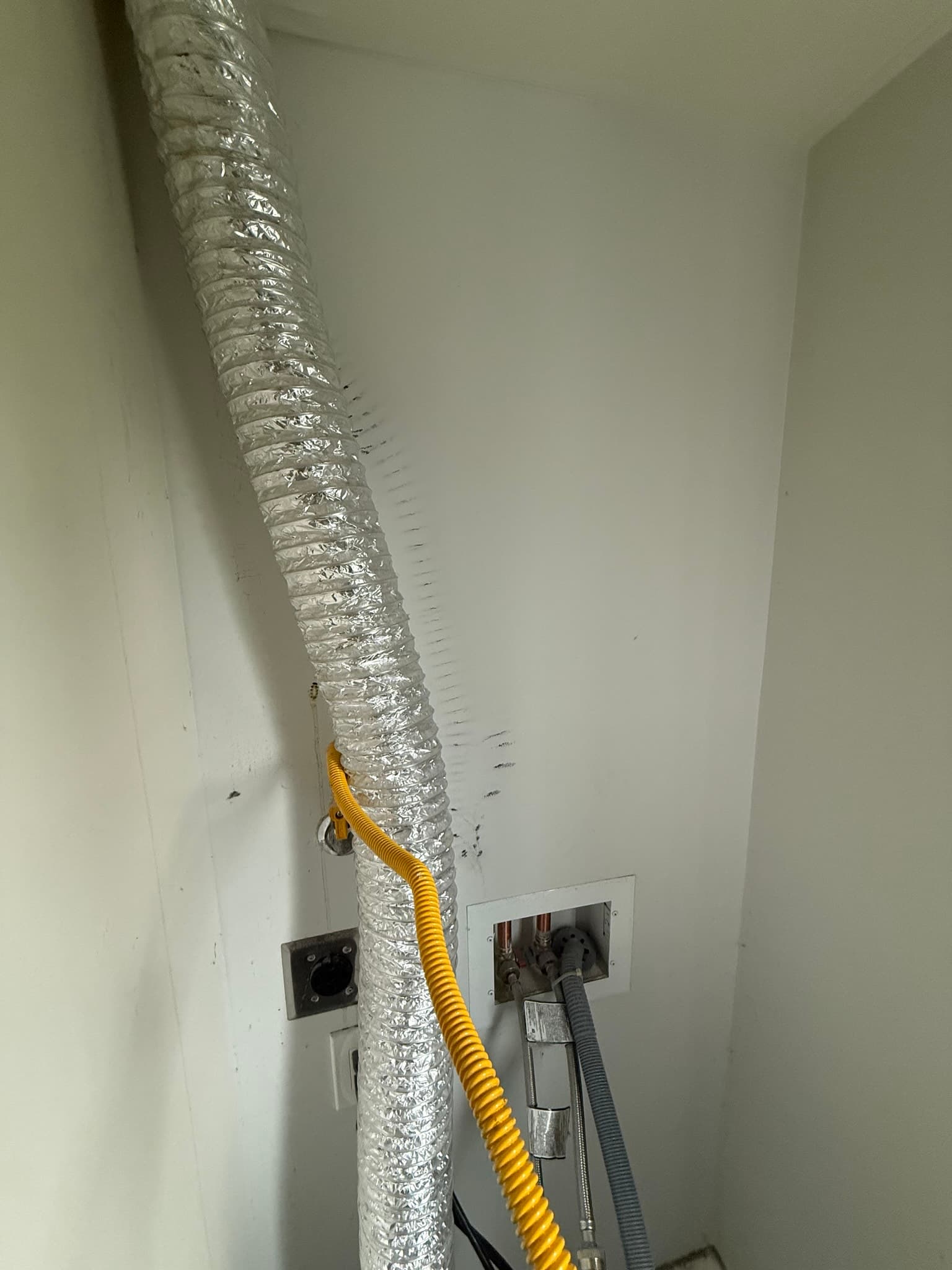
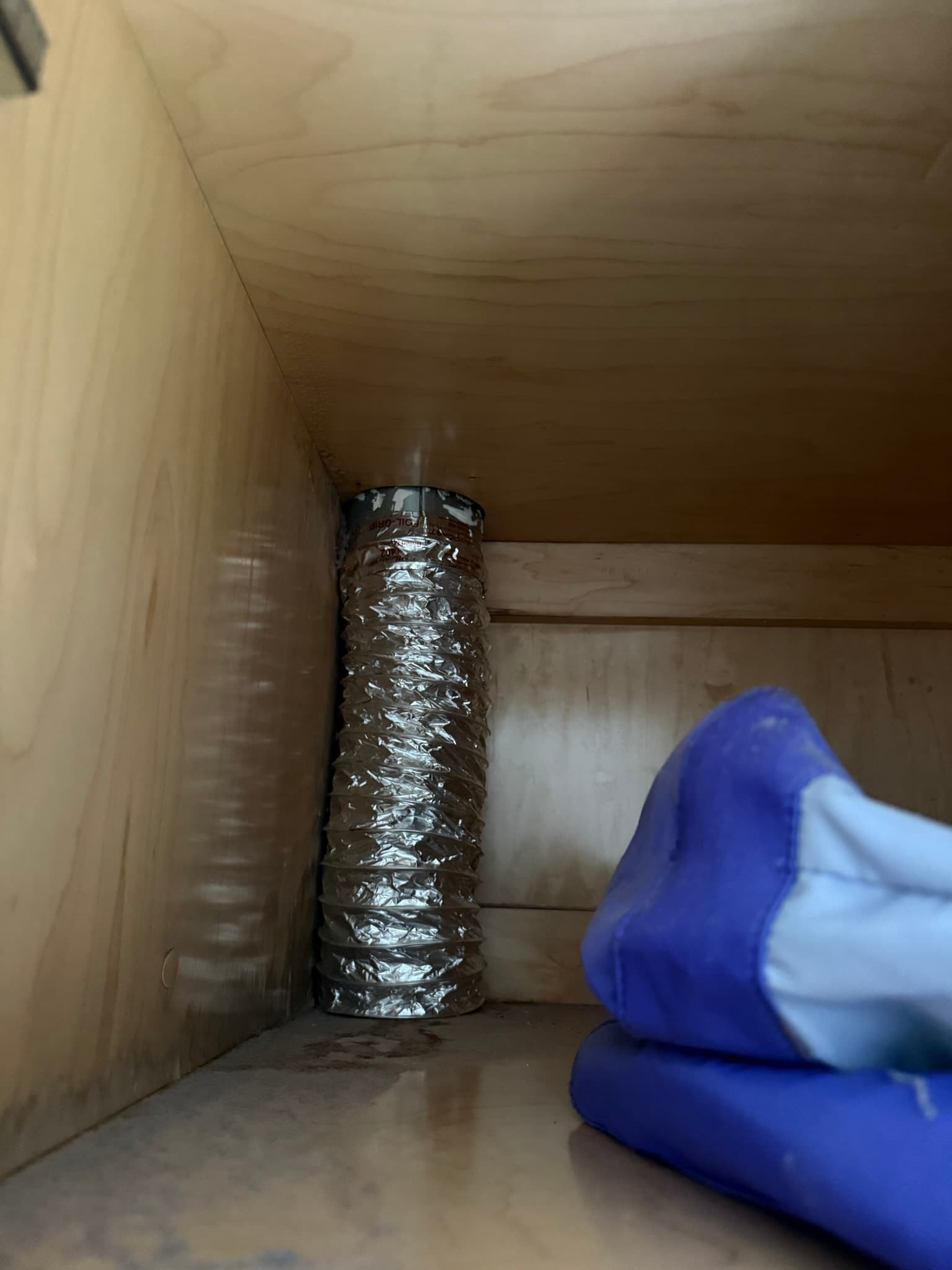
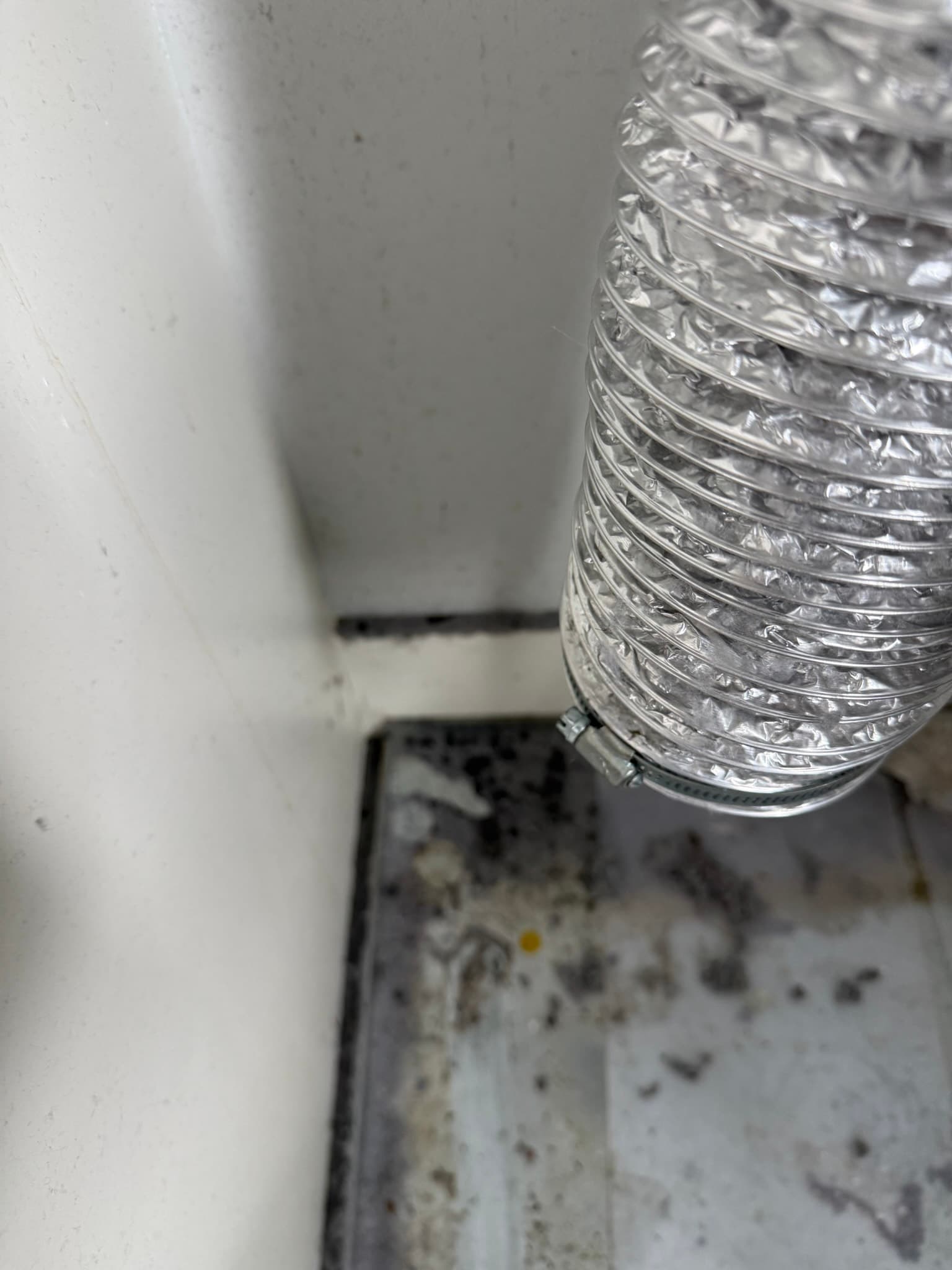
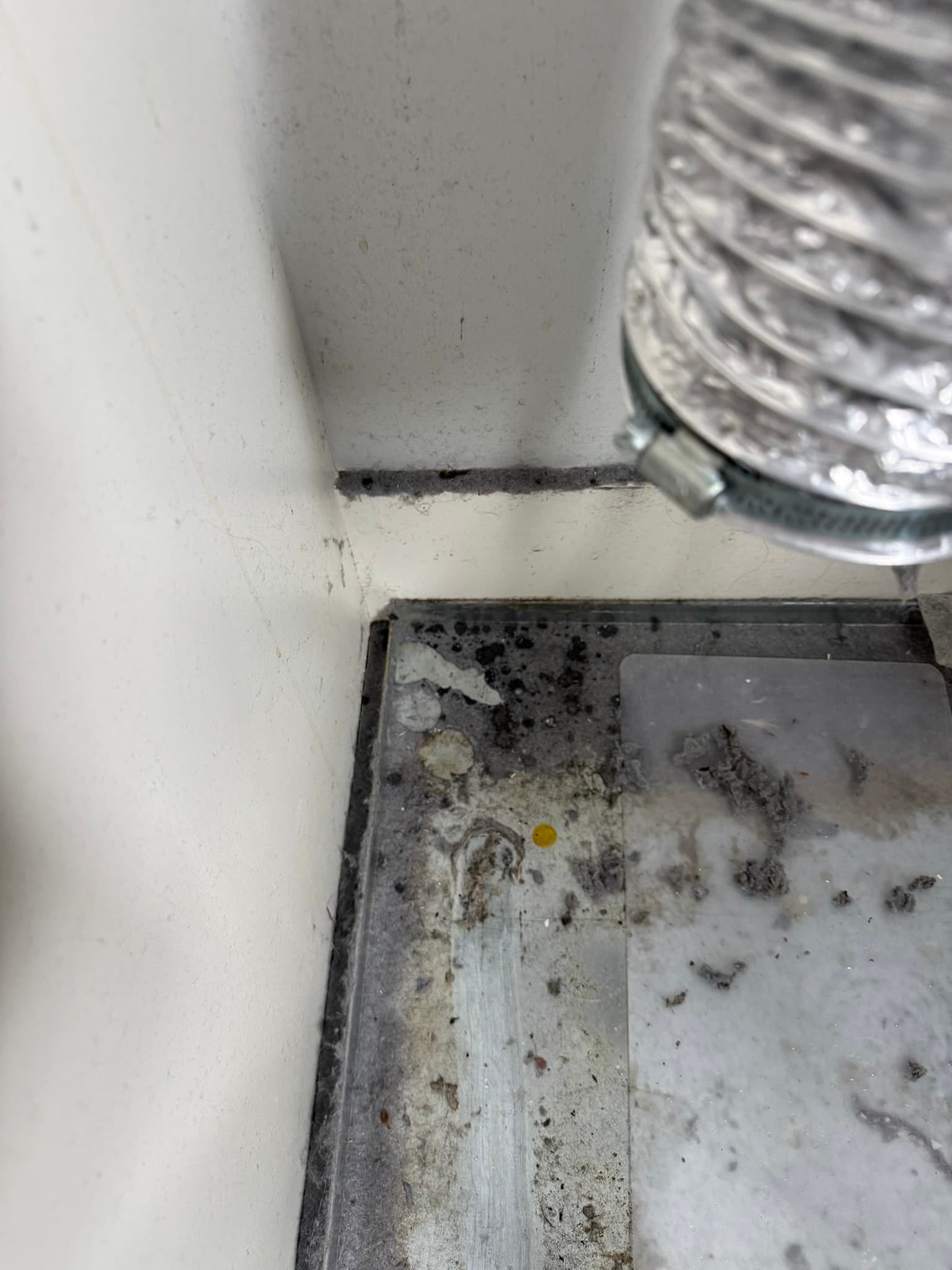
When our technician arrived at this Redwood City home, the stacked Electrolux washer-dryer unit was vented through a long run of flexible foil duct. That type of material is prohibited under IRC M1502.4.1, which requires dryer exhaust ducting to be smooth-interior metal of at least No. 28 gauge. Foil flex duct fails that standard on two counts: its thin metallic film does not meet the minimum thickness requirement, and its ribbed interior traps lint at many times the rate of rigid duct. On top of the code violation, the duct was installed with noticeable crimping and compression, further restricting airflow through an already-inadequate run.
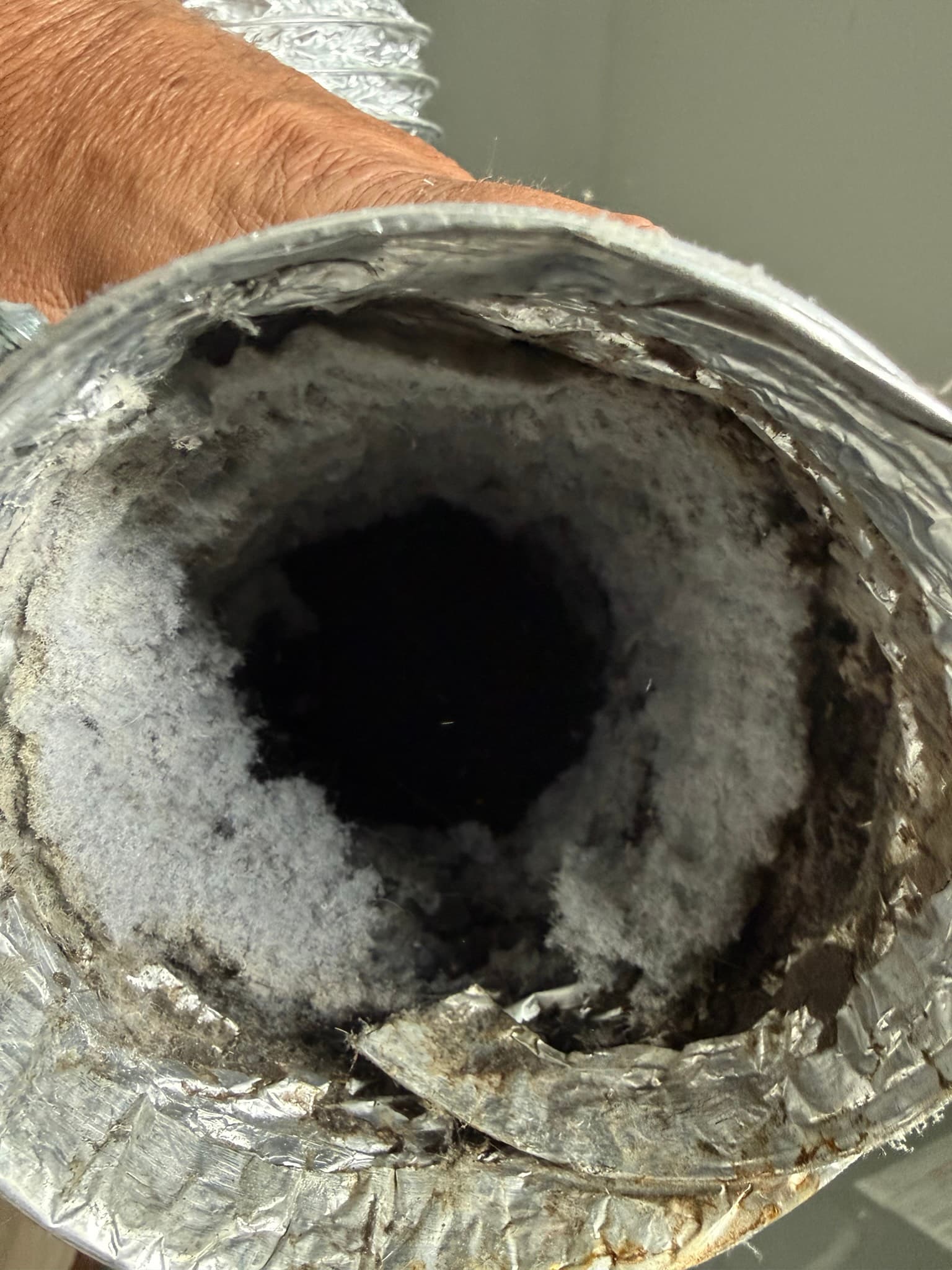
The interior of the flex duct told the full story. The duct walls were coated with thick, compacted lint that had narrowed the effective passage to well below what the dryer requires for proper exhaust. Moisture had also accumulated inside the duct, a condition that compounds lint adhesion and accelerates deterioration of the duct material. Airflow at this stage was severely compromised, consistent with back-pressure levels that force the dryer to run multiple cycles to dry a single load and that can push exhaust temperatures at the dryer connection well above safe operating thresholds.
Unexpected Obstructions
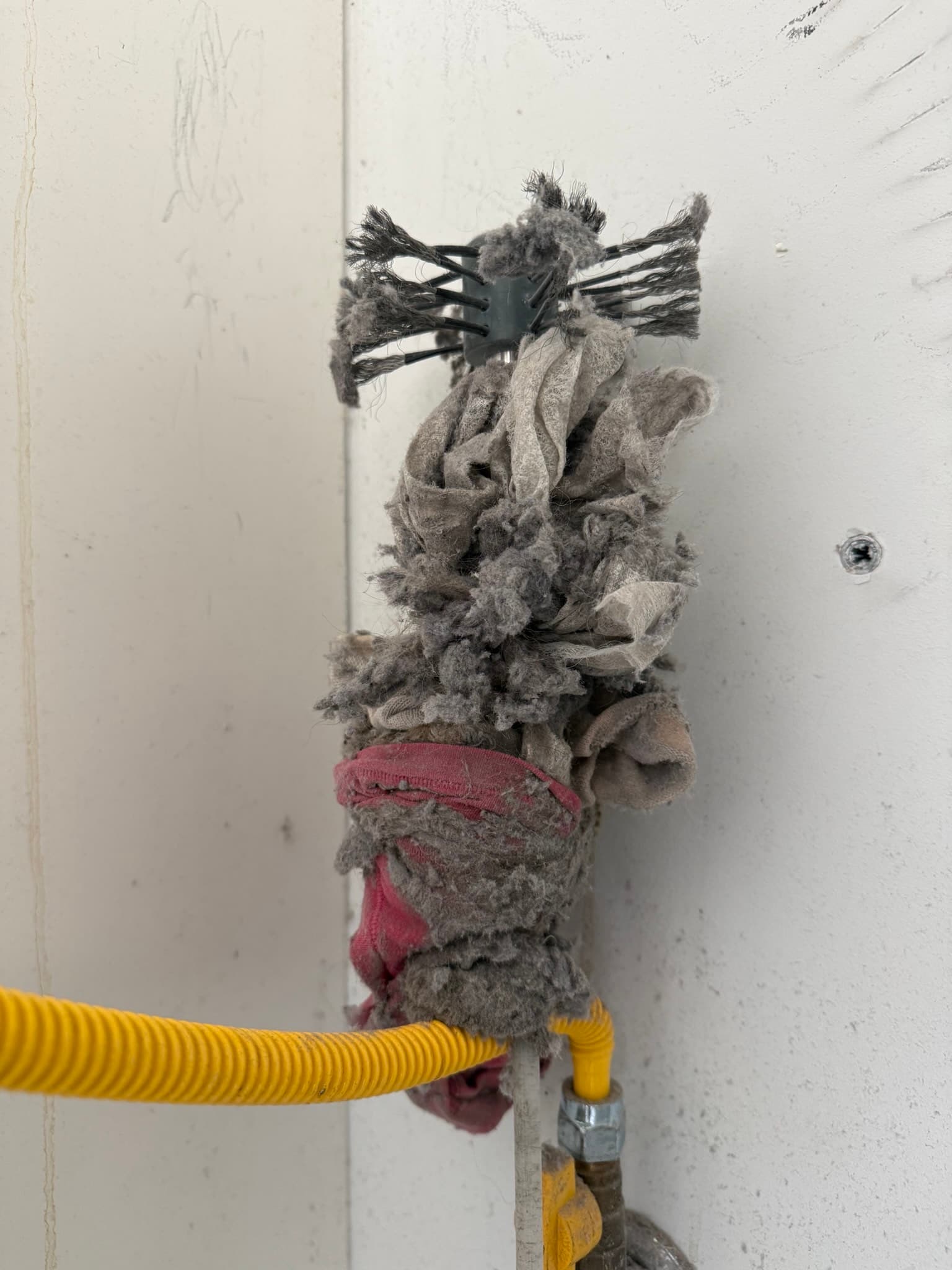
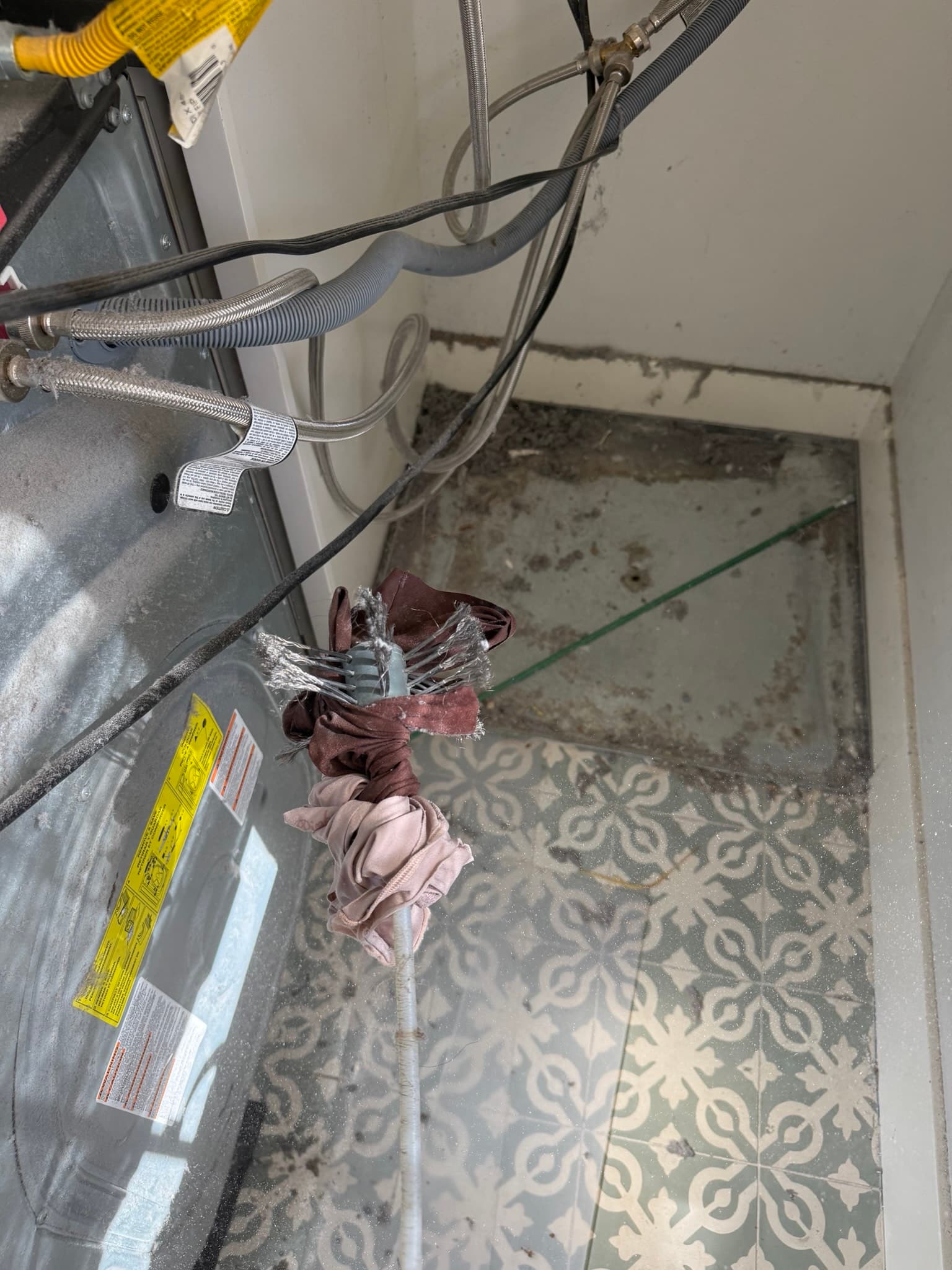
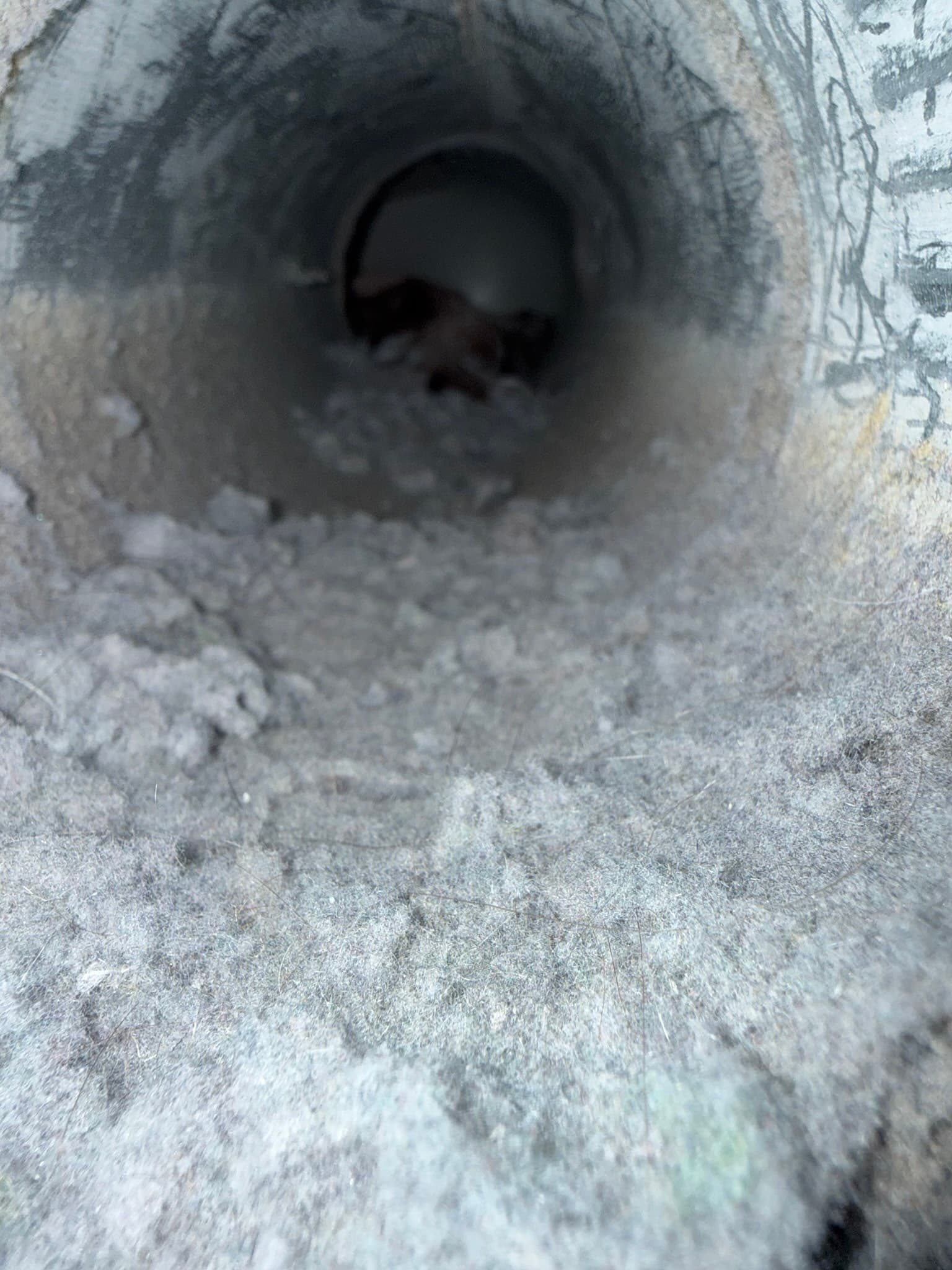
Beyond the lint, the inspection uncovered a more unusual blockage. Approximately four feet into the exhaust system, the technician found three pairs of underwear and a sock that had passed through the lint trap and lodged inside the duct. Additional fabric items, including socks and underwear, were found inside the dryer's burner tube itself. This is a known tendency with certain Electrolux dryer models: the lint trap opening is large enough that small garments can slip past it and migrate into the exhaust path or heating chamber. Fabric items in the burner tube present a direct fire hazard and also prevent the dryer from heating evenly and efficiently. All foreign objects were removed during the service.
What We Did: Cleaning and Inspection
With the obstructions documented, the technician performed a full residential dryer exhaust cleaning using a drill-attachment rotary brush system combined with a high-powered shop vacuum. This method agitates compacted lint from the duct walls while the vacuum draws debris out continuously, ensuring that dislodged material does not settle back into the system. The cleaning covered the entire exhaust path from the dryer connection to the exterior termination. A thorough airflow test was performed after cleaning to verify that the system was moving air at an acceptable rate.
What We Did: Duct Replacement and New Components
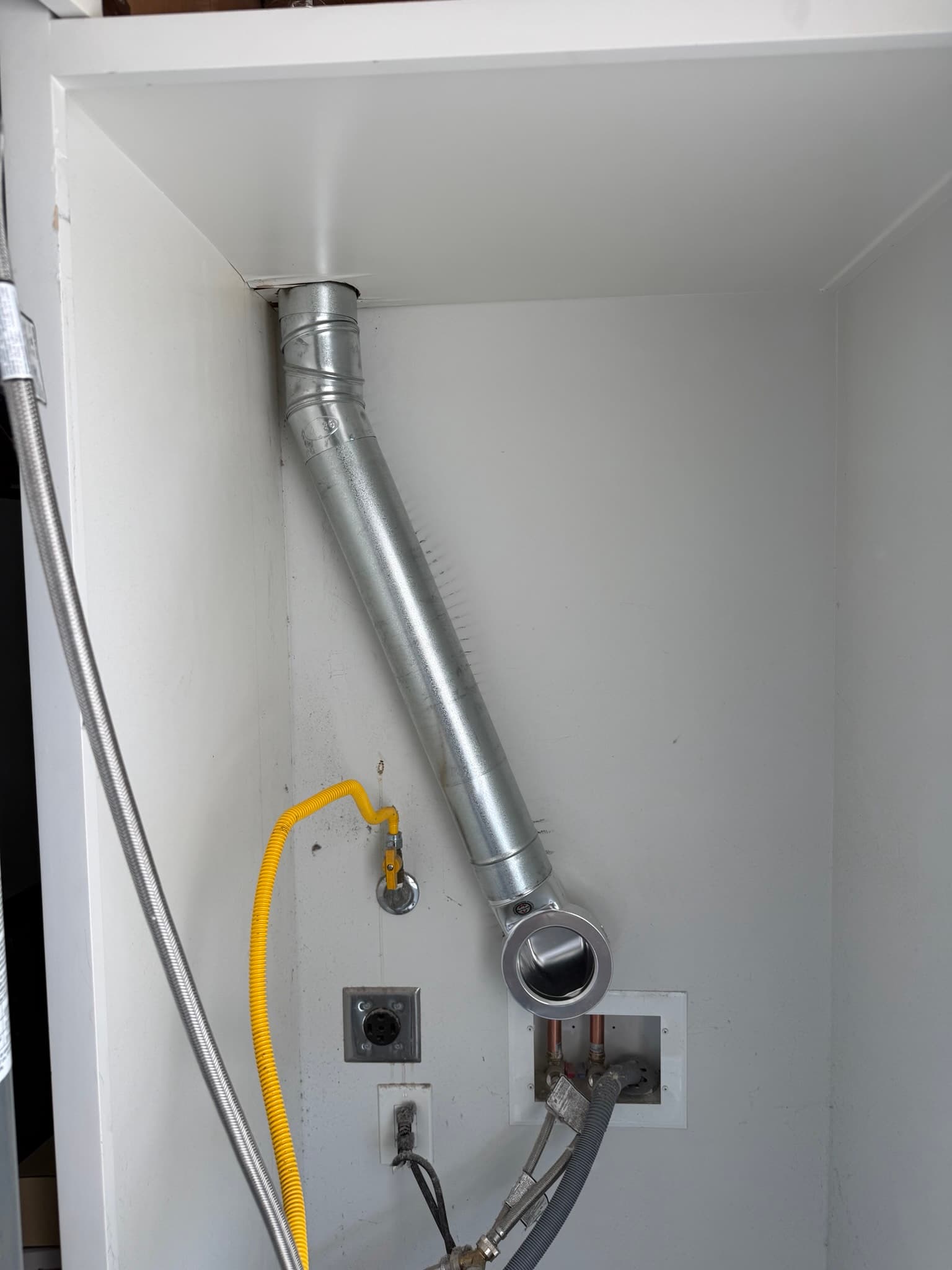
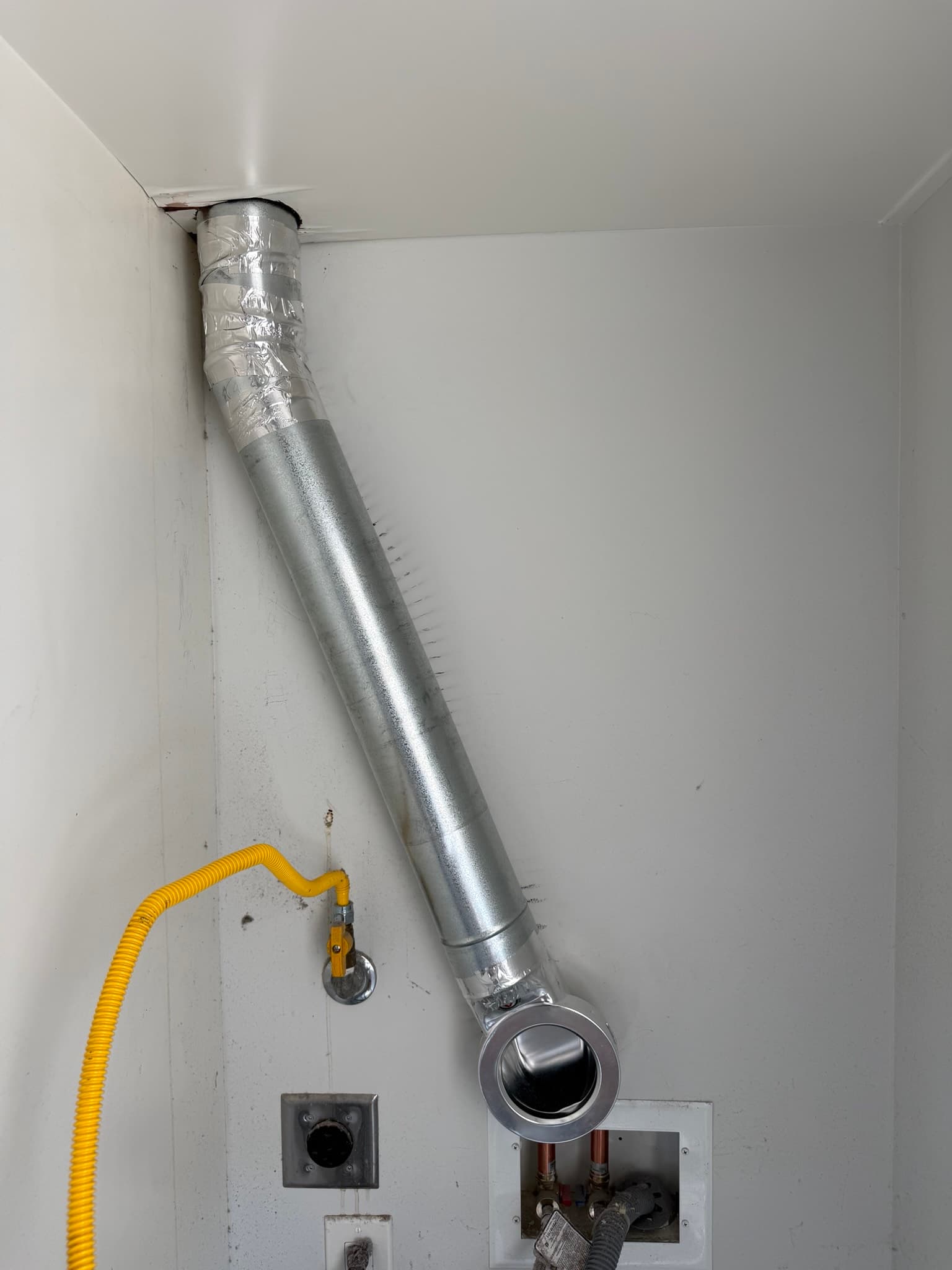
After cleaning, the prohibited flexible foil duct was removed and replaced with a rigid metal duct configuration built around approximately four feet of hard pipe joined with a 22-degree shallow-angle elbow. Shallow elbows reduce flow resistance compared to standard 90-degree fittings, and IRC M1502.4.1 counts each 90-degree equivalent toward the system's maximum allowable equivalent length, so minimizing bend resistance also supports long-term code compliance. The new duct run was sealed at connection points with metal tape to prevent lint from escaping at the joints.
At the dryer connection, the technician installed a MagVent MV-90, which is a 90-degree magnetic dryer vent connector. This component uses a magnetic coupling rather than a fixed fitting, which means the stacked unit can be pulled out of its closet for future service or cleaning without disconnecting any duct hardware. Two EZ-Vent fittings, an EZ-20 and an EZ-8, were also installed as part of the completed duct assembly to manage the transition geometry within the tight closet space. The result is a fully rigid, properly supported exhaust path that meets IRC M1502.4.1 material requirements, provides strong measured airflow, and makes every future service call faster and easier.
The Outcome
At the conclusion of the job, the Redwood City home had a dryer exhaust system that was free of lint, free of foreign objects, built from code-compliant rigid metal ductwork, and configured for straightforward future access. The MagVent 90-degree connection in particular addresses one of the most common reasons dryer vents are neglected: when a dryer is difficult to move, homeowners and technicians alike defer maintenance. By making the unit easy to access, the new installation supports regular cleaning intervals that keep lint accumulation well below hazardous levels. Airflow tested strong after the work was complete, and the dryer is positioned to dry loads efficiently in a single cycle.
Project photos
12 photos
Need similar work in Redwood City?
Get a free quote - same-week appointments usually available.