
Foster City · Residential Dryer Exhaust Cleaning Inspection
Dryer Vent Cleaning & DryerFlex Installation - Foster City
A Foster City home received a full dryer exhaust cleaning and inspection, plus replacement of a non-compliant accordion-style transition duct with a 48-inch DryerFlex UL 2158A-listed connector and an EZ-Vent EZ-20 exterior cap.
Completed September 16, 2026
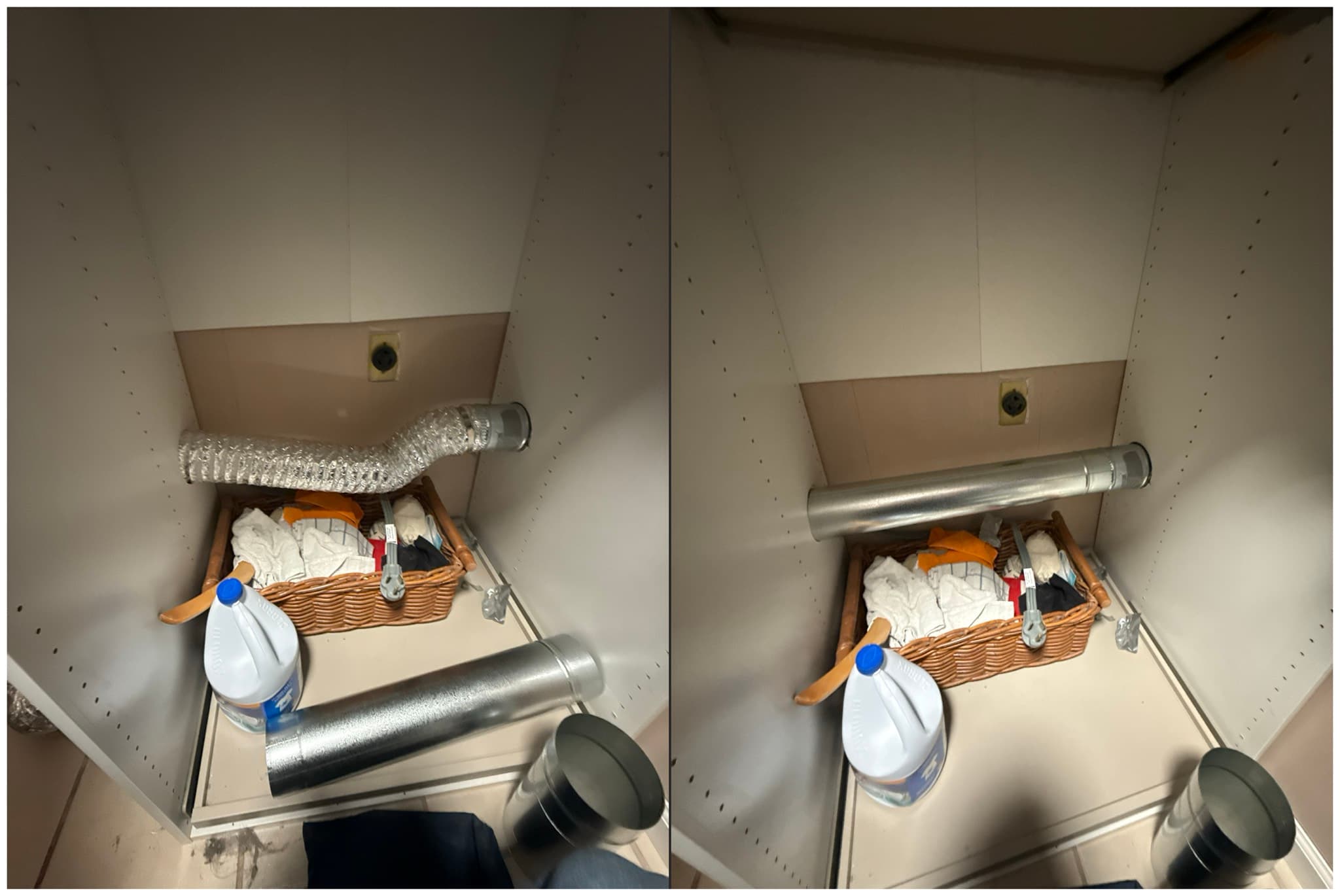
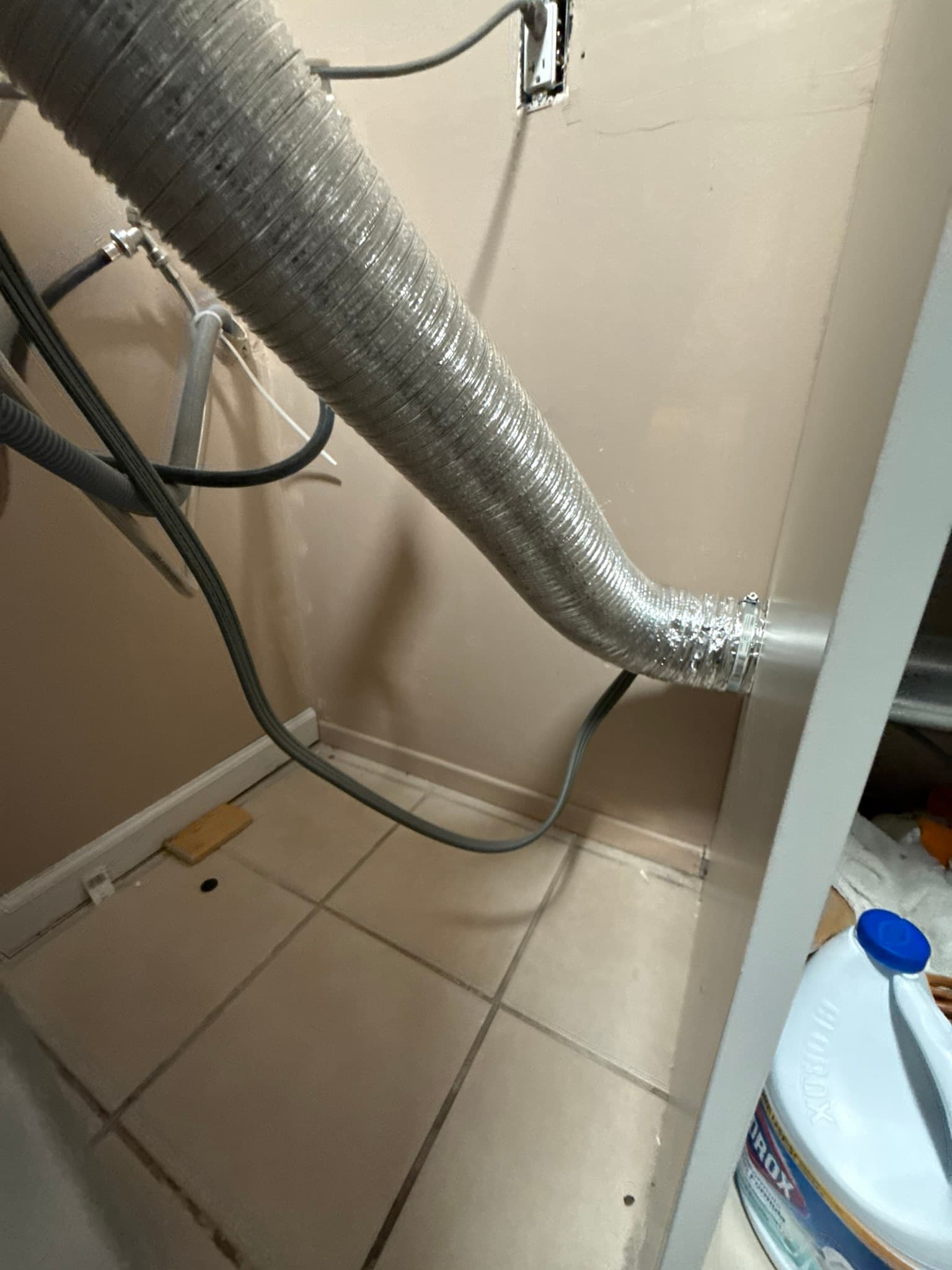
Before and after: the clogged corrugated flex duct replaced with a clean, code-compliant smooth-metal connection.
What We Found
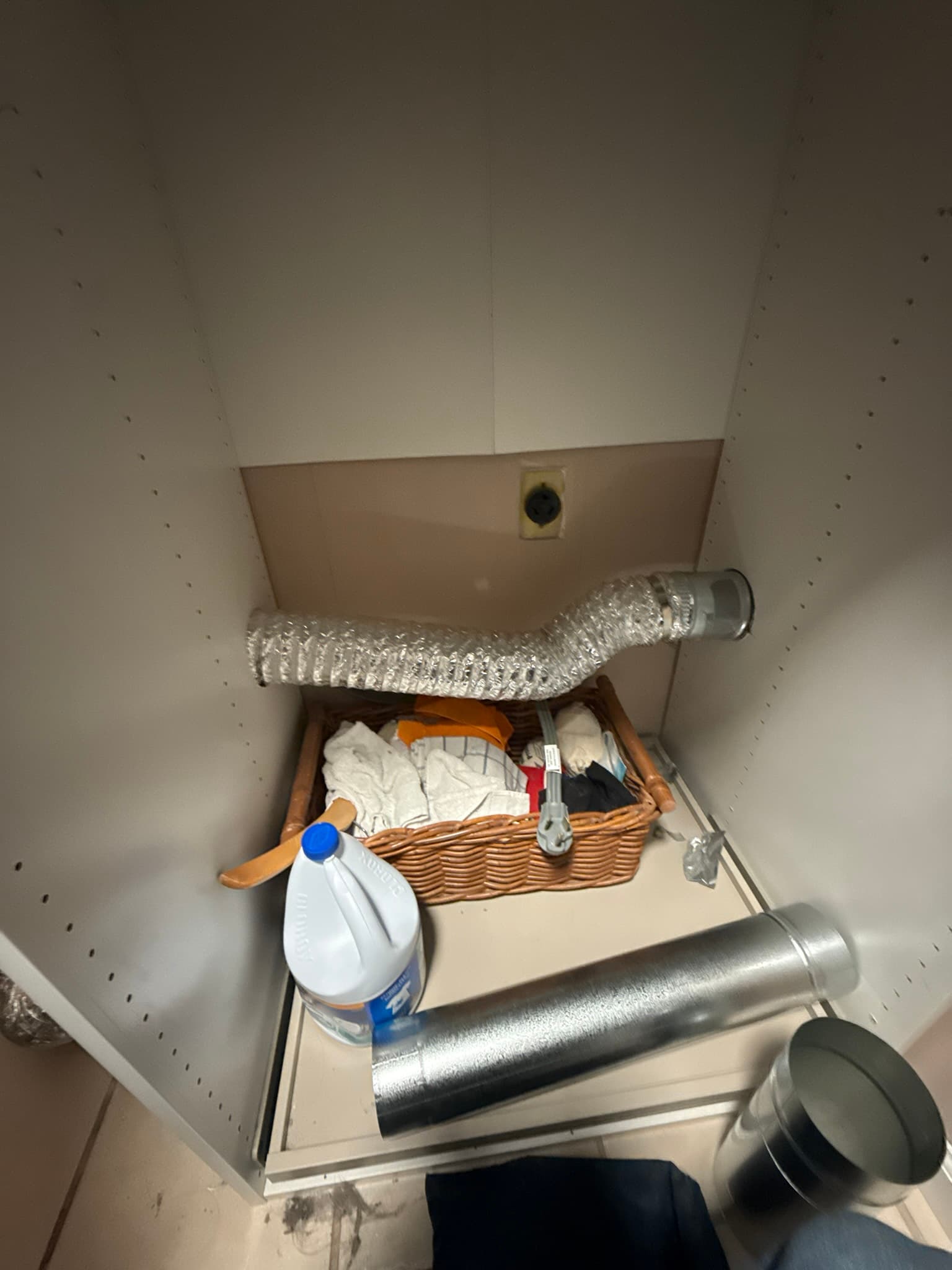
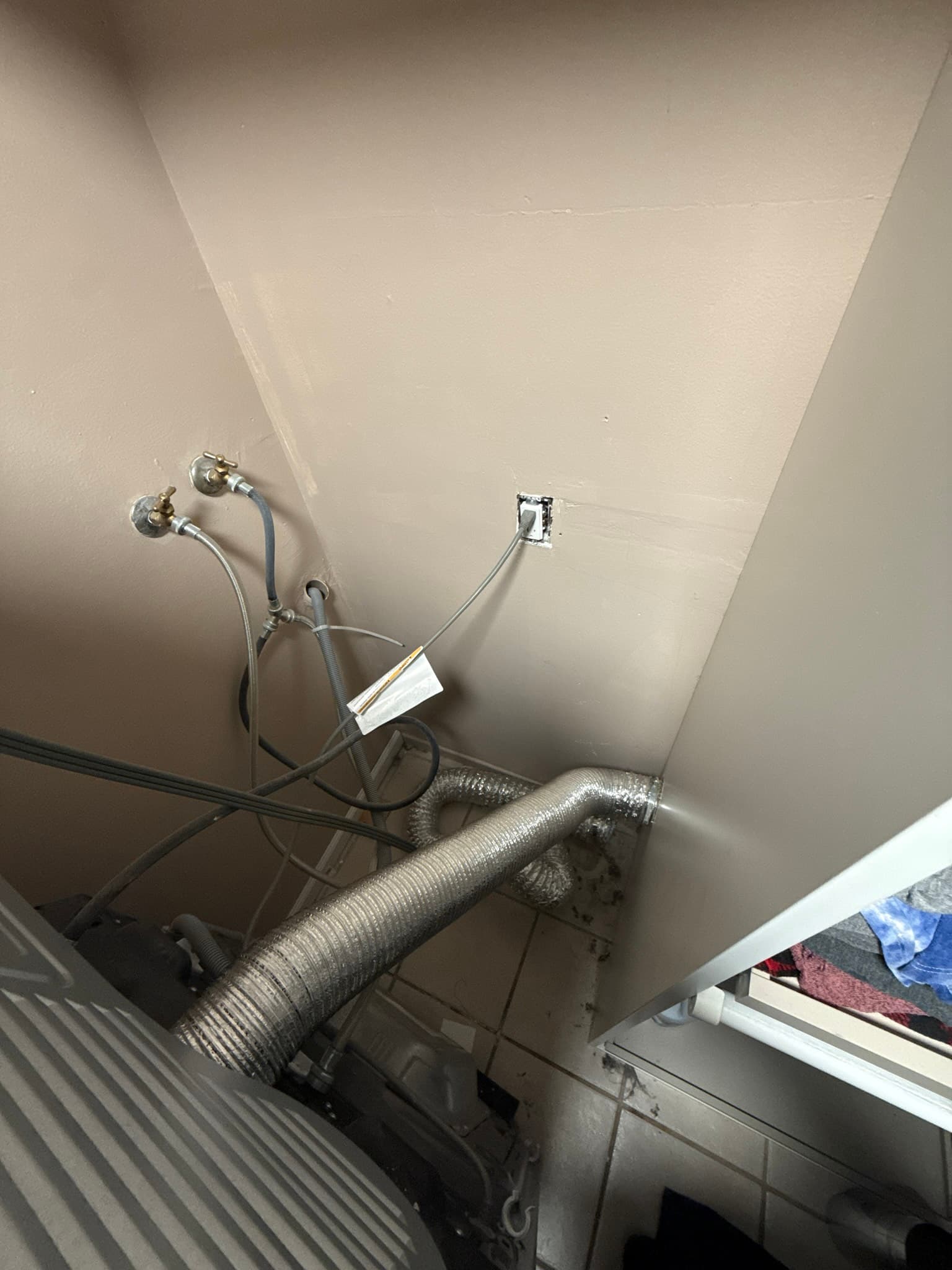
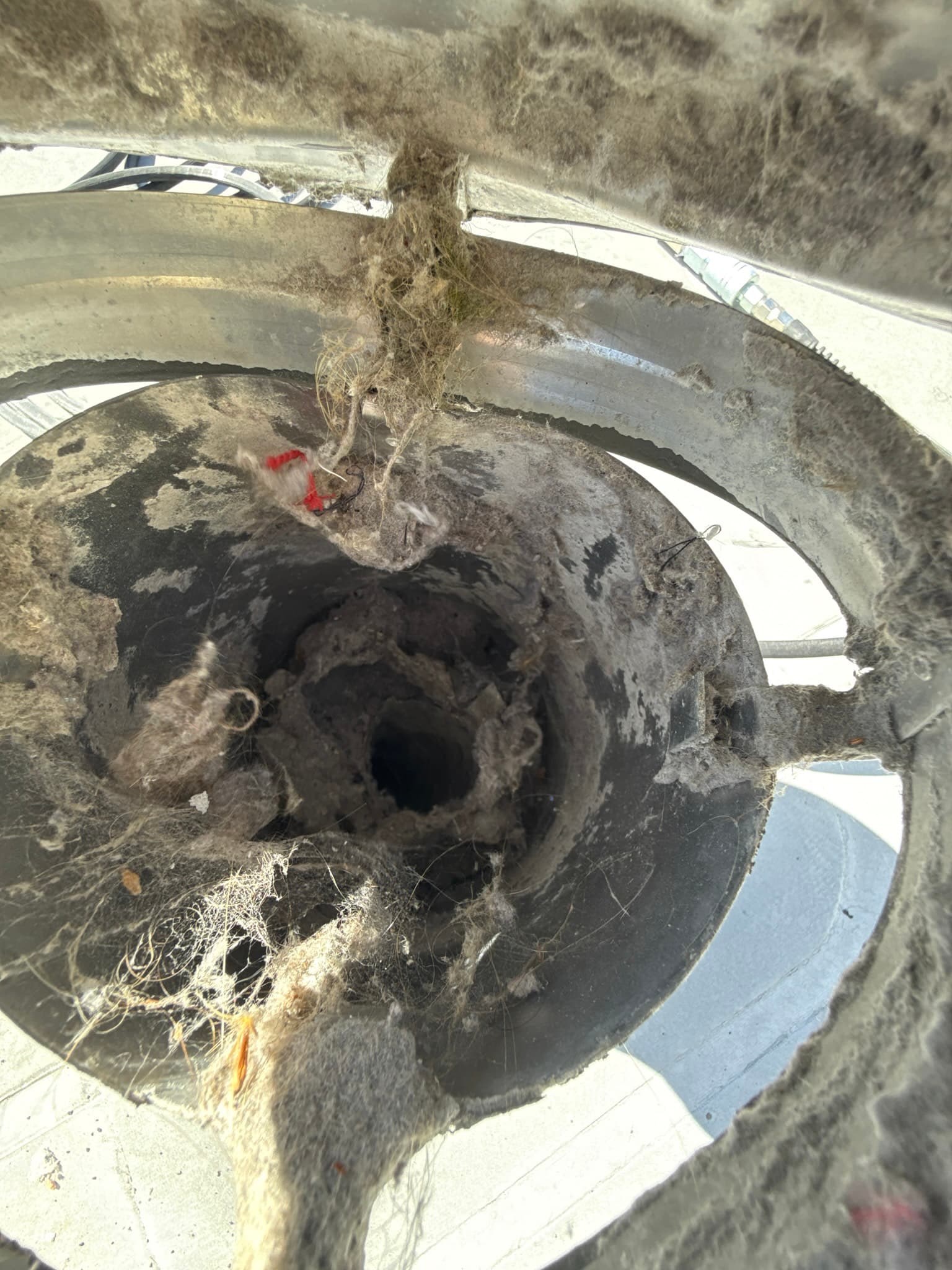
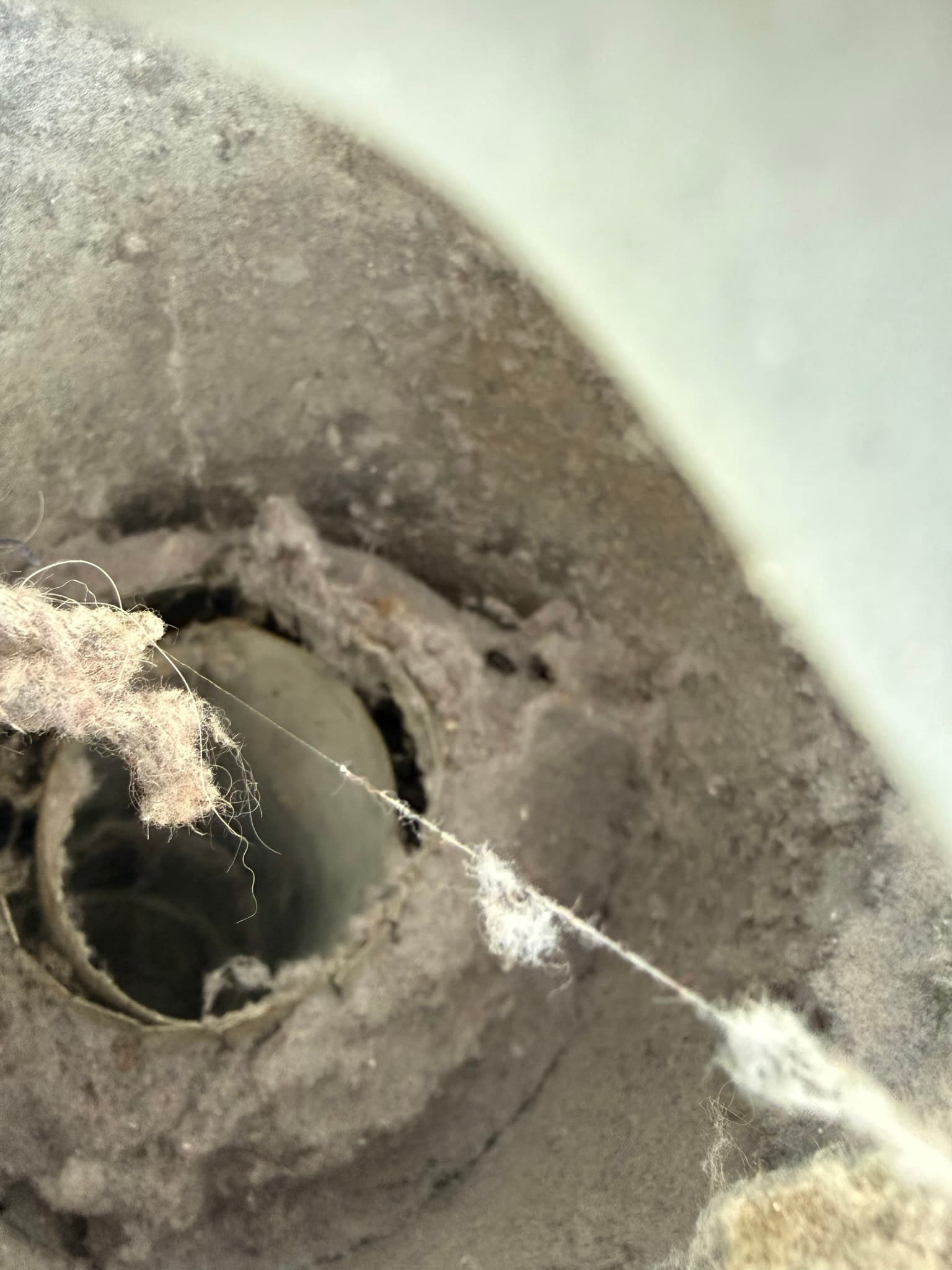
When our technician arrived at this Foster City residence, the dryer exhaust system showed two significant problems that were compounding each other. First, the transition duct connecting the dryer to the wall was a corrugated accordion-style flexible duct. The ribbed interior of that type of duct snags lint at a dramatically higher rate than smooth-wall material, and photos taken before service confirmed heavy, compacted lint coating along nearly the entire interior surface. The duct interior was well over half occluded, which is consistent with severe lint accumulation: a condition where measured airflow at the termination typically falls well below the 200 CFM minimum needed to exhaust moisture effectively, and where back-pressure drives exhaust temperatures at the dryer connection above safe operating levels. The U.S. Fire Administration attributes roughly 15,000 residential dryer fires each year to lint buildup, and what we found here represented that kind of risk.
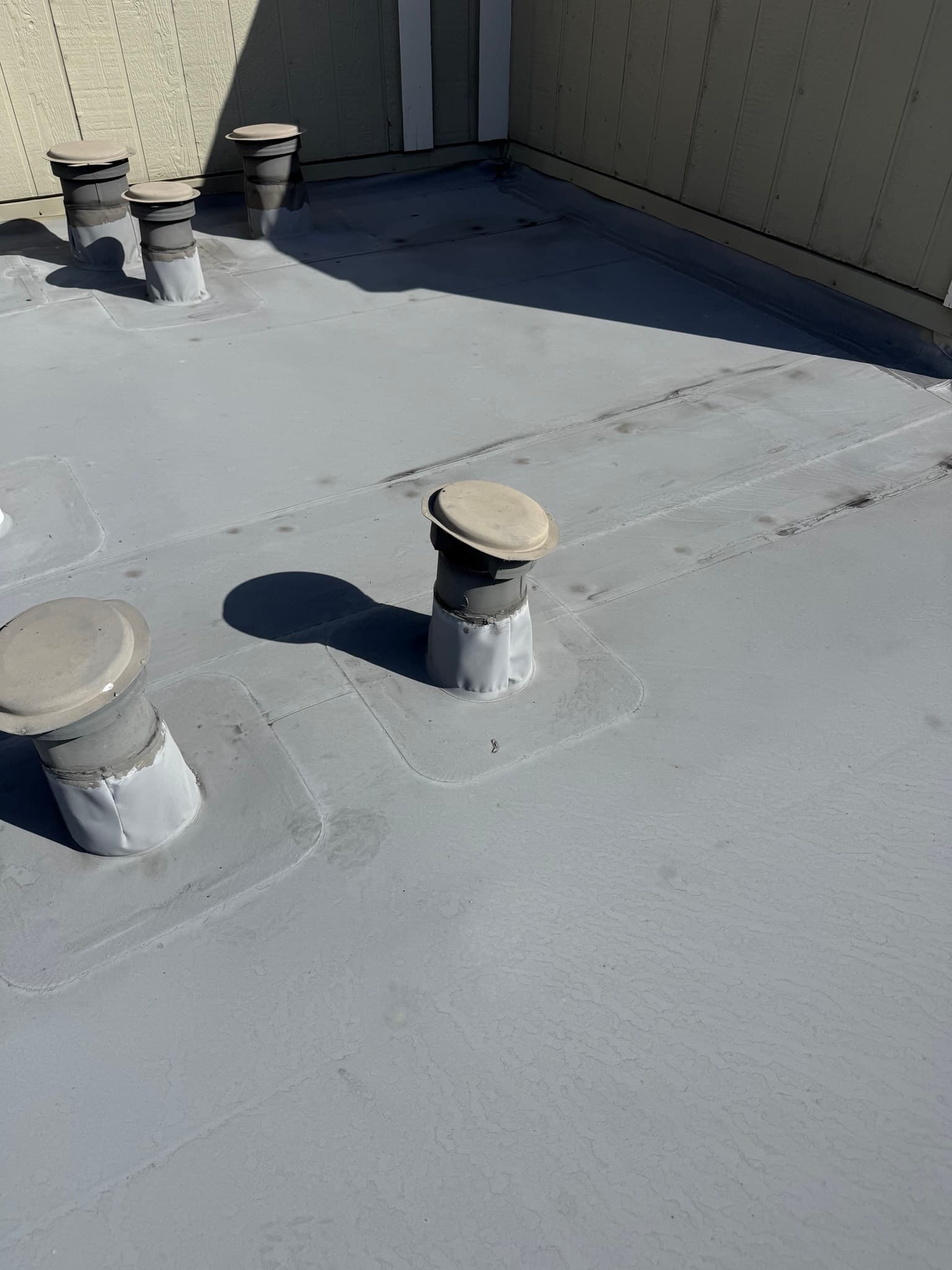
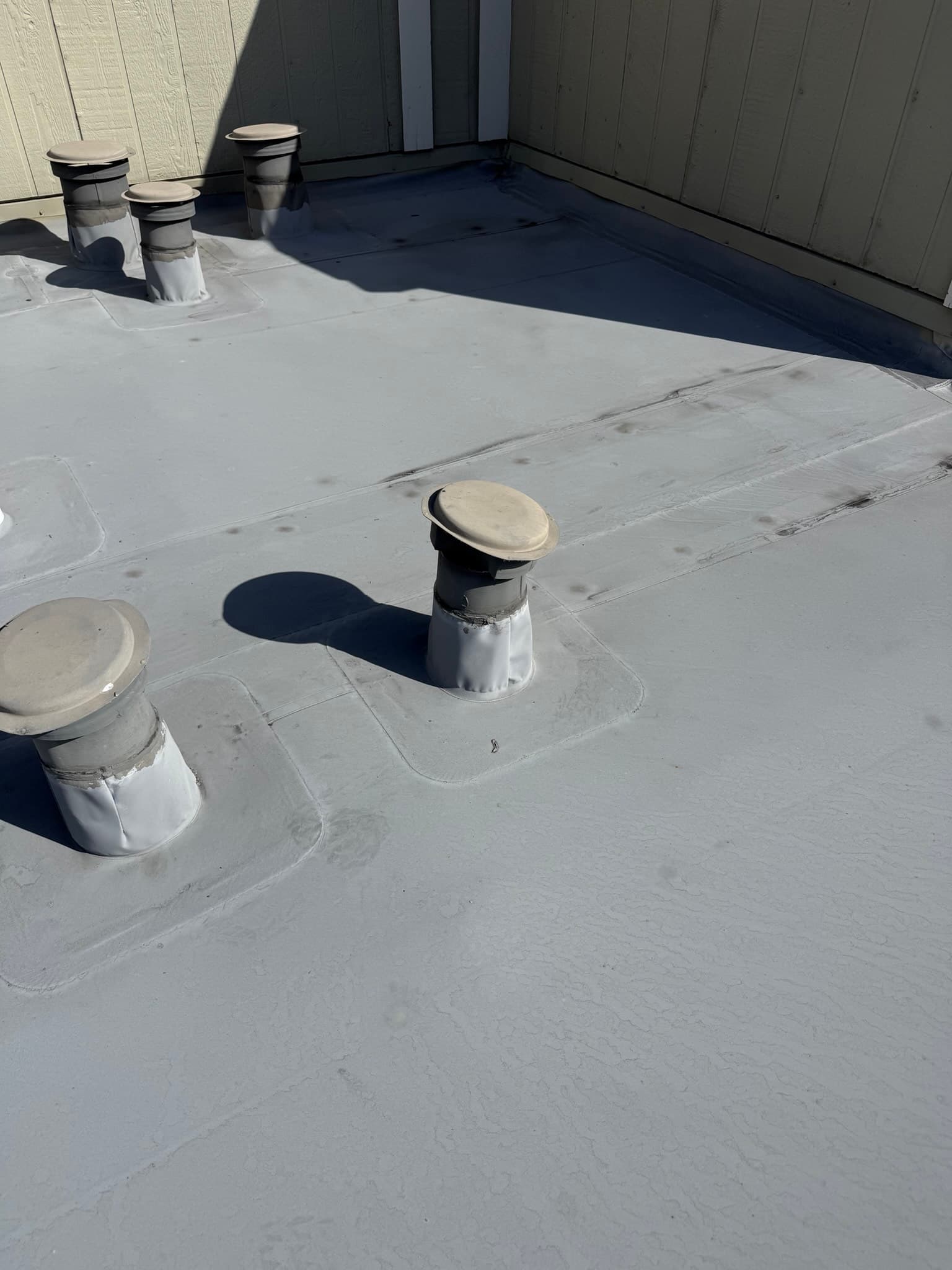
Second, the exterior cap had accumulated a dense plug of compacted lint at its opening. The cap louvers and damper were visibly burdened with lint strands packed into the opening, restricting the final point of exhaust to a fraction of the minimum 12.5 square inches of clear area required by IRC M1502.3.1. Between the clogged transition duct and the blocked exterior cap, the system was operating under severe restriction from one end to the other.
Why It Matters
IRC M1502.4.1 requires that dryer exhaust ducts have a smooth interior finish and be constructed of metal not less than 0.0157 inch (No. 28 gauge) in thickness. The corrugated accordion duct that was originally installed does not meet this standard: its ribbed interior surface traps lint at a rate many times higher than smooth-wall duct, and it lacks the structural integrity of listed transition duct material. IRC M1502.4.3 further requires that transition ducts be a single length listed and labeled in accordance with UL 2158A and no greater than 8 feet in length. The original duct was not a UL 2158A-listed product. Replacing it was not optional from a code-compliance standpoint, and doing so also directly reduces lint accumulation rates going forward, extending the interval between required cleanings.
What We Did: Deep Cleaning
Our technician performed a full residential dryer exhaust cleaning and inspection from the dryer connection point to the exterior cap. The cleaning method used a drill-attachment rotary brush working in combination with a high-powered shop vacuum. The rotary brush agitates compacted lint off the interior duct walls while the vacuum maintains negative pressure throughout the system, drawing the freed debris out rather than allowing it to resettle. Every accessible inch of the duct run was addressed, including the elbow transitions and the exterior cap opening. The before-and-after photos show the contrast clearly: a duct interior that was heavily coated with compacted gray lint was restored to clean, open metal on all visible surfaces.
What We Did: DryerFlex Transition Duct Installation
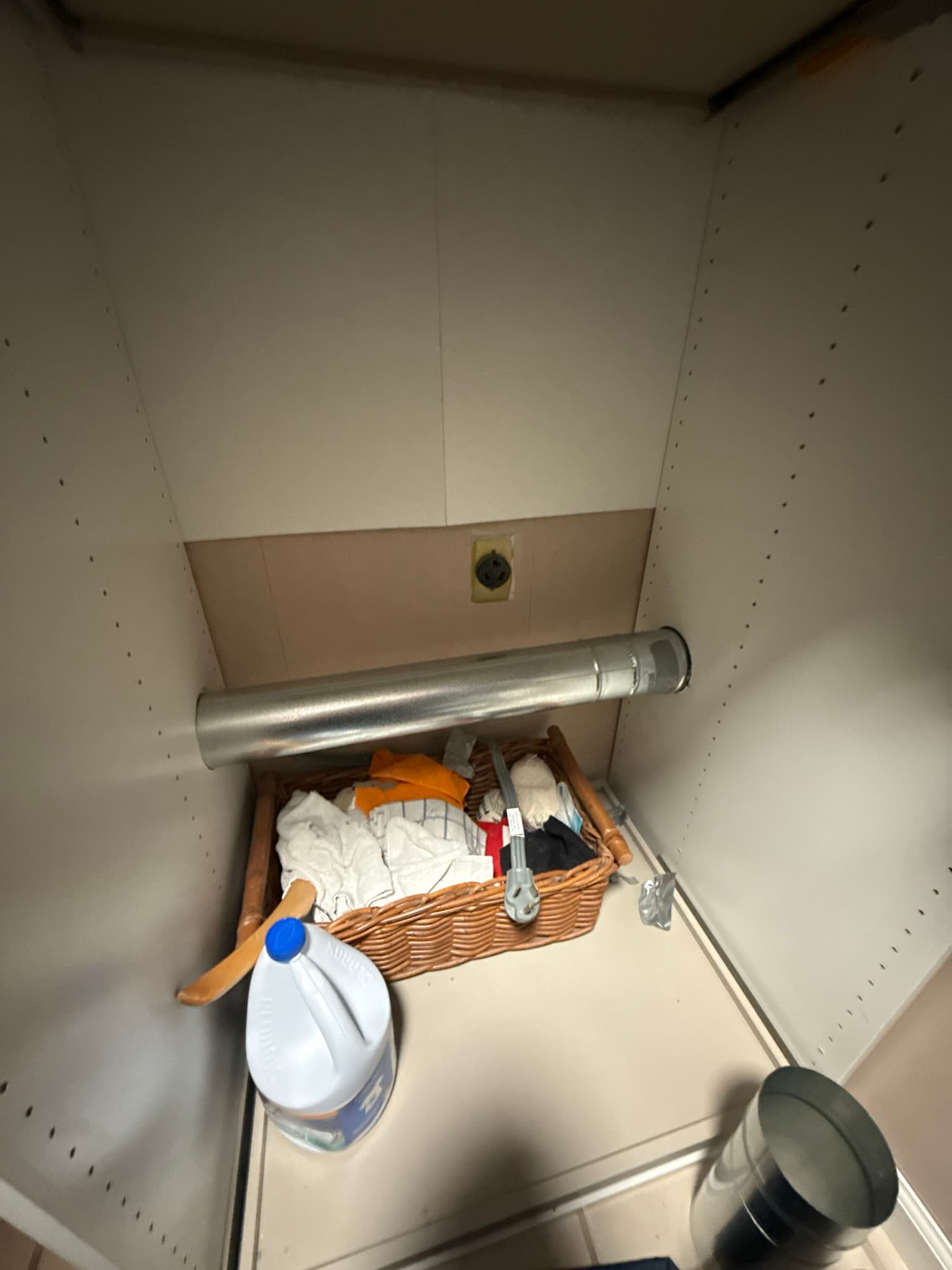
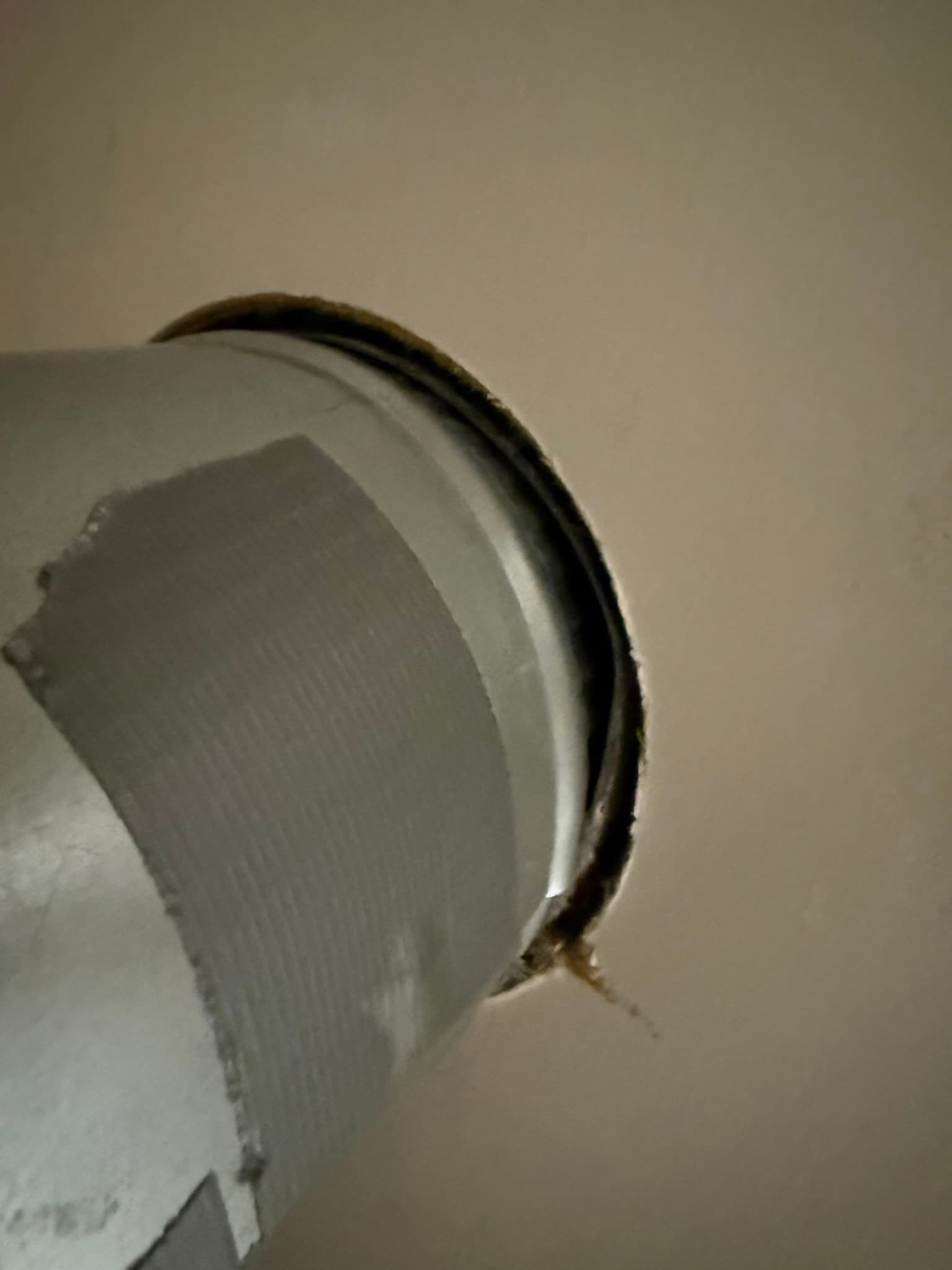
With the duct system cleaned, the technician removed the non-compliant corrugated transition duct and replaced it with a 48-inch length of DryerFlex semi-rigid aluminum transition duct, secured at both ends with two DryerClamps included in the kit. DryerFlex is listed and labeled to UL 2158A as required by IRC M1502.4.3, and its UL listing goes further than many competing products. In fire-exposure testing, DryerFlex minimizes smoke and flame emission while withstanding temperatures up to 482 degrees Fahrenheit, placing it in the highest UL fire resistance class available for this application. Its construction combines the wire-bound semi-rigid form of aluminum flex with an interior surface smooth enough to resist lint adhesion far more effectively than the accordion-style duct it replaced. The 48-inch length keeps the transition well within the 8-foot maximum allowed by code and provides the dryer with proper clearance from the wall connection. The EZ-Vent EZ-20 exterior cap was also installed as part of this service, providing a properly functioning backdraft damper at the termination point as required by IRC M1502.3.
The Outcome
After cleaning and installation were complete, the system was functionally restored: the duct interior is clear from the dryer collar to the exterior cap, the transition duct is a UL 2158A-listed product installed within code length limits, and the exterior cap is fitted with an operating backdraft damper. Foster City homeowners with dryers located in closets or utility spaces, where the dryer is pushed close to the wall, commonly end up with accordion-style transition ducts that get compressed and accumulate lint quickly. Replacing that section with DryerFlex and keeping a proper clearance gap behind the dryer breaks that cycle. Annual professional cleaning remains the standard recommendation for any dryer exhaust system, and the clean baseline established by this service gives the next inspection a reliable starting point.
Project photos
10 photos
Need similar work in Foster City?
Get a free quote - same-week appointments usually available.