
San Francisco · Residential Dryer Exhaust Cleaning Inspection
Dryer Exhaust Cleaning & Laundry Hookup Service in San Francisco
A San Francisco home with a severely lint-packed dryer exhaust and deteriorated rubber laundry hoses received a full exhaust cleaning and inspection plus new stainless steel supply lines and transition ducting.
Completed October 8, 2026
Verified customer review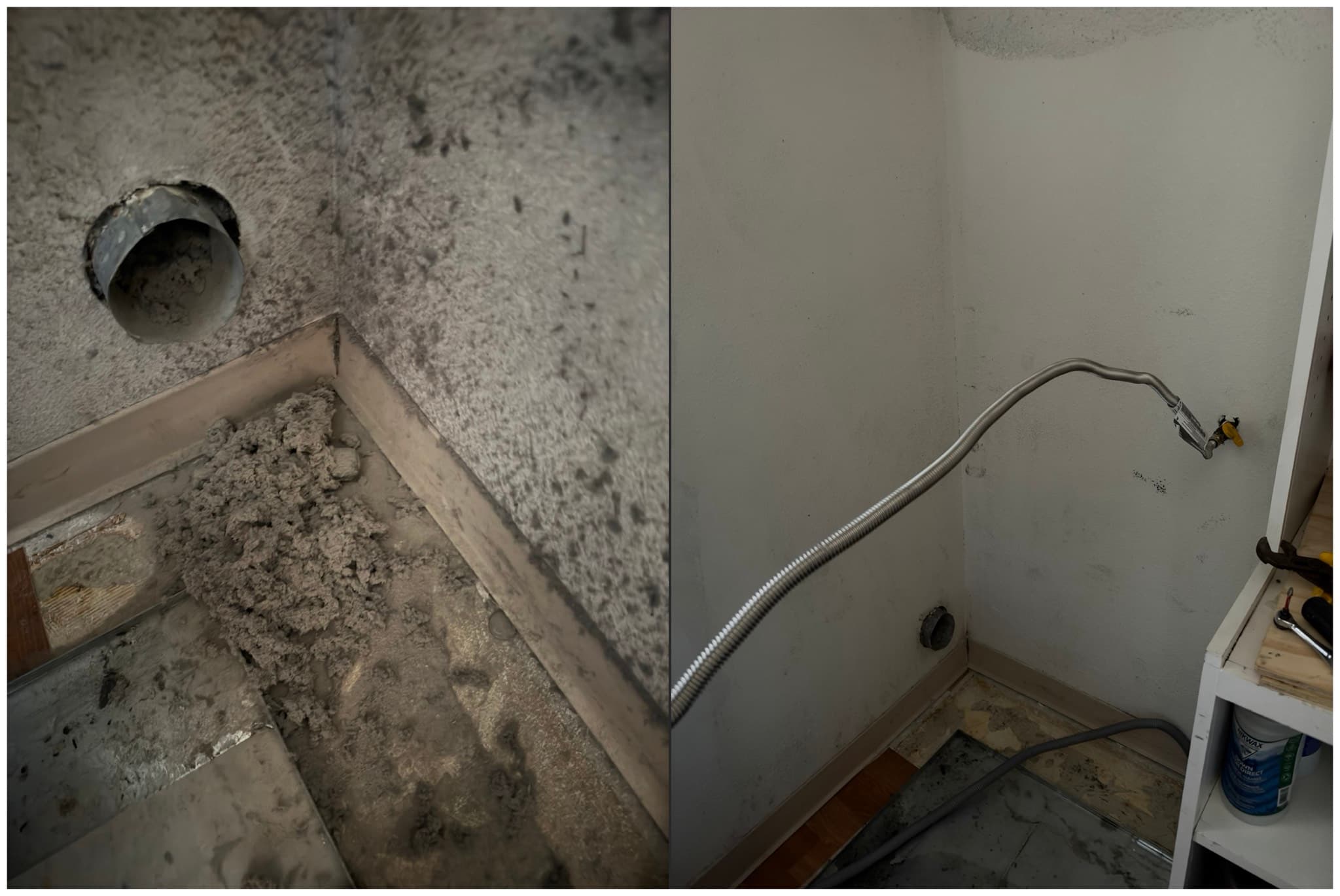
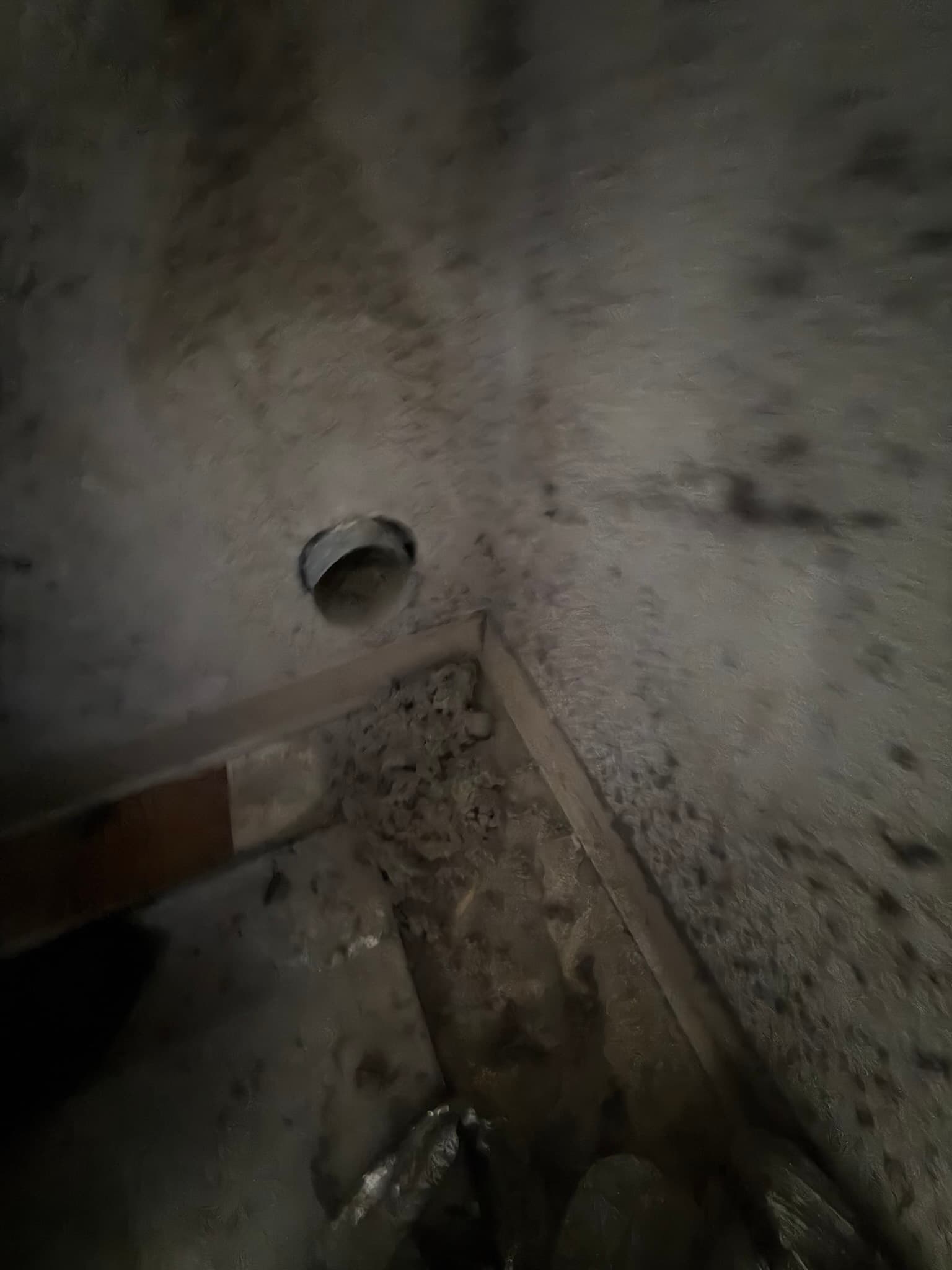
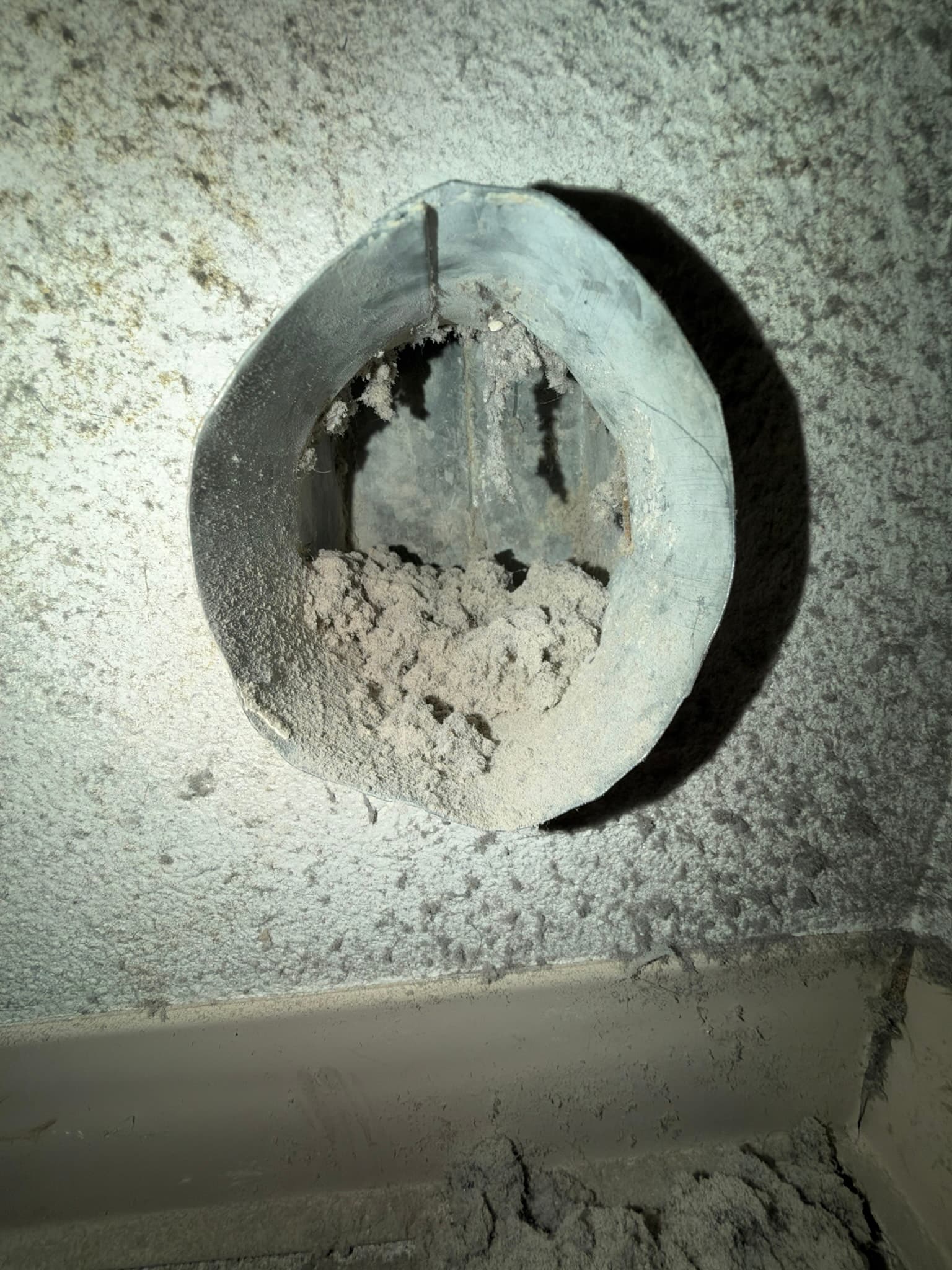
Before and after: severe lint buildup cleared from the dryer exhaust connection
What We Found
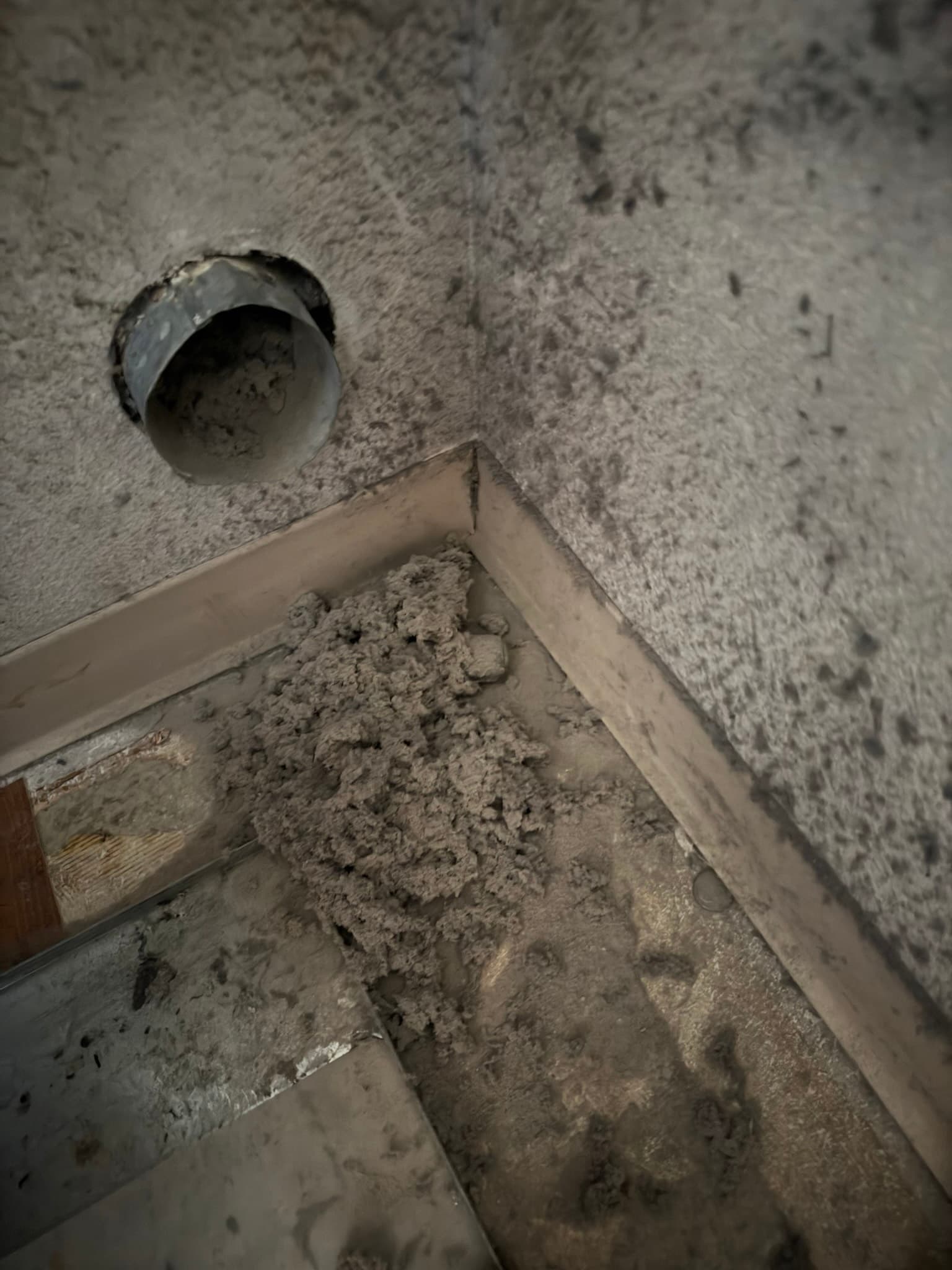
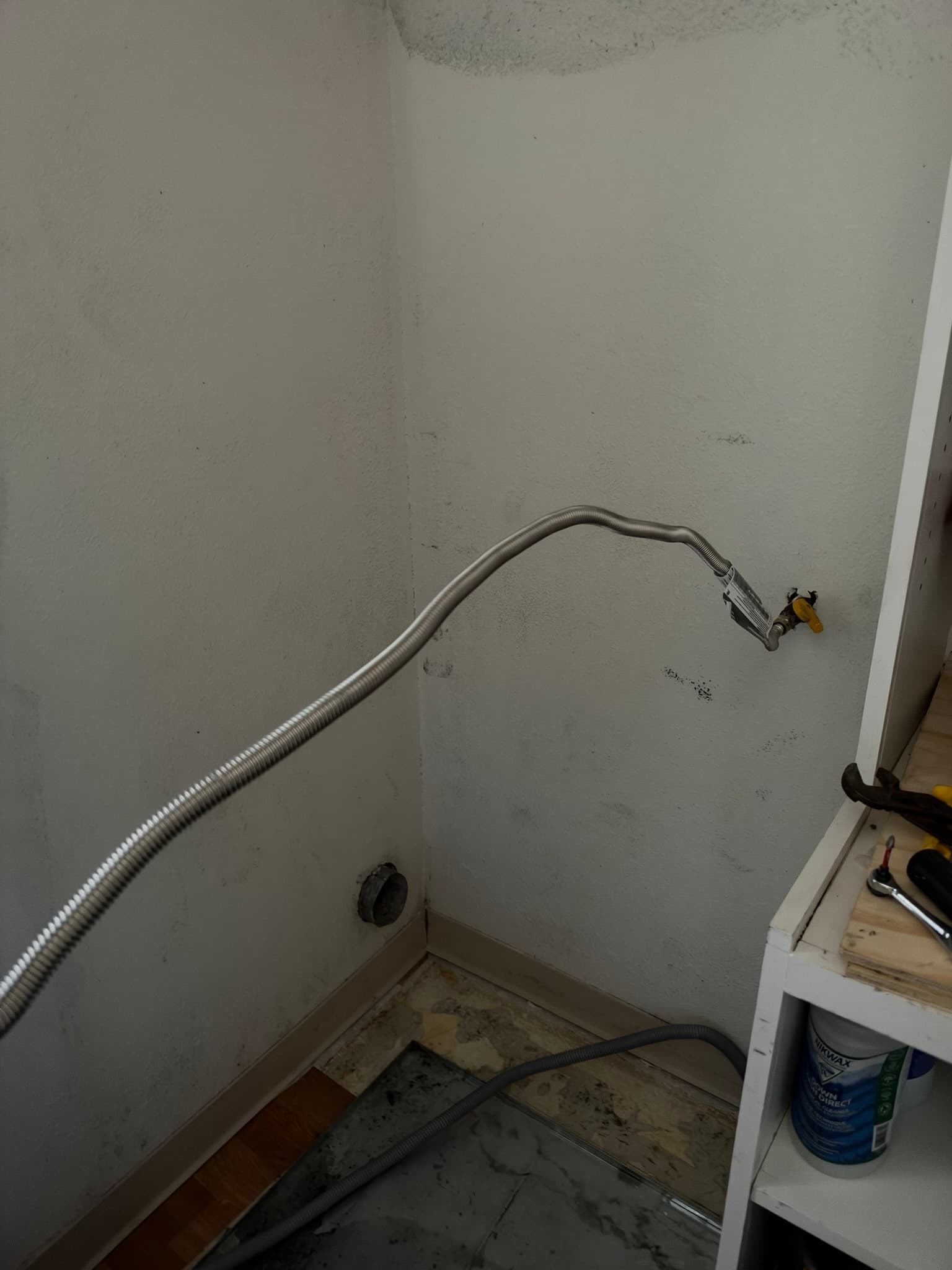
This San Francisco laundry closet arrived with two separate problems stacked on top of each other. Behind the dryer, the semi-rigid metal duct connection was packed with a dense, compacted mat of lint, visible both at the dryer-side opening and further back in the wall cavity where the duct penetrated into the framing. The buildup extended across the surrounding wall surface and floor, with lint coating the insulation and framing members near the vent opening, the kind of accumulation that typically corresponds to duct airflow dropping well below the 300 CFM most dryer manufacturers require for safe, efficient operation. At the same time, the washing machine was still running on the original rubber supply hoses, which showed the chalky discoloration and surface staining common to aged rubber nearing the end of its service life, along with a semi-rigid duct section at the dryer connection that needed to be brought up to current transition duct practice.
What We Did
The core of this visit was our Residential Dryer Exhaust Cleaning and Inspection service. We performed a full airflow test, then worked the entire exhaust path with a drill-attachment rotary brush paired with a high-powered shop vac, clearing lint from the dryer connection point all the way out to the exterior termination cap. The before and after difference at the wall opening is dramatic: what was a corner packed solid with gray, heat-exposed lint is now an open, clear duct path with the metal interior visible again. We also removed the old semi-rigid ductwork at the dryer connection and replaced it with 8 feet of DryerFlex transition duct, secured at both ends with DryerClamps rated for the connection. This single-length, smooth-interior transition duct is sized to standard practice for dryer connections and resists the crushing and sagging that contributes to lint traps over time.
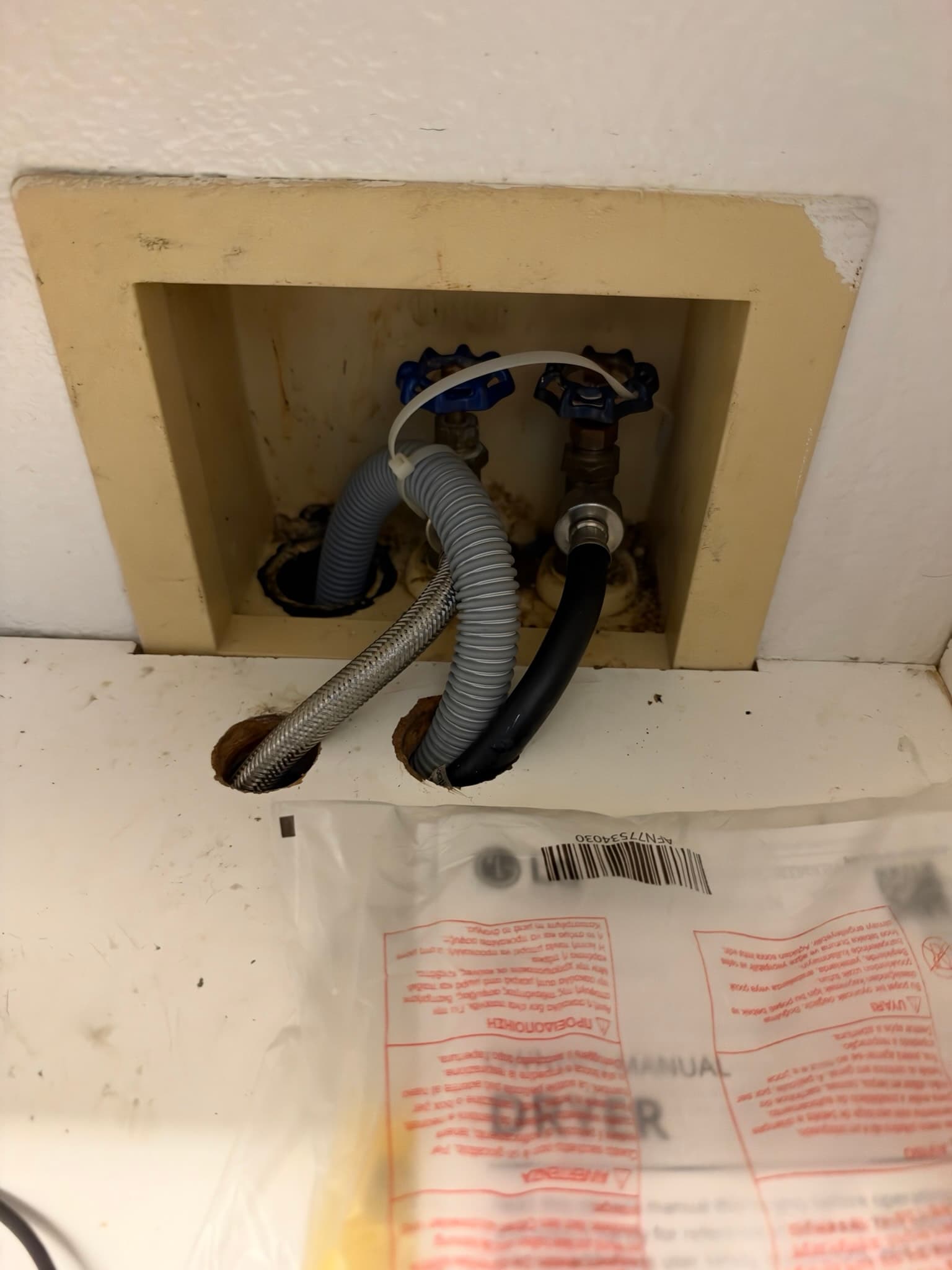
On the plumbing side, we installed an 8 foot stainless steel washing machine supply line at the wall shutoff valve, replacing the old rubber hose that was showing age-related deterioration. We paired this with a stainless steam dryer installation kit to properly supply the steam function on the dryer unit. Braided stainless construction holds up far better than rubber under sustained residential supply pressure and resists the cracking, blistering, and sudden burst failures that are a leading cause of laundry room water damage. The new line was connected directly at the wall-mounted shutoff valve, visible in the recessed supply box alongside the existing drain standpipe connection.
The Outcome
The wall cavity behind the dryer is now fully cleared of lint and debris, and the transition duct from the dryer to the exhaust point is a single, properly clamped 8 foot run of listed flexible duct rather than the lint-collecting semi-rigid section that was there before. The washing machine's cold and hot supply is now running on a new stainless line built to handle both standard cold-water fill and the steam function, replacing a rubber hose that was well past the point where we'd recommend waiting any longer. Together, this visit addressed both the fire-risk side of the job, the lint load that was choking exhaust airflow, and the flood-risk side, an aging supply hose at a connection point that sees constant pressure cycling. The dryer and washer were both confirmed in good working order at the end of the visit.
Why This Matters for San Francisco Homes
Many homes in this part of San Francisco have laundry closets tucked into tight interior spaces with limited duct runs to an exterior wall, which means lint has fewer places to go before it packs solid at the first bend or connection point. The U.S. Fire Administration points to lint accumulation as the leading factor behind the roughly 15,000 home dryer fires reported annually, which is why an annual cleaning and inspection, as recommended by NFPA guidance for residential venting systems, is worth keeping on a regular schedule rather than waiting for drying times to noticeably slow down. Pairing that service with a look at the laundry's water supply connections, as we did here, closes out the two most common sources of costly laundry room incidents in one visit.
Project photos
6 photos
What the customer said
“Purchased the dryer vent cleaning service for my apartment in San Francisco. Very professional, cordial, and efficient. Very clearly cares about his work and has high standards. Would recommend!”
Need similar work in San Francisco?
Get a free quote - same-week appointments usually available.