Burlingame · Residential Fire Code Compliance Install
Dryer Exhaust Cleaning & Duct Repair in Burlingame, CA
A Burlingame stacked washer/dryer unit with a heavily clogged exterior vent and a short, kinked periscope connector was cleaned, repaired, and reconfigured with code-compliant UL 2158A transition duct for safe, efficient operation.
Completed October 6, 2026
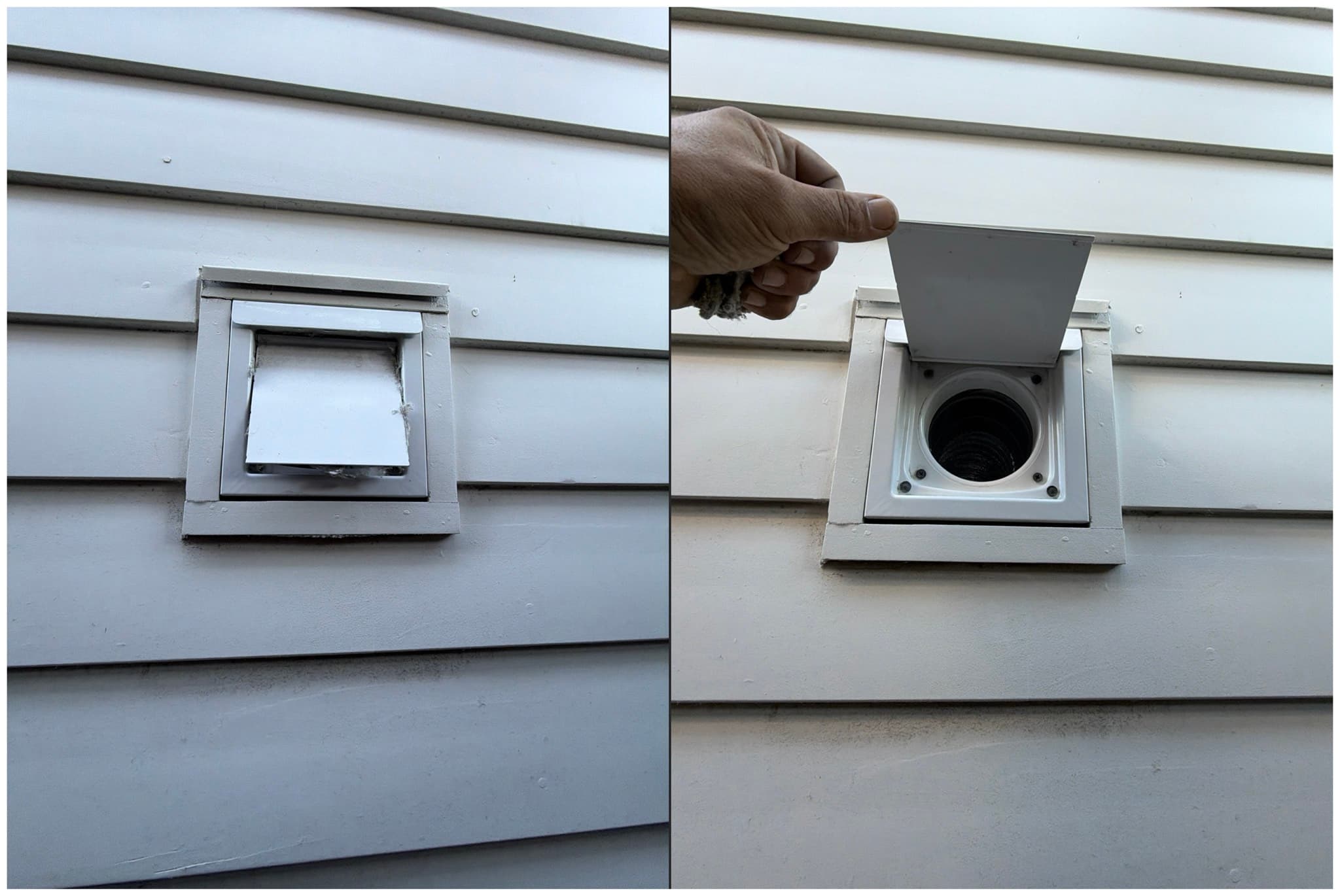
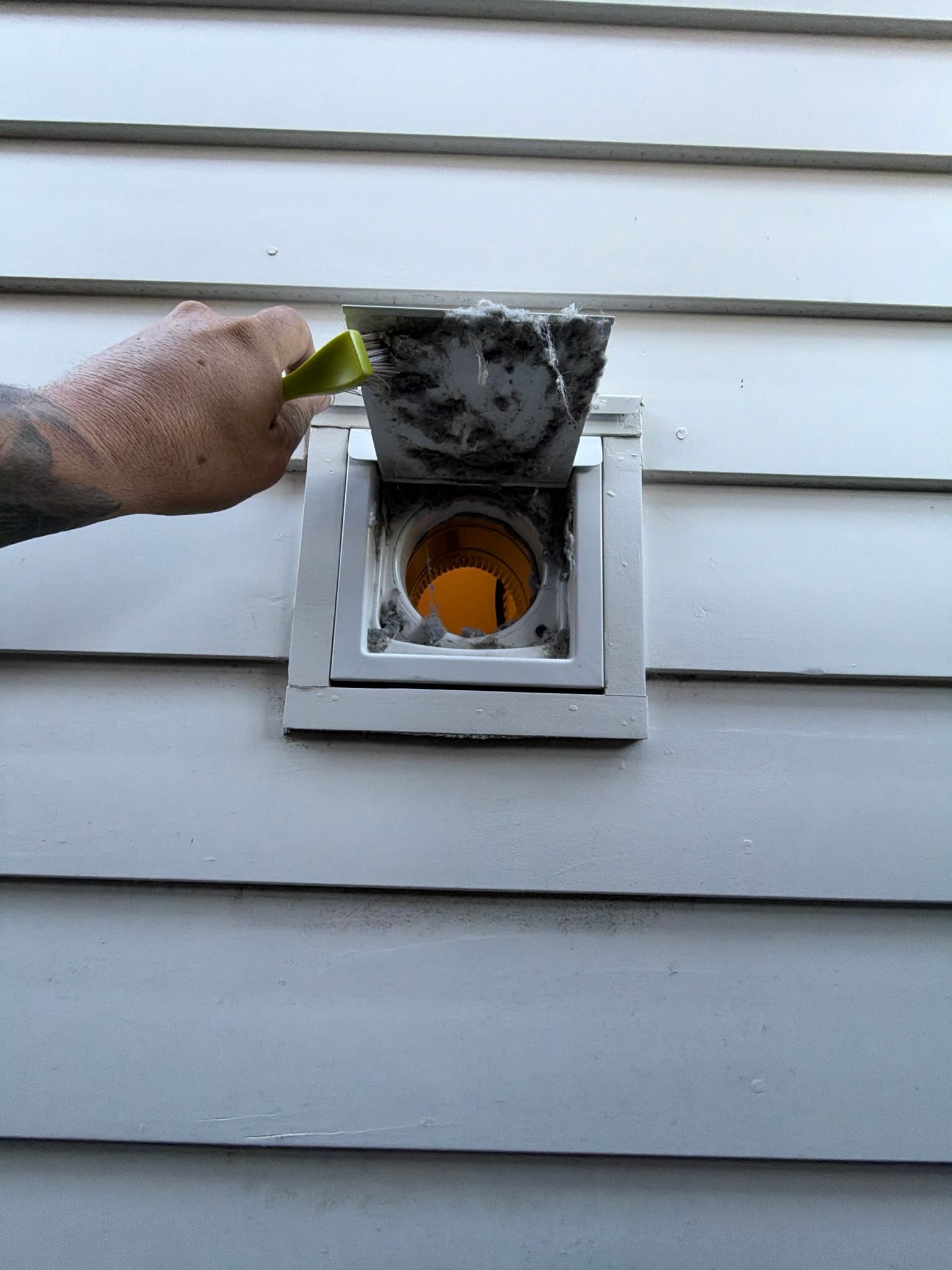
Exterior vent before and after cleaning
What We Found
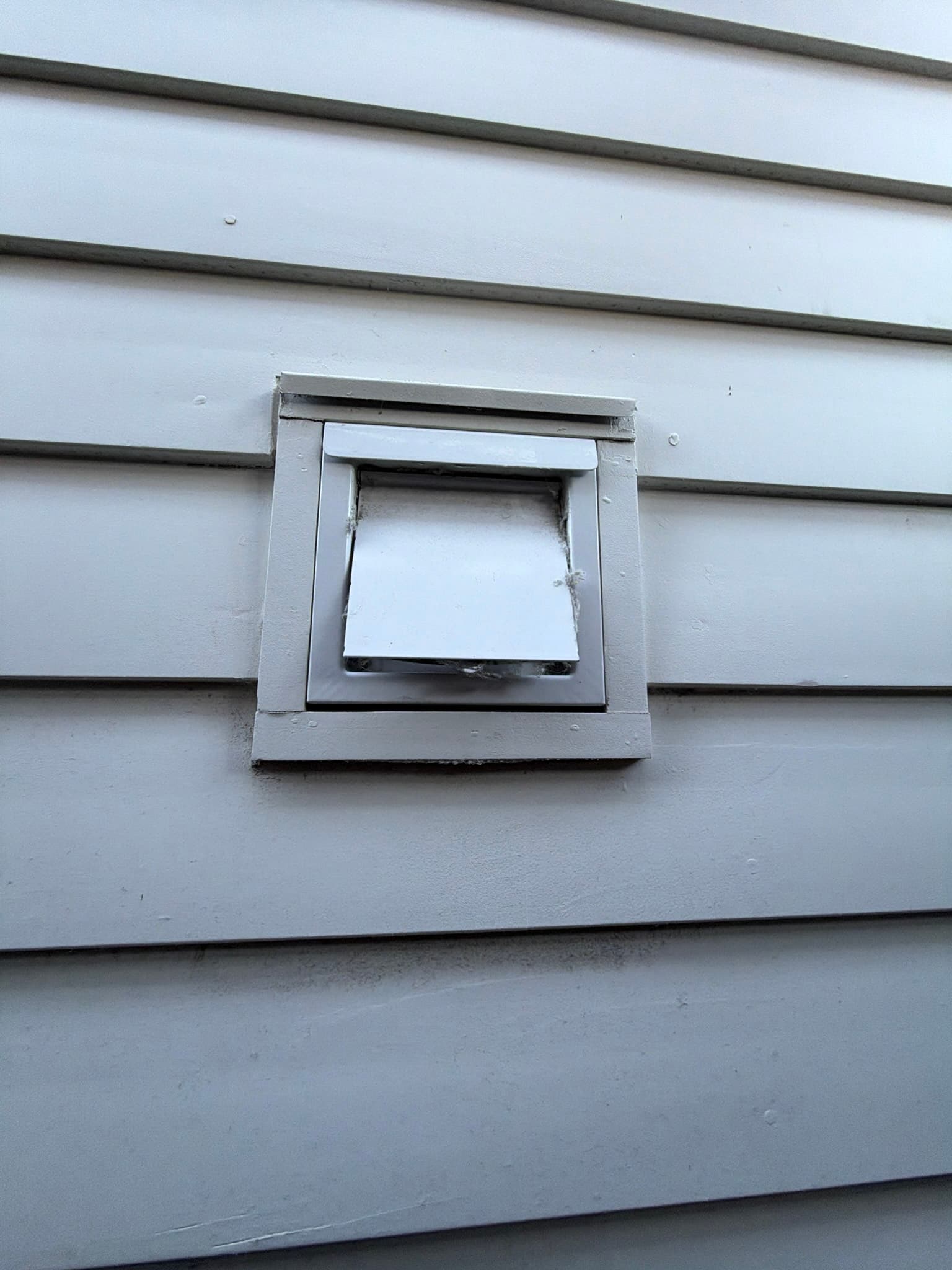
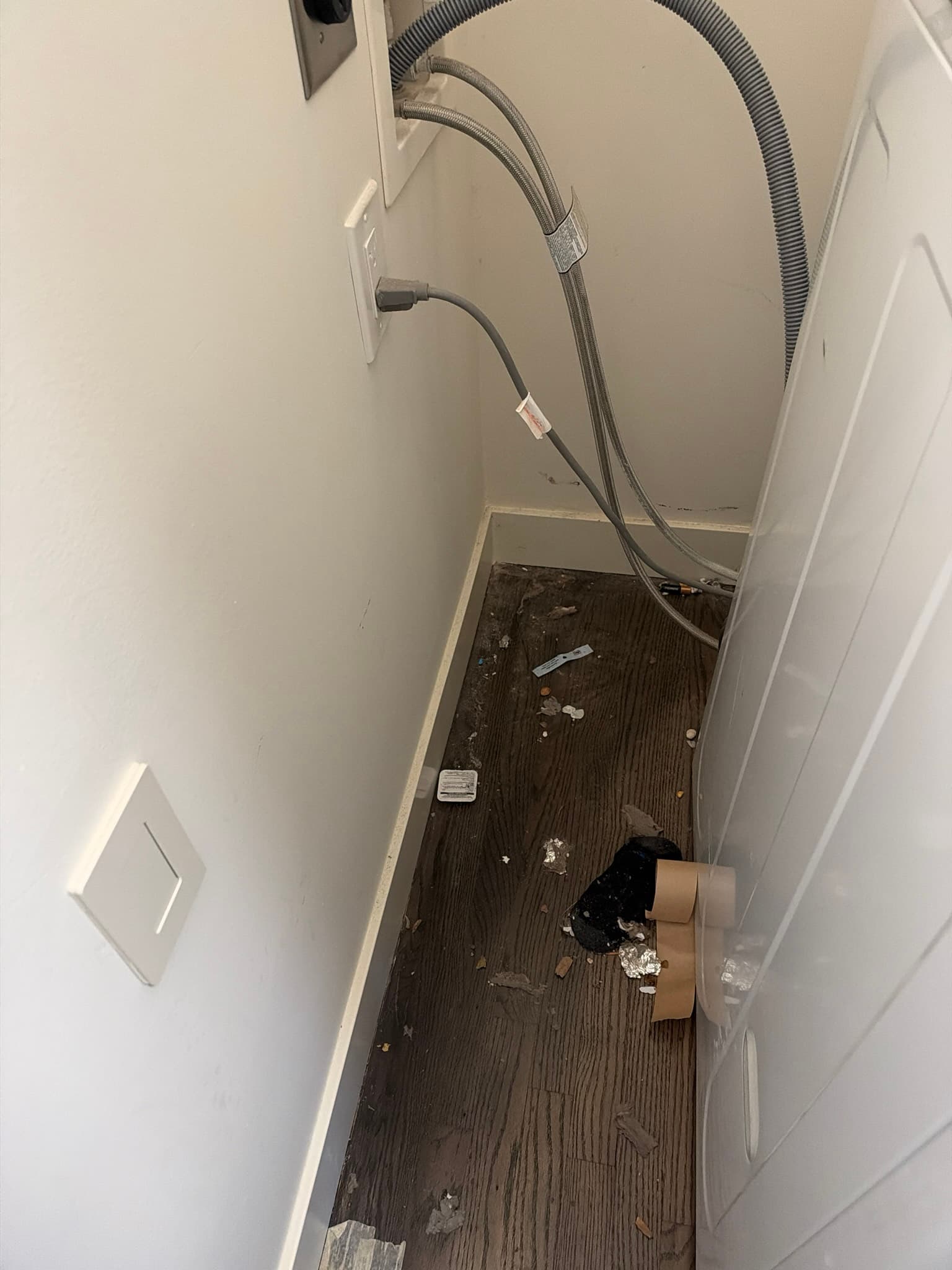
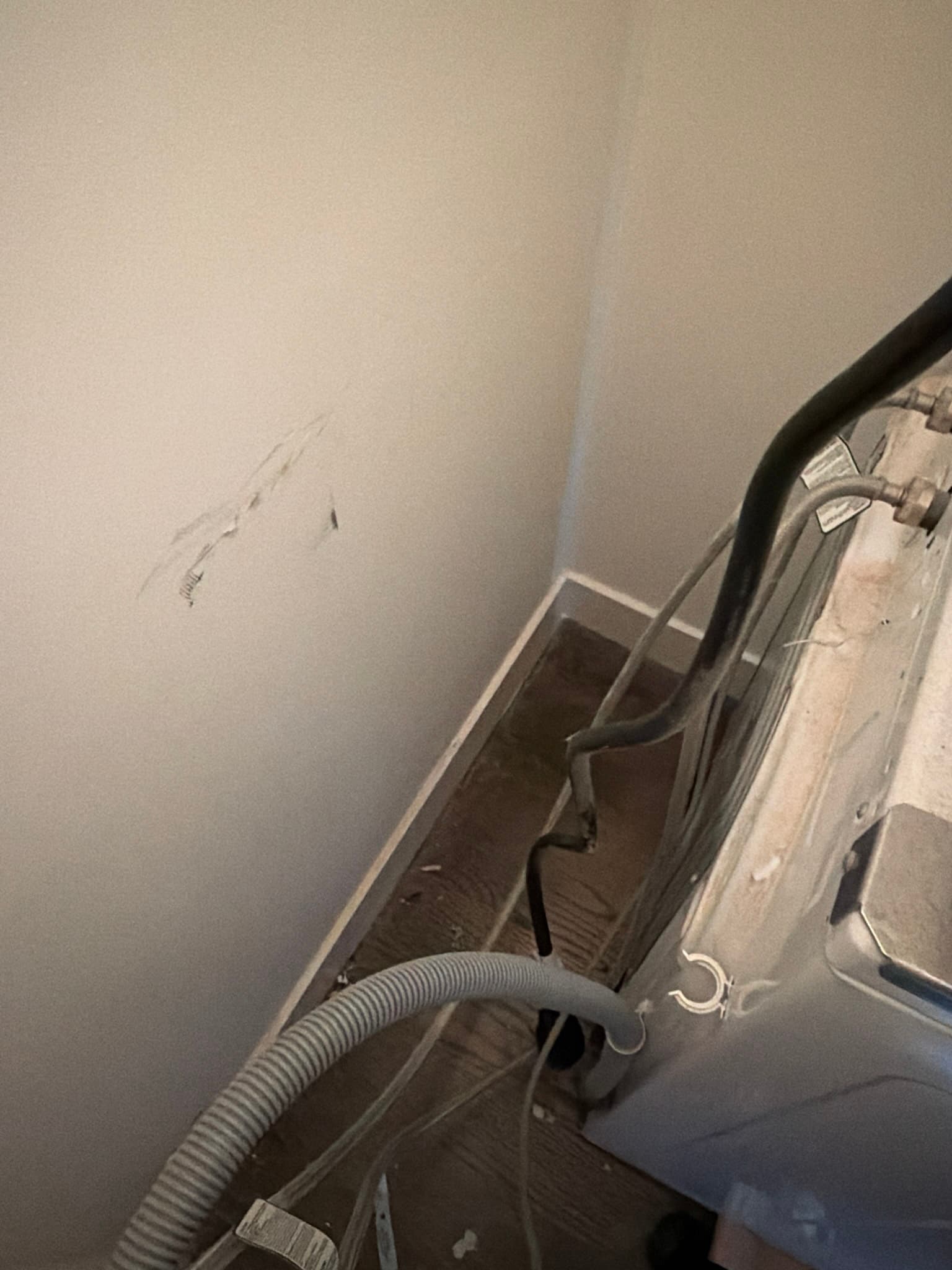
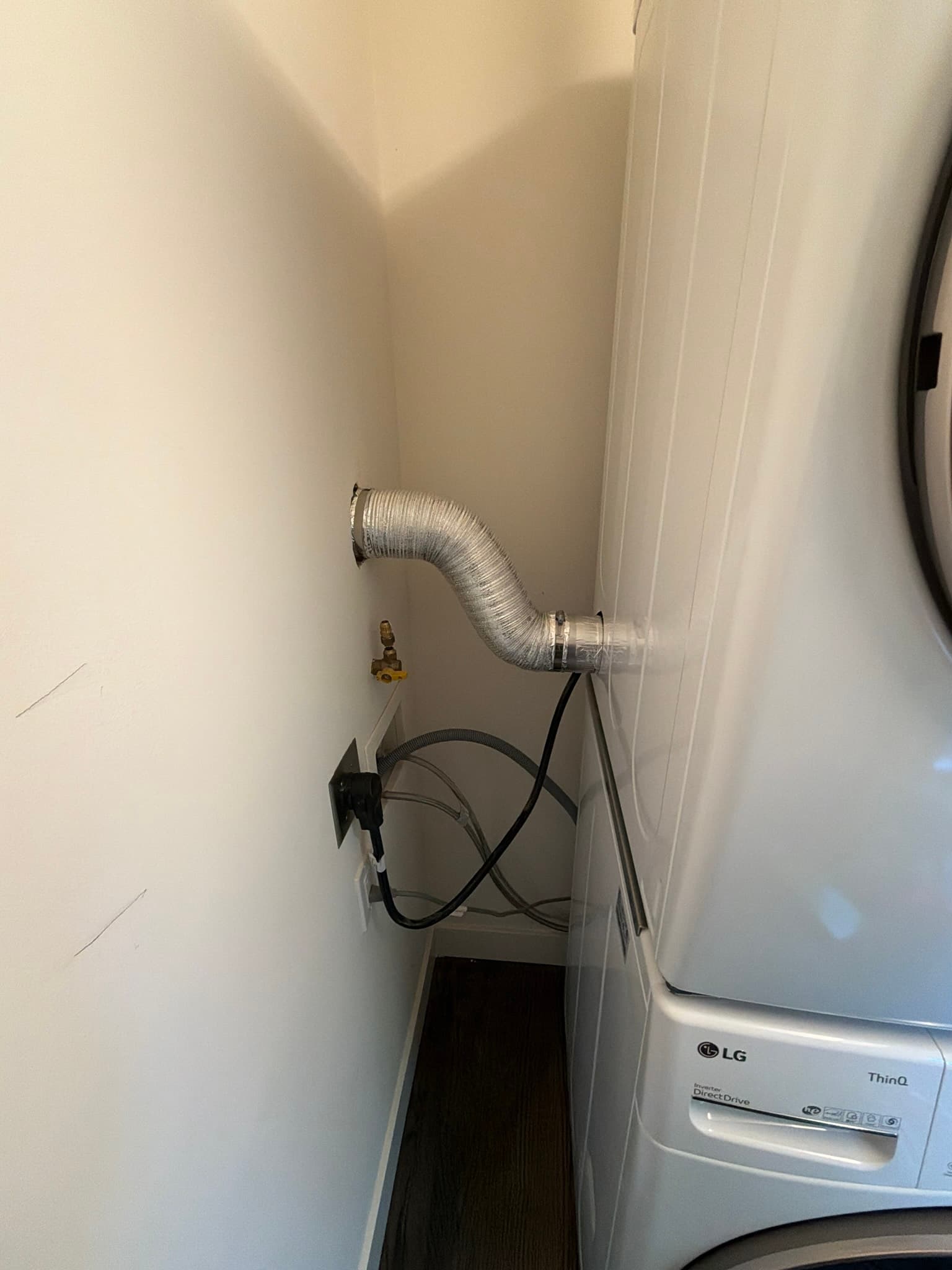
This Burlingame service call started with a stacked dryer setup that was fighting an uphill battle on two fronts. At the exterior termination, the wall vent hood was packed with heavy, matted lint caked across the hinged damper flap and crammed into the louvered opening. The flap was propped open by trapped debris instead of closing fully under spring tension, which is a telltale sign that airflow has been restricted for some time. Behind the machine, the dryer had been connected using a short periscope-style offset vent, which is the typical workaround installers use when a stacked unit sits too close to the wall for a standard transition duct. In this case the periscope connection was too short for the space, forcing a tight, inefficient path from the exhaust port to the wall collar.
What We Did
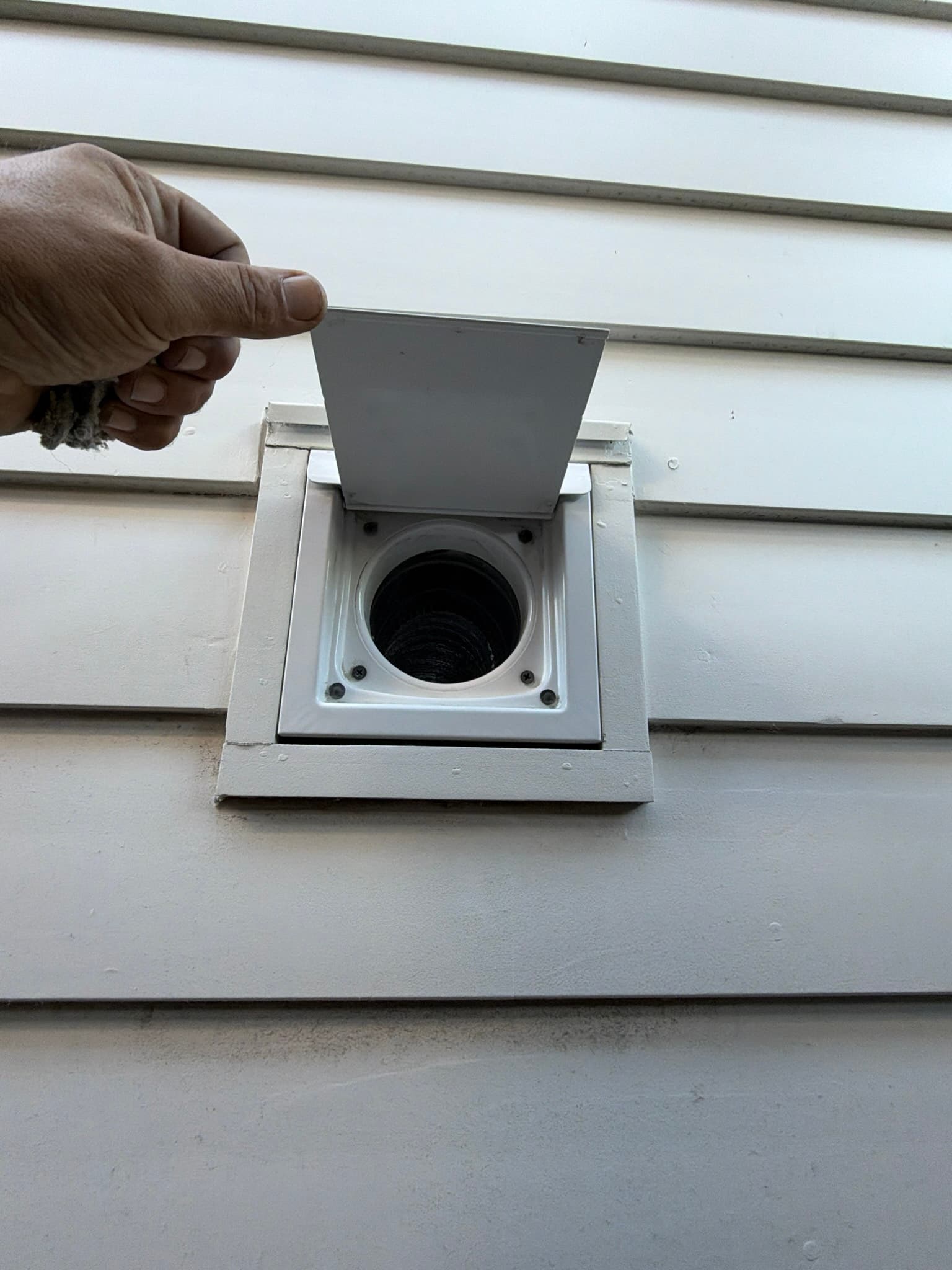
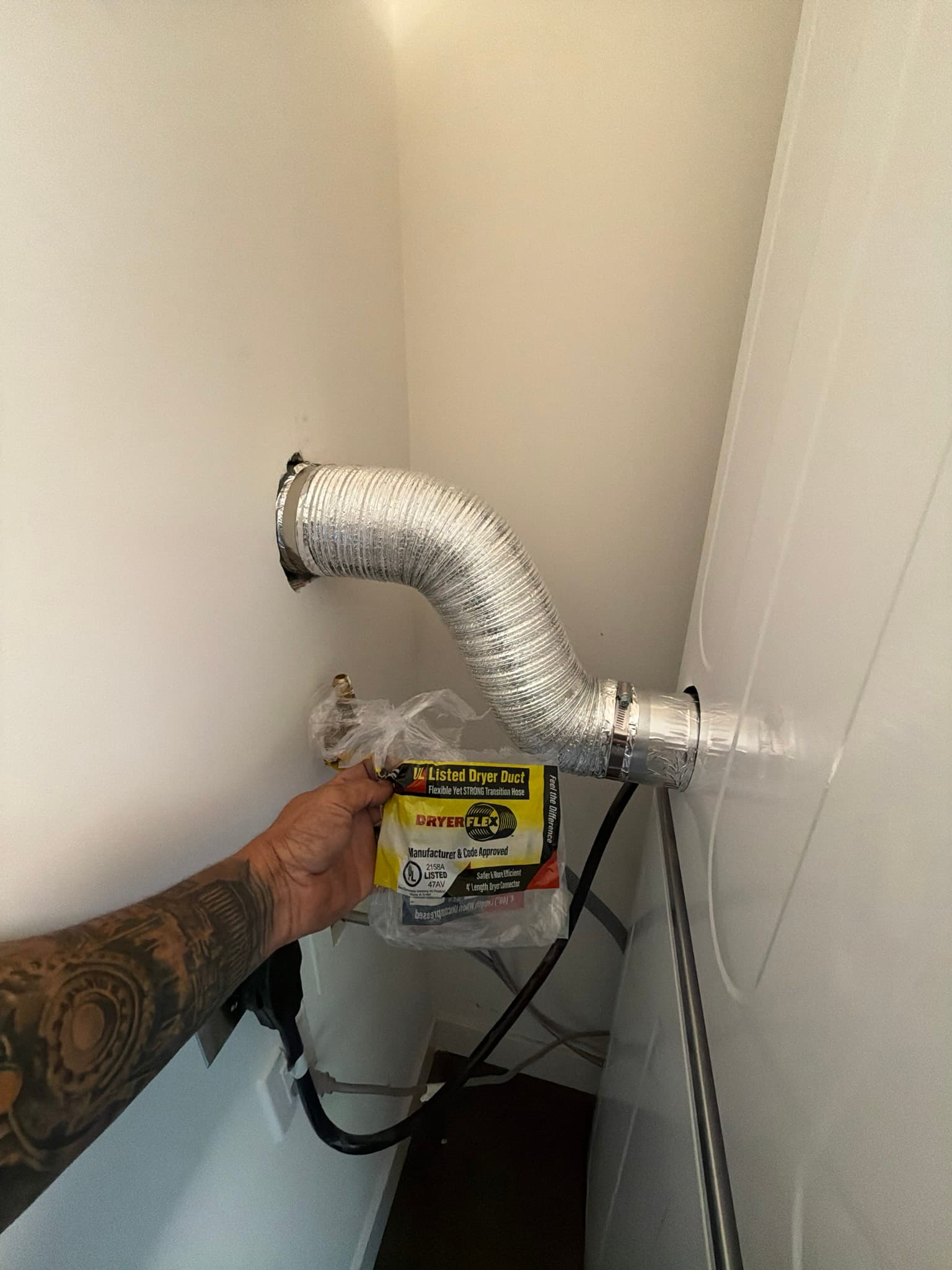
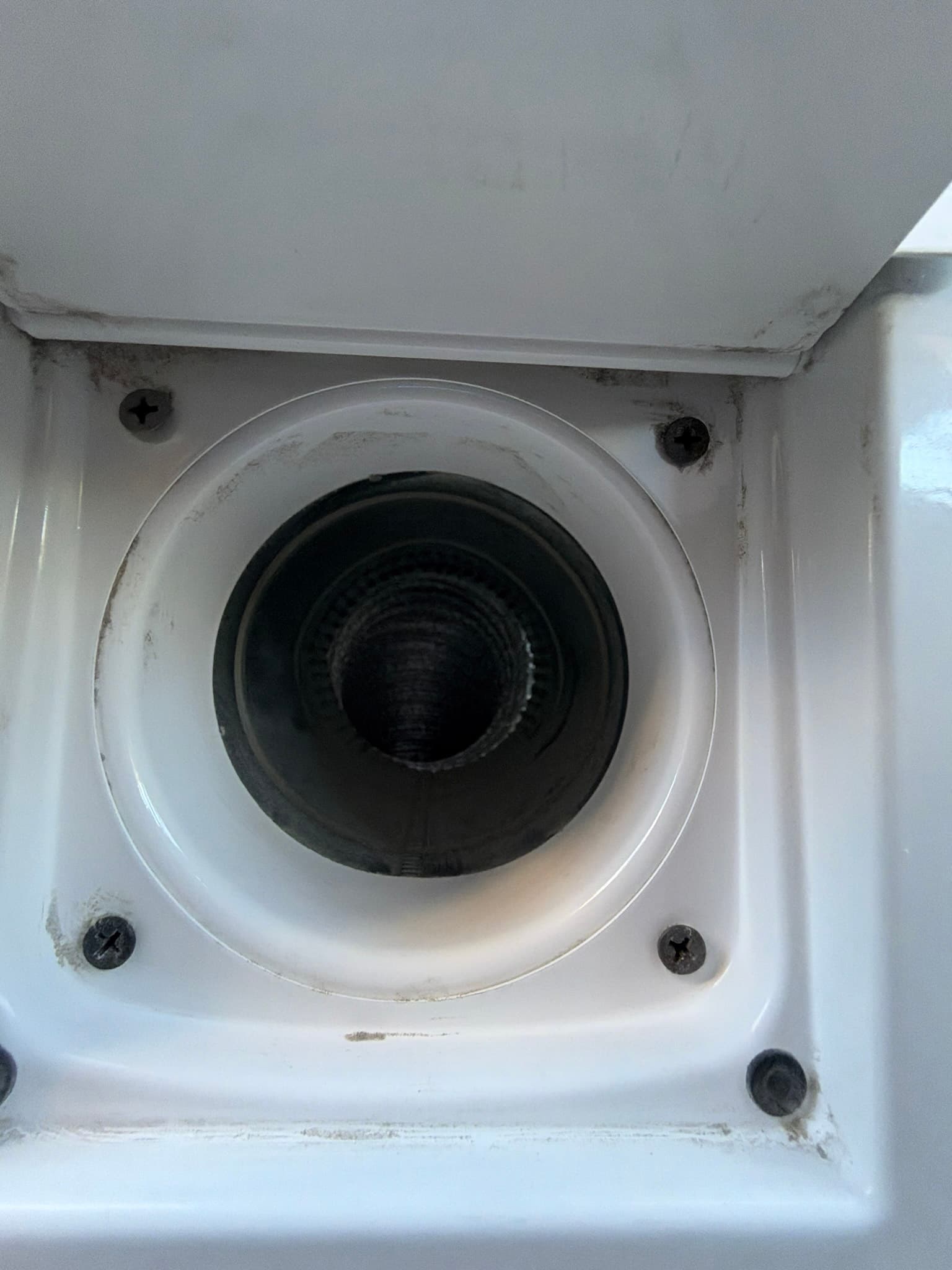
We began with a full cleaning and inspection of the exhaust system, starting at the exterior termination. Using a hand brush, the technician cleared the compacted lint from the damper flap and vent opening until the hood could open and close freely with no residue or obstruction remaining. With the exterior clear, attention moved to the connection behind the dryer. The existing periscope vent was removed, and the dryer's exhaust collar was extended to properly accommodate a code-compliant connection. In its place we installed 48 inches of DryerFlex transition duct, a UL 2158A listed semi-rigid product that combines the flexibility of foil flex with the fire resistance and smooth airflow characteristics of rigid aluminum duct. The kit included two DryerClamps, which were used to secure both the dryer-side and wall-side connections. A new 4 inch by 4 inch vent collar was installed at the wall opening to properly mate the transition duct to the existing exhaust run. As part of the duct installation and repair work, the dryer itself was repositioned roughly 10 inches to the right to open up the clearance needed for the transition duct to run without kinks or compression, which had been a contributing factor to the prior cramped, makeshift periscope configuration.
The Outcome
With the lint cleared from the termination and the transition duct replaced, the system was run-tested to confirm proper operation. The dryer now exhausts freely, the backdraft damper at the exterior hood opens fully under airflow and closes completely when the dryer shuts off, and measured exhaust airflow came in at 1,830 feet per minute at the termination, well above the minimum performance most manufacturers require for efficient drying. The new DryerFlex duct is rated to resist smoke and flame spread at temperatures up to 482 degrees Fahrenheit, giving this connection a meaningfully higher margin of safety than standard foil flex duct, while still being UL 2158A listed per IRC M1502.4.3. Replacing the undersized periscope connection with a single length of properly sized transition duct also brings this connection point in line with IRC M1502.4.1's smooth interior finish requirement for the portion of the run it affects, reducing the surfaces where lint can catch and accumulate going forward.
Why This Matters for Burlingame Homeowners
Severe lint accumulation at the vent termination is one of the most common precursors to dryer fires, and the U.S. Fire Administration continues to cite lint buildup as a leading factor in residential dryer fires nationwide. A vent hood clogged to the point where the damper can no longer close is not just an efficiency problem, it is a backdraft and fire risk that also lets outside air, moisture, and pests into the duct when the dryer is idle. Stacked laundry installations in tighter Burlingame homes and condos often rely on periscope or offset connectors to make the tight geometry work, but those connectors have to be sized correctly for the gap they are bridging. A too-short or crushed periscope section restricts airflow just as effectively as a clogged vent cap, so clearing the termination without correcting the connection behind the dryer would have only solved half the problem.
Maintenance Recommendation
With the exterior vent now clear and a properly sized UL 2158A transition duct in place, this system is positioned to perform at or near its rated airflow for the foreseeable future. We recommend annual professional cleaning and inspection, consistent with NFPA guidance for venting systems, to catch lint accumulation before it reaches the level found at this visit and to confirm the backdraft damper continues to seat and seal properly each year.
Project photos
9 photos
Need similar work in Burlingame?
Get a free quote - same-week appointments usually available.