
Cupertino · Residential Fire Code Compliance Install
Dryer Duct Repair & Vent Replacement in Cupertino
A Cupertino home's LG dryer was reporting a severely blocked exhaust path, and a crawl space inspection confirmed damaged, disconnected semi-rigid ductwork. We replaced the failing system with fire-rated DryerFlex duct, a 90-degree long-turn elbow, and a new code-compliant wall vent to restore safe, efficient dryer operation.
Completed August 6, 2026
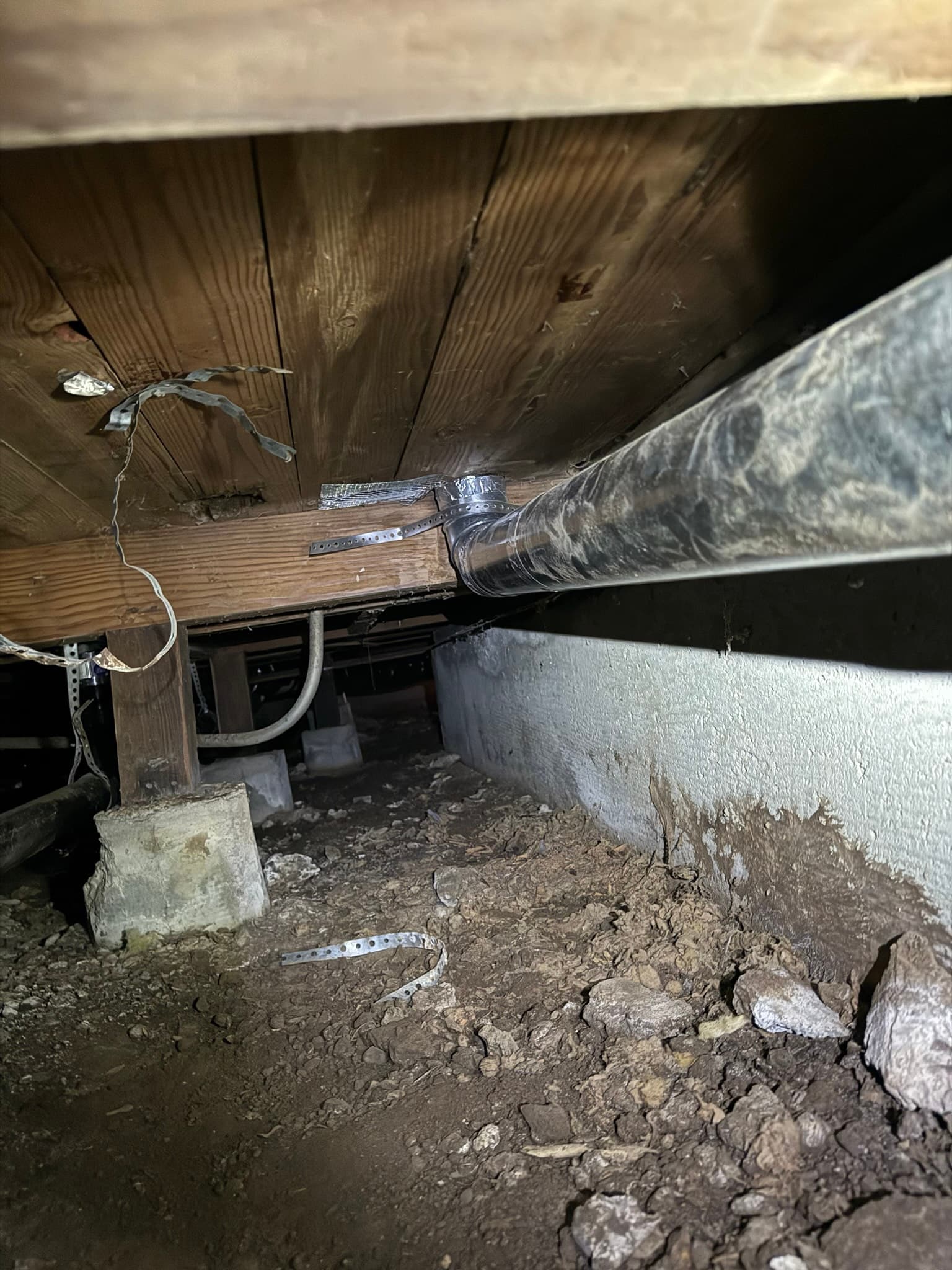
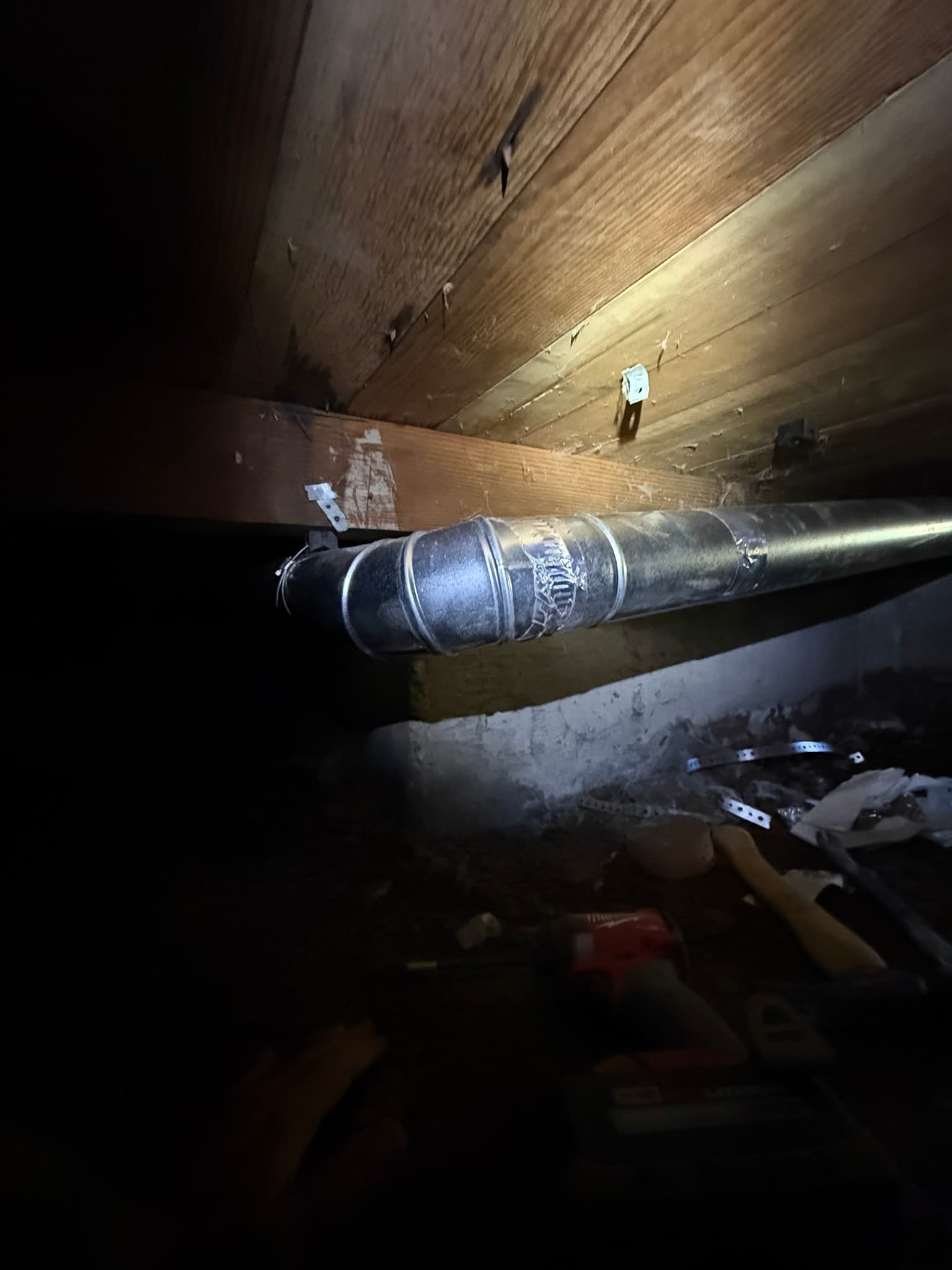
The floor penetration where the new 90-degree long-turn elbow and DryerFlex duct were routed to the exterior
What We Found
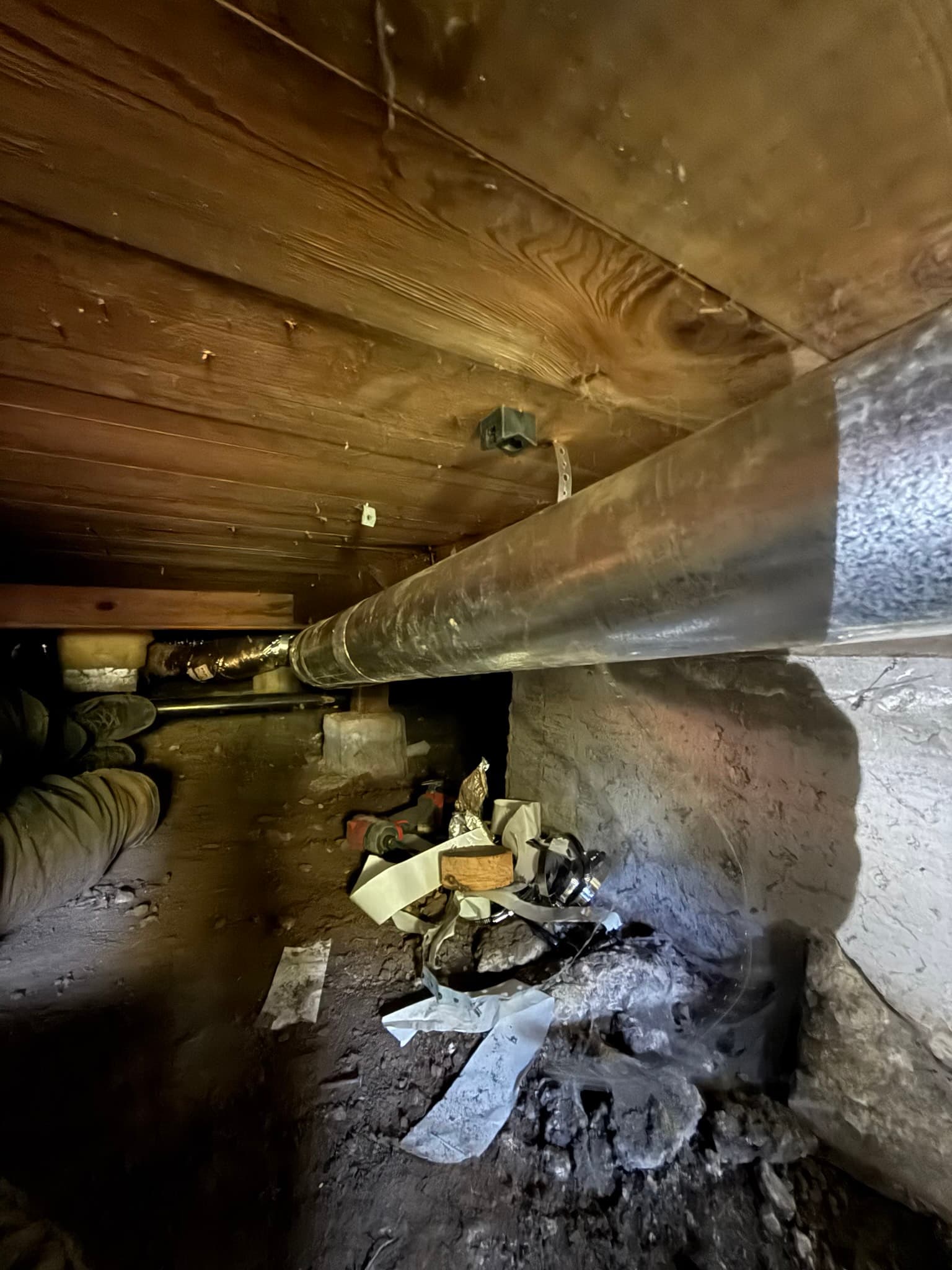
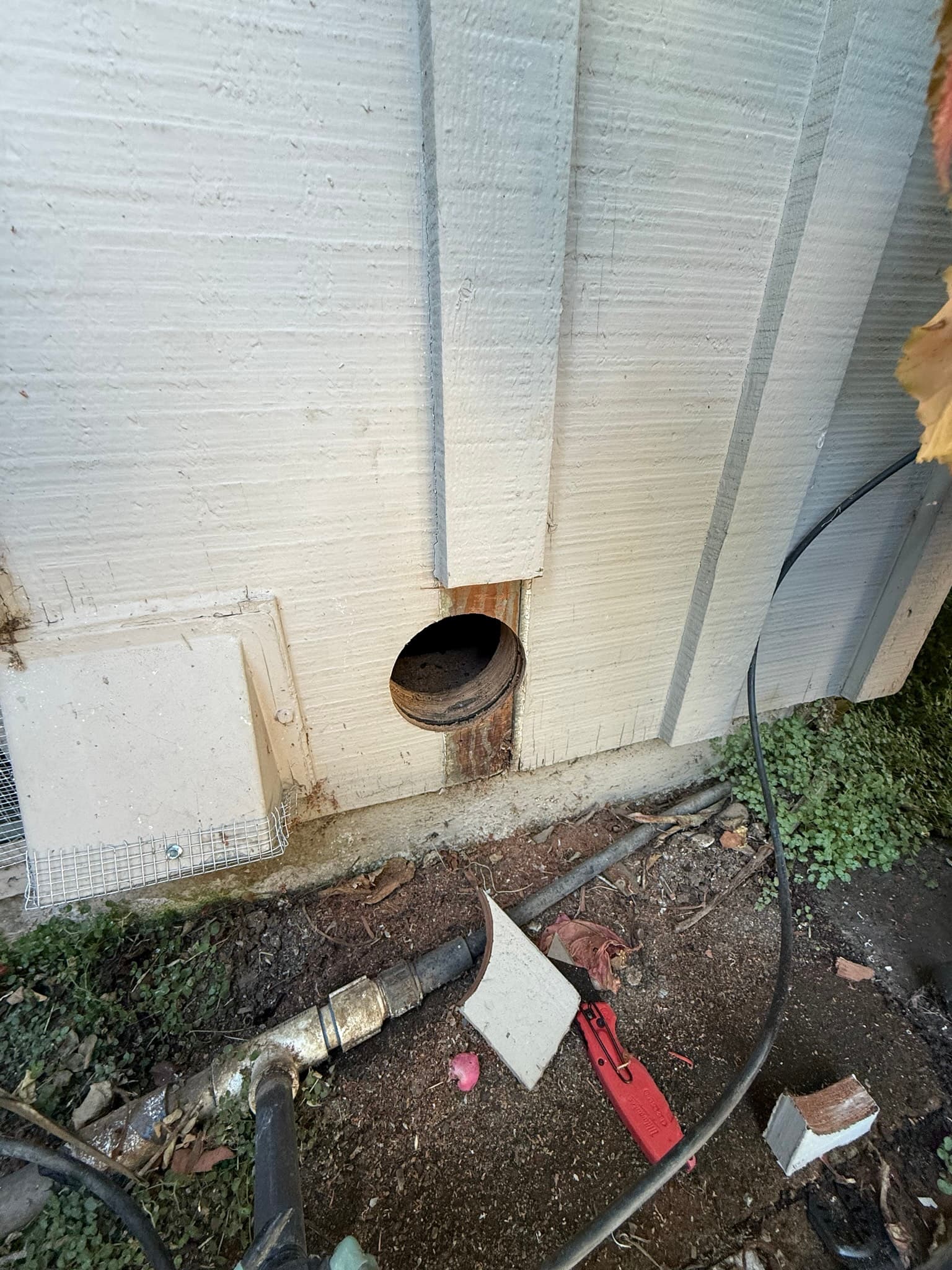
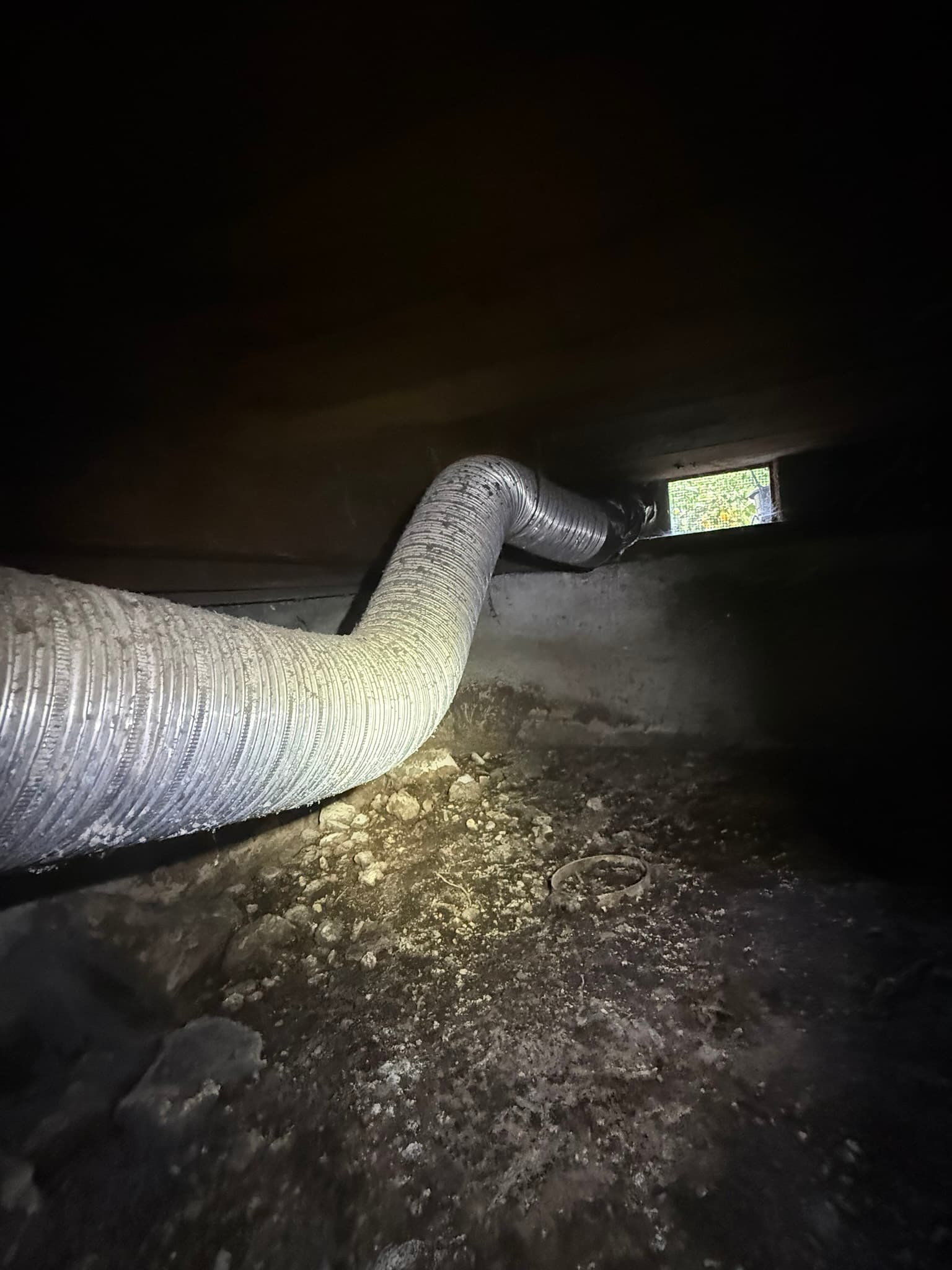
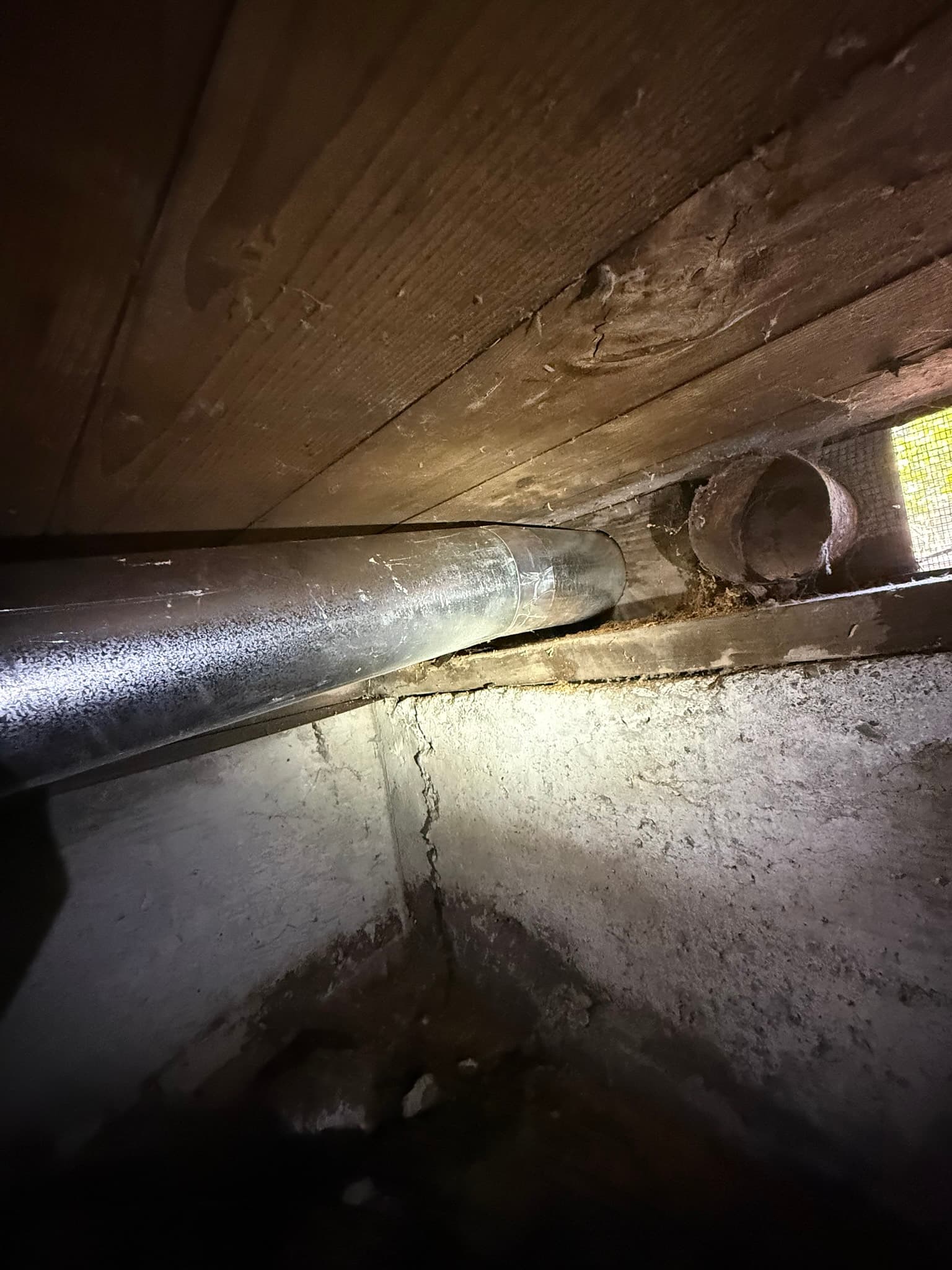
When the homeowner's LG dryer began displaying a duct blockage alert, the error was not a false alarm. Our inspection of the crawl space revealed the root cause: the existing semi-rigid ductwork was rusted out, bent in multiple directions, and had separated from the wall vent entirely. With no sealed connection at the termination point, the dryer had essentially been exhausting hot, lint-laden air into the crawl space rather than to the outside. Heavy lint accumulation was visible on the crawl space floor, coating the surrounding wooden subframing and debris scattered throughout the space. The duct itself showed corrosion and deformation severe enough to choke airflow well before any lint buildup was even factored in.
The dryer's onboard diagnostic placed blockage at approximately 80 percent, which is consistent with what we found. When a duct is more than half occluded and simultaneously disconnected from its terminus, measured airflow at the exterior cap drops well below the 300 CFM that most dryer manufacturers require for safe, efficient operation. Per IRC M1502.2, the exhaust system must convey moisture to the outdoors through a continuous, sealed path. The old installation met none of those requirements.
What We Did: Duct Installation and Repair
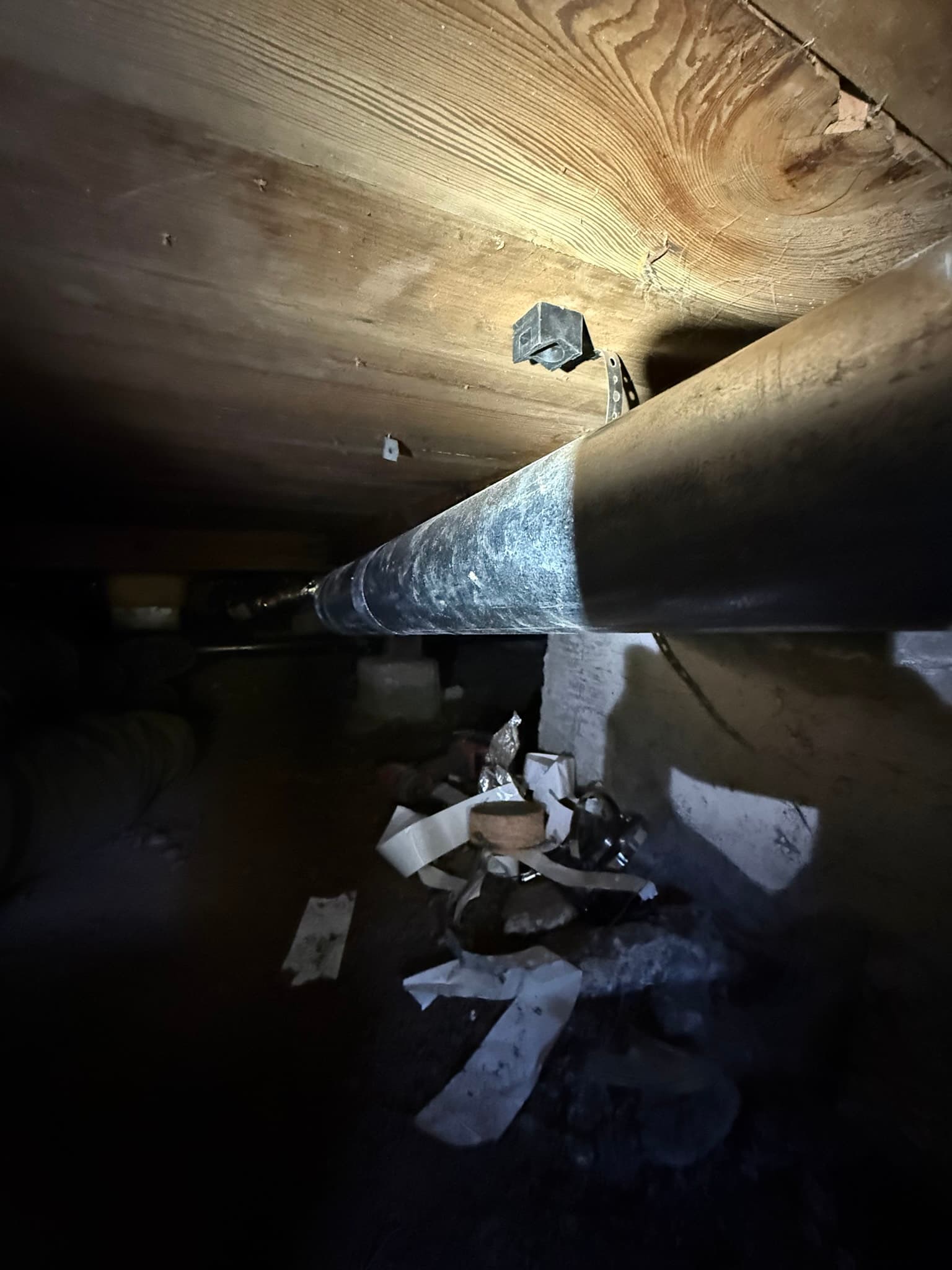
The corroded, disconnected semi-rigid ductwork was removed and replaced with 12 linear feet of DryerFlex, a fire-rated flexible metal duct designed specifically for dryer exhaust applications. DryerFlex is constructed to withstand the elevated temperatures generated by dryer exhaust and does not present the melt or ignition risk associated with vinyl or standard foil flex duct, both of which are prohibited under IRC M1502.4.1 for this application.
The new duct run was routed through the crawl space using a 90-degree long-turn dryer elbow at the floor penetration, which allows the duct to make a directional change with minimal resistance to airflow. Long-turn elbows are the correct fitting choice here because their gradual radius imposes far less back-pressure than a standard short-radius 90-degree fitting. From there, the duct was connected to an additional elbow and run to the exterior wall cap, keeping the total equivalent length within code limits and ensuring proper male-into-female orientation throughout the run in the direction of airflow. All joints were properly secured and sealed to prevent any exhaust from escaping into the crawl space.
What We Did: Wall Vent Replacement
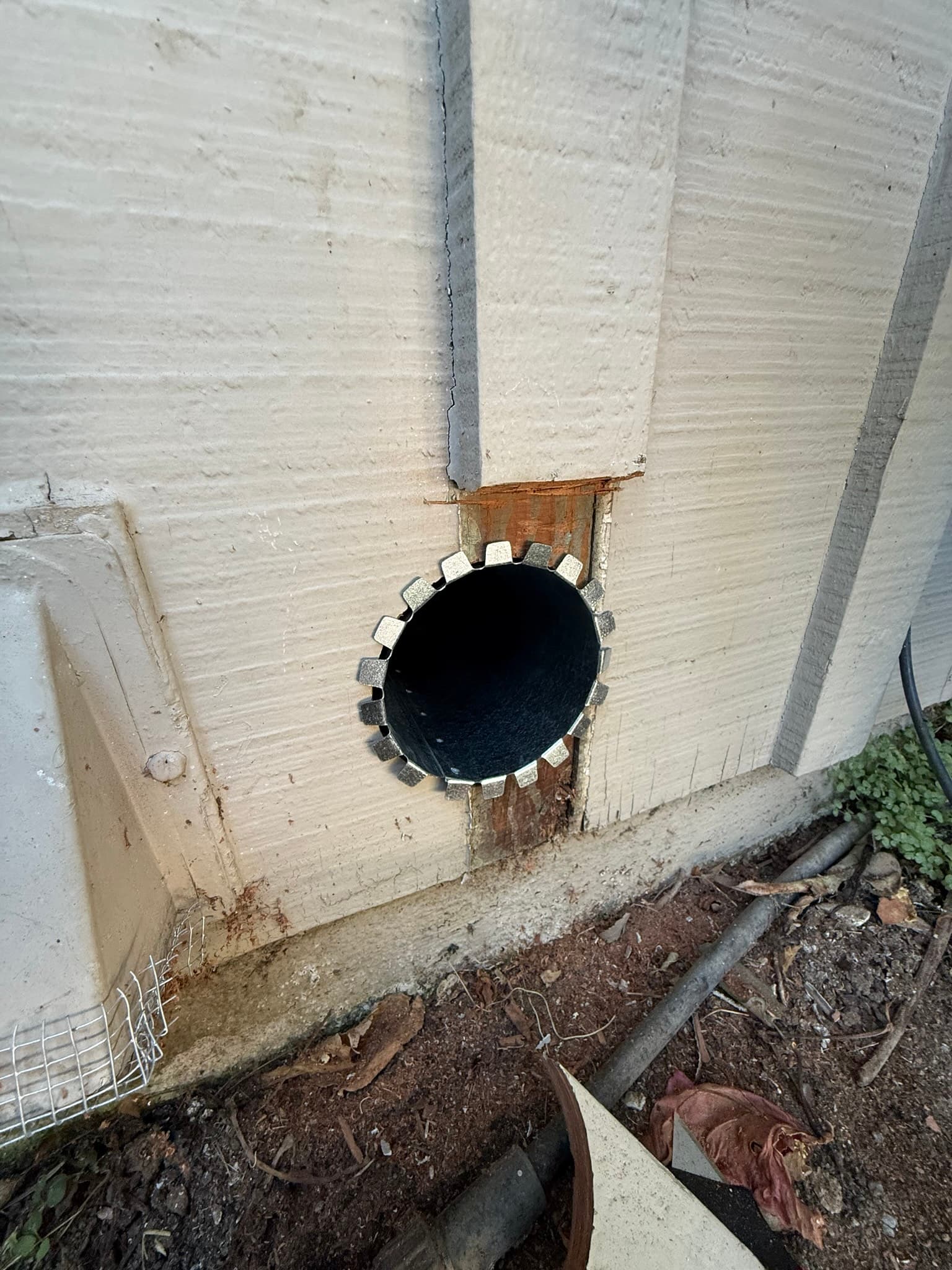
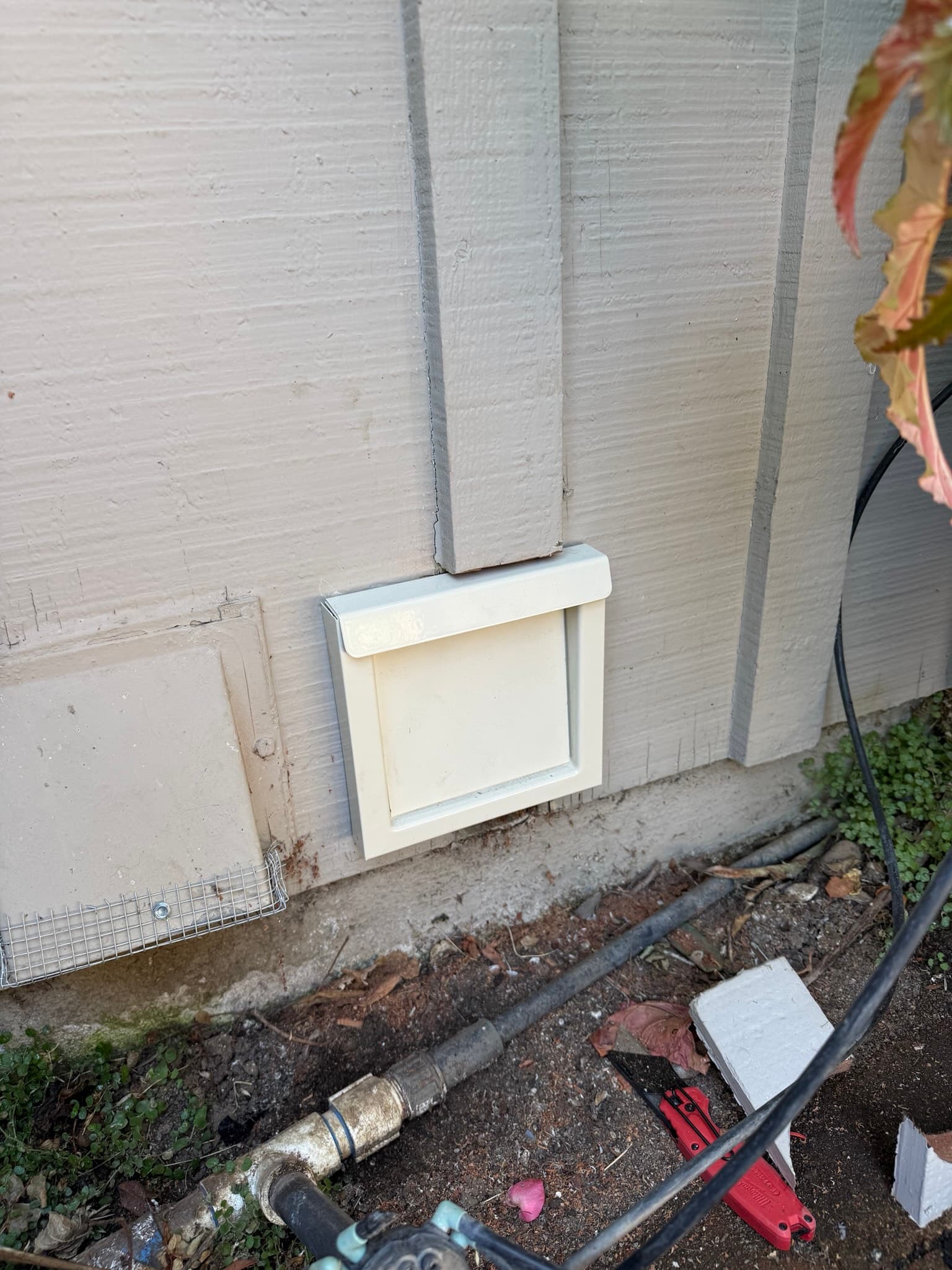
The old exterior termination was corroded, improperly sealed, and lacked the structural integrity to function as a reliable cap. We installed a new dryer wall vent built from heavy-gauge Galvalume steel with a powder-coated finish, designed to meet or exceed all code requirements for dryer exhaust termination. A perforated-edge metal collar was used at the wall penetration to create a clean, flat fit between the duct and the vent body, ensuring a tight seal at the foundation wall and preventing moisture intrusion or pest entry around the opening.
IRC M1502.3 requires that dryer exhaust terminate on the outside of the building with a backdraft damper and a minimum clearance from grade and adjacent openings. The new wall vent is engineered to satisfy these termination requirements while providing a durable, weather-resistant exterior finish. The Galvalume steel construction resists the corrosion that had destroyed the previous cap, making this a long-service installation rather than a short-term fix.
The Outcome
With 12 feet of DryerFlex duct properly routed through the crawl space, a correctly installed 90-degree long-turn elbow managing the directional change at the floor penetration, and a new Galvalume steel wall vent sealing the exterior termination, this Cupertino home's dryer exhaust system now forms a continuous, sealed path from the dryer connection to the outside. The crawl space is no longer receiving hot, humid, lint-laden exhaust air. The fire hazard from lint accumulation on the wooden subframing has been addressed by eliminating the source of uncontrolled exhaust. The dryer's blockage alert should clear once airflow is confirmed restored to operating specification, and drying cycle times should return to normal as back-pressure is no longer forcing the appliance to overwork.
Project photos
9 photos
Need similar work in Cupertino?
Get a free quote - same-week appointments usually available.