
Cupertino · Residential Dryer Exhaust Cleaning Inspection
Cupertino Dryer Vent Cleaning & Transition Duct Replacement
A Cupertino homeowner's crushed foil transition duct and heavy lint buildup were cleared and replaced with a properly sized, code compliant connector during a full dryer exhaust cleaning and inspection.
Completed September 28, 2026
Verified customer review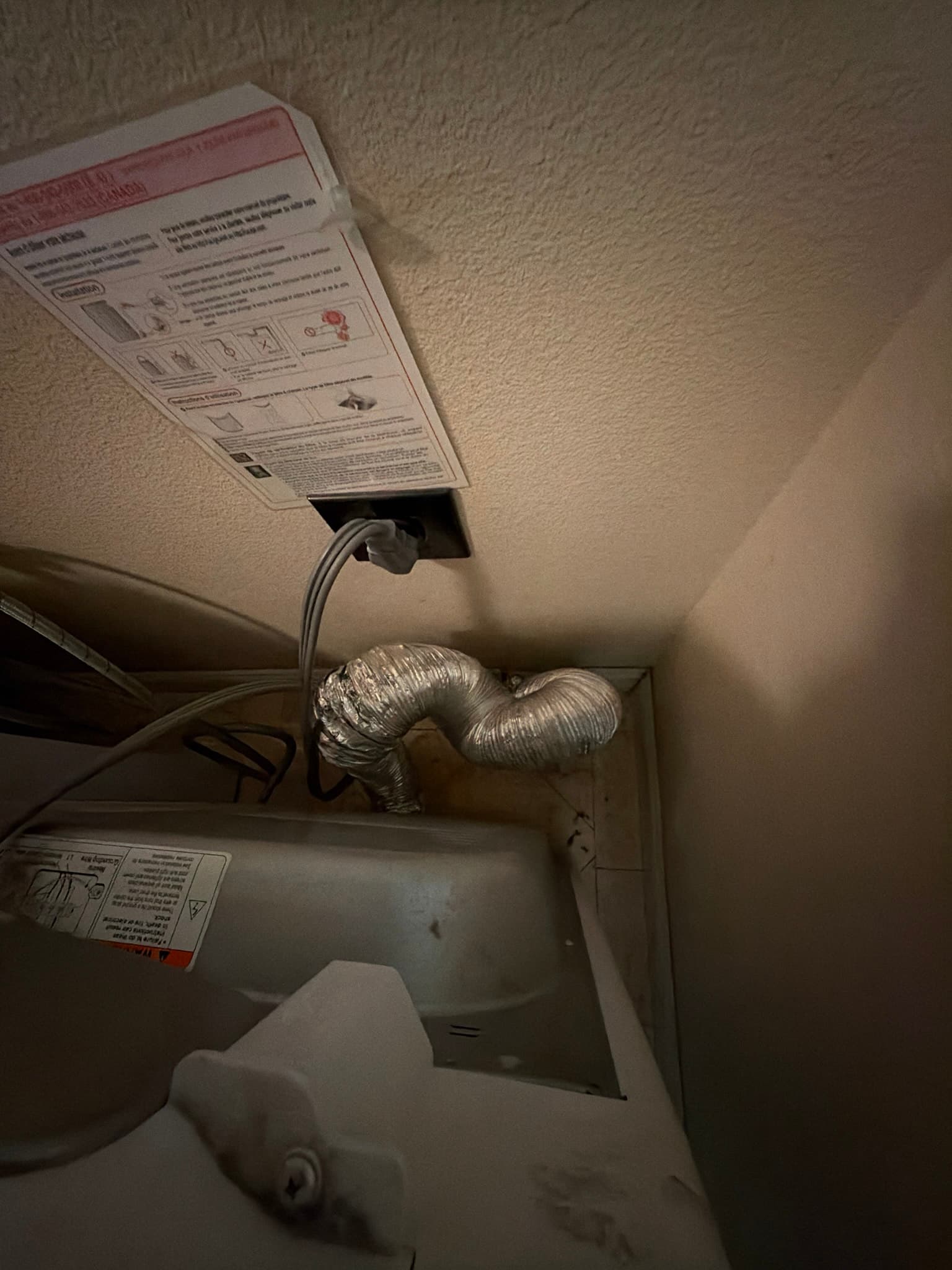
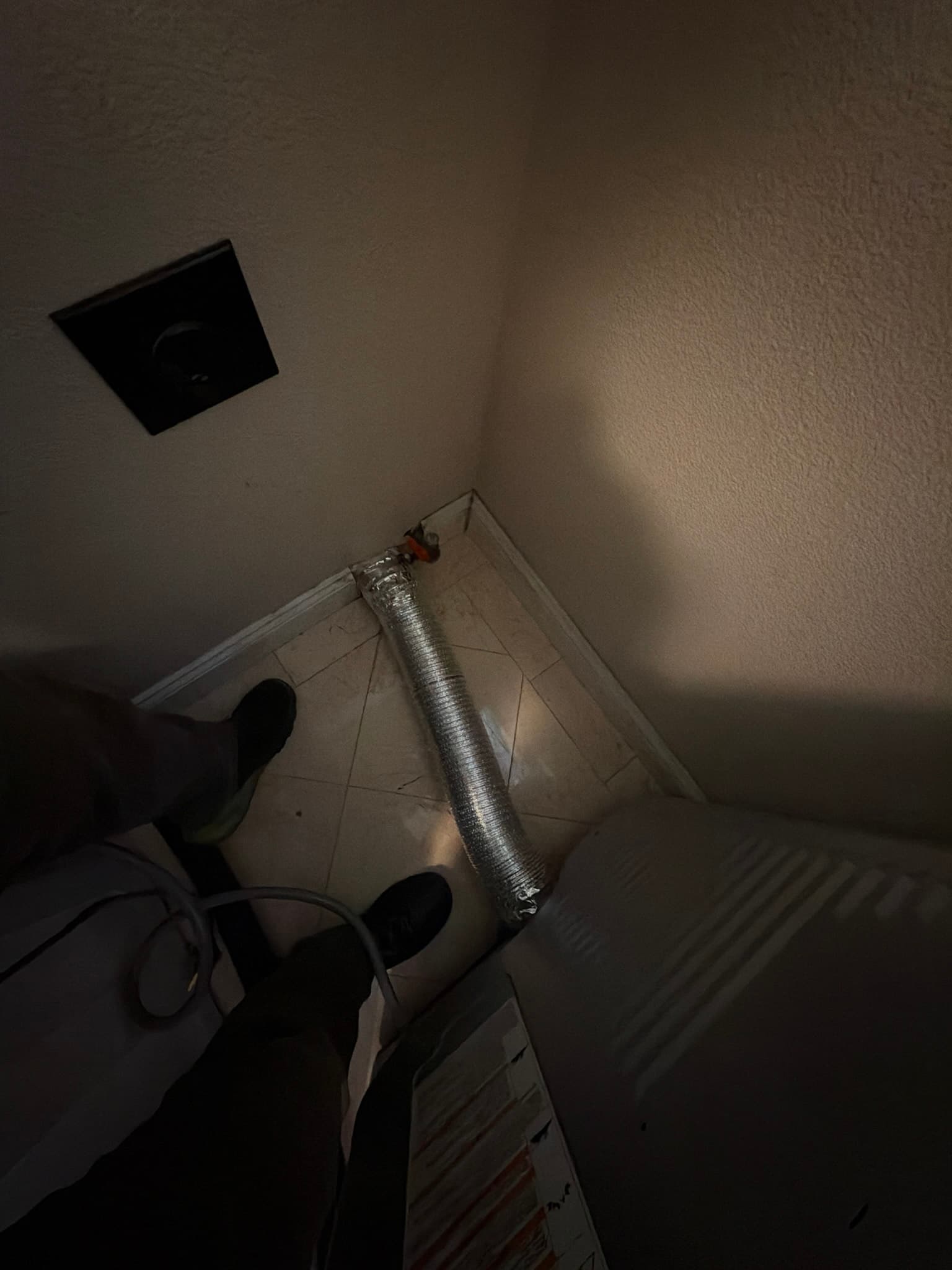
Before service: crushed transition duct restricting airflow behind the dryer.
What We Found
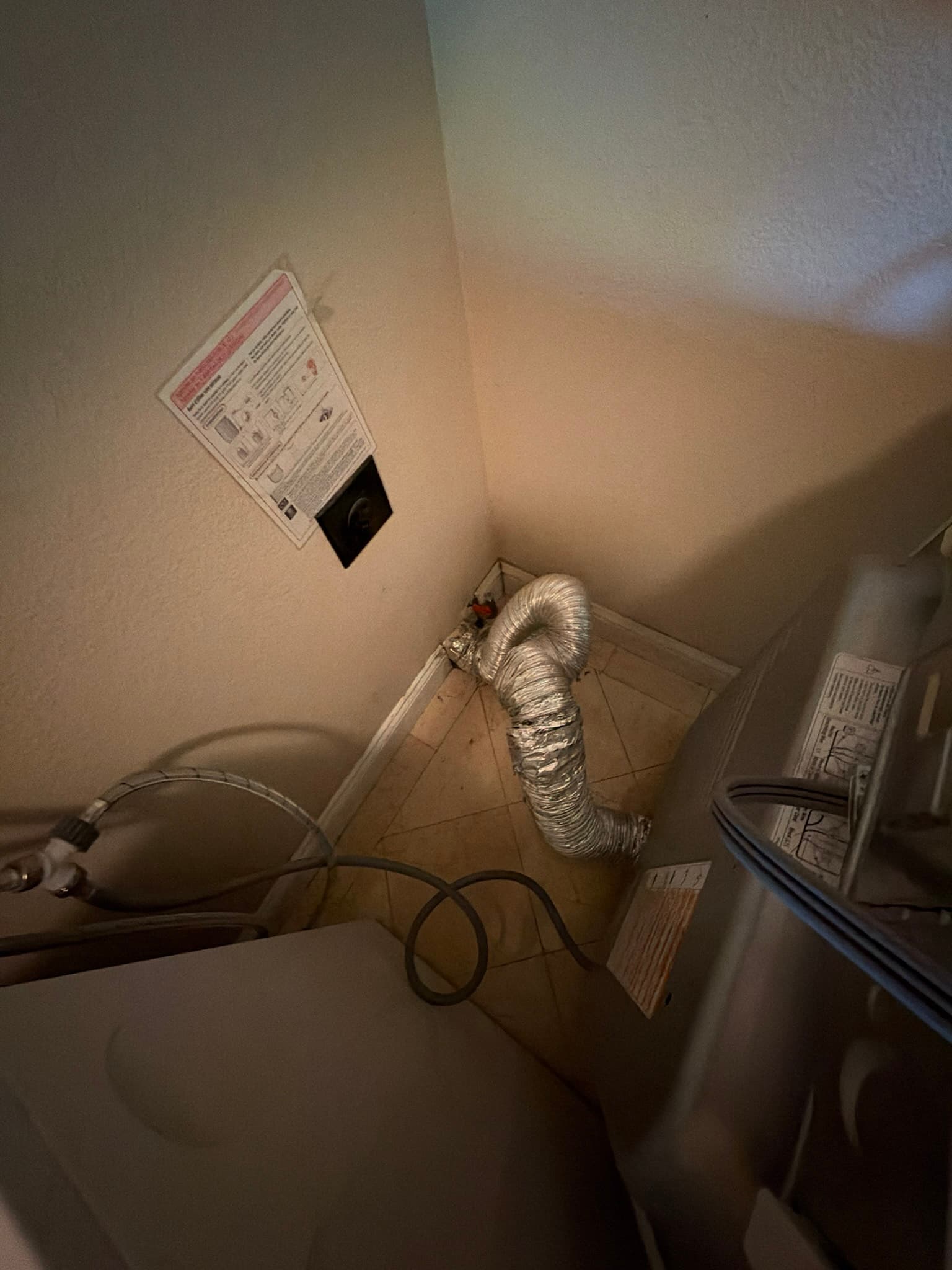
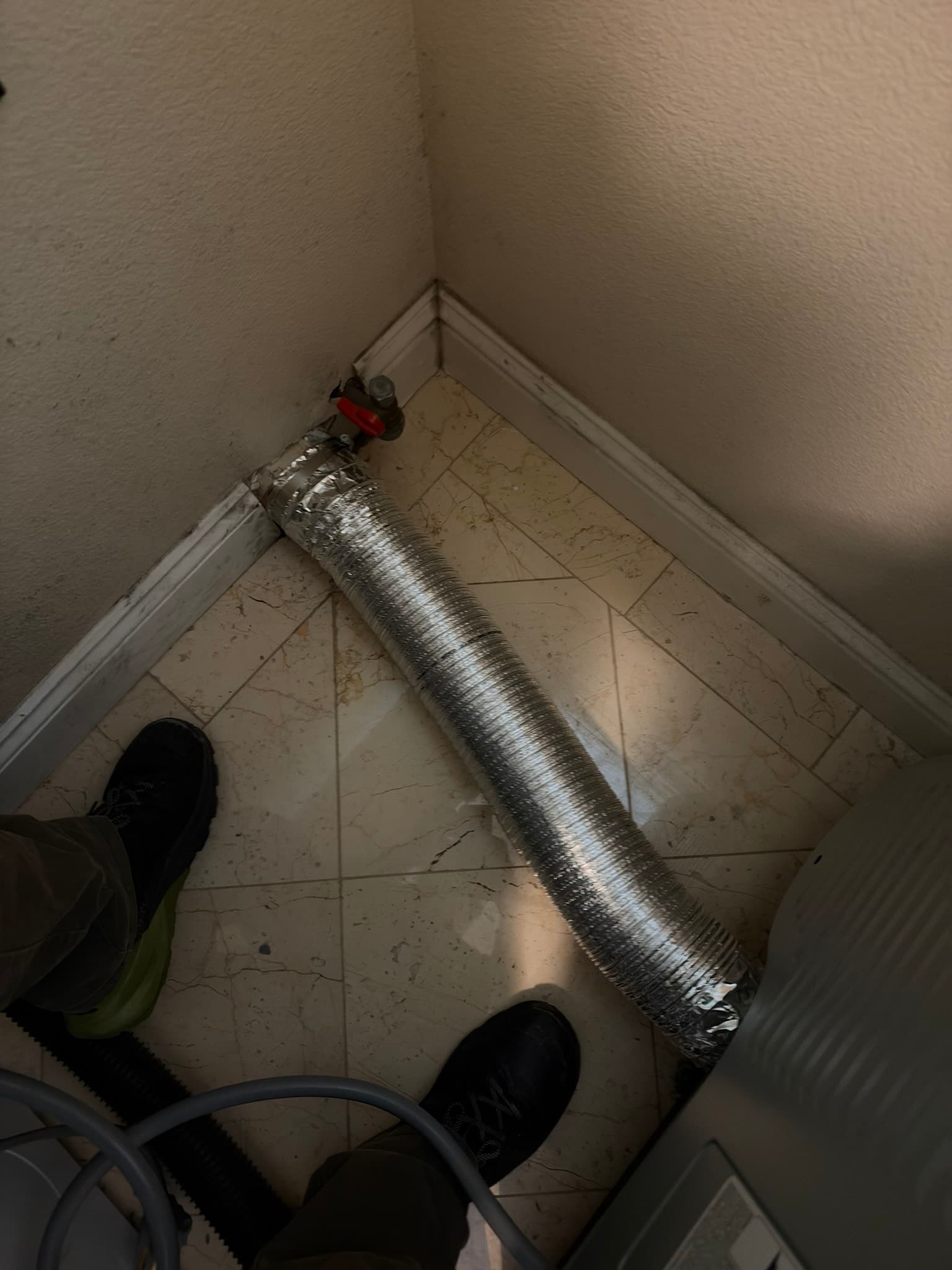
During a routine residential dryer exhaust cleaning and inspection call in Cupertino, our technician pulled the dryer away from the wall and found the transition duct connecting the appliance to the wall outlet in poor condition. Instead of a listed rigid or semi-rigid connector, the run was thin foil flexible duct that had been squeezed into tight folds and bends behind the machine, with a section crushed nearly flat. This kind of ribbed foil material is not rated for dryer exhaust use under UL 2158A and traps lint at a much higher rate than smooth-wall duct, and the crushed sections were restricting airflow well beyond what the manufacturer's installation instructions allow. Heavy lint accumulation coated the interior of the duct, the wall opening, and the area behind the dryer, consistent with a system that was significantly overdue for cleaning. A manufacturer's warning placard near the exhaust outlet underscored that this connection had likely never been properly addressed.
What We Did
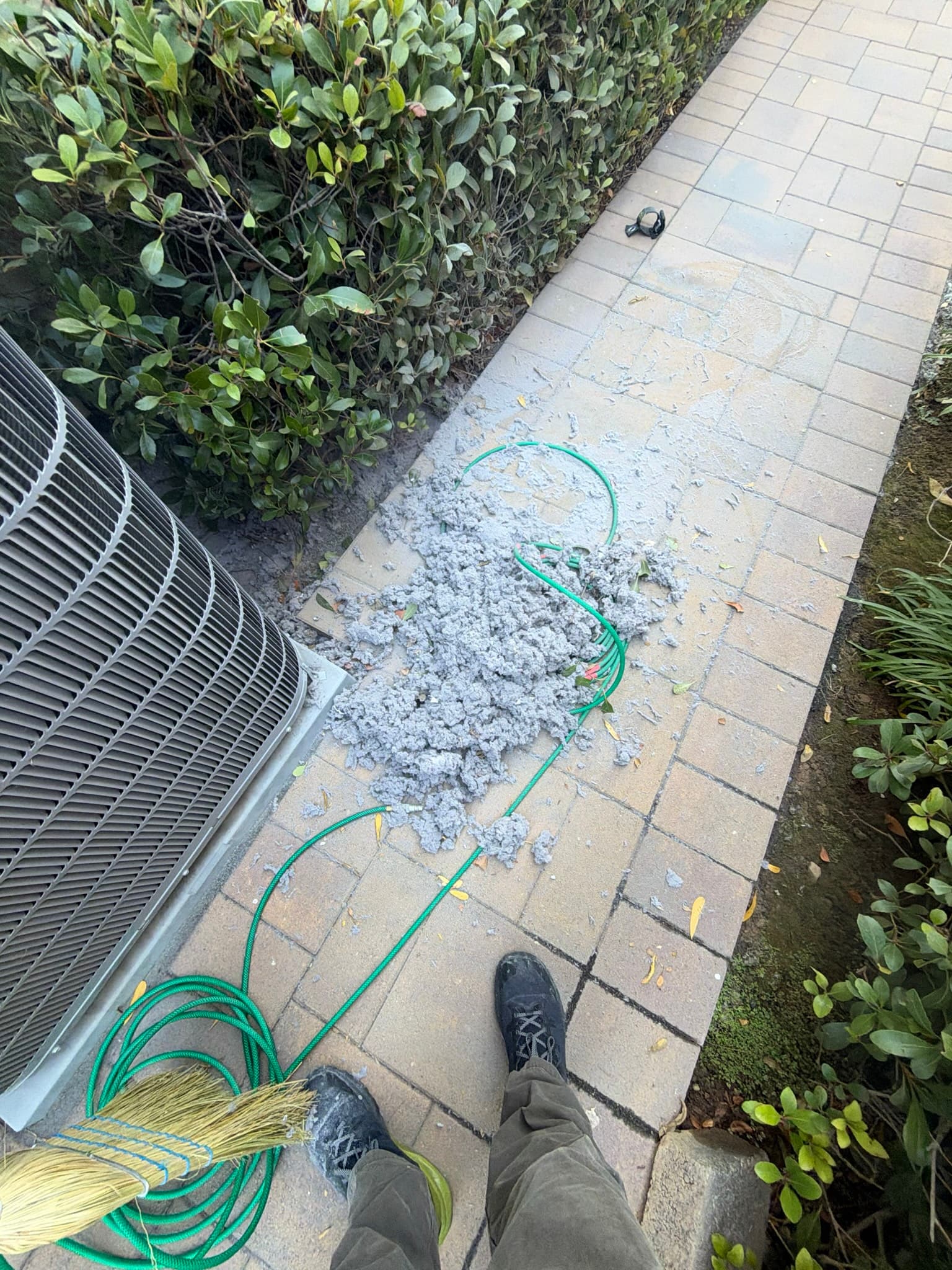
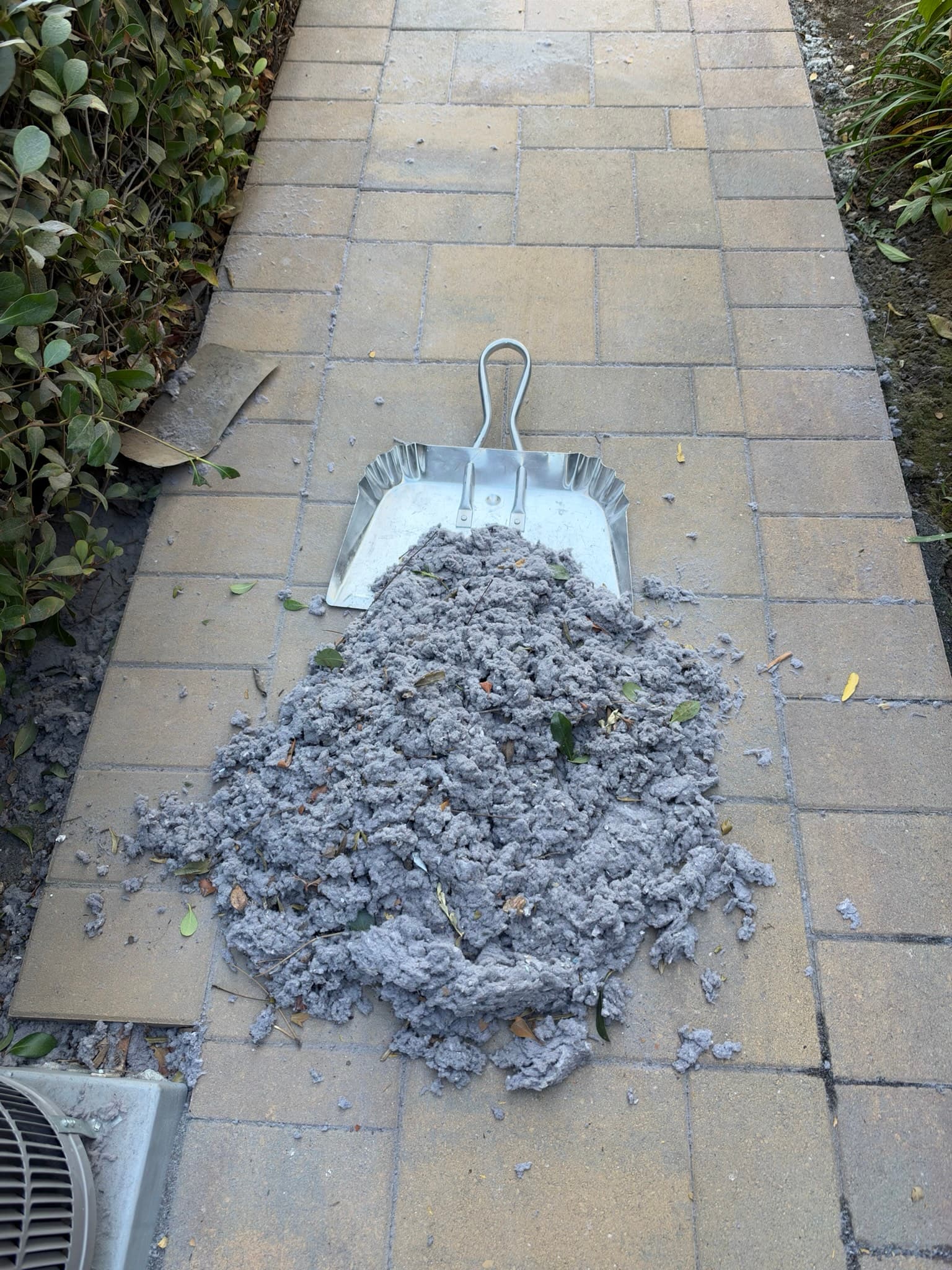
The technician performed our standard full-system service: a complete inspection, an airflow test, and a deep cleaning using a drill-attachment rotary brush paired with a high-powered shop vacuum, working the entire path from the dryer connection through to the exterior cap. The rotary brush breaks up compacted lint mats along the full interior surface of the duct rather than just the accessible ends, and the shop vac immediately captures the loosened material so it doesn't redistribute inside the line. The volume of lint pulled from this system, a large compacted pile mixed with leaf debris, confirmed the duct had been significantly obstructed prior to service, a condition consistent with the kind of severe lint accumulation that the U.S. Fire Administration identifies as the leading cause of home dryer fires.
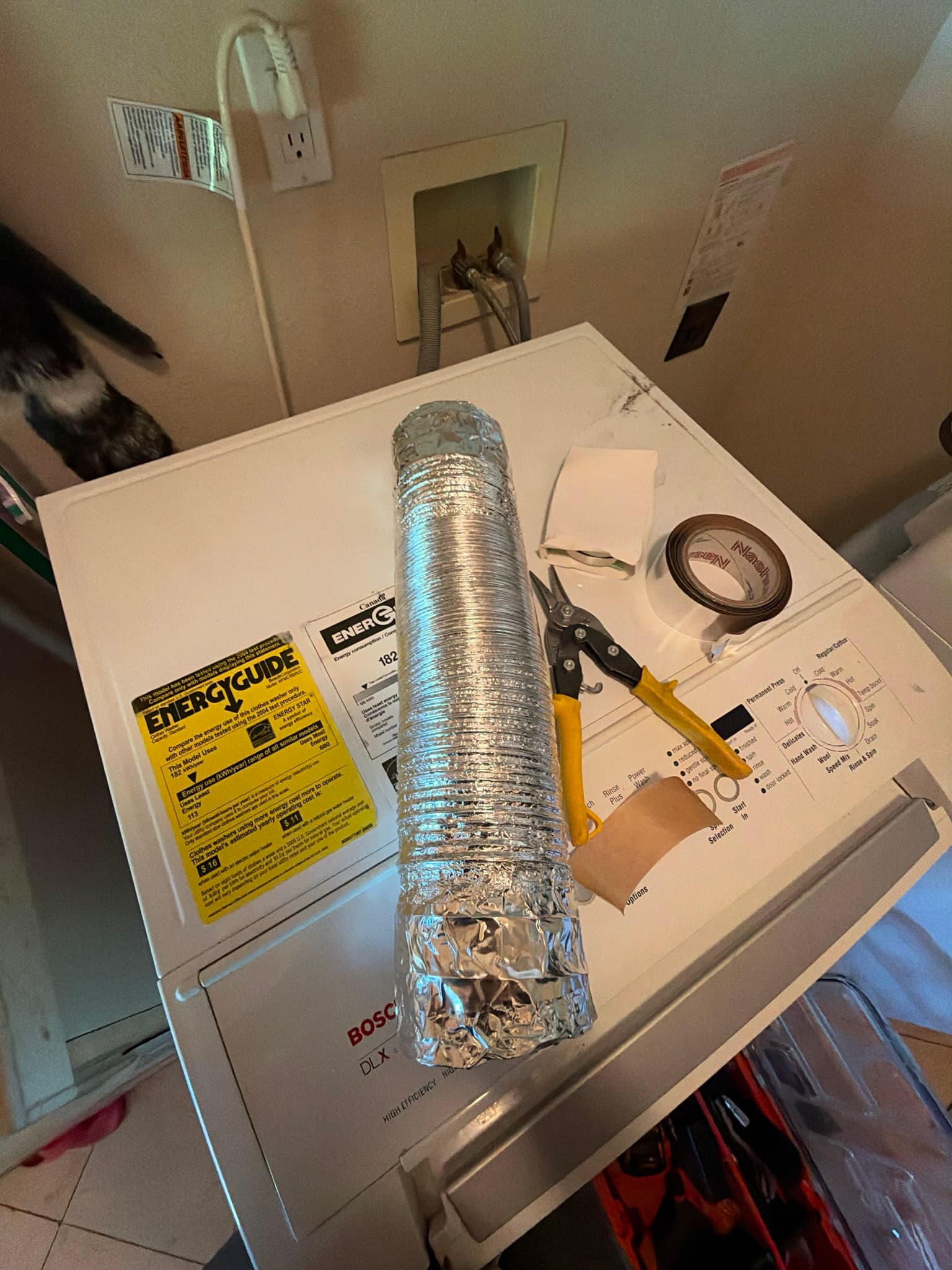
Because the existing transition duct was crushed, kinked, and made of non-compliant foil flex material, it was removed and replaced with 4 feet of DryerFlex transition duct, a semi-rigid metal connector listed to UL 2158A, secured with two DryerClamps at the dryer outlet and wall connection points. This single-length run falls within the 8-foot maximum permitted under IRC M1502.4.3 and is not concealed within any wall or floor cavity, keeping the connection accessible for future service. The new duct was routed in a shorter, straighter path across the tile floor to reduce the sharp bends that had caused the original failure, improving airflow and reducing future lint accumulation at bend points.
The Outcome
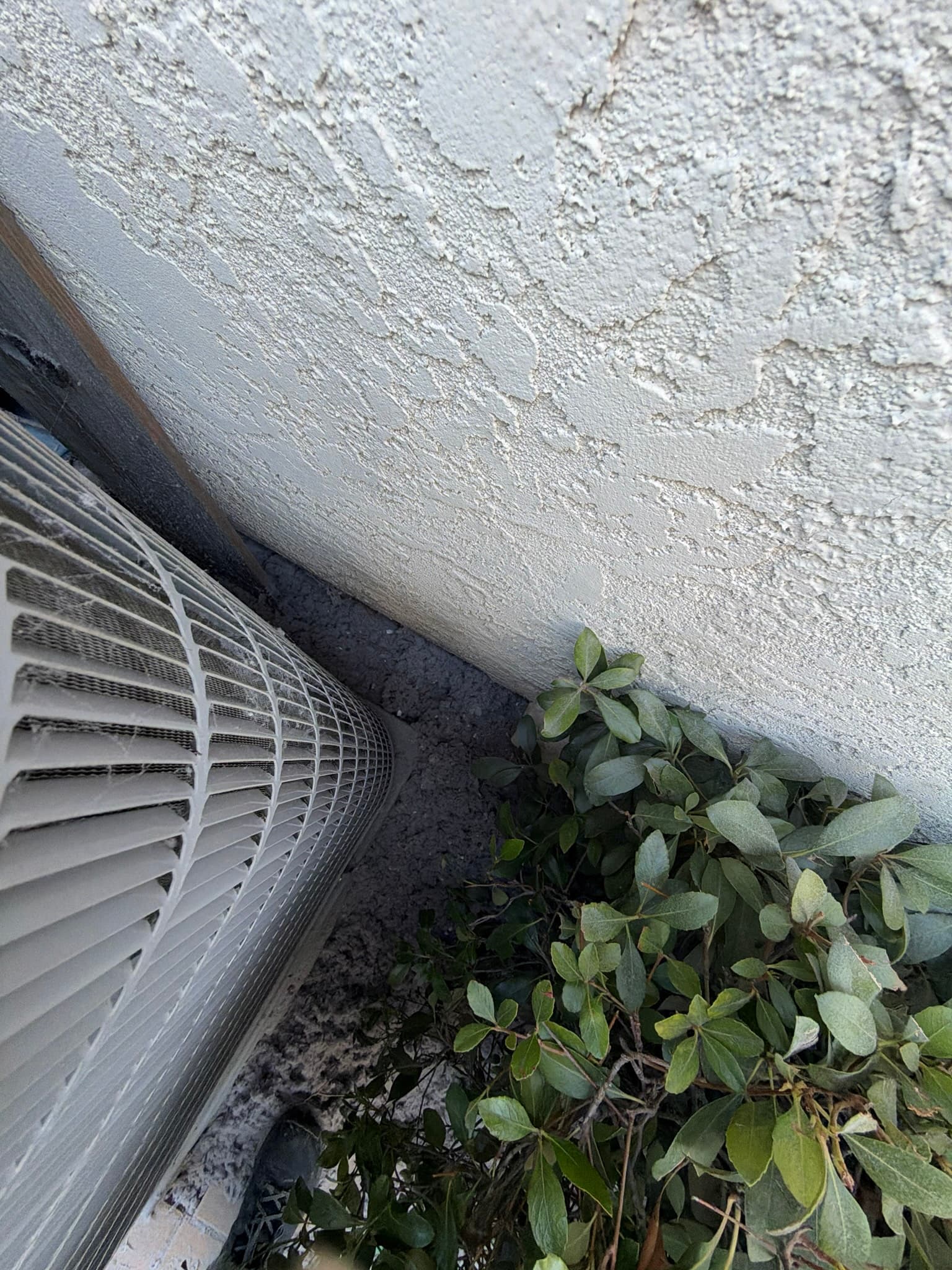
With the old crushed foil duct removed and lint cleared from the full exhaust path, the dryer connection was reassembled using the new DryerFlex transition duct and clamps, restoring a clear, properly supported path from the appliance to the exterior wall vent. The exterior louvered vent cap was inspected as part of the service and found with its slats intact and free of lint or debris, though dense shrub growth against the stucco wall was noted as encroaching on the termination and worth monitoring so it doesn't restrict exhaust dispersion over time. While on site, the technician also noted that the exterior vent hood currently installed is a 6 inch unit rather than the 4 inch size called for by code; it is functioning correctly in its present condition, but homeowners in this situation should be aware that a future upgrade to a correctly sized hood would bring the termination fully in line with current requirements.
Why This Matters for Cupertino Homeowners
Crushed and kinked transition ducts are a common finding behind dryers that sit in tight alcoves or closets, since even a few inches of extra push toward the wall can fold thin foil duct in on itself. Combined with a full year or more of uncleaned lint, this creates the exact conditions the fire safety codes are designed to prevent: reduced airflow, elevated exhaust temperatures at the dryer connection, and a duct increasingly packed with a highly flammable material. Replacing the crushed foil section with a proper UL 2158A listed transition duct and clearing the line end to end addresses both the immediate blockage and the underlying material problem, and it's a straightforward, effective fix for the type of laundry closet layout common in many Cupertino homes.
Project photos
9 photos
What the customer said
“Super pleased with the speed and quality of the work done by Michael”
Need similar work in Cupertino?
Get a free quote - same-week appointments usually available.